
Best Proxies For Gaming Marketplaces: A Practical Buyer’s Guide.
Gaming marketplaces are no longer small side corners of the internet. They handle skins, keys, collectibles, accounts, in-game items, regional stores, price checks, fraud reviews, and high-value trades. That means one thing for serious operators: your network setup matters.
A weak proxy setup can ruin your workflow fast. Slow sessions, random IP jumps, poor region matching, and recycled addresses can cause login friction, payment checks, failed listings, or marketplace trust issues. A good proxy does the opposite.
It keeps sessions stable, lets your team test regional storefronts properly, and helps you manage legitimate marketplace operations without looking like a broken automation script.
Before we go deeper, use proxies responsibly. Respect platform rules, marketplace terms, rate limits, account ownership rules, and local laws.
This guide is for legitimate use cases such as QA testing, regional marketplace research, fraud monitoring, pricing analysis, secure account access, and multi-location operations.
Quick Comparison Table: Best Proxies For Gaming Marketplaces
| Provider | Best For | Proxy Types | Rotation Control | SOCKS5 Support | Starting Price Signal | Main Strength |
|---|---|---|---|---|---|---|
| Bright Data | Enterprise marketplace research | Residential, ISP, datacenter, mobile | Advanced sticky and rotating sessions | Yes | Residential from about $5.88/GB | Deep targeting and controls |
| Oxylabs | Premium teams and high-volume projects | Residential, ISP, datacenter, mobile | Sticky and rotating options | Yes | ISP from about $1.60/IP | Stability and business support |
| Decodo | Balanced performance and usability | Residential, ISP, mobile, datacenter | Flexible session controls | Yes | Residential often around mid-range per GB | Easy dashboard and good scale |
| SOAX | Geo-targeted marketplace checks | Residential, mobile, ISP, datacenter | Precise rotation and sticky sessions | Yes | Entry plans vary by traffic | Strong location filtering |
| IPRoyal | Budget-conscious marketplace teams | Residential, ISP, datacenter, mobile | Custom rotation options | Yes | Often affordable PAYG pricing | Value and simple setup |
| Webshare | Beginners and smaller teams | Residential, static residential, datacenter | Basic to moderate controls | Yes | Residential from about $1.4/GB | Low entry cost |
| NetNut | Stable residential and ISP workflows | Residential, ISP, mobile, datacenter | Rotating and static options | Yes | Usually premium pricing | ISP-grade stability |
| ProxyEmpire | Niche geos and rollover bandwidth | Residential, mobile, datacenter | Sticky and rotating sessions | Yes | Varies by plan | Flexible bandwidth handling |
What Makes a Proxy Good for Gaming Marketplaces?
A gaming marketplace proxy has a different job from a scraping proxy. Speed matters, but trust matters more.
For marketplace use, the best proxy should offer:
- Clean residential or ISP IPs
- Sticky sessions for login and checkout flows
- Region targeting by country, state, or city
- SOCKS5 support for apps and custom tools
- Low latency for live dashboards
- Transparent usage analytics
- Stable IP reputation
- Clear compliance rules
Datacenter proxies can work for simple browsing, testing, or public price checks. But for account-based marketplace work, residential and ISP proxies usually feel more natural because the traffic looks closer to normal consumer access.
1. Bright Data

Bright Data is one of the most advanced proxy platforms for teams that need control, scale, and compliance. It is not the cheapest option, but it is one of the strongest choices if your marketplace operation needs accurate regional testing, large IP coverage, and advanced session logic.
For gaming marketplaces, Bright Data makes sense when you are checking localized prices, testing storefront visibility, reviewing listing behavior, or managing fraud-monitoring workflows across different regions. Its residential network is useful when you need natural-looking access patterns, while ISP proxies are better when you need longer-lasting sessions with cleaner stability.
The dashboard gives you deep targeting controls. You can select locations, manage sessions, rotate IPs, and monitor usage. That level of control is useful when your team needs to compare item prices across regions or test whether marketplace content changes based on location.
Pro-Tip
Use sticky residential sessions for login-based marketplace research. Use rotating sessions only for public pages, item discovery, and non-login price checks.
Best For
Bright Data is best for agencies, enterprise teams, fraud analysts, and marketplace operators who need advanced controls and reliable compliance standards.
2. Oxylabs
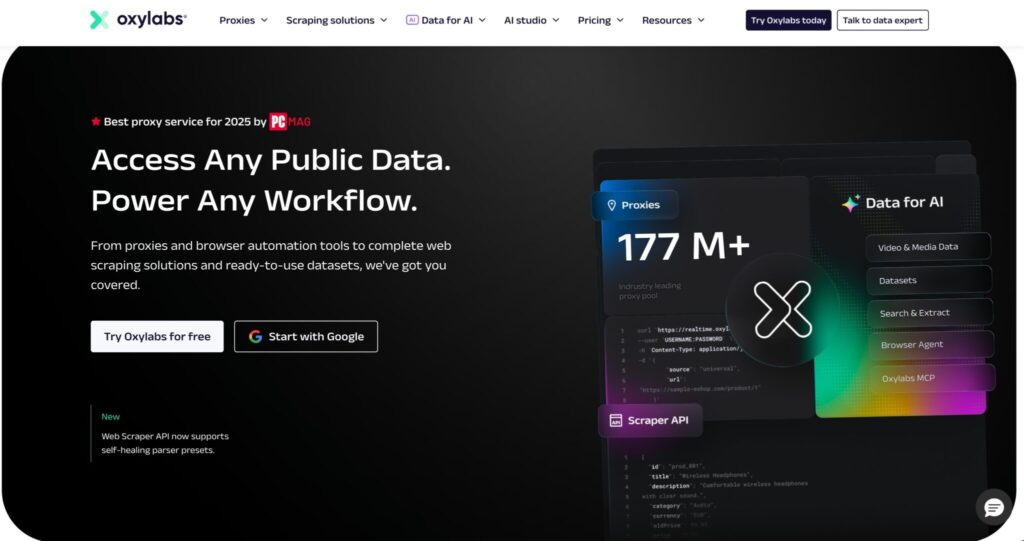
Oxylabs is another premium proxy provider built for serious business use. It stands out because of its stability, large proxy network, strong documentation, and dedicated support. If Bright Data feels like a powerful control room, Oxylabs feels like a polished enterprise system built for teams that want fewer moving parts.
For gaming marketplaces, Oxylabs is a strong fit for account-safe browsing, regional catalog checks, product monitoring, and QA testing. Its ISP proxies are especially useful because they blend the speed of datacenter infrastructure with the reputation profile of residential-style IPs.
SOCKS5 support is a major plus for gaming marketplace tools because some desktop apps, inventory managers, and browser environments work better with SOCKS5 than basic HTTP proxies.
The main drawback is pricing. Oxylabs is not ideal if you are testing a small project with a tiny budget. But if uptime, support, and clean infrastructure matter more than saving a few dollars, it is one of the safest premium picks.
Pro-Tip
For marketplace dashboards and account sessions, test ISP proxies before mobile proxies. ISP proxies are usually faster, more stable, and easier to manage for long sessions.
Best For
Oxylabs is best for professional teams that need stable infrastructure, premium support, and strong session reliability.
3. Decodo

Decodo, formerly known as Smartproxy, is one of the easiest proxy providers to recommend for mid-sized users. It offers a good mix of residential, mobile, ISP, and datacenter proxies without making the setup feel painful.
For gaming marketplaces, Decodo works well for regional price checks, testing marketplace visibility, monitoring public listings, and managing normal account workflows with stable sessions. Its dashboard is beginner-friendly, but the platform still has enough controls for more advanced users.
The biggest advantage is balance. Some providers are powerful but heavy. Others are cheap but limited. Decodo sits in the middle. You get a strong IP pool, smooth onboarding, documentation, browser extensions, and enough targeting options to run marketplace research properly.
It is also a smart option if your team is new to proxies and does not want to spend days learning a complex enterprise platform.
Pro-Tip
Create separate proxy groups for each marketplace region. Do not mix US, EU, and Asia sessions inside the same browser profiles because it can create inconsistent account behavior.
Best For
Decodo is best for affiliates, small agencies, marketplace researchers, and gaming commerce teams that want reliable proxies without enterprise complexity.
4. SOAX
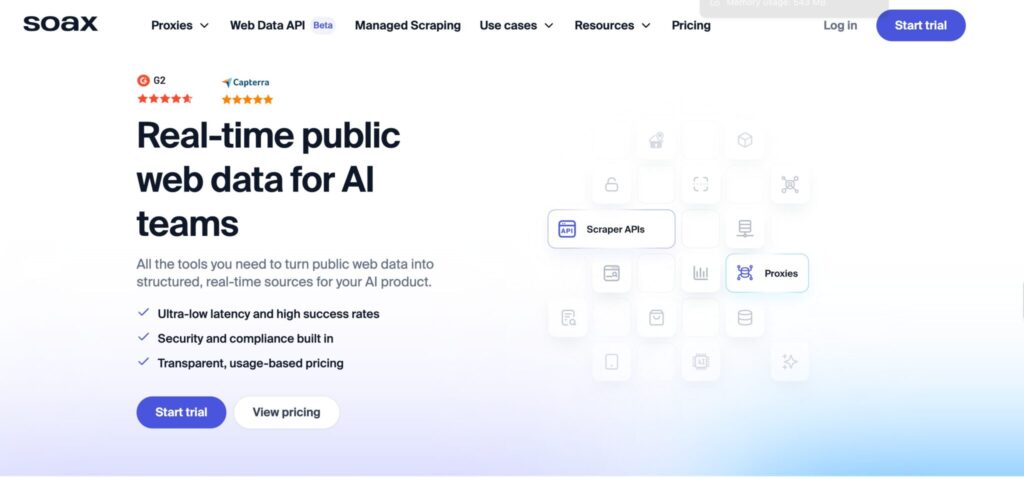
SOAX is a strong choice when location accuracy matters. Gaming marketplaces can behave differently depending on country, city, payment region, language settings, tax rules, and availability. SOAX helps because it focuses heavily on precise geo-targeting.
For example, if you are checking how a marketplace displays item availability in Germany versus the UK, or how pricing looks from different regions, SOAX gives you the filtering tools to do that with more control.
It supports residential, mobile, ISP, and datacenter proxies, which means you can build different workflows under one provider. Residential proxies are good for natural browsing. Mobile proxies can help with mobile-first marketplace testing. ISP proxies are better for longer sessions.
SOAX may not feel as polished as some enterprise platforms, but it has strong flexibility. The setup is manageable, the dashboard is practical, and the targeting options are useful for marketplace testing.
Pro-Tip
Use city-level targeting only when you truly need it. Narrow targeting can reduce available IP volume and may increase session failures during busy periods.
Best For
SOAX is best for marketplace teams that need accurate regional testing and flexible proxy filtering.
5. IPRoyal
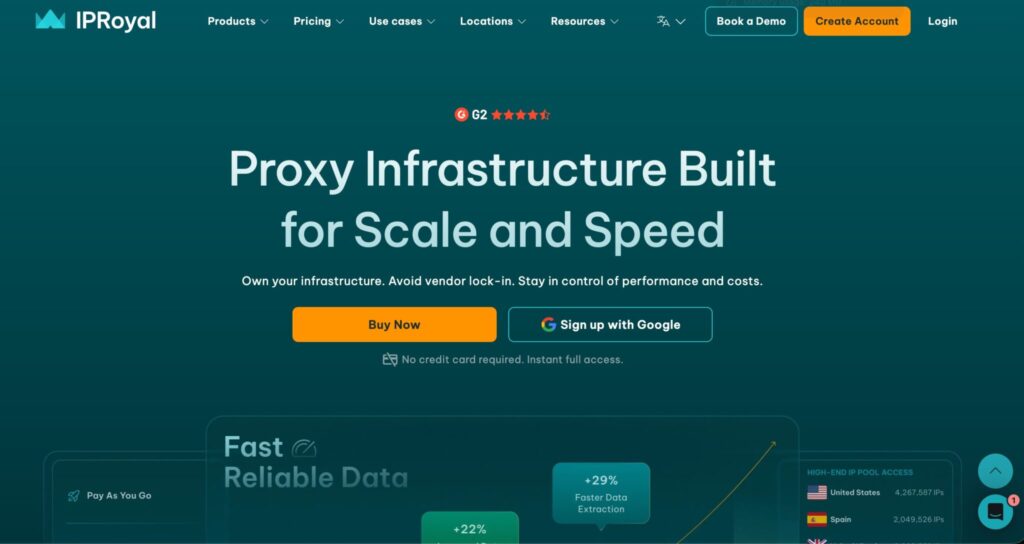
IPRoyal is popular because it gives smaller teams access to residential, ISP, datacenter, and mobile proxies without forcing them into expensive enterprise plans. It is not always the biggest network in the room, but it offers strong value.
For gaming marketplaces, IPRoyal is useful for smaller operations that need secure browsing, regional checks, public listing research, and basic account management. The dashboard is simple, pricing is approachable, and the provider supports common proxy formats that work with browsers and third-party tools.
IPRoyal’s residential proxies are useful for general marketplace access. ISP proxies are better if you need a consistent IP for the same account or admin profile. Datacenter proxies can work for low-risk tasks such as checking public pages, but they are not the best choice for sensitive account sessions.
The trade-off is that support, targeting depth, and infrastructure maturity may not match Bright Data or Oxylabs. But for the price, IPRoyal is a very practical option.
Pro-Tip
Start with a small traffic package and test login stability, page speed, and region accuracy before scaling your full workflow.
Best For
IPRoyal is best for freelancers, small marketplace teams, and budget-conscious buyers who still want legitimate paid proxies.
6. Webshare
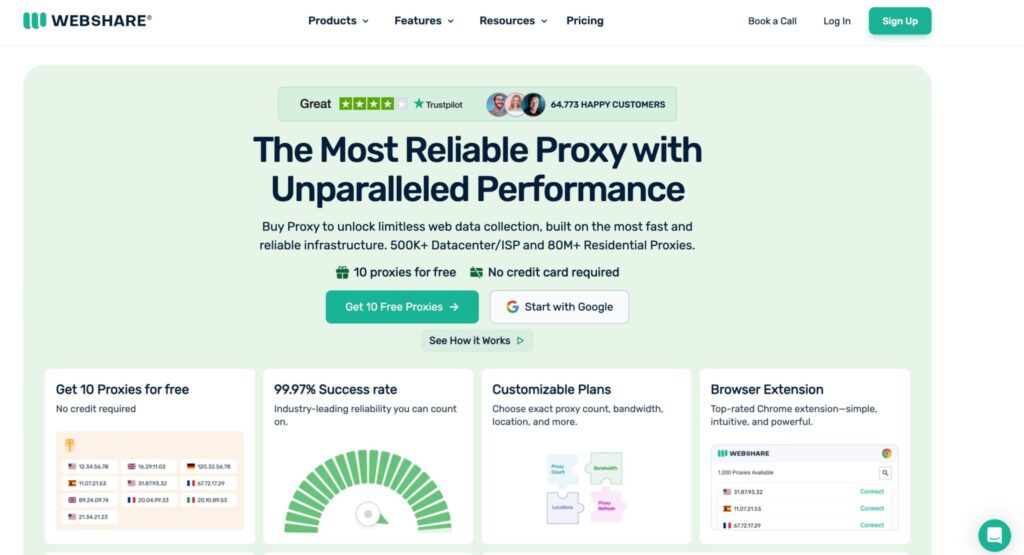
Webshare is one of the most beginner-friendly proxy providers in this list. It offers low-cost entry plans, datacenter proxies, residential proxies, and static residential options. For gaming marketplace users who want to test proxies without a heavy monthly bill, Webshare is a sensible starting point.
Its static residential proxies are useful when you need the same IP for repeat sessions. Its rotating residential proxies can support public marketplace research and price checks. Datacenter proxies are cheap and fast, but they should be used carefully because marketplace platforms may treat them with more suspicion.
The dashboard is clean, and the pricing is easier to understand than many premium providers. That makes it attractive for solo operators or small teams running lightweight marketplace tasks.
The downside is that Webshare does not offer the same advanced tooling or high-touch support as premium providers. Still, for cost control, it is hard to ignore.
Pro-Tip
Use Webshare for testing workflows first. Once you know your traffic volume and session needs, you can decide whether to stay budget-friendly or move to a premium provider.
Best For
Webshare is best for beginners, small teams, and users who want affordable proxies for basic marketplace research.
7. NetNut
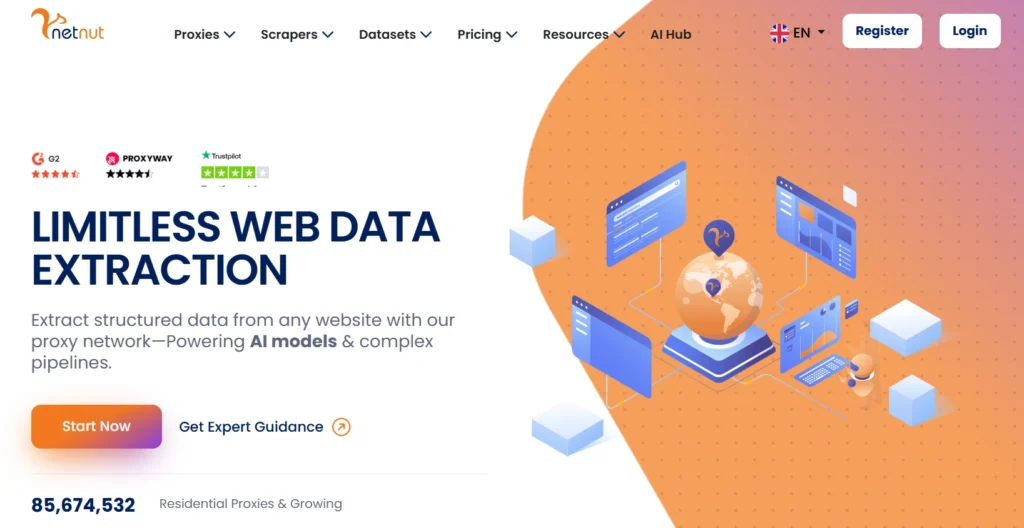
NetNut is a strong option for users who care about stable residential and ISP proxy performance. Its network is designed for business use cases such as market research, data access, and secure browsing.
For gaming marketplaces, NetNut works well when you need consistent sessions and broad country coverage. ISP proxies can be useful for account dashboards, while rotating residential proxies are better for public pricing data and regional storefront checks.
One thing I like about NetNut is its focus on infrastructure quality. It is not always the cheapest provider, but it feels built for teams that care about uptime and predictable access.
The main issue is pricing. Smaller users may find it expensive compared with Webshare or IPRoyal. But if your marketplace operation has revenue tied to accurate monitoring or account stability, the extra cost can make sense.
Pro-Tip
Use NetNut ISP proxies for high-value workflows where frequent IP changes would create unnecessary account checks.
Best For
NetNut is best for professional marketplace teams that need stable residential and ISP sessions.
8. ProxyEmpire
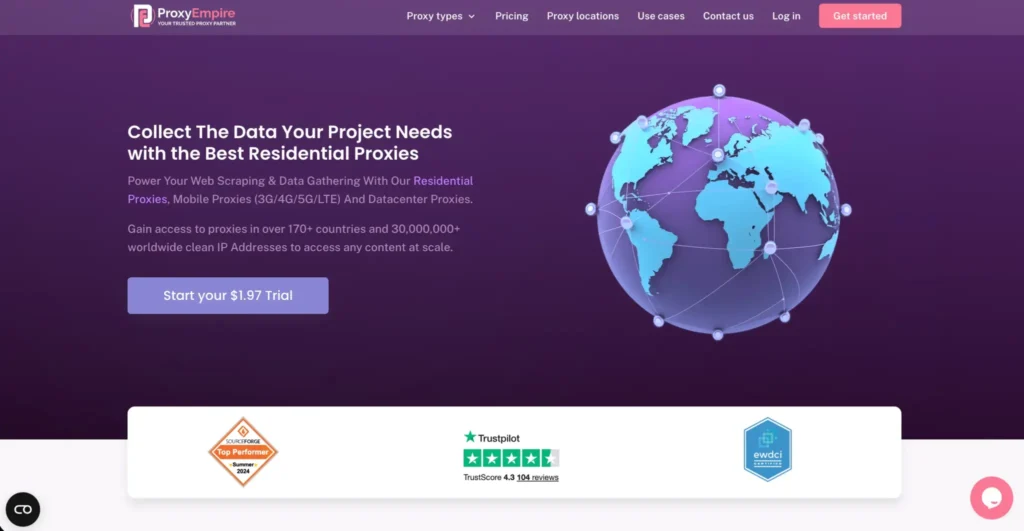
ProxyEmpire is worth considering if you need flexible bandwidth and access to less common regions. It offers residential, mobile, and datacenter proxies, with features such as sticky sessions and bandwidth rollover on selected plans.
For gaming marketplaces, this can help when your traffic is uneven. Some months you may run heavy pricing checks. Other months you may only monitor a few marketplaces. Bandwidth rollover can reduce waste if your usage changes often.
ProxyEmpire is also useful for niche geo-testing. If your marketplace research includes smaller countries or less common regions, its location options may help.
It is not always the first provider I would choose for massive enterprise scale, but it is a practical option for buyers who want flexibility and do not want unused bandwidth to disappear too quickly.
Pro-Tip
Check the exact geo you need before buying. Proxy availability can vary by country, city, and proxy type.
Best For
ProxyEmpire is best for niche regional testing, flexible bandwidth users, and teams with irregular traffic needs.
How to Choose Proxies For Gaming Marketplaces
Choosing the right proxy is not about buying the biggest IP pool. It is about matching the proxy type to the task.
Residential Proxies
Residential proxies route traffic through real consumer-style IPs. They are useful for marketplace browsing, regional research, and public listing checks. They are usually priced per GB, so costs can rise if your pages are heavy or your team uses them all day.
Best use cases:
- Regional storefront checks
- Public marketplace monitoring
- Price comparison
- Marketplace QA testing
- Normal browsing workflows
ISP Proxies
ISP proxies are static residential-style IPs hosted on faster infrastructure. They are excellent for longer sessions because they do not rotate randomly unless you configure them to.
Best use cases:
- Account dashboards
- Seller panels
- Login sessions
- Team access
- Long marketplace workflows
Mobile Proxies
Mobile proxies route traffic through mobile carrier IPs. They can be useful for mobile app testing, mobile marketplace flows, and checking mobile-first experiences. They are usually more expensive and slower than ISP proxies.
Best use cases:
- Mobile marketplace testing
- App-based storefront checks
- Carrier-specific regional testing
- Mobile UX research
Datacenter Proxies
Datacenter proxies are fast and cheap, but they are easier to detect. They can still work for public pages, speed testing, and low-risk research.
Best use cases:
- Public catalog checks
- Non-login testing
- Fast page monitoring
- Low-cost experiments
IP Pools and Rotation Protocols Explained
The IP pool is the number and quality of IPs available inside a provider’s network. Bigger is not always better. A smaller clean pool can outperform a massive abused pool.
For gaming marketplaces, look at:
- Country coverage
- City targeting
- ASN or ISP filtering
- IP freshness
- Session duration
- Replacement rules
- Usage limits
- Abuse prevention policies
Rotation controls matter just as much. A rotating proxy changes IPs after a set time, request count, or session reset. A sticky session keeps the same IP for a fixed period.
Use rotating sessions for public marketplace pages. Use sticky sessions for logins, seller dashboards, carts, wishlists, and anything tied to an account.
Best Proxy Setup For Gaming Marketplace Workflows
A smart setup usually looks like this:
- ISP proxies for account access
- Residential proxies for regional research
- Datacenter proxies for low-risk public checks
- Mobile proxies for app testing
- Separate browser profiles for each region
- One region per profile
- Clear logs for bandwidth and errors
Avoid switching the same marketplace account between multiple countries in a short period. That can trigger extra verification and break trust signals. Stable access usually beats aggressive rotation.
FAQs About Gaming Marketplace Proxies
1. What are the best proxies for gaming marketplaces?
The best proxies are usually ISP and residential proxies. ISP proxies are better for stable account sessions, while residential proxies are better for regional research and public marketplace checks.
2. Are datacenter proxies good for gaming marketplaces?
Datacenter proxies are useful for low-risk public tasks, but they are not ideal for account-based workflows. They are fast and cheap, but their IP reputation can be weaker.
3. Should I use rotating or sticky proxies?
Use sticky proxies for login sessions and dashboards. Use rotating proxies for public pages, catalog checks, and non-account research.
4. Are mobile proxies worth it?
Mobile proxies are worth it if you need to test mobile marketplace apps or carrier-specific experiences. For normal desktop marketplace work, ISP proxies are usually more practical.
5. Can proxies reduce marketplace account checks?
A stable proxy setup can reduce unnecessary friction caused by sudden IP changes. It cannot guarantee fewer checks because platforms use many trust signals, not just IP addresses.
6. What is the safest proxy type for seller accounts?
ISP proxies are often the safest choice for seller accounts because they provide stable IPs, good speed, and residential-style reputation.
7. How much should I spend on marketplace proxies?
Small teams can start with Webshare or IPRoyal. Professional teams should consider Decodo, SOAX, NetNut, Oxylabs, or Bright Data depending on budget and targeting needs.
8. Do proxies improve gaming marketplace speed?
Not always. A proxy can slow things down if the server is far from the marketplace or overloaded. Choose low-latency locations near your target region.
Final Verdict
For enterprise-grade marketplace research, Bright Data and Oxylabs are the strongest picks. For balanced value, Decodo is the easiest recommendation. For geo-targeting, SOAX is excellent. For budget buyers, IPRoyal and Webshare make sense. For stable ISP workflows, NetNut is a strong option, while ProxyEmpire is useful for niche regions and flexible bandwidth.
The best proxy setup is not the one with the biggest marketing claim. It is the one that keeps your sessions stable, your regions accurate, your costs predictable, and your marketplace activity clean.