
Best Proxies For Gaming Scraping.
Gaming data moves fast. Prices change, skins trend overnight, esports odds shift by the minute, marketplace listings disappear, and community sentiment can flip after one patch note.
If you are collecting public gaming data for market research, price intelligence, anti-fraud monitoring, esports analytics, or community trend tracking, normal browsing infrastructure will not hold up for long.
That is where proxies matter.
The best proxies for gaming scraping are not just “IPs that rotate.” You need clean IP pools, stable sessions, low latency, location targeting, SOCKS5 or HTTP support, ethical sourcing, and enough control to scrape without burning through bandwidth. You also need to stay within legal, platform, and robots.txt boundaries.
A good proxy setup helps you collect allowed public data reliably. It should not be used for account abuse, credential attacks, spam, vote manipulation, botting, or bypassing private access controls.
Below is a practical buyer’s guide built for teams scraping gaming marketplaces, esports pages, server lists, forums, wiki pages, patch notes, review sites, and public community data.
Quick Comparison Table: Best Proxies For Gaming Scraping
| Provider | Best For | Proxy Types | IP Pool Strength | Rotation Control | Sticky Sessions | Geo Targeting | Protocols | Scraping Tools | Pricing Style | Main Drawback |
|---|---|---|---|---|---|---|---|---|---|---|
| Bright Data | Enterprise gaming data teams | Residential, ISP, mobile, datacenter | Very large | Advanced | Yes | Country, city, ASN options | HTTP, HTTPS, SOCKS5 | Strong | Premium | Expensive |
| Oxylabs | High-volume scraping | Residential, mobile, datacenter, ISP | Enterprise-grade | Strong | Up to long sessions | Global targeting | HTTP, HTTPS, SOCKS5 | Strong | Premium | Best value only at scale |
| Decodo | Balanced price and power | Residential, mobile, ISP, datacenter | Large | Flexible | 1 to 60 min style options | 195+ locations | HTTP, HTTPS, SOCKS5 | Good | Mid-range | Some advanced tools cost more |
| SOAX | Precise geo scraping | Residential, mobile, ISP, datacenter | Very large | Good | Yes | Strong city-level targeting | HTTP, HTTPS, SOCKS5 | Moderate | Mid to premium | Setup can feel detailed |
| IPRoyal | Budget-friendly scraping | Residential, ISP, mobile, datacenter | Moderate to large | Good | Yes | Country and city options | HTTP, HTTPS, SOCKS5 | Basic | Affordable | Less enterprise polish |
| Webshare | Low-cost static and rotating proxies | Residential, ISP, datacenter | Large | Good | Yes | Country and city options | HTTP, SOCKS5 | Basic | Affordable | Fewer scraping APIs |
| NetNut | ISP-backed reliability | Residential, mobile, datacenter | Large | Strong | Yes | Global targeting | HTTP, HTTPS, SOCKS5 | Good | Premium | Not ideal for tiny projects |
| PacketStream | Cheap residential bandwidth | Residential | Smaller than premium networks | Basic | Limited | Global coverage | HTTP, HTTPS | Basic | $/GB | Less control and support |
| Rayobyte | Datacenter and ISP-heavy workloads | Datacenter, ISP, residential | Good | Moderate | Yes | Location options | HTTP, HTTPS, SOCKS5 | Basic | Mid-range | Residential pool not as deep |
1. Bright Data: Best Overall for Enterprise Gaming Scraping
Bright Data is the heavyweight choice for large gaming scraping operations. If your team tracks game item prices across marketplaces, monitors regional storefront changes, gathers esports pricing intelligence, or runs continuous public data collection, Bright Data gives you the control most cheaper providers lack.
Its biggest strength is infrastructure depth. You can use residential proxies for public pages with heavier bot filtering, ISP proxies for stable identity, mobile proxies for mobile-first gaming apps or app-store style testing, and datacenter proxies for lightweight targets like static patch note pages.
Rotation is highly configurable. You can rotate per request, hold sticky sessions, or segment traffic by country, city, carrier, or other targeting layers depending on the product. That matters when scraping gaming data because different targets behave differently. A marketplace page may need session persistence. A public price index may work better with fast rotation.
The downside is cost. Bright Data is not the proxy you buy for a tiny weekend scraper. It is for teams that value compliance tools, dashboards, documentation, support, and large-scale reliability.
Pro-Tip
Use ISP proxies for stable marketplace monitoring and residential proxies for broader discovery crawls. Mixing both often gives better success rates than relying on one proxy type.
2. Oxylabs: Best for High-Volume Gaming Data Pipelines
Oxylabs is another enterprise-grade provider built for serious scraping. It is especially strong when your gaming data operation has predictable volume, strict uptime needs, and a technical team that wants clean integration.
For gaming scraping, Oxylabs fits use cases like tracking public marketplace prices, monitoring game store availability by region, collecting public esports event data, and testing localized gaming pages. Its residential network is large, and the provider is known for premium support, stable performance, and scraping-focused tooling.
Sticky sessions are useful when a target expects the same browsing identity for several requests. That can happen when collecting paginated marketplace data or browsing regional game catalogs. For broader crawling, rotation can reduce IP reuse and improve throughput.
Pricing is usually better for businesses than hobbyists. If you need only a few GB per month, Oxylabs may feel oversized. If you process millions of requests, the reliability can justify the spend.
Pro-Tip
Before scaling, test three proxy types against the same gaming target: residential, ISP, and datacenter. The cheapest working option is not always residential.
3. Decodo: Best Balanced Choice for Most Gaming Scraping Teams
Decodo, formerly Smartproxy, is one of the easiest providers to recommend for mid-size scraping teams. It offers a strong mix of residential proxies, mobile proxies, ISP proxies, datacenter proxies, API tools, session controls, and fair pricing.
For gaming scraping, Decodo works well across public community forums, public game review pages, marketplace listings, patch note archives, esports pages, and price comparison projects. It is not as intimidating as some enterprise platforms, but it still gives you enough flexibility to build a real scraping workflow.
The rotation options are practical. You can rotate frequently for large crawls or keep sticky sessions when scraping multi-page flows. That session control is important when you want consistency without manually managing proxy lists.
Decodo also has a friendly dashboard, which helps if your SEO, content, or affiliate team is running research without a full engineering department. Developers still get API access and integration options.
Pro-Tip
For gaming scraping, start with rotating residential proxies. Move hot targets to sticky residential or ISP proxies only after you see block patterns in logs.
4. SOAX: Best for Geo-Targeted Gaming Data
SOAX is a strong pick when location accuracy matters. Gaming scraping often has a regional angle. Prices can vary by country. Game availability may change by market. Esports pages can show different sponsors, odds, or content depending on location. Community pages may redirect by region.
SOAX gives you strong residential and mobile proxy coverage with detailed targeting. That makes it useful for collecting public data across regions without mixing results from the wrong market.
Its sticky sessions are also helpful for flows where you need a stable IP for several requests. For example, if you are collecting public catalog data from several pages in the same country, a sticky session can reduce failed requests and inconsistent responses.
The tradeoff is that SOAX may require more setup discipline. Because targeting is precise, poor configuration can waste bandwidth. It is best for users who know which locations they need.
Pro-Tip
Do not scrape every country by default. Pick the gaming markets that matter: US, UK, Germany, Brazil, India, Japan, South Korea, Turkey, and Southeast Asia often show very different gaming behavior.
5. IPRoyal: Best Budget Residential Proxy Option
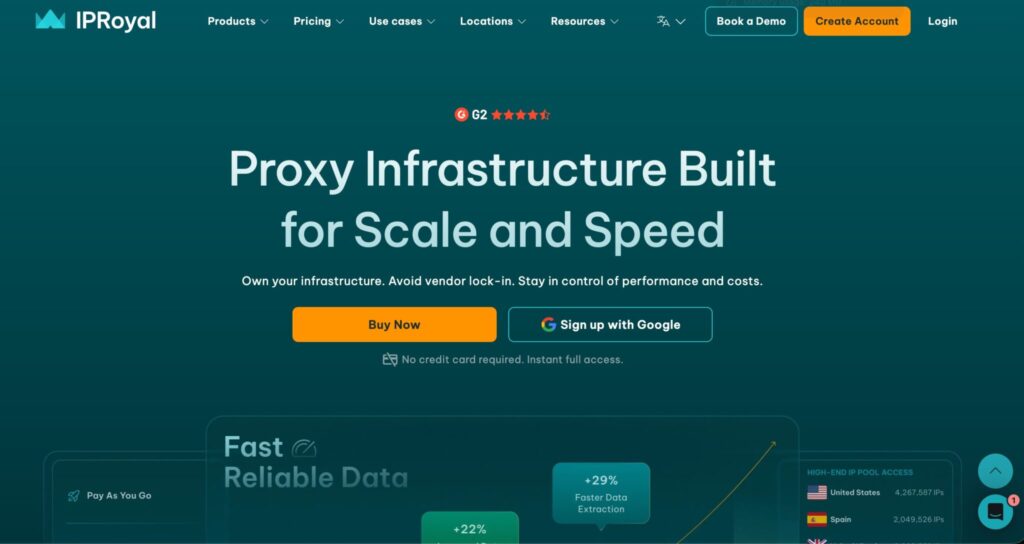
IPRoyal is a good fit for smaller teams that need residential proxies without enterprise pricing. It is useful for public gaming data projects where you want country targeting, sticky sessions, and basic rotation but do not need a full scraping platform.
For example, IPRoyal can work well for collecting public server list data, checking public game prices by region, monitoring gaming blogs, or scraping lightweight community pages. It is also attractive for agencies that run several small research projects and need cost control.
The provider offers residential, ISP, mobile, and datacenter proxies, so you can test different setups without jumping platforms. The dashboard is straightforward, and pricing tends to be friendly for beginners.
Still, IPRoyal is not the most advanced option for large-scale scraping. If you need enterprise SLAs, advanced unlockers, or deep analytics, look at Bright Data, Oxylabs, or NetNut.
Pro-Tip
Use IPRoyal for pilot testing. Once you know your request volume, error rate, and target behavior, decide whether you need a premium provider.
6. Webshare: Best Affordable Proxy Stack for Developers
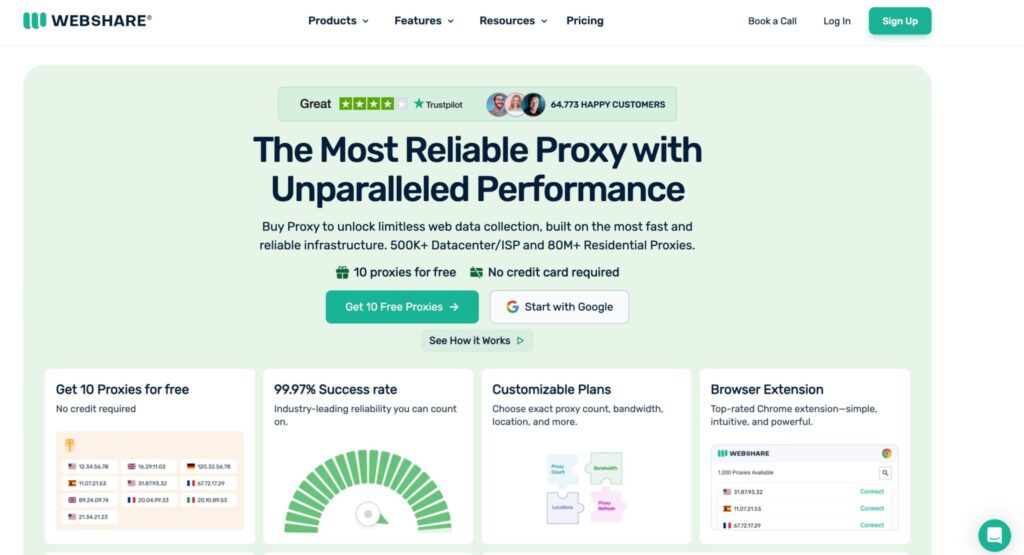
Webshare is popular because it keeps things simple. You get residential proxies, static residential proxies, and datacenter proxies at pricing that makes sense for developers, startups, and solo operators.
For gaming scraping, Webshare is a smart option when your targets are not extremely protected. Public blogs, patch note pages, marketplace previews, esports schedules, and wiki-style pages can often be handled with a mix of datacenter and residential proxies.
Its static residential proxies are useful when you need speed and consistency. Rotating residential proxies are better when you need broader public data collection and less IP reuse.
Webshare does not offer the same advanced scraping APIs as some premium platforms, so you may need to build more logic yourself: retries, headers, browser rendering, request pacing, and error handling.
Pro-Tip
Use datacenter proxies first for low-protection gaming pages. Save residential bandwidth for pages that actually need it.
7. NetNut: Best for Stable ISP-Backed Scraping
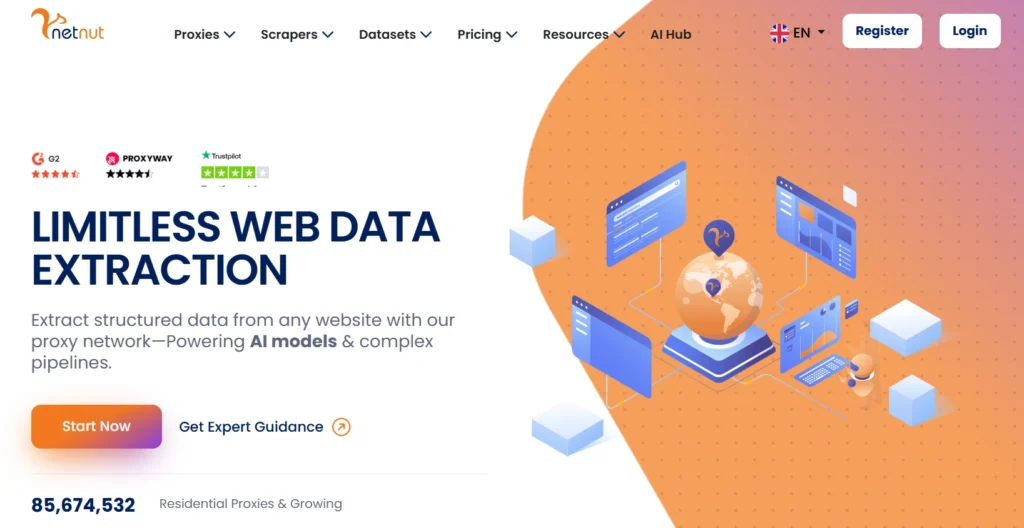
NetNut is built around reliability. Its network has a strong ISP-backed positioning, which can be useful for scraping public gaming data at scale with fewer random session drops.
For gaming projects, NetNut fits long-running crawlers, regional monitoring, and public marketplace tracking where stability matters more than the lowest price. It is also useful when you need account management and support from people who understand scraping workloads.
The platform offers residential, mobile, and datacenter proxy options. That gives data teams room to test combinations. For example, ISP-style residential routes can support stable workflows, while rotating residential proxies can handle wider discovery tasks.
NetNut is not the cheapest provider here. Smaller publishers may find it too heavy. But for teams that care about predictable infrastructure, it is a serious option.
Pro-Tip
If your scraper fails because sessions reset too often, test NetNut or another ISP-heavy provider before rewriting your crawler.
8. PacketStream: Best Cheap Residential Bandwidth
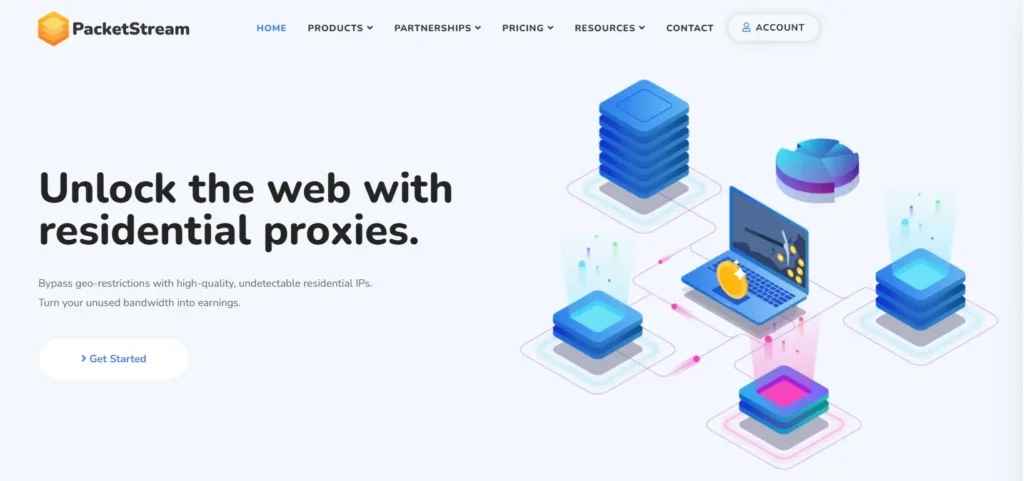
PacketStream is the budget play. It offers residential proxy bandwidth at simple per-GB pricing, which makes it attractive for low-risk testing and small scraping jobs.
For gaming scraping, PacketStream can work for public pages with light protection, such as gaming blogs, open forums, some public listing pages, and research crawls. Its main appeal is cost. You can test ideas without committing to expensive monthly contracts.
The tradeoff is control. You do not get the same advanced targeting, support, rotation tuning, or scraping tools that premium providers offer. If your project is business-critical, PacketStream should be tested carefully before production use.
It is best seen as a low-cost tool, not a complete data collection platform.
Pro-Tip
Use PacketStream for exploratory scraping only. If success rate drops below your target, switch before wasting engineering time.
9. Rayobyte: Best for Datacenter and ISP Proxy Mixes
Rayobyte is worth considering if your gaming scraping workload can use datacenter or ISP proxies instead of expensive residential traffic. Many teams overbuy residential proxies because they assume every target needs them. That is rarely true.
Public gaming news sites, patch notes, wikis, esports calendars, and lightweight directories may work well with datacenter proxies if you use respectful pacing. ISP proxies can help with targets that need more trust but still benefit from static speed.
Rayobyte is especially useful for teams that want dedicated IPs, predictable performance, and a more traditional proxy setup. It may not be the first choice for highly protected marketplaces, but it can lower costs for broader crawling.
Pro-Tip
Segment your targets into low, medium, and high difficulty. Use datacenter for low, ISP for medium, and residential or mobile only for high.
9. How to Choose Proxies for Gaming Scraping
1. Match Proxy Type to the Target
Residential proxies are best for public gaming marketplaces, regional pages, and targets with stricter traffic filtering. ISP proxies are great when you need a stable IP with better trust than normal datacenter proxies. Datacenter proxies are fast and cheap for low-protection pages. Mobile proxies are useful for mobile-first gaming apps and mobile web testing, but they are usually expensive.
Do not use the most expensive proxy by default. Use the proxy type that matches the target’s difficulty.
2. Look at IP Pool Quality, Not Just Pool Size
Large IP pools sound impressive, but quality matters more. A clean 20 million IP pool can outperform a larger pool if the bigger network is overused. For gaming scraping, look for ethically sourced IPs, low abuse history, location diversity, and clear usage policies.
Pool depth matters most when you scrape at scale across many regions. For small research crawls, session quality and stability may matter more.
3. Understand Rotation Protocols
Rotation controls how often your IP changes. Per-request rotation gives a new IP often and works for large public crawls. Time-based rotation changes IPs every few minutes. Sticky sessions keep the same IP for a set period.
Gaming scraping often needs both. Use rotating proxies for discovery and sticky sessions for paginated pages, marketplace flows, or localized browsing paths.
4. Check Protocol Support
HTTP and HTTPS proxies are enough for most web scraping. SOCKS5 is useful when your tools need lower-level traffic handling or when you work with non-browser applications. For gaming data teams, SOCKS5 can help with flexibility, but it is not always necessary.
5. Prioritize Geo Targeting
Gaming markets are regional. Prices, availability, rankings, servers, communities, and offers can change by country. A good provider should let you target at least by country. City-level targeting is useful for testing localized pages, but it can cost more and reduce available IP supply.
6. Watch Bandwidth Costs
Gaming scraping can burn bandwidth quickly if you render full pages, load images, or use browser automation. Disable images, block unnecessary assets, cache repeated pages, compress responses, and avoid scraping the same URL too often.
A cheaper proxy with poor success rates may cost more in retries. Always calculate cost per successful page, not cost per GB.
7. Review Compliance and Use Policy
Use proxies for lawful, permission-based, public data collection. Respect robots.txt, site terms, rate limits, copyright, privacy rules, and platform restrictions. Avoid private data, login-gated scraping, spam, account creation abuse, botting, or any action that harms gaming communities.
Best Proxy Setup for Gaming Scraping
For most teams, the best starting stack is simple:
Use datacenter proxies for static public pages.
Use rotating residential proxies for public marketplaces and regional pages.
Use sticky ISP or residential sessions for multi-page flows.
Use mobile proxies only when testing mobile-specific results.
Track response codes, CAPTCHA rates, latency, bandwidth, and successful pages. After 48 to 72 hours of testing, you will know which targets need premium routing and which ones can run cheaply.
FAQs: Best Proxies For Gaming Scraping
1. What are the best proxies for gaming scraping?
Bright Data, Oxylabs, Decodo, SOAX, IPRoyal, Webshare, NetNut, PacketStream, and Rayobyte are strong options. The best choice depends on scale, budget, target difficulty, and location needs.
2. Are residential proxies better for gaming scraping?
Residential proxies are often better for public gaming marketplaces and region-sensitive pages because they look like normal user traffic. But they are not always needed. Datacenter proxies can work for easier targets.
3. Should I use rotating or sticky proxies?
Use rotating proxies for large public crawls. Use sticky sessions when you need the same IP across several pages, such as paginated marketplace listings or localized browsing.
4. Are gaming scraping proxies legal?
Proxies themselves are legal in many places, but how you use them matters. Scrape only public, permitted data and follow applicable laws, robots.txt, platform terms, and privacy rules.
5. Do I need SOCKS5 proxies for gaming scraping?
Not always. HTTP and HTTPS proxies work for most web scraping. SOCKS5 is helpful for advanced tools, non-browser traffic, or flexible networking setups.
6. Which proxy is best for scraping game prices?
For game prices, start with rotating residential proxies from Decodo, SOAX, Bright Data, or Oxylabs. If pages require stable sessions, test ISP or sticky residential proxies.
7. How many proxies do I need?
It depends on request volume, target limits, and rotation settings. Start small, measure error rates, then scale. Buying a huge pool before testing usually wastes money.
8. Can free proxies work for gaming scraping?
Free proxies are risky. They are often slow, unstable, abused, and unsafe for business data collection. Use a paid provider with clear sourcing and support.
9. What is the biggest mistake in gaming scraping?
The biggest mistake is treating every target the same. A wiki page, a marketplace, and an esports odds page need different request pacing, proxy types, headers, and session rules.
Final Verdict
For enterprise gaming scraping, Bright Data and Oxylabs are the safest premium picks. For most teams, Decodo gives the best balance of price, usability, and control.
SOAX is excellent for geo-targeted projects. IPRoyal and Webshare are strong budget choices. NetNut fits stable high-volume workflows, while PacketStream works for cheap testing.
The smart move is not buying the biggest proxy package. Start with a controlled test, measure success rate, cost per successful page, and block patterns, then scale the proxy type that actually performs.