
Best Proxies for Minecraft.
Minecraft looks simple from the outside. Blocks, servers, skins, mods, friends, and a lot of late nights. But once you run a public server, test plugins, manage multiple environments, or troubleshoot regional access, the networking side gets serious very quickly.
A good proxy setup can help with privacy, server testing, geo checks, uptime monitoring, account security, and controlled QA workflows. A bad proxy setup can add lag, trigger blocks, break sessions, or make your Minecraft experience worse than playing on hotel WiFi.
This guide is built for legitimate use cases. Not ban evasion. Not bot raids. Not spam. If your goal is to protect your server, test performance, manage clean development workflows, or route traffic more safely, the right proxy can be useful.
What Makes a Proxy Good for Minecraft?
Minecraft is more latency sensitive than normal web browsing. You are not just loading pages. You are maintaining live connections where ping, packet stability, routing distance, and IP reputation all matter.
For Minecraft Java Edition, TCP based proxy support matters most. SOCKS5 is usually more useful than basic HTTP proxies because it can handle broader traffic types. For Minecraft Bedrock, things get trickier because Bedrock relies heavily on UDP, and many standard proxy products are not designed for that.
A good Minecraft proxy should offer:
- Low latency routes
- Clean IP reputation
- Sticky sessions
- SOCKS5 support where possible
- Country or city level targeting
- Enough IP pool depth
- Simple authentication
- Clear bandwidth pricing
- Abuse controls and compliance standards
Best Proxies for Minecraft: Quick Comparison Table
| Provider | Best For | Proxy Types | Pool Size | SOCKS5 | Sticky Sessions | Pricing Style | Minecraft Fit |
|---|---|---|---|---|---|---|---|
| Decodo | Balanced performance | Residential, ISP, mobile, datacenter | 125M+ IPs | Yes | Yes | Bandwidth based | Best overall |
| Bright Data | Enterprise control | Residential, ISP, mobile, datacenter | Large global pool | Yes | Yes | Premium usage based | Best for advanced teams |
| Oxylabs | Large scale QA | Residential, mobile, ISP, datacenter | 175M+ IPs | Yes | Yes | Usage based | Best for large server networks |
| SOAX | Flexible targeting | Residential, mobile, ISP, datacenter | 155M+ IPs | Yes | Yes | GB based plans | Best for geo testing |
| IPRoyal | Budget projects | Residential, datacenter, ISP, mobile | 32M+ residential IPs | Yes | Yes | Pay as you go | Best affordable option |
| Webshare | Beginners | Datacenter, static residential, rotating residential | 80M+ residential IPs | Yes | Limited by plan | Custom monthly plans | Best entry level choice |
| NetNut | Stable ISP routing | Residential, static residential, mobile | 85M+ residential IPs | Yes | Yes | Business plans | Best for stable sessions |
| Rayobyte | US focused infrastructure | Datacenter, ISP, residential | 40M+ residential IPs | Yes | Yes | Monthly plans | Best for datacenter and static IP use |
1. Decodo: Best Overall Proxy for Minecraft Testing

Decodo, formerly Smartproxy, is one of the cleanest options for Minecraft related proxy use because it balances pool size, speed, dashboard simplicity, and pricing. It offers residential, mobile, ISP, and datacenter proxies, which makes it flexible for different Minecraft workflows.
For server owners, Decodo works well when you need to test how your server appears from different countries, check login behavior, monitor uptime, or run controlled connection tests from multiple locations. Its sticky session options are helpful when you need one IP to stay consistent during a longer testing window.
The big advantage is usability. Some proxy providers feel built only for enterprise engineers. Decodo is easier to understand without giving up serious features.
Pro Tip
Use ISP or datacenter proxies for repeatable Minecraft server testing. Use residential proxies only when you need realistic regional routing or IP diversity.
2. Bright Data: Best for Enterprise Minecraft Networks
Bright Data is the power user option. It is not the cheapest provider, but it gives you deep control over proxy type, location, session behavior, and traffic management.
For Minecraft businesses, hosting brands, server listing platforms, or larger QA teams, Bright Data can make sense. You get residential, mobile, ISP, and datacenter options, plus advanced routing controls. That matters when you want to test performance across multiple countries or verify how your public server behaves under different network conditions.
The learning curve is higher, and the pricing can feel heavy for small creators. But if your Minecraft project has real revenue behind it, Bright Data is one of the strongest technical choices.
Pro Tip
Avoid using rotating residential IPs for long Minecraft sessions. Set sticky sessions so your IP does not change halfway through a login, test, or server connection.
3. Oxylabs: Best for Large Scale Minecraft QA
Oxylabs is built for serious scale. Its huge residential IP pool, datacenter products, ISP proxies, and SOCKS5 support make it a strong option for companies running large test environments.
For Minecraft, Oxylabs is best suited to teams that need stable testing across multiple regions. Think server networks, hosting companies, marketplace tools, uptime platforms, or developers testing mods and plugins under varied network routes.
It may be more than a casual player needs. But if you care about clean infrastructure, account management, support, and global coverage, Oxylabs deserves a spot near the top.
Pro Tip
For Minecraft testing, compare datacenter, ISP, and residential routes separately. The fastest proxy is not always the best one if the IP reputation is poor.
4. SOAX: Best for Geo Targeting
SOAX is a strong pick when location accuracy matters. It offers residential, mobile, ISP, and datacenter proxies under a flexible traffic model, which makes it practical for testing Minecraft access from specific countries or cities.
This is useful if you run a server with players from different regions and want to understand connection quality. You can also test whether your website, vote pages, launcher downloads, or server store behave correctly in different markets.
SOAX is also beginner friendly enough for small teams, but still technical enough for professionals.
Pro Tip
For Minecraft server owners, test from the same regions where your player base lives. A proxy in the wrong continent tells you almost nothing about real player latency.
5. IPRoyal: Best Budget Minecraft Proxy
IPRoyal is one of the better budget friendly providers for Minecraft users who do not want enterprise pricing. It offers residential, datacenter, ISP, and mobile proxies, with flexible pay as you go options.
For small server owners, plugin developers, or testers who only need light proxy usage, IPRoyal is easy to justify. The dashboard is simple, pricing is approachable, and the provider supports common proxy workflows.
The tradeoff is that it may not feel as polished or enterprise ready as Bright Data, Oxylabs, or Decodo. Still, for basic Minecraft testing and privacy focused routing, it gives good value.
Pro Tip
Start with a small bandwidth package and test ping, disconnect rate, and login stability before buying larger traffic volume.
6. Webshare: Best for Beginners
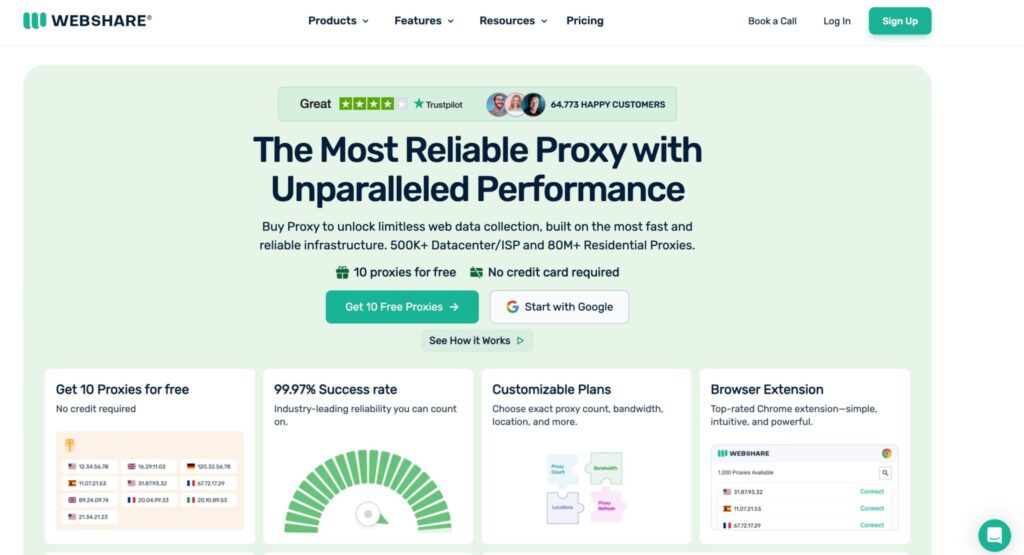
Webshare is a practical starting point if you are new to proxies. It offers a free proxy tier, simple plans, and a dashboard that does not bury you under technical settings.
For Minecraft users, Webshare is best for basic testing, simple IP checks, and light datacenter proxy use. It is not the first provider I would choose for complex Minecraft networking, but it is a good learning tool.
Its static and rotating residential options are useful, but always check whether the plan supports the connection type your setup needs. Minecraft is not the same as browser traffic, so do not assume every proxy will work perfectly out of the box.
Pro Tip
Use Webshare to learn proxy basics, then move to ISP or premium residential proxies when your testing needs become more serious.
7. NetNut: Best for Stable ISP Style Sessions
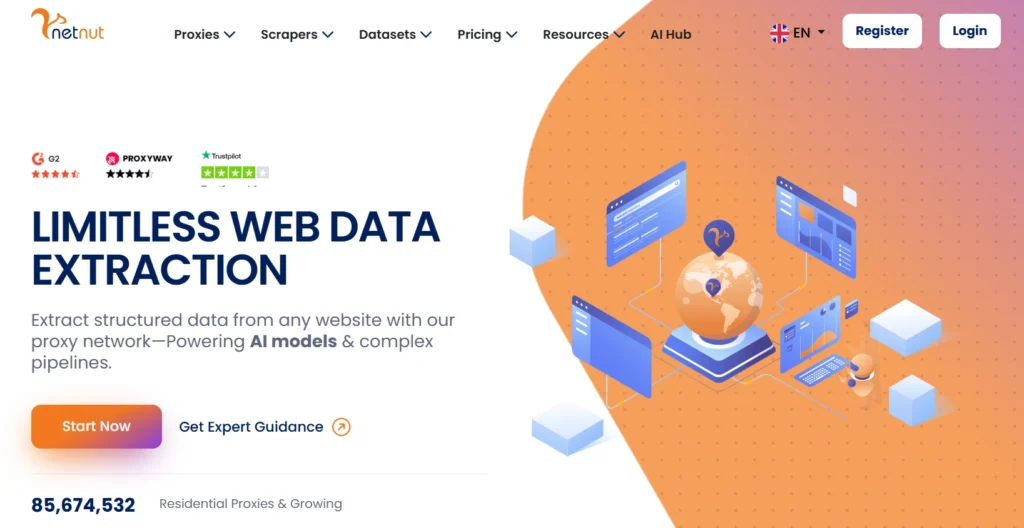
NetNut is a strong choice when stability matters more than constant rotation. Its network focuses heavily on residential and ISP style connectivity, which can be helpful for longer sessions and lower failure rates.
For Minecraft, NetNut fits users who need consistent identity during testing. If your IP changes too often, sessions may fail or look suspicious. Static residential and ISP proxies solve that problem better than fast rotating residential pools.
NetNut is better for business users than casual players. Its plans and positioning lean toward teams that need reliable data collection, geo access, and stable routing.
Pro Tip
Choose static residential or ISP proxies when your Minecraft task needs a consistent session, such as server admin testing, whitelist checks, or launcher access validation.
8. Rayobyte: Best for Datacenter and Static IP Use
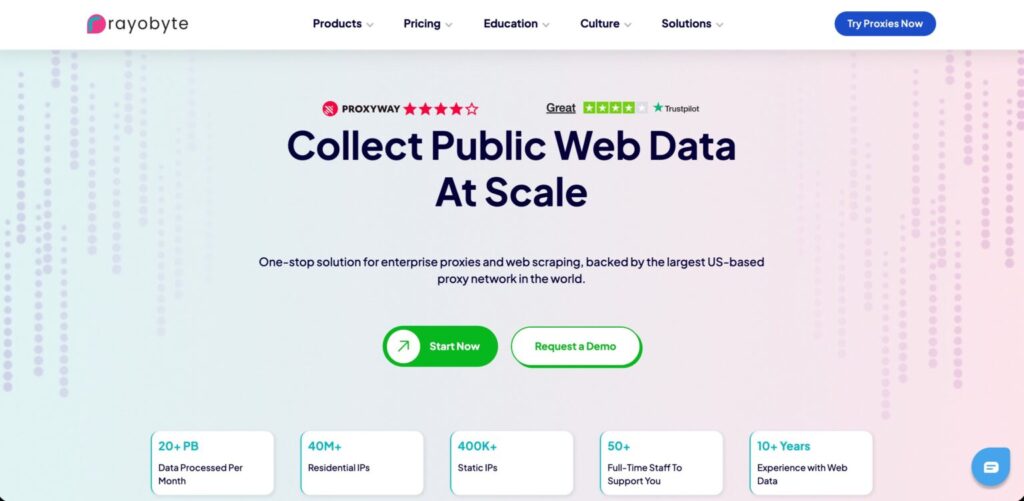
Rayobyte is known for datacenter proxies and US based proxy infrastructure. It also offers residential and ISP options, making it a flexible provider for Minecraft related testing.
For server owners, Rayobyte is most useful when you need stable, predictable proxy IPs rather than massive rotation. Datacenter proxies can work well for uptime checks, server list monitoring, backend tests, and network diagnostics.
It is not the best choice if you need huge global residential rotation. But for clean static infrastructure, especially in the United States, Rayobyte is worth considering.
Pro Tip
Datacenter proxies are often faster than residential proxies, but they are easier to detect. Use them for monitoring and testing, not for pretending to be a normal home player.
How to Choose the Best Minecraft Proxy
1. Match the Proxy Type to the Job
Residential proxies are useful when you need realistic consumer IPs. ISP proxies are better when you want residential style trust with more stability. Datacenter proxies are fast and cheap, but easier to flag. Mobile proxies are expensive and usually unnecessary for Minecraft unless you have a very specific mobile network testing need.
For most Minecraft users, ISP proxies are the sweet spot. They offer stable sessions, decent trust, and better speed than many rotating residential pools.
2. Check SOCKS5 Support
SOCKS5 is often better for Minecraft than standard HTTP proxies because Minecraft traffic is not normal browser traffic. If a provider only talks about web scraping and browser use, check the documentation before buying.
A proxy can be excellent for SEO scraping and still be poor for game traffic.
3. Understand Rotation Rules
Rotating proxies change IPs. Sticky proxies hold the same IP for a set time.
For Minecraft, sticky sessions are usually safer. Random rotation can break logins, interrupt tests, or create inconsistent results. Look for session controls like 10 minutes, 30 minutes, or 60 minutes.
4. Test Latency Before Scaling
Ping is everything. A proxy with a huge IP pool is useless if it routes your traffic across the planet.
Test three things before buying more:
- Ping to the Minecraft server
- Login success rate
- Disconnect rate during a 20 to 30 minute session
5. Avoid Dirty IP Pools
Cheap proxies can come with abused IPs. That means failed logins, blocked connections, or weird routing behavior.
If a deal looks too cheap, test carefully. Minecraft servers, login systems, and security plugins may treat poor reputation IPs badly.
6. Think About Server Protection Separately
Player side proxies are not the same as Minecraft server protection. If you run a public Minecraft server, look at DDoS protected hosting, TCPShield, reverse proxy setups, Velocity, BungeeCord, firewall rules, and proper backend IP protection.
A residential proxy will not magically protect your server from attacks.
Best Proxy Type for Each Minecraft Use Case
| Use Case | Best Proxy Type | Why |
|---|---|---|
| Testing server access from another country | Residential or ISP | Realistic regional routing |
| Uptime monitoring | Datacenter | Fast, cheap, predictable |
| Plugin testing | ISP or datacenter | Stable and repeatable |
| Launcher or website geo checks | Residential | Better location realism |
| Server admin privacy | ISP | Stable and less suspicious |
| Large scale QA | Residential plus ISP | Good balance of coverage and consistency |
| DDoS protection | Specialist server proxy or protected host | Built for inbound attack filtering |
FAQs About Minecraft Proxies
1. What is the best proxy for Minecraft?
Decodo is the best overall choice for most Minecraft users because it offers a strong mix of residential, ISP, mobile, and datacenter proxies with good session control. Bright Data and Oxylabs are better for enterprise users, while IPRoyal and Webshare are better for smaller budgets.
2. Can I use free proxies for Minecraft?
You can, but you probably should not. Free proxies are often slow, unstable, overcrowded, and risky. They may log traffic or fail during login. For Minecraft testing, even a small paid plan is usually safer.
3. Are SOCKS5 proxies good for Minecraft?
Yes, SOCKS5 proxies are usually better than HTTP proxies for Minecraft because they support broader traffic handling. Still, support depends on your launcher, client setup, and network tool.
4. Do proxies reduce Minecraft ping?
Usually, no. A proxy adds another network hop, so it often increases latency. The only exception is when the proxy provides a better route to the server than your normal ISP connection.
5. Can proxies protect my Minecraft server from DDoS attacks?
Normal outbound proxies do not protect your public server. For DDoS protection, use protected hosting, TCPShield, Cloudflare Spectrum where suitable, Minekube Gate, reverse proxy setups, or firewall based backend protection.
6. What is better for Minecraft: residential or datacenter proxies?
Residential proxies are better for realistic location testing. Datacenter proxies are better for speed, monitoring, and cost. ISP proxies often give the best balance because they are stable and trusted.
7. Should I use rotating proxies for Minecraft?
Use rotating proxies only for short tests. For real sessions, sticky proxies are better because the IP stays the same for a set period.
8. Are Minecraft proxies allowed?
Proxies themselves are not automatically wrong, but how you use them matters. Do not use proxies to bypass bans, harass servers, spam accounts, or violate Minecraft or server rules. Use them for privacy, testing, monitoring, and legitimate network management.
Final Verdict: Which Minecraft Proxy Should You Pick?
If you want the best all round proxy for Minecraft, start with Decodo. It is fast, flexible, and easier to manage than most enterprise tools.
Choose Bright Data if you need deep control and have the budget for premium infrastructure. Pick Oxylabs if your Minecraft project needs large scale global testing.
Go with SOAX if location targeting is your main priority. Choose IPRoyal or Webshare if you want a lower cost entry point. Pick NetNut when static ISP style stability matters. Use Rayobyte if your work leans toward datacenter proxies and predictable US infrastructure.
For most serious Minecraft users, the best setup is simple: ISP proxies for stable sessions, datacenter proxies for monitoring, and residential proxies for location testing. That mix gives you speed, trust, and flexibility without wasting money on proxy types you do not need.