
Best Proxies For Online Anonymity.
Online anonymity is not about “hiding” for the sake of being invisible. For professionals, it is usually about reducing unnecessary exposure, separating work identities, testing localized web experiences, protecting research workflows, and avoiding lazy IP-based profiling.
The mistake most buyers make is simple: they shop for the biggest proxy pool and ignore the actual behavior of the proxy network.
A 150 million IP pool sounds impressive, but if the rotation logic is weak, session control is clumsy, or the subnet quality is poor, you still get blocked, flagged, or forced into endless CAPTCHA loops.
A good anonymity proxy should feel boring. It should connect cleanly, rotate naturally, keep sticky sessions when needed, support the right protocols, and give you enough location control without making setup feel like a network engineering exam.
Below is a tested-style buyer’s guide built for people who care about practical anonymity, not marketing noise.
Best Proxies For Online Anonymity: Quick Comparison Table
| Proxy Provider | Best For | Proxy Types | IP Pool Size | Starting Price | Rotation Options | Protocols | Main Strength |
|---|---|---|---|---|---|---|---|
| Bright Data | Enterprise-grade anonymity | Residential, mobile, ISP, datacenter | 400M+ residential IPs | From around $5.88/GB | Rotating and sticky | HTTP, HTTPS, SOCKS5 | Huge pool and deep targeting |
| Oxylabs | Large-scale anonymous data access | Residential, mobile, ISP, datacenter | 175M+ residential IPs | From around $6/GB | Automatic rotation and sessions | HTTP, HTTPS, SOCKS5 | Premium network quality |
| Decodo | Best balance of price and usability | Residential, ISP, mobile, datacenter | 125M+ IPs | From around $2/GB on higher plans | Rotating and sticky | HTTP, HTTPS, SOCKS5 | Easy setup and strong value |
| SOAX | Geo-targeted anonymity | Residential, mobile, US datacenter | 155M+ residential IPs | From around $3.60/GB | Rotating and sticky | HTTP(S), SOCKS5, UDP/QUIC | Precise targeting and clean dashboard |
| NetNut | Stable business workflows | Residential, mobile, datacenter | 85M+ residential IPs | From around $3.53/GB | Rotating and sticky | HTTP, HTTPS, SOCKS5 | ISP-sourced stability |
| IPRoyal | Budget anonymity | Residential, ISP, mobile, datacenter | 32M+ residential IPs | From around $7/GB small plans | Rotating and sticky | HTTP, HTTPS, SOCKS5 | Non-expiring traffic |
| Webshare | Affordable proxy access | Residential, static residential, datacenter | 80M+ residential IPs | From around $1.40/GB | Rotating and session control | HTTP, SOCKS5 | Low-cost entry point |
| Proxy-Seller | Cheap rotating residential proxies | Residential, mobile, ISP, datacenter | 20M+ residential IPs | From around $0.70/GB | By request, by time, sticky | HTTPS, SOCKS5 | Budget pricing and flexible control |
1. Bright Data: Best for Enterprise-Level Online Anonymity
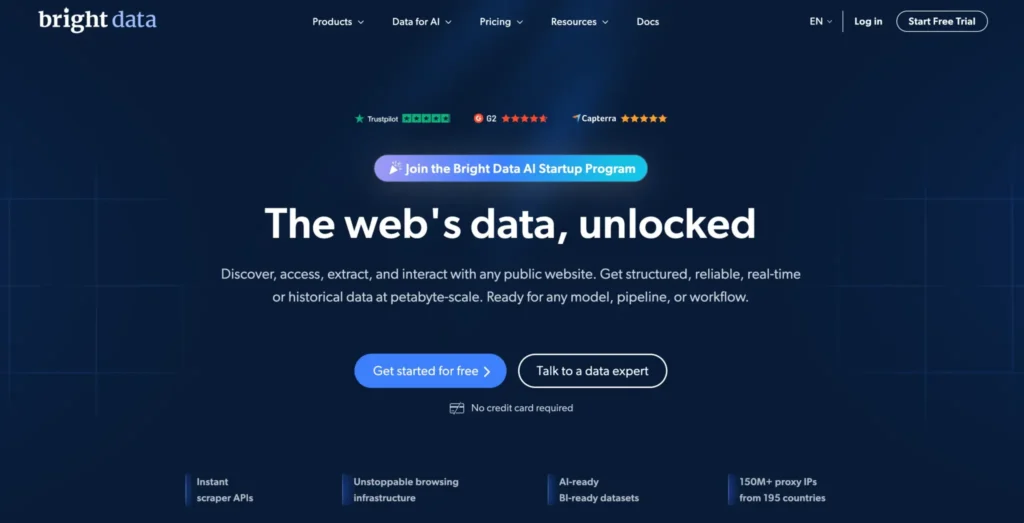
Bright Data is the heavyweight option for serious anonymity workflows. It is not the cheapest provider, and it does not try to be.
Its strength is scale, targeting depth, compliance controls, and the ability to handle complex use cases without forcing teams to stitch together five different tools.
For online anonymity, Bright Data works best when you need residential IPs that look natural across many regions. The provider offers one of the largest residential proxy pools in the industry, with targeting by country, city, ZIP code, carrier, and ASN.
That level of control matters when you are testing localized pages, checking ad placements, monitoring SERPs, or verifying how a site behaves for real users in specific locations.
The platform also gives you rotating and sticky session options. Rotation is useful when you need a fresh identity across requests.
Sticky sessions are better when you need continuity, such as logging into a dashboard, browsing a multi-step flow, or testing checkout behavior.
The main drawback is cost and complexity. Bright Data can feel like too much machine for a simple browser anonymity setup. If you only need a few residential IPs for light research, you may pay for features you do not fully use.
Pro-Tip: Bright Data makes the most sense when anonymity is tied to commercial workflows like ad verification, brand protection, price intelligence, SERP monitoring, and large-scale public data collection.
Who Should Use Bright Data?
Choose Bright Data if you need premium proxy infrastructure, deep location targeting, high compliance standards, and enough scale to run demanding projects without constantly changing providers.
2. Oxylabs: Best for Premium Proxy Quality and Large Teams
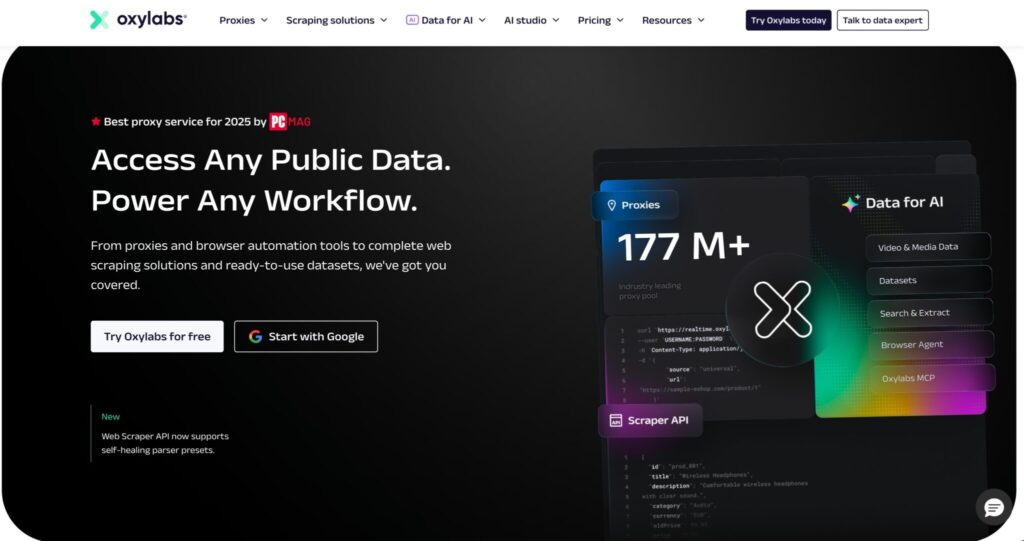
Oxylabs sits in the same premium category as Bright Data, but it feels slightly more focused on high-quality data access and enterprise workflows. Its residential proxy network is large, clean, and built for businesses that cannot afford unstable routing.
For online anonymity, Oxylabs is strong because it combines a massive residential pool with automatic scaling and advanced targeting. That helps users avoid patterns that make proxy activity look artificial.
When a provider has better IP diversity and cleaner routing, your requests are less likely to bunch up around suspicious ranges.
Oxylabs supports residential, mobile, ISP, and datacenter proxies. Residential proxies are the safest choice for anonymity because websites see traffic coming from real consumer networks. ISP proxies are useful when you need better speed and longer sessions while still keeping a more trusted IP profile than standard datacenter proxies.
The interface is polished, but the service is clearly built for business users. Smaller buyers may find the entry price higher than budget competitors. Still, if anonymity supports revenue-critical work, paying extra for quality is often cheaper than dealing with bans, failed requests, or unreliable sessions.
Pro-Tip: Use residential proxies for high-trust browsing and geo-testing. Use ISP proxies when you need longer, more stable sessions without changing IPs too often.
Who Should Use Oxylabs?
Oxylabs is a good fit for SEO teams, data teams, market research companies, cybersecurity teams, and agencies that need reliable anonymous access across many countries.
3. Decodo: Best Value Proxy Provider for Online Anonymity
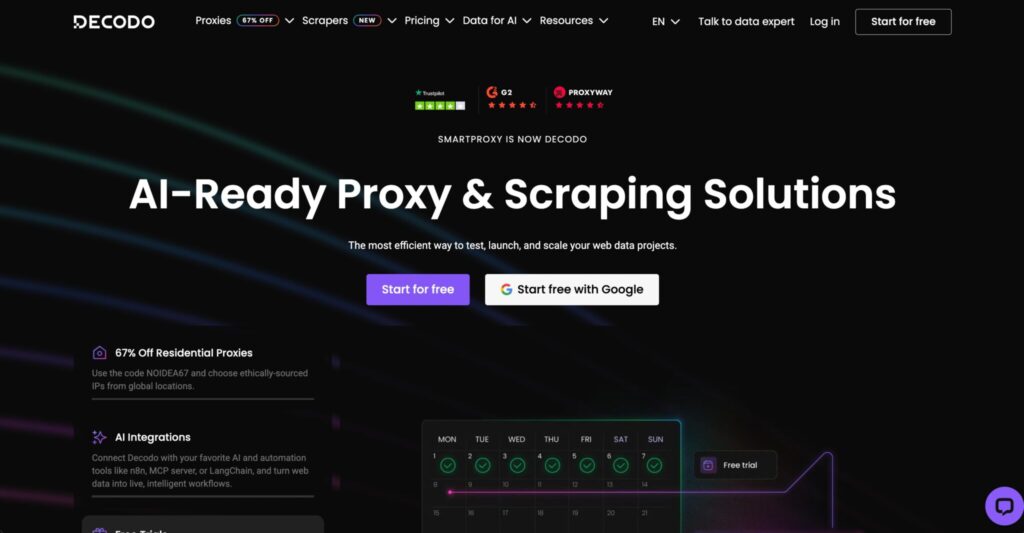
Decodo, formerly known as Smartproxy, has become one of the most attractive proxy providers for users who want strong anonymity without enterprise-level pricing shock. It offers a good mix of residential proxies, mobile proxies, ISP proxies, datacenter proxies, browser tools, and scraping features.
The main reason Decodo works well for anonymity is usability. Some proxy platforms feel like they were designed only for backend engineers.
Decodo is easier for marketers, SEOs, affiliate teams, and growth teams to understand. You can create endpoints, choose locations, set session behavior, and connect with common tools without fighting the dashboard.
Its residential proxy pool is large enough for most professional use cases. You get access to real-user IPs across many countries, with rotating and sticky session support.
That makes it useful for anonymous browsing, localized SERP checks, competitor research, ad verification, and account-safe workflows where IP reputation matters.
Decodo also has a strong price-to-performance position. It is not always the absolute cheapest, but it often gives a better balance than ultra-budget networks.
Cheap proxies can look tempting until you spend three hours troubleshooting blocks. Decodo usually feels like a safer middle ground.
Pro-Tip: If you are buying proxies for the first time, Decodo is one of the easier providers to test before committing to a larger enterprise platform.
Who Should Use Decodo?
Decodo is ideal for affiliate marketers, SEO professionals, ad verification teams, researchers, and small businesses that want strong anonymity features without a heavy technical learning curve.
4. SOAX: Best for Precise Geo-Targeting and Session Control
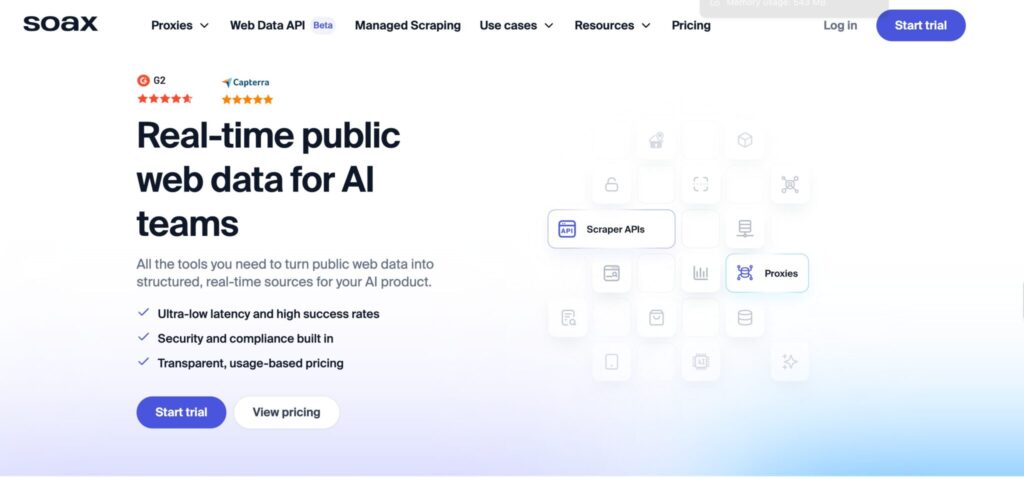
SOAX is built for users who care about clean targeting. If your anonymity workflow depends on appearing from a very specific country, city, carrier, or network type, SOAX deserves a close look.
The provider offers residential, mobile, and US datacenter proxies, with a large residential network across many countries. Its biggest advantage is control. You can filter locations, manage sessions, rotate IPs, and set up proxy access through a clean dashboard.
For online anonymity, SOAX is especially useful when you need to avoid looking generic. A random IP from a random country may work for basic access, but it is not always ideal for professional testing.
If you are checking how a website behaves for a user in London, Mumbai, Toronto, or Berlin, you need a proxy provider that can place you closer to that audience.
SOAX also supports modern protocols, including SOCKS5 and UDP/QUIC on residential proxies. That gives more flexibility for advanced users and teams that need protocol-specific setups.
The downside is that SOAX may feel slightly more expensive than budget-first providers, especially for casual users. But for serious geo-targeted anonymity, the extra control can be worth it.
Pro-Tip: Use SOAX when location accuracy matters more than the cheapest possible GB price. Better targeting often improves success rates and reduces wasted traffic.
Who Should Use SOAX?
SOAX is best for teams doing ad verification, localized browsing tests, SERP tracking, market research, and web data collection where location accuracy is important.
5. NetNut: Best for Stable Business Anonymity Workflows
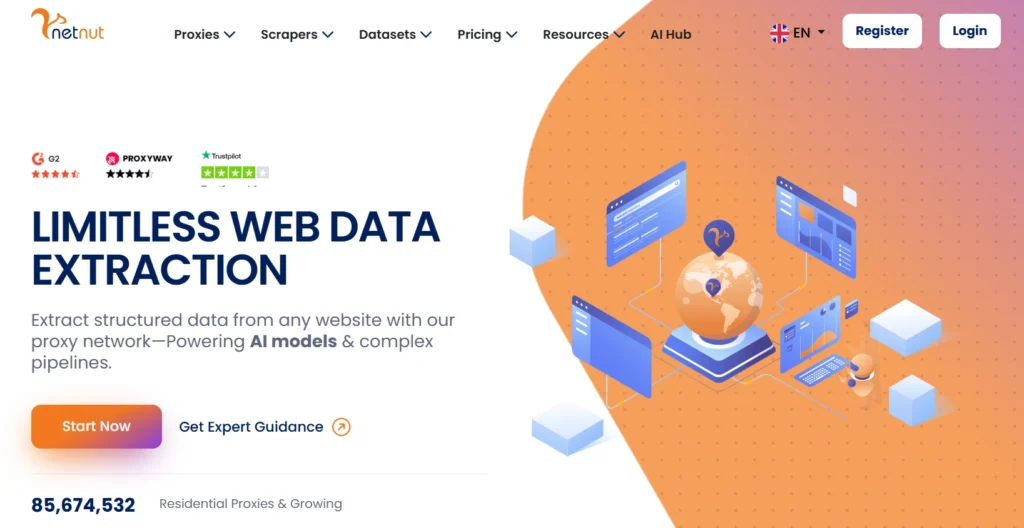
NetNut is a strong pick when anonymity needs to stay stable over longer sessions. Many residential proxy networks rely heavily on peer-to-peer routing, where availability can change depending on user devices.
NetNut’s positioning is different. It focuses heavily on ISP-based connectivity, which can make sessions more predictable.
That matters for users who do not just need a random IP. They need an IP that behaves consistently enough for research, monitoring, account access, and repeated checks.
NetNut offers residential, mobile, datacenter, and static residential proxies, so you can match the proxy type with the risk level of the task.
For online anonymity, residential proxies are the safer default. They blend better with normal user traffic. Static residential proxies are useful when you need longer identity consistency.
Datacenter proxies are faster and cheaper, but they are easier for websites to detect because they come from hosting networks.
NetNut is not the cheapest provider on this list, but it is practical for teams that care about uptime, routing stability, and fewer interruptions.
Pro-Tip: Use NetNut static residential proxies for workflows where frequent IP changes can create suspicion, such as dashboard checks, account-based research, or long-form browsing sessions.
Who Should Use NetNut?
NetNut is best for agencies, research teams, eCommerce monitoring teams, cybersecurity teams, and businesses that want anonymity with stable infrastructure behind it.
6. IPRoyal: Best Budget Proxy Option with Non-Expiring Traffic
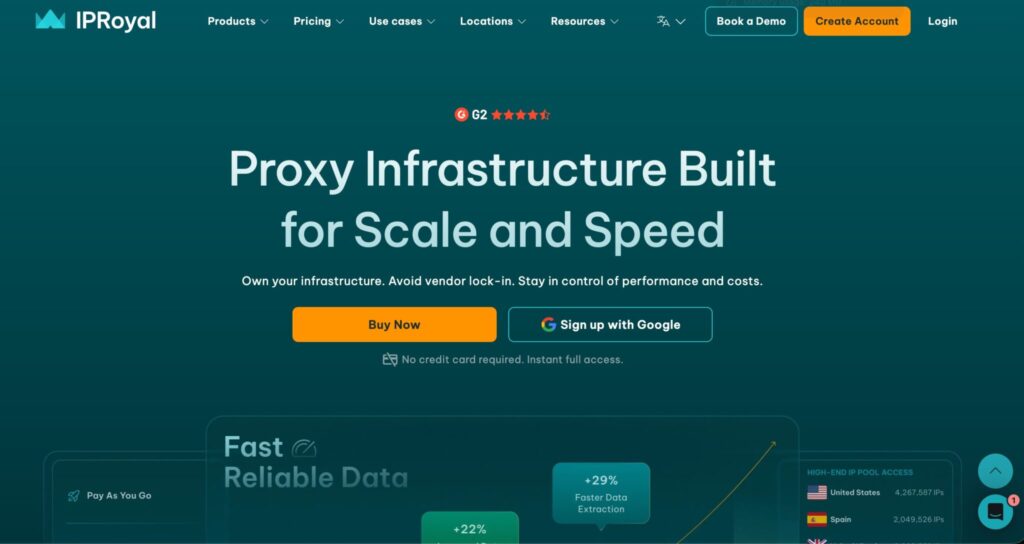
IPRoyal is a smart choice for buyers who want residential anonymity without locking themselves into heavy monthly usage. One of its biggest advantages is non-expiring residential traffic.
That is useful if your proxy usage is irregular. You can buy traffic, use it slowly, and avoid wasting unused bandwidth at the end of the month.
The provider offers residential, ISP, mobile, datacenter, and sneaker proxies. For online anonymity, its residential and ISP proxies are the most relevant.
Residential proxies are good for general anonymous browsing, geo-testing, and research. ISP proxies are better when you need speed and longer sessions.
IPRoyal’s proxy pool is smaller than Bright Data, Oxylabs, or SOAX, but that is not always a deal-breaker. If your work does not require massive scale or hundreds of simultaneous locations, IPRoyal can be a very cost-effective option.
The dashboard is simple, and setup is friendly enough for beginners. You can use HTTP, HTTPS, and SOCKS5, which gives flexibility across browsers, automation tools, and proxy managers.
Pro-Tip: IPRoyal is a good option for small teams that do not use proxies daily. Non-expiring traffic helps reduce wasted spend.
Who Should Use IPRoyal?
IPRoyal is best for freelancers, small SEO teams, affiliate marketers, light researchers, and buyers who want affordable anonymous access without complicated contracts.
7. Webshare: Best Low-Cost Proxy Provider for Beginners
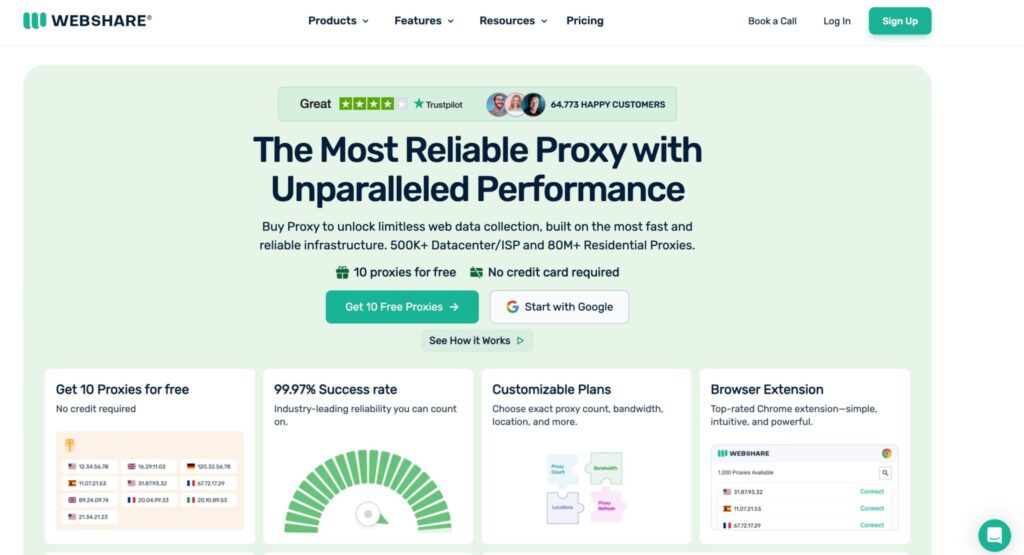
Webshare is one of the easiest providers to recommend to beginners because it keeps proxy buying simple. It offers datacenter proxies, static residential proxies, and rotating residential proxies.
You can start small, test the service, and scale only when you understand your traffic needs.
For anonymity, Webshare’s rotating residential proxies are more useful than its standard datacenter proxies. Residential IPs look more natural because they come from consumer networks.
Datacenter proxies are still useful for speed-focused jobs, but they carry a higher detection risk.
Webshare also supports SOCKS5 across plans, which is a nice advantage for users who want more than basic HTTP proxy support.
The platform is clean, pricing is accessible, and the free proxy plan can help new users understand setup before spending money.
The trade-off is that Webshare is not as advanced as providers like Bright Data or Oxylabs.
You should not expect the same level of enterprise tooling, managed support, or ultra-granular targeting.
But for affordable anonymous browsing and entry-level proxy workflows, it does the job well.
Pro-Tip: Start with Webshare if you are learning proxy setup. Once you know your real traffic volume, move to a larger residential provider only if your use case demands it.
Who Should Use Webshare?
Webshare is best for beginners, solo marketers, small teams, and users who want simple anonymous proxy access without paying premium provider rates.
8. Proxy-Seller: Best for Cheap Rotating Residential Proxies
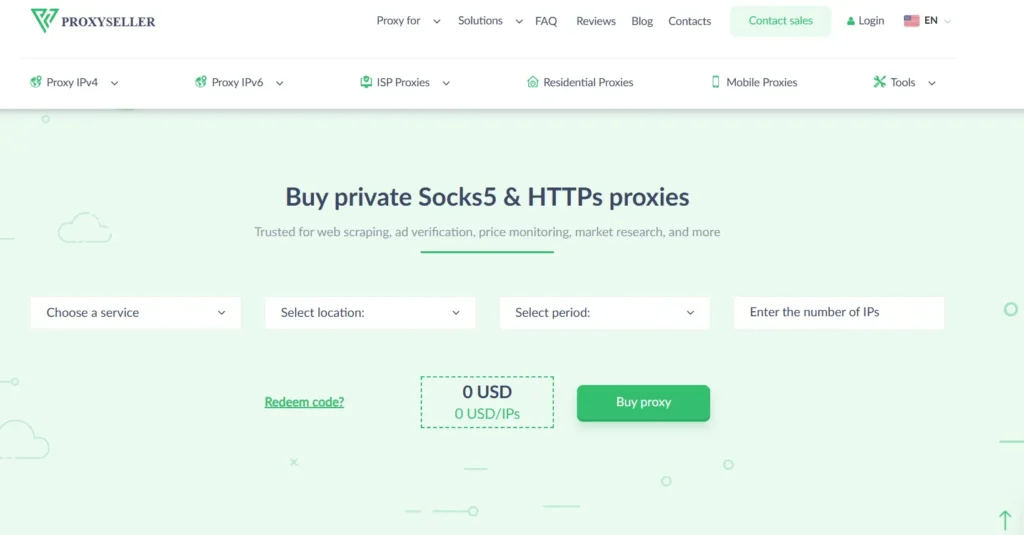
Proxy-Seller is a flexible budget provider with residential, mobile, ISP, datacenter, and IPv6 proxy options. Its residential pricing is especially aggressive, making it attractive for users who need rotating IP access at a lower cost.
For online anonymity, Proxy-Seller works best when you need basic rotation, country coverage, and affordable bandwidth. It supports rotation by time, by request, and sticky sessions, which gives enough control for common anonymity tasks.
The provider is not as polished as enterprise-first platforms, but it gives solid flexibility for the price. If you are running simple SEO checks, browsing tests, light scraping, or market research, Proxy-Seller can be a practical choice.
The main caution is quality consistency. With cheaper proxy providers, you should always test before committing to larger volumes. Check success rates, speeds, CAPTCHA frequency, and blocked requests against your own target sites.
Pro-Tip: Buy a small amount of traffic first. Test the exact websites, locations, and tools you plan to use. Proxy quality is always use-case specific.
Who Should Use Proxy-Seller?
Proxy-Seller is best for budget-conscious users who need rotating residential proxies, basic anonymity, and flexible proxy types without enterprise pricing.
How to Choose the Best Proxy for Online Anonymity
Buying proxies gets easier when you stop asking, “Which provider is best?” and start asking, “Which proxy behavior fits my use case?”
1. Choose the Right Proxy Type
Residential proxies are the safest default for anonymity. They use IPs associated with real internet users, so websites usually treat them as more natural than datacenter IPs.
Mobile proxies are even more trusted in many cases because mobile carrier IPs are shared by many users.
They are useful for social media, mobile app testing, and high-trust browsing, but they cost more.
ISP proxies sit between residential and datacenter proxies. They are fast and stable like datacenter proxies, but they are issued by internet service providers. This makes them useful for longer sessions.
Datacenter proxies are cheap and fast, but they are easier to detect. Use them for low-risk tasks, not sensitive anonymity workflows.
2. Look Beyond IP Pool Size
A large IP pool helps, but it does not guarantee better anonymity. What matters is the mix of IPs, location availability, subnet diversity, and how often the same ranges are abused.
A smaller clean pool can outperform a giant overused one. Always test the provider against your actual websites before buying a large plan.
3. Understand Rotation Protocols
Rotation controls how often your IP changes.
Per-request rotation gives you a fresh IP on every request. This is useful for scraping, SERP checks, and broad data collection.
Time-based rotation changes your IP after a set period, such as every 1, 5, 10, or 30 minutes. This is useful for browsing tasks where too much rotation can look unnatural.
Sticky sessions keep the same IP for a longer period. Use this for logins, carts, dashboards, account research, and multi-step browsing flows.
The wrong rotation setup can ruin anonymity. If your IP changes every few seconds during a login session, it looks suspicious. If your IP never changes during high-volume crawling, it also looks suspicious.
4. Check Protocol Support
HTTP and HTTPS are enough for most browser and web scraping tasks. SOCKS5 gives more flexibility because it can handle more traffic types and usually works well with browsers, apps, and automation tools.
If you need advanced traffic handling, SOCKS5 support should be on your checklist.
5. Match Location Targeting With Your Task
Country-level targeting is enough for general browsing. City-level targeting is better for local SERP tracking, ad verification, and regional testing. Carrier targeting matters for mobile workflows.
Do not overpay for targeting you do not need. But if your work depends on local accuracy, cheap country-level proxies may not be enough.
Best Proxy Recommendations by Use Case
| Use Case | Best Proxy Type | Recommended Providers |
|---|---|---|
| Anonymous browsing | Residential or ISP | Decodo, IPRoyal, Webshare |
| Enterprise anonymity | Residential, ISP, mobile | Bright Data, Oxylabs, NetNut |
| Geo-targeted testing | Residential or mobile | SOAX, Bright Data, Oxylabs |
| Budget proxy use | Residential or datacenter | Webshare, Proxy-Seller, IPRoyal |
| Long sessions | ISP or sticky residential | NetNut, Oxylabs, Decodo |
| SEO monitoring | Rotating residential | Decodo, SOAX, Bright Data |
| Ad verification | Residential or mobile | Bright Data, SOAX, Oxylabs |
| Light scraping | Rotating residential | Webshare, Proxy-Seller, IPRoyal |
FAQs About Proxies for Online Anonymity
1. What is the best proxy type for online anonymity?
Residential proxies are usually the best option for online anonymity because they use IP addresses linked to real internet connections. They look more natural than datacenter proxies and are less likely to get flagged.
2. Are proxies better than VPNs for anonymity?
Proxies are better for task-level anonymity, automation, geo-testing, and managing multiple sessions. VPNs are easier for full-device privacy. If you need browser-level or tool-level IP control, proxies are more flexible.
3. Can proxies make me completely anonymous online?
No proxy can make you completely anonymous. Websites can still use cookies, browser fingerprints, device signals, account history, and behavior patterns. Proxies hide or change your IP, but they do not erase every tracking signal.
4. Are free proxies safe for anonymity?
Free proxies are usually a bad idea. They can be slow, abused, blocked, or unsafe. Some may log traffic or inject unwanted ads. For serious anonymity, use a reputable paid provider.
5. What is the difference between rotating and sticky proxies?
Rotating proxies change IPs automatically. Sticky proxies keep the same IP for a set time. Rotating proxies work well for scale. Sticky proxies work better for browsing sessions, logins, and multi-step tasks.
6. Do SOCKS5 proxies offer better anonymity?
SOCKS5 does not automatically make you anonymous, but it gives more flexibility than standard HTTP proxies. It can support different traffic types and is useful for advanced browser, app, and automation setups.
7. Which proxy provider is best for beginners?
Webshare and Decodo are good beginner-friendly options. Webshare is cheaper and simpler. Decodo offers better overall features and a smoother experience for professional users.
8. Which proxy provider is best for businesses?
Bright Data, Oxylabs, and NetNut are stronger choices for business users. They offer larger networks, better infrastructure, and more professional controls for teams.
Final Buying Advice
The best proxy for online anonymity depends on how serious your workflow is.
If you want the most powerful infrastructure, choose Bright Data or Oxylabs. If you want a balanced option that is easier to use, choose Decodo. If location accuracy matters, SOAX is a strong pick. If stable sessions matter, look at NetNut. If your budget is tight, IPRoyal, Webshare, and Proxy-Seller are practical starting points.
The smartest move is to test before scaling. Buy a small plan, run your real workflow, check blocks, speed, CAPTCHA rates, and session stability. Proxy marketing pages can look similar. Real performance shows up only when your own tools and target sites are involved.