
Best Proxies For Online Monitoring.
Online monitoring sounds simple until you run it at scale.
Checking your brand mentions, tracking competitor prices, verifying ads, watching SERPs, monitoring product availability, testing regional content, and collecting public market signals all depend on one thing: access that does not break halfway through the job.
That is where proxies become important. Not because they are magic. They are not. A proxy is simply the layer between your monitoring tool and the websites you need to check. But the quality of that layer decides whether your reports are accurate, delayed, blocked, or full of messy gaps.
For online monitoring, the best proxy setup is not always the largest pool or the cheapest plan. You need the right IP type, clean rotation logic, stable sessions, geo-targeting, and enough control to avoid looking like a noisy bot.
A price tracking workflow may need rotating residential IPs. A login-protected dashboard test may need ISP proxies. A bulk uptime-style monitor may work fine with datacenter IPs. A mobile ad verification task may require real mobile IPs.
This guide breaks down the best proxy providers for online monitoring, compares them across practical buying factors, and shows you how to choose based on IP pools, rotation protocols, session control, and real operational needs.
Quick Comparison Table: Best Proxies For Online Monitoring
| Provider | Best For | Proxy Types | IP Pool Strength | Rotation Control | Geo Targeting | Best Use Case |
|---|---|---|---|---|---|---|
| Bright Data | Enterprise monitoring | Residential, datacenter, ISP, mobile | Very large global pool | Advanced | Country, city, ASN, ZIP-level options | Brand, ad, SERP, and price intelligence |
| Oxylabs | Large-scale data operations | Residential, datacenter, ISP, mobile | Enterprise-grade pool | Strong | City and country-level targeting | Market monitoring and web intelligence |
| Decodo | Balanced performance and usability | Residential, static residential, mobile, datacenter | Large global pool | Flexible sessions | 195+ locations | SEO, ecommerce, and ad checks |
| SOAX | Granular geo monitoring | Residential, mobile, ISP, datacenter | Strong global residential reach | Sticky and rotating | Country, city, ISP, ASN options | Localized monitoring campaigns |
| NetNut | Stable ISP-style monitoring | Residential, static residential, mobile | Strong direct ISP model | Stable sessions | Broad global coverage | Long-session monitoring |
| IPRoyal | Affordable monitoring setups | Residential, ISP, datacenter, mobile | Mid-sized but practical | Flexible | Country and city targeting | SMB monitoring and SEO checks |
| Webshare | Budget-friendly proxy operations | Datacenter, static residential, rotating residential | Good coverage for cost | Basic to moderate | Global coverage | Lightweight monitoring and testing |
| Rayobyte | Datacenter and ISP-heavy workflows | Residential, ISP, datacenter | Reliable business-focused pool | Good | Useful location options | Infrastructure and ecommerce checks |
| DataImpulse | Low-cost public data monitoring | Residential, mobile, datacenter | Large pool for the price | Simple | Country and advanced filters | Lean teams watching public data |
| Infatica | Compliance-minded monitoring | Residential, mobile, datacenter | Solid residential network | Practical controls | Multiple location options | Market research and brand tracking |
1. Bright Data: Best Overall For Enterprise Online Monitoring
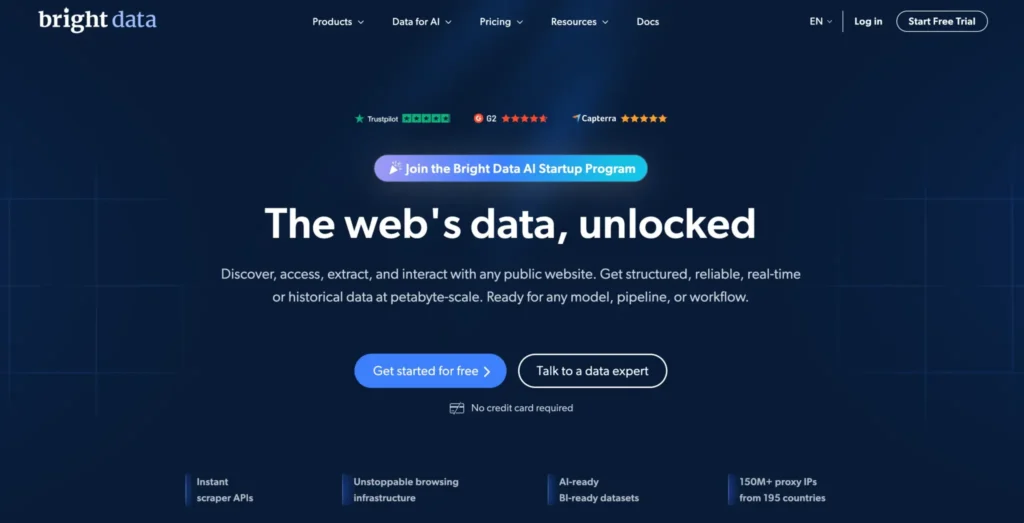
Bright Data is the provider I would look at first when the monitoring job is serious, global, and tied to business-critical reporting. It offers residential, mobile, datacenter, and ISP proxies, which means you can build separate monitoring flows instead of forcing every task through one proxy type.
For online monitoring, that flexibility matters. A brand protection team might need residential IPs to check public marketplace pages across countries. A paid media team may need mobile proxies to verify mobile ad placements. A technical team may use datacenter IPs for high-speed checks where reputation is less sensitive.
The biggest advantage is control. Bright Data gives advanced targeting options and strong session handling, which helps when you need repeatable monitoring results by location. If your report says a product price changed in a specific city or a regional ad is missing, you need confidence in the location signal.
The downside is cost and complexity. Bright Data can feel heavy for small teams that only need basic tracking. It is better suited for teams with recurring monitoring volume, technical setup needs, and a real reason to pay for premium infrastructure.
Pro Tip: Use Bright Data when accuracy matters more than lowest cost. For regulated, brand-sensitive, or executive-facing reports, cleaner access is worth more than saving a few dollars per GB.
2. Oxylabs: Best For Large-Scale Monitoring Pipelines
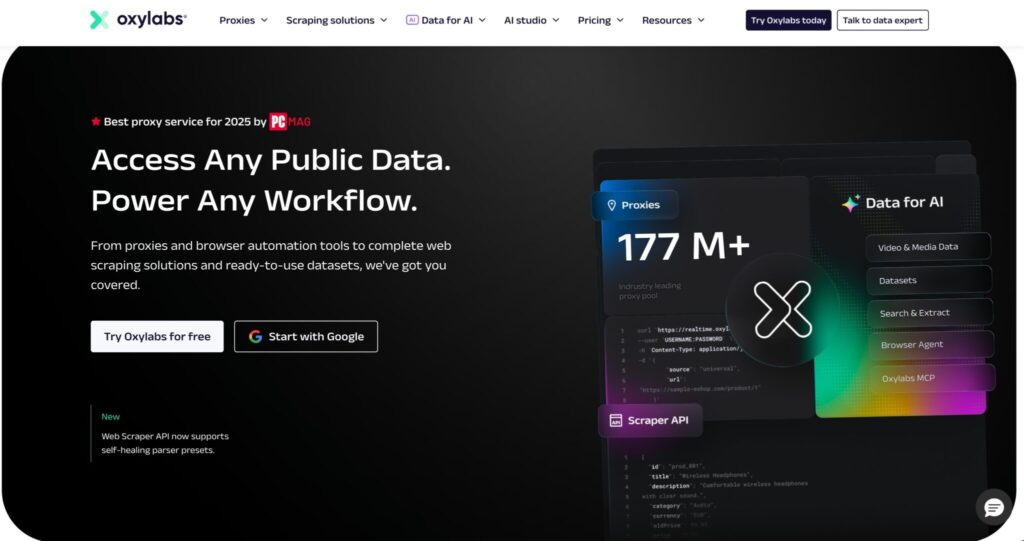
Oxylabs is built for teams that collect public web data at scale. It offers a strong proxy portfolio and pairs it with scraping-focused tools, which makes it useful for monitoring projects that go beyond simple page checks.
For online monitoring, Oxylabs works well when you need consistency across large request volumes. Think competitor catalog monitoring, search result visibility, public review tracking, marketplace intelligence, or regional content checks. Its residential pool is large, and its datacenter infrastructure is useful for fast, lower-risk targets.
Oxylabs also has a strong enterprise feel. The product is not just “buy proxies and figure it out.” It is positioned around data collection operations, which can help teams that want proxy infrastructure plus support for scraping workflows.
It may not be the cheapest choice for small projects. If you only need a few thousand checks per month, Oxylabs can feel like too much machine. But for teams running monitoring as an ongoing system, it gives you room to scale without rebuilding your stack.
Pro Tip: Use residential proxies for sensitive targets and datacenter proxies for lightweight, high-frequency checks. Mixing proxy types can cut costs without hurting reliability.
3. Decodo: Best Balanced Proxy Provider For Monitoring Teams
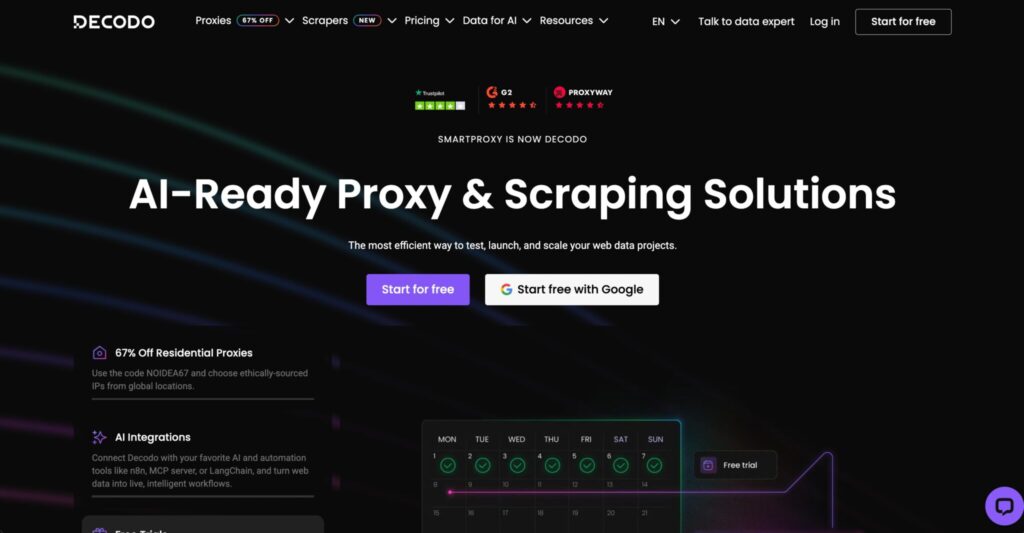
Decodo, formerly Smartproxy, sits in a sweet spot between power and usability. It offers residential, static residential, mobile, and datacenter proxies, with a dashboard that is easier to work with than many enterprise-first platforms.
For online monitoring, Decodo is a strong fit for SEO visibility tracking, ecommerce monitoring, public data collection, and ad verification. Its large global network gives teams enough location spread for most campaigns, while its session controls make it practical for tools that need either rotating IPs or sticky sessions.
The main benefit is balance. You get serious proxy coverage without feeling like you need a full infrastructure team to operate it. That makes it attractive for agencies, affiliate teams, ecommerce analysts, and SEO teams that monitor many regions but still care about setup speed.
Decodo is not always the cheapest at higher scale, and enterprise users may still compare it against Bright Data or Oxylabs. But for many monitoring teams, it offers enough performance without unnecessary friction.
Pro Tip: For SERP and ecommerce monitoring, test both rotating and sticky sessions. Some targets behave better with a fresh IP per request, while others prefer short session consistency.
4. SOAX: Best For Granular Geo-Targeted Monitoring
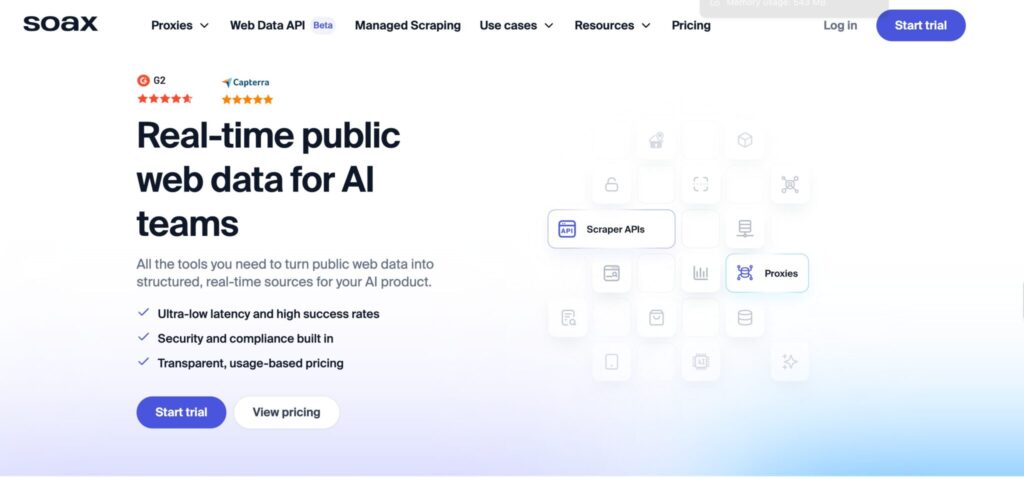
SOAX is a strong choice when location accuracy is central to your monitoring work. It supports residential, mobile, ISP, and datacenter proxies, with useful targeting controls across countries, cities, ISPs, and ASNs.
That makes SOAX especially useful for regional monitoring. If you need to see how a product page, ad, search result, or offer appears from a specific market, broader country targeting may not be enough. City-level or ISP-level targeting can make your data more practical.
SOAX also fits teams that want a cleaner interface and flexible setup rather than a purely developer-heavy experience. It is a good option for ad verification, brand monitoring, travel pricing checks, local SEO checks, and marketplace tracking.
Its pricing and plan structure should be reviewed carefully before scaling. Like most residential proxy providers, costs can climb quickly if your monitoring system is not optimized. Cache what you can, avoid repeat checks that add no value, and design your crawl schedule properly.
Pro Tip: Use sticky sessions for workflows that compare multiple pages in one region. Use rotating sessions when you need broad sampling without tying activity to one exit IP.
5. NetNut: Best For Stable Long-Session Monitoring
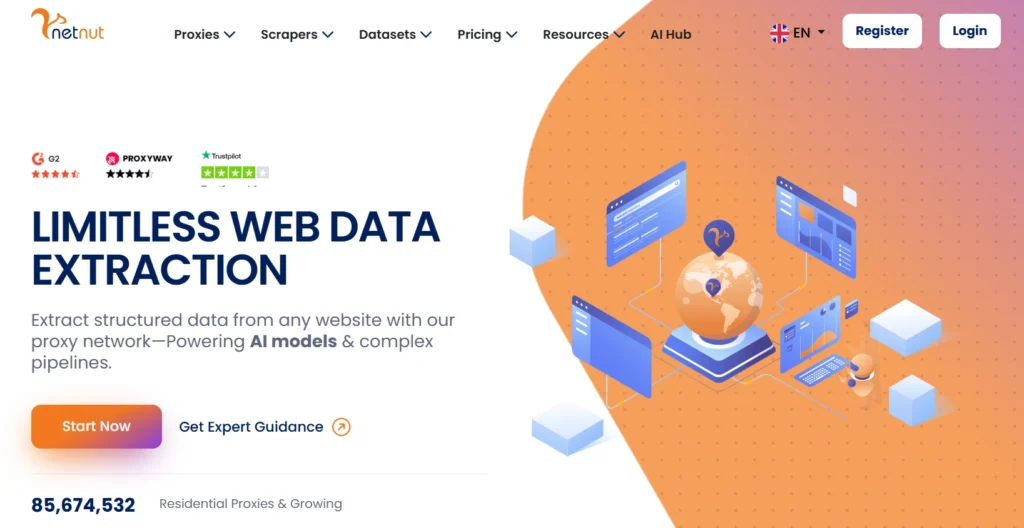
NetNut is different from many peer-to-peer residential proxy providers because of its direct ISP connectivity model. For online monitoring, that can be useful when stability is more important than constant IP rotation.
This makes NetNut a strong fit for tasks that need persistent sessions, lower random disconnects, and steady access patterns. Examples include account-based monitoring where allowed, public dashboards, recurring checks from the same region, ad verification, SEO monitoring, and competitive intelligence workflows.
NetNut also offers residential, static residential, and mobile proxies, so teams can pick the level of stability and realism they need. Static residential proxies are especially useful when your workflow needs the same IP identity for longer periods.
The tradeoff is that NetNut may be less attractive for small teams looking for the lowest entry price. It is better for businesses that value reliable monitoring infrastructure and can justify the cost through recurring data operations.
Pro Tip: Use NetNut when failed sessions are more expensive than bandwidth. If broken monitoring creates bad reports or manual cleanup, stability should win.
6. IPRoyal: Best Affordable Option For Small Monitoring Teams
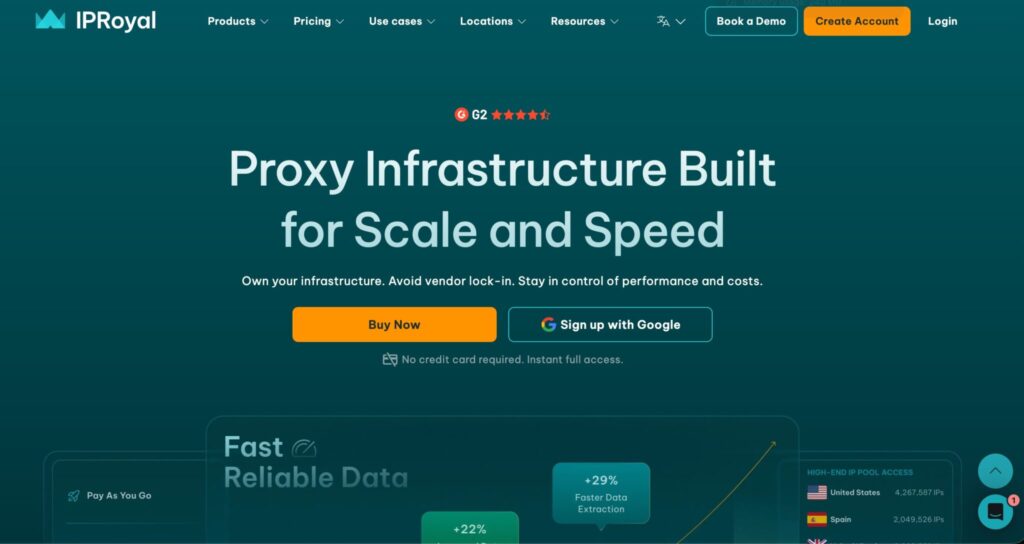
IPRoyal is a practical choice for smaller teams, solo operators, and agencies that want residential, ISP, datacenter, and mobile proxies without jumping straight into enterprise pricing.
It works well for basic online monitoring tasks like local SEO checks, lightweight price tracking, competitor page checks, public review monitoring, and regional content testing. The interface is approachable, and the pricing model is friendly for teams that want to start small.
The residential pool is not as large as the biggest enterprise providers, but size is not everything. For many monitoring jobs, you need enough clean IPs in the right regions, not the largest pool on the market.
IPRoyal’s ISP proxies are also useful for long-session work where you want the speed of datacenter-style infrastructure with stronger legitimacy than standard datacenter IPs. That can help with stable monitoring tasks that should not rotate on every request.
Pro Tip: Start with a smaller residential plan and measure success rate by target. Do not buy huge bandwidth upfront until you know your target sites, regions, and rotation settings.
7. Webshare: Best Budget Pick For Lightweight Monitoring
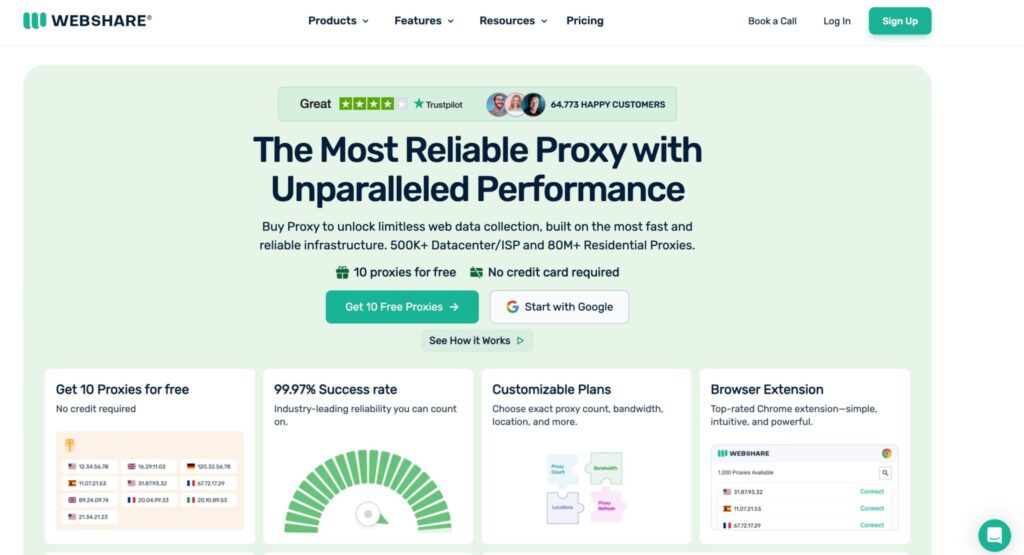
Webshare is one of the more accessible proxy providers for teams that want affordable infrastructure. It offers datacenter proxies, static residential proxies, and rotating residential proxies, which covers most basic monitoring needs.
For online monitoring, Webshare is a strong option when your targets are not highly protected or when you need affordable testing across regions. It can work well for QA checks, simple public page monitoring, price checks on less restrictive websites, and infrastructure-style tasks where datacenter IPs are enough.
The major appeal is pricing and simplicity. You can start small, test quickly, and avoid heavy enterprise contracts. This makes Webshare attractive for startups, developers, and agencies that need practical proxy access without overbuying.
The limitation is that it does not offer the same level of managed scraping tools, premium support, or advanced enterprise controls as providers like Bright Data or Oxylabs. For complex monitoring systems, that gap may matter.
Pro Tip: Use Webshare datacenter proxies for speed-first checks, then move difficult targets to rotating residential or static residential IPs only when needed.
8. Rayobyte: Best For Datacenter And ISP Monitoring Workloads
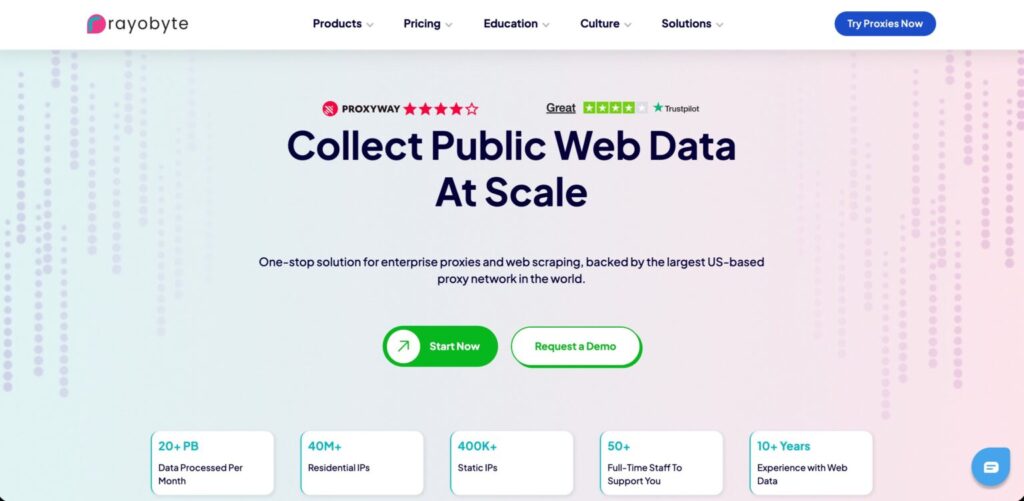
Rayobyte has a strong reputation in datacenter proxies and also offers residential and ISP proxy products. It is a good fit for monitoring teams that care about predictable infrastructure, dedicated options, and business-friendly proxy setups.
For online monitoring, Rayobyte works well for ecommerce checks, public page monitoring, infrastructure testing, regional access checks, and competitor monitoring on targets that do not require massive residential rotation. Its ISP proxy options can be valuable when you want a blend of stability and residential-like trust.
Rayobyte is not always the first name for huge global residential pools, but that is not necessarily a weakness. Many monitoring workflows are better served by reliable, controlled IPs than by endless rotation.
The best use case is a team that understands its targets and wants stable proxy infrastructure rather than a giant one-size-fits-all pool.
Pro Tip: If you monitor the same targets daily, test ISP proxies before residential rotation. A stable IP pattern can sometimes perform better than constant random switching.
9. DataImpulse: Best Low-Cost Proxy Option For Public Data Monitoring
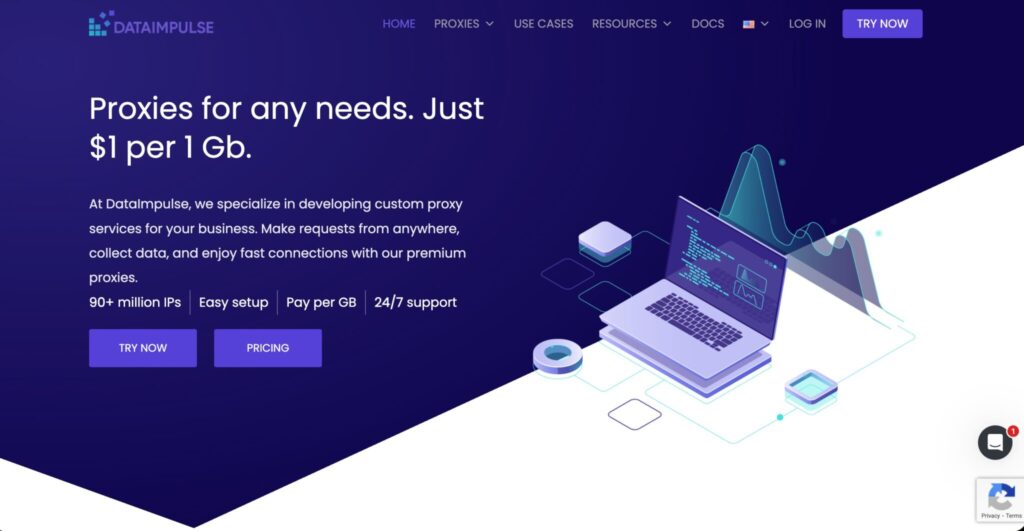
DataImpulse is attractive for teams that want low-cost residential proxy bandwidth and a simple setup. It offers a large IP pool and pay-per-GB style access, which makes it interesting for lean monitoring systems.
For online monitoring, DataImpulse can work well for public price checks, market research, content availability checks, and early-stage data pipelines. The lower cost makes it easier to test more regions and targets without a large upfront commitment.
The tradeoff is that budget providers may require more hands-on testing. You should measure success rates, latency, and block rates by target. A cheap GB is only cheap if the data comes back clean.
DataImpulse is a strong option for teams that are still validating their monitoring model and do not want to lock into premium pricing too early.
Pro Tip: Track cost per successful request, not cost per GB. That number tells you whether a budget provider is actually saving money.
10. Infatica: Best For Compliance-Minded Monitoring
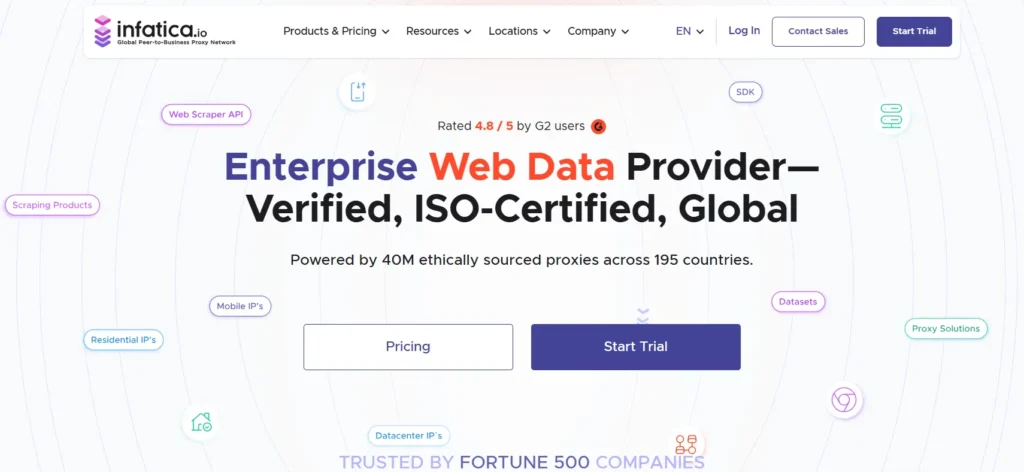
Infatica positions itself around ethically sourced residential proxies and business data collection. For teams that care about proxy sourcing, compliance posture, and reliable public-data access, it deserves a look.
For online monitoring, Infatica can support brand tracking, market research, SEO checks, public content monitoring, and ecommerce intelligence. It may not be as dominant in brand recognition as Bright Data or Oxylabs, but it offers a serious alternative for teams that want residential access with a compliance-aware angle.
Infatica is best suited for teams that do not just ask, “Will this proxy work?” but also ask, “Can we defend how we collected this public data?” That question is becoming more important as companies tighten vendor review processes.
Pro Tip: Ask every proxy vendor about sourcing, consent, acceptable use, and compliance controls. The answer matters, especially for brand monitoring and enterprise clients.
How To Choose The Best Proxy For Online Monitoring
Match Proxy Type To The Monitoring Task
Residential proxies are best for sensitive public websites where datacenter IPs get blocked quickly. Datacenter proxies are best for speed, cost control, and lower-risk checks. ISP proxies are ideal when you need stable sessions with stronger trust than datacenter IPs. Mobile proxies are best for mobile ads, app testing, and mobile-only regional experiences.
Do not run every workflow through the most expensive proxy type. That is how monitoring costs get out of control.
Study The IP Pool, Not Just The Pool Size
A provider may advertise millions of IPs, but your workflow may only need clean IPs in five countries. Check location depth, ASN diversity, city coverage, and how often IPs repeat.
For online monitoring, diversity is important because repeated access from the same small set of IPs can distort results or trigger blocks.
Understand Rotation Protocols
Rotation decides when your exit IP changes. Common options include rotating every request, rotating after a set time, or keeping sticky sessions for several minutes.
For price monitoring, rotating per request can help sample more naturally. For multi-page workflows, sticky sessions are usually better. For login-based or account-permitted monitoring, static or ISP proxies may be safer and more stable.
Measure Success Rate By Target
Do not judge proxies only by speed tests. The real question is: how many successful responses do you get from your actual target sites?
Track HTTP status codes, CAPTCHA frequency, timeout rate, median latency, and cost per successful result. This will reveal the real winner faster than any marketing page.
Check Compliance And Acceptable Use
Good proxy buying is not only technical. Make sure your monitoring use case follows laws, site terms, privacy rules, and the vendor’s acceptable use policy. Stick to public data, avoid restricted systems, and do not use proxies for spam, abuse, credential attacks, or anything that harms platforms or users.
FAQs: Best Proxies For Online Monitoring
1. What are the best proxies for online monitoring?
The best proxies depend on your use case. Bright Data and Oxylabs are strong for enterprise monitoring. Decodo and SOAX are great for balanced geo-targeted monitoring. IPRoyal, Webshare, and DataImpulse are better for smaller budgets.
2. Are residential proxies better for monitoring?
Residential proxies are better for sensitive targets because they use ISP-assigned IPs associated with real locations. They are useful for price monitoring, SERP tracking, ad verification, and brand monitoring. Datacenter proxies are still better for speed and cost when targets are less restrictive.
3. Should I use rotating or sticky proxies?
Use rotating proxies when you need broad sampling and lower repetition. Use sticky proxies when your workflow needs continuity across several pages. For long sessions, ISP or static residential proxies may work better.
4. Which proxy type is best for price monitoring?
Residential proxies are usually the safest choice for price monitoring, especially across ecommerce sites and travel platforms. ISP proxies can also work well when you need stable sessions and lower latency.
5. Can I use datacenter proxies for online monitoring?
Yes, datacenter proxies are useful for lightweight checks, uptime-style monitoring, QA testing, and public pages that do not block aggressively. They are faster and cheaper, but easier to detect than residential or ISP proxies.
6. What should I check before buying a proxy plan?
Check IP pool quality, geo-targeting, rotation settings, supported protocols, bandwidth pricing, success rate, refund terms, support quality, and compliance standards. Always test with your real monitoring targets before scaling.
7. Are proxies legal for online monitoring?
Proxies are legal tools, but how you use them matters. Use them for lawful monitoring of public data, respect applicable rules, and avoid private, restricted, abusive, or deceptive activity.
8. Which provider is best for small teams?
IPRoyal, Webshare, and DataImpulse are good starting points for smaller teams because they offer affordable access and simpler setup. Decodo is a strong upgrade when you need better global coverage and more control.
9. Which provider is best for enterprise monitoring?
Bright Data, Oxylabs, SOAX, and NetNut are stronger choices for enterprise monitoring because they offer larger networks, advanced targeting, stronger controls, and better support for recurring data operations.
Final Take: Build Around The Workflow, Not The Brand Name
The best proxy for online monitoring is the one that gives you accurate data at a sustainable cost.
For enterprise-grade monitoring, start with Bright Data or Oxylabs. For a balanced setup, look at Decodo or SOAX. For stable long-session work, test NetNut or ISP proxies from IPRoyal and Rayobyte. For budget testing, Webshare and DataImpulse make sense. For compliance-aware public data collection, Infatica is worth reviewing.
The smartest teams do not choose one proxy and force it into every task. They build a stack. Datacenter proxies for speed. Residential proxies for sensitive public targets. ISP proxies for stable sessions. Mobile proxies for mobile-specific checks.
That is how you get cleaner monitoring data, fewer blocks, and reports your team can actually trust.