
Best Proxies For Real Estate Data Scraping
Real estate data looks clean from the outside. A listing has an address, price, bedroom count, square footage, photos, agent details, and maybe a price history. Simple enough, right? Not once you collect it at scale.
Property websites change results by ZIP code, city, device, session history, and browsing behavior. A rental page in Austin may show different listing order than the same search from Dallas. Sold-home pages may load behind filters. Map results often rely on JavaScript. Listing pages are heavy because they include images, scripts, tracking pixels, and neighborhood widgets.
That is why proxy choice matters. For real estate scraping, you do not just need random IPs. You need clean residential coverage, smart rotation, sticky sessions, local targeting, stable uptime, and enough bandwidth discipline to avoid wasting money.
This guide breaks down the best proxies for real estate data scraping, including property marketplaces, rental platforms, agent directories, valuation pages, and local market research.
Quick Comparison Table
| Proxy Provider | Best For | Proxy Types | Geo Targeting | Rotation Control | Pricing Snapshot | Real Estate Scraping Fit |
|---|---|---|---|---|---|---|
| Bright Data | Enterprise teams and datasets | Residential, ISP, datacenter, mobile, APIs | Country, city, ASN, carrier | Rotating and sticky | Residential from around $5.88/GB | Excellent for Zillow-style data and large workflows |
| Oxylabs | Large data pipelines | Residential, ISP, datacenter, mobile, Real Estate Scraper API | Country, state, city | Rotating, sticky, API-managed | Residential from around $6/GB | Strong for multi-market property data collection |
| Decodo | Best balance for most teams | Residential, ISP, mobile, datacenter, APIs | 195+ locations | Rotating and sticky | Residential from around $2/GB at volume | Great for agencies and mid-sized scraping jobs |
| SOAX | Local market targeting | Residential, mobile, ISP, datacenter | Country, region, city, ISP | Custom sticky sessions | Plans around $3.60/GB | Good for ZIP and city-level rental tracking |
| NetNut | Stable recurring crawls | Residential, static residential, mobile, datacenter | 200+ countries | Rotating and static | Tiered pricing | Strong for repeated listing checks |
| IPRoyal | Budget testing | Residential, ISP, datacenter, mobile | Country, state, city | Rotation and session TTL | From around $1.75/GB at bulk levels | Good for lean pilot projects |
| Webshare | Low-cost proof of concept | Residential, static residential, datacenter | Global coverage | Rotating and static | Residential from around $1.40/GB | Good for small crawls and testing |
| Rayobyte | Transparent proxy infrastructure | Residential, ISP, datacenter | Location filters | Rotating sessions | Residential from around $3.50/GB | Useful for steady monitoring stacks |
| Nimble | Managed web data workflows | Residential proxies and data platform | Global pool | Optimized routing | Custom pricing | Best when automation matters more than manual tuning |
What Makes a Proxy Good for Real Estate Scraping?
Real estate websites are location-sensitive. Your proxy pool should mirror real users in the markets you care about. If you track rentals in Phoenix, Miami, and Chicago, your IPs should support those regions cleanly.
Residential proxies usually perform best because they route traffic through ISP-assigned household IPs. Datacenter proxies are cheaper and fast, but they can get flagged sooner on property marketplaces. ISP proxies sit in the middle. They are stable like datacenter IPs but look closer to residential traffic.
Rotation also needs control. Fast rotation works for search result pages. Sticky sessions work better when you open a listing, view price history, collect agent details, and keep the same browsing context.
1. Bright Data
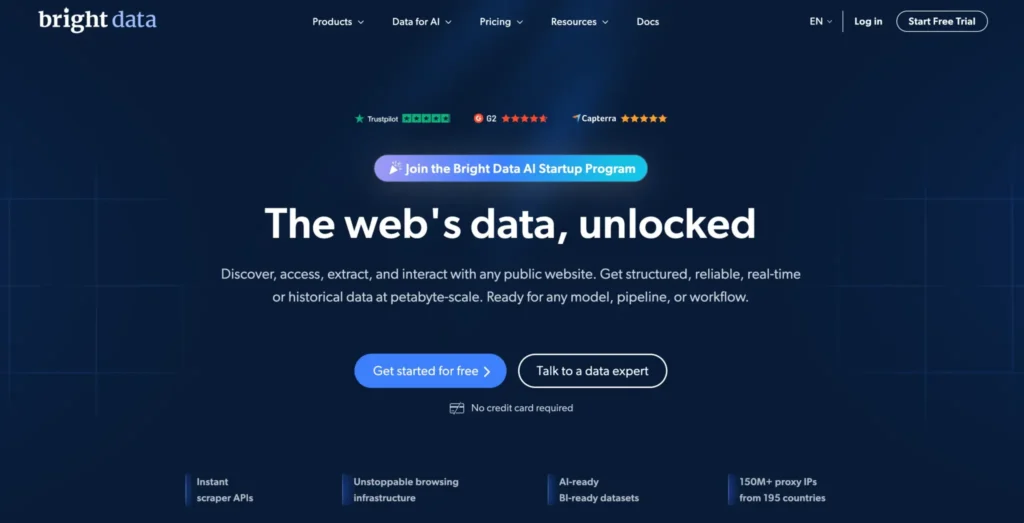
Bright Data is one of the strongest choices for serious real estate scraping. It has a large residential network, city targeting, ASN filtering, sticky sessions, scraping APIs, and ready-made real estate datasets.
The biggest edge is its real estate ecosystem. Bright Data offers scrapers and datasets for property data, including fields like property status, bedrooms, bathrooms, price, address, home type, and valuation signals. That helps if your team wants structured output instead of building every parser from scratch.
It is not a budget-first platform. Bright Data makes sense when accuracy, compliance controls, support, and scale matter more than shaving a few dollars off proxy spend.
Pro Tip: Use Bright Data when you need both live scraping and historical datasets. That combination is useful for price trend analysis and market intelligence.
2. Oxylabs
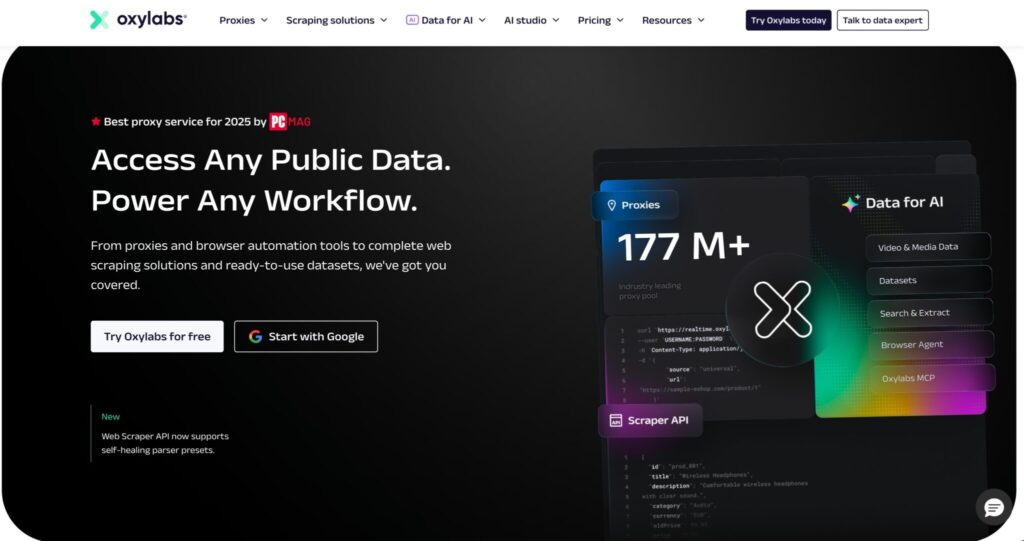
Oxylabs is built for teams that want reliable infrastructure and fewer moving parts. It offers residential proxies, ISP proxies, datacenter proxies, mobile proxies, Web Unblocker, and a dedicated Real Estate Scraper API.
For real estate scraping, Oxylabs is strong because it supports large market coverage and managed scraping workflows. If you need to track price changes across many ZIP codes or collect rental trends from multiple portals, its API approach can save engineering time.
It also fits JavaScript-heavy pages. Property platforms often load listing cards, maps, pricing modules, and filters dynamically. A managed scraper can handle more of that complexity than a raw proxy pool.
Pro Tip: Pick Oxylabs when missed listings can affect business reporting, investment research, or pricing models.
3. Decodo
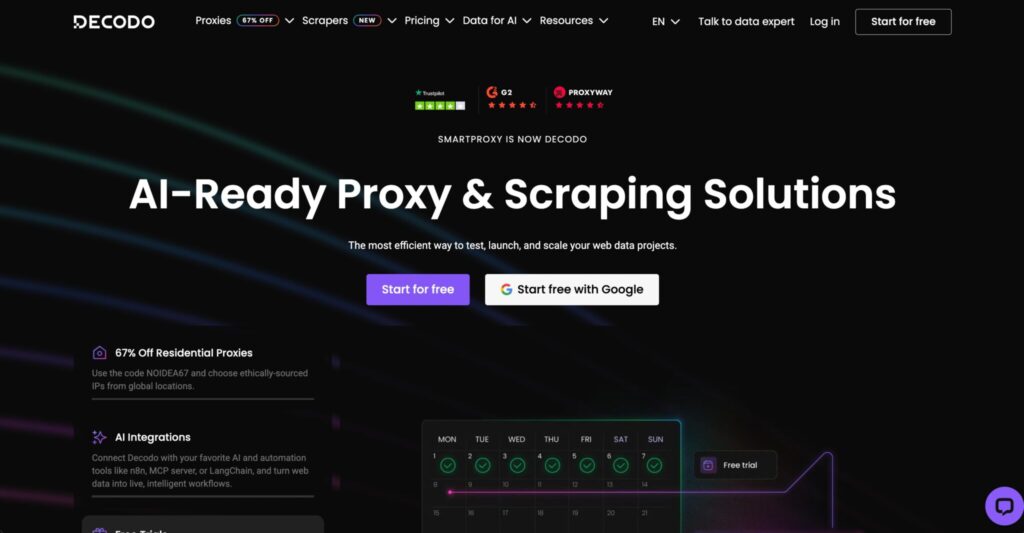
Decodo, formerly Smartproxy, is the practical middle-ground pick. It is easier to use than many enterprise tools, yet strong enough for serious scraping. Its residential pool covers many locations, supports sticky sessions, and integrates well with scraping frameworks.
For real estate data, Decodo works well for agencies, SaaS teams, SEO researchers, and analysts who need neighborhood comparisons, agent listings, rental prices, or property trend data without enterprise complexity.
Its dashboard is clean, which matters during testing. When you are adjusting headers, session length, rotation behavior, and location filters, a simple interface saves hours.
Pro Tip: Start with Decodo if you are still estimating bandwidth and success rates. It gives enough room to test before larger commitments.
4. SOAX
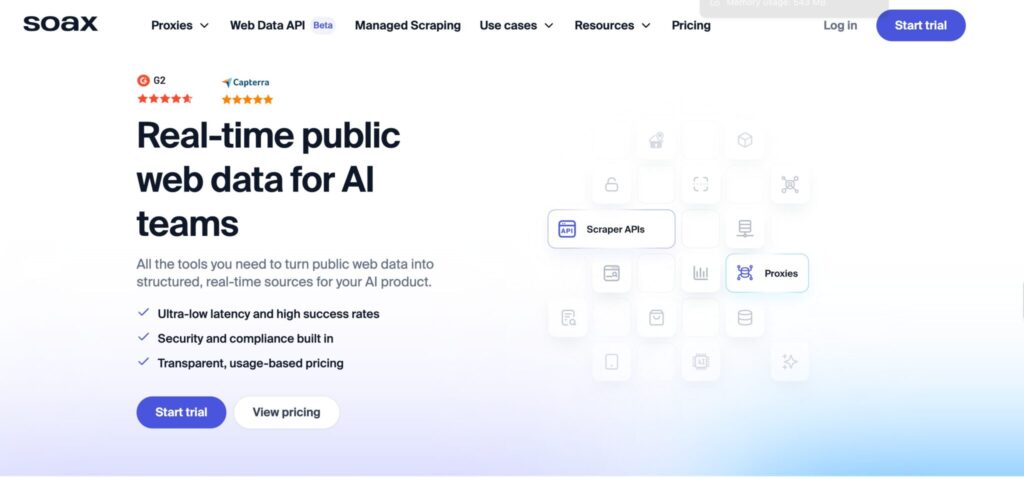
SOAX is useful when local accuracy is the priority. Real estate scraping often depends on geography. A search from one city can show different listings, different sponsored placements, and different rental recommendations than a search from another city.
SOAX gives access to residential, mobile, ISP, datacenter proxies, and Web Data API under flexible plans. That lets you test which proxy type works best for each target.
Its sticky session controls help with listing-level workflows. Search pages may work fine with rotating IPs, but detail pages often need session consistency.
Pro Tip: Use SOAX for city-by-city rental monitoring. Keep separate proxy profiles for each market.
5. NetNut
NetNut is known for stable routing and business-grade proxy infrastructure. Its residential and static residential options are useful for crawlers that revisit the same property websites every day.
Not every scraping job needs aggressive rotation. Sometimes stability wins. If your crawler checks property pages every few hours, a clean sticky or static setup may cause fewer interruptions than constant IP switching.
NetNut is also useful for international coverage. Real estate data is not only a US use case. Relocation tools, travel companies, investors, and rental platforms often track several countries.
Pro Tip: Use NetNut when recurring access and session stability matter more than the cheapest entry price.
6. IPRoyal
IPRoyal is a good budget-friendly residential proxy provider for smaller real estate scraping projects. It supports location targeting, rotation settings, and session TTL controls, which are enough for many pilots.
The platform is useful when you are validating an idea. Maybe you want to test rental pricing across 20 ZIP codes, scrape agent profiles, or monitor new listings in one state. You may not want an enterprise contract just to prove the workflow.
The tradeoff is depth. Larger teams may eventually need advanced scraping APIs, deeper support, or more enterprise controls.
Pro Tip: Use IPRoyal for pilot projects, then upgrade only after you know your target sites, fields, and traffic needs.
7. Webshare
Webshare is one of the easiest options for developers who want to start fast. It offers residential, static residential, and datacenter proxies with a simple dashboard and low-cost plans.
For real estate scraping, Webshare is best for proof-of-concept work, small search result crawls, and basic market monitoring. It does not offer the same managed scraping depth as Bright Data or Oxylabs, but it is affordable and simple.
If you are testing apartment listings, agent directories, or public property search pages, Webshare can help validate the workflow before you scale.
Pro Tip: Use Webshare to test selectors, parsing logic, and crawl frequency before spending on premium residential bandwidth.
8. Rayobyte
Rayobyte is a practical proxy provider with clear pricing and a developer-friendly setup. It offers residential, ISP, and datacenter products, which makes it suitable for mixed scraping stacks.
For real estate data, Rayobyte works well when you need predictable costs and steady access. Residential proxies can handle listing pages, while ISP or datacenter proxies can support lighter pages such as public directories or non-sensitive metadata.
It is not packed with managed scraping tools, but that is fine if your team already has its own crawler.
Pro Tip: Use Rayobyte when you want dependable proxy coverage without handing over the full scraping workflow.
9. Nimble
Nimble is closer to a web data platform than a plain proxy vendor. Its value comes from automation, optimized residential routing, and tools that reduce manual scraping work.
For real estate teams, Nimble can help when websites change layouts, load content dynamically, or behave differently by location. Instead of tuning every proxy rule yourself, you rely more on optimized data collection.
It may not be the cheapest choice for raw traffic, but it can reduce operational headaches.
Pro Tip: Consider Nimble when your team wants clean outputs and less time spent debugging failed requests.
How To Choose Proxies For Real Estate Data Scraping
Check IP Pool Quality, Not Just Size
A provider can advertise millions of IPs, but quality matters more than the headline number. For real estate scraping, you need clean residential IPs in the cities, states, and countries you target.
Ask three questions: Can it target my locations? Are sessions stable enough for listing pages? Does the provider remove poor-performing IPs?
Pick The Right Rotation Setup
Use rotating residential proxies for search results, category pages, and broad discovery crawls. These pages can be scraped in short bursts.
Use sticky sessions for listing details, map browsing, saved filters, and pages that require several connected requests. A 10 to 30 minute sticky session is often enough.
Use ISP proxies when you need speed and consistency for recurring checks.
Watch Bandwidth Closely
Real estate pages are heavy. They load images, maps, videos, scripts, and third-party widgets. If you fetch everything, your proxy bill can climb fast.
Block images, fonts, videos, and analytics scripts unless needed. Collect HTML and structured data first. Fetch images only when they matter.
Match Proxy Type To Page Type
Use residential proxies for major property marketplaces. Use ISP proxies for repeated listing checks. Use datacenter proxies for public records, broker directories, and lightweight pages that do not block aggressively.
This hybrid setup keeps costs under control without hurting success rates.
Stay Inside Clean Data Practices
Scrape public data only. Review site terms, robots rules, and rate limits. Avoid collecting personal data you do not need. Property data can include names, phone numbers, addresses, and agent details, so handle privacy carefully.
A good scraper is not just fast. It is controlled, documented, and respectful.
Best Overall Picks
For enterprise workflows, choose Bright Data or Oxylabs.
For the best balance of price, usability, and performance, choose Decodo.
For local targeting, choose SOAX.
For budget testing, choose IPRoyal or Webshare.
For steady proxy infrastructure, choose Rayobyte.
For managed web data collection, consider Nimble.
FAQs
What type of proxy is best for real estate scraping?
Residential proxies are usually best because property websites are location-sensitive and often strict with datacenter traffic. ISP proxies are also useful for longer sessions and recurring checks.
Can I scrape Zillow, Redfin, or Realtor-style websites with proxies?
Proxies can help with public page access, but you still need to respect each site’s terms, robots rules, and legal limits. For business use, scraper APIs or licensed datasets may be safer.
How much bandwidth do I need?
It depends on page weight and crawl frequency. Real estate pages can consume heavy bandwidth because of maps and images. Start small, block unused assets, then calculate cost per 1,000 listings.
Are datacenter proxies good enough?
Sometimes. They can work for public records, simple directories, and lightweight pages. For major property marketplaces, residential or ISP proxies usually perform better.
What is a sticky session?
A sticky session keeps the same proxy IP for a set period. It helps when your scraper opens search results, visits listings, and sends related requests that should share one browsing session.
Should I use a scraper API instead of raw proxies?
Use a scraper API if you want fewer engineering tasks. Use raw proxies if your team wants full control over crawling, parsing, retries, headers, and browser behavior.
How do I reduce proxy costs?
Block images and videos, cache repeated pages, avoid duplicate listings, use datacenter proxies for low-risk pages, and save residential bandwidth for pages that need it.
Final Take
The best proxy for real estate scraping depends on your target websites, locations, budget, and technical setup. Bright Data and Oxylabs are the safest picks for serious data operations. Decodo gives most teams a clean mix of price and performance. SOAX is strong for city-level research. IPRoyal and Webshare help you test without spending heavily.
Do not buy proxies based on IP count alone. Real estate scraping rewards clean locations, controlled rotation, stable sessions, bandwidth discipline, and a crawler that behaves like a careful researcher instead of a noisy bot.