
est Proxies for Scam Monitoring
Best Proxies for Scam Monitoring.
Scam monitoring is no longer just about checking Google once a week and hoping nobody is copying your brand.
Fraudsters now spin up fake login pages, cloned stores, fake coupon pages, social media impersonation profiles, suspicious ads, and marketplace listings across multiple countries.
Some of these pages only appear from certain locations, devices, or IP ranges. That is exactly where proxies become useful.
A good proxy setup helps your team view the web from different regions, rotate IPs safely, track fake brand mentions, verify suspicious ads, monitor SERPs, and collect public scam signals without getting blocked too early. The goal is not to hide bad behavior.
The goal is to monitor public web activity at scale, protect customers, and gather evidence before a scam damages your brand.
Below are the best proxy providers for scam monitoring, with a clear focus on IP pools, location targeting, session control, rotation quality, and practical fraud-monitoring workflows.
Quick Comparison Table: Best Proxies for Scam Monitoring
| Provider | Best For | Proxy Types | IP Pool / Coverage | Rotation Strength | Best Scam Monitoring Use Case |
|---|---|---|---|---|---|
| Bright Data | Enterprise brand protection | Residential, ISP, mobile, datacenter | 400M+ monthly residential IPs, 195 countries | Excellent | Large-scale phishing, fake ads, marketplace abuse |
| Oxylabs | Enterprise web intelligence | Residential, ISP, mobile, datacenter, scraper APIs | 175M+ residential IPs, 195 countries | Excellent | SERP monitoring, scam pages, public data collection |
| Decodo | Balanced pricing and usability | Residential, ISP, mobile, datacenter | 115M+ residential IPs, 195+ locations | Strong | Mid-size scam monitoring and geo checks |
| SOAX | Clean geo-targeted monitoring | Residential, mobile, ISP, datacenter | 191M+ total IP pool, 195+ geos | Strong | City-level fraud checks and mobile-first scams |
| NetNut | Stable business monitoring | Residential, mobile, ISP, datacenter | 85M+ residential IPs, 195+ countries | Strong | Continuous monitoring with stable sessions |
| IPRoyal | Budget-friendly monitoring | Residential, ISP, mobile, datacenter | 32M+ residential IPs, 195 countries | Good | Small teams tracking fake listings and SERPs |
| Webshare | Affordable proxy testing | Residential, static residential, datacenter | Custom plans, free proxy starter option | Good | Low-cost monitoring scripts and QA |
| Rayobyte | US-heavy public data monitoring | Residential, ISP, datacenter | 40M+ residential IPs, 400K+ static IPs | Good | US marketplace and ecommerce scam checks |
1. Bright Data: Best Overall for Enterprise Scam Monitoring
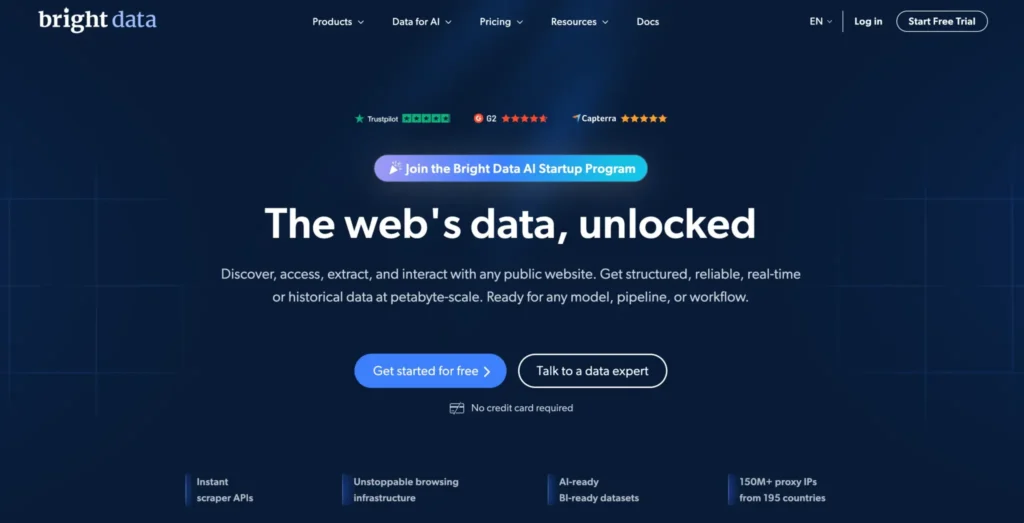
Bright Data is the provider I would look at first for serious scam monitoring operations. It has one of the largest residential proxy networks, strong geo-targeting, and advanced tools that fit brand protection teams working across many regions.
For scam monitoring, the biggest advantage is control. You can check how fake ads, phishing pages, copycat landing pages, or suspicious search results appear in specific countries, cities, ZIP codes, carriers, and ASNs. That matters because scams are often geo-cloaked.
A fake bank login page may show harmless content from one IP, then reveal the scam only from another country or mobile carrier.
Bright Data also supports sticky and rotating sessions, which is useful when you need both behaviors. Use rotating IPs for broad discovery. Use sticky sessions when you need to document a scam flow across multiple pages.
Pro-Tip: For brand impersonation checks, run two passes: one with rotating residential IPs for discovery, then one with sticky sessions for evidence capture.
Best for
Enterprise teams, cyber threat intelligence firms, brand protection agencies, and companies monitoring scams in multiple regions.
Watch out for
It can be more expensive and more complex than smaller teams need.
2. Oxylabs: Best for Public Web Intelligence and SERP Scam Tracking
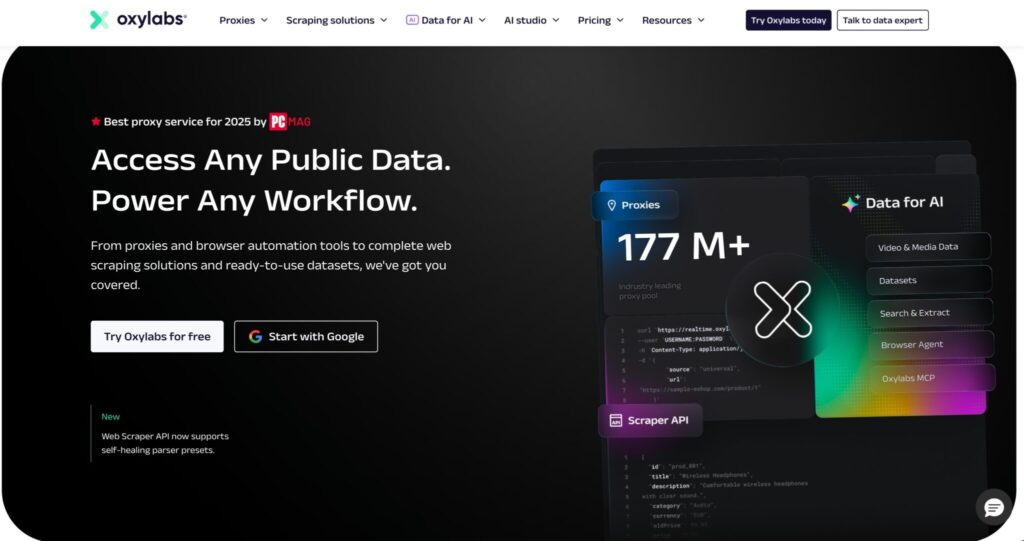
Oxylabs is built for teams that need reliable public web data collection. It offers residential proxies, datacenter proxies, ISP proxies, mobile proxies, and scraping APIs. For scam monitoring, that mix is valuable because not every task needs the same proxy type.
If your team monitors fake coupon pages, phishing domains, suspicious search results, scam affiliate pages, or paid ad abuse, Oxylabs is a strong fit. Its residential proxy pool is large, and its location targeting helps you see country-specific scam pages. Its scraper APIs can also reduce the engineering work needed for SERP and website monitoring.
A common scam monitoring workflow would look like this: track branded keywords, collect SERP results by country, detect suspicious domains, crawl the pages, screenshot the evidence, and send takedown requests. Oxylabs can support this kind of pipeline better than a basic proxy seller.
Pro-Tip: Use datacenter proxies for low-risk bulk checks, then switch to residential or ISP proxies for URLs that show blocks, CAPTCHAs, or cloaked behavior.
Best for
Threat intelligence teams, SEO abuse monitoring, ad verification, and high-volume scam discovery.
Watch out for
Premium features can be overkill if you only need light manual checks.
3. Decodo: Best Mid-Market Proxy Provider for Scam Monitoring
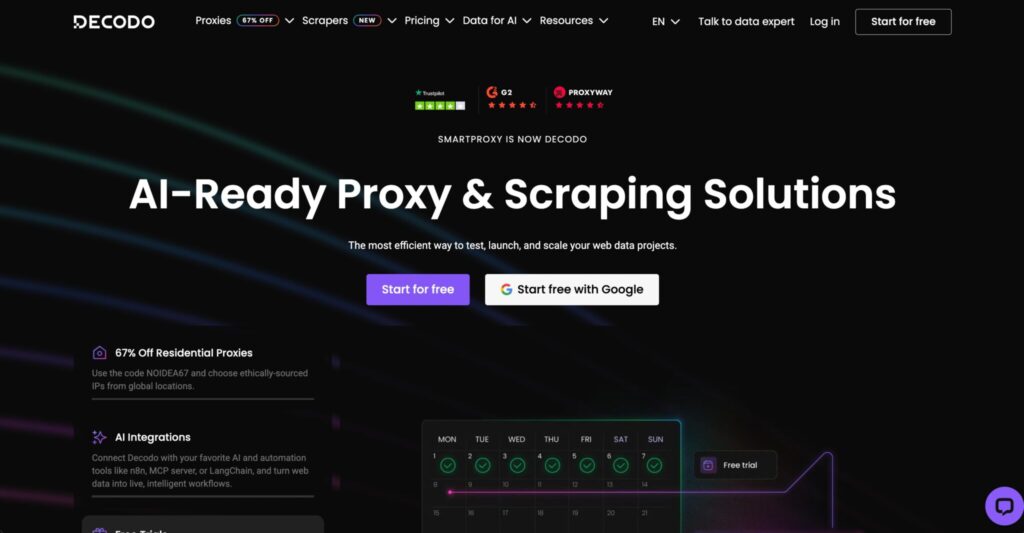
Decodo, formerly Smartproxy, has become a strong middle-ground option. It is easier to use than many enterprise platforms, but still gives you enough scale for real scam monitoring work.
The platform offers residential, ISP, mobile, and datacenter proxies. Its residential network is large enough for checking scam pages across many countries, while its dashboard and pricing are friendlier for leaner teams. For agencies monitoring client brands, Decodo makes sense because it balances usability, coverage, and cost.
It is especially useful for monitoring fake social profiles, regional SERPs, copied landing pages, cloned ecommerce stores, and suspicious ads. You can rotate IPs for discovery or keep sessions stable when you need to move through a multi-step flow.
Pro-Tip: For scam landing pages, test with both desktop residential and mobile proxies. Many scammers show different content to mobile traffic.
Best for
Agencies, mid-size brands, affiliate compliance teams, and fraud analysts who need scale without enterprise-level complexity.
Watch out for
For very large global monitoring programs, Bright Data or Oxylabs may offer deeper infrastructure.
4. SOAX: Best for Geo-Targeted Scam Visibility
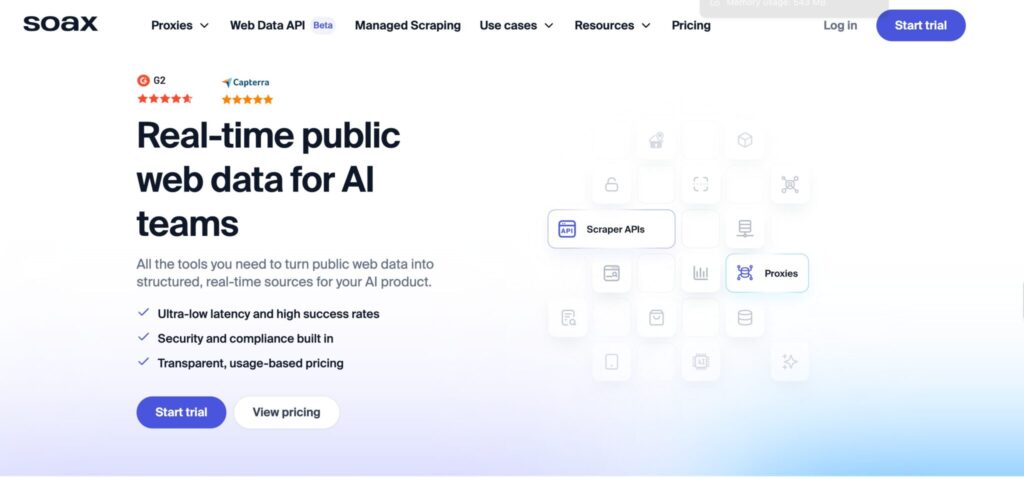
SOAX is a strong pick when location accuracy matters. Scam campaigns are often localized. You may see fake investment ads in one country, cloned brand pages in another, and fake marketplace sellers targeting specific cities.
SOAX is useful because it focuses heavily on clean IPs and flexible geo-targeting.
Its proxy pool includes residential, mobile, ISP, and datacenter options. For scam monitoring, mobile proxies are particularly useful when checking fraud that appears mainly on mobile devices, app-like landing pages, or social traffic.
SOAX also works well for recurring monitoring jobs. You can set up location-specific checks and track whether suspicious pages keep changing their content based on region.
Pro-Tip: When investigating region-specific scams, avoid relying only on country-level targeting. City-level checks can reveal pages that broad checks miss.
Best for
Geo-sensitive fraud monitoring, mobile scam checks, localized brand abuse, and marketplace surveillance.
Watch out for
Large-volume users should test performance and pricing carefully before scaling.
5. NetNut: Best for Stable, Business-Grade Monitoring
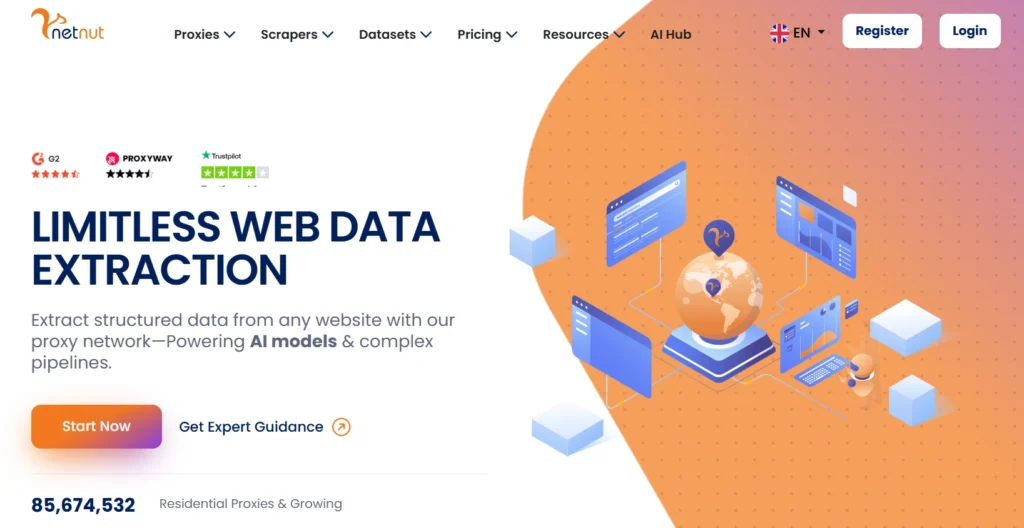
NetNut is a reliable option for companies that need stable proxy performance and broad residential coverage. It is especially useful when your scam monitoring involves repeated checks, scheduled crawls, and long-running jobs.
For scam detection, stability matters more than people think. If your proxies fail often, your monitoring reports become noisy. You start questioning whether a scam page disappeared or your infrastructure simply broke. NetNut’s focus on business data collection makes it suitable for ongoing monitoring pipelines.
It supports residential proxies across many countries and is useful for checking ad fraud, fake comparison pages, search result manipulation, and copied product listings.
Pro-Tip: For daily scam monitoring, separate your proxy pools by task. Use one pool for SERP checks, another for marketplace scans, and another for manual investigation.
Best for
Companies running scheduled monitoring, compliance checks, and recurring brand protection scans.
Watch out for
It may not be the cheapest choice for small teams.
6. IPRoyal: Best Budget Option for Smaller Scam Monitoring Teams
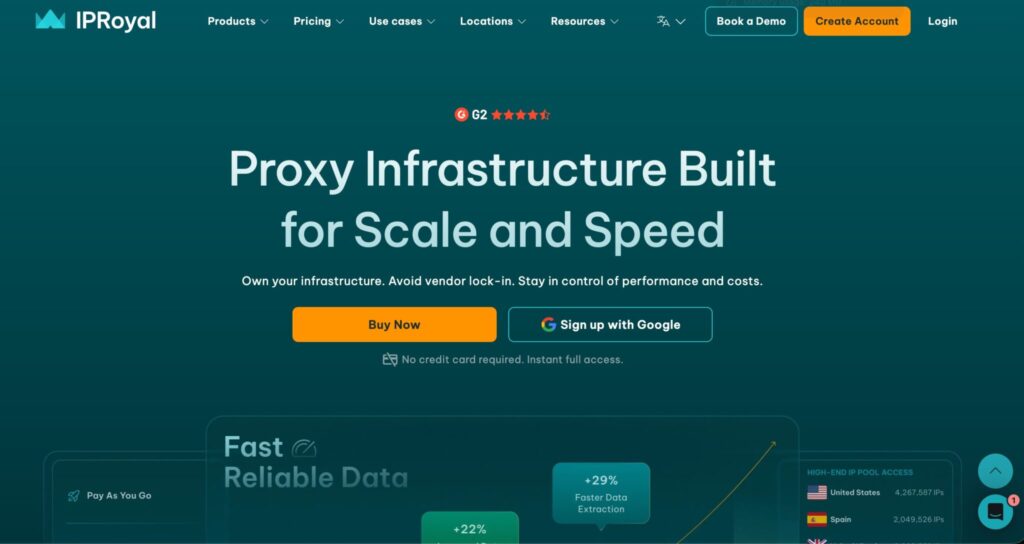
IPRoyal is a good entry point for smaller teams that need residential proxies without heavy upfront spending. It offers residential proxies with flexible pricing, broad country coverage, and simple controls.
For scam monitoring, IPRoyal works well for checking fake listings, suspicious SERPs, cloned product pages, review spam, and impersonation pages. It also supports rotation options, including changing IPs per request or holding sessions longer.
The biggest appeal is cost control. If you are not running millions of requests, you may not need an enterprise platform. IPRoyal gives you enough flexibility to start monitoring without making the project expensive from day one.
Pro-Tip: Start with a smaller residential plan, identify your highest-risk countries, then expand only where you find actual scam activity.
Best for
Small brands, solo analysts, affiliate compliance teams, and budget-conscious agencies.
Watch out for
It lacks some of the advanced web intelligence tooling found in Oxylabs or Bright Data.
7. Webshare: Best for Low-Cost Proxy Testing and Monitoring Scripts
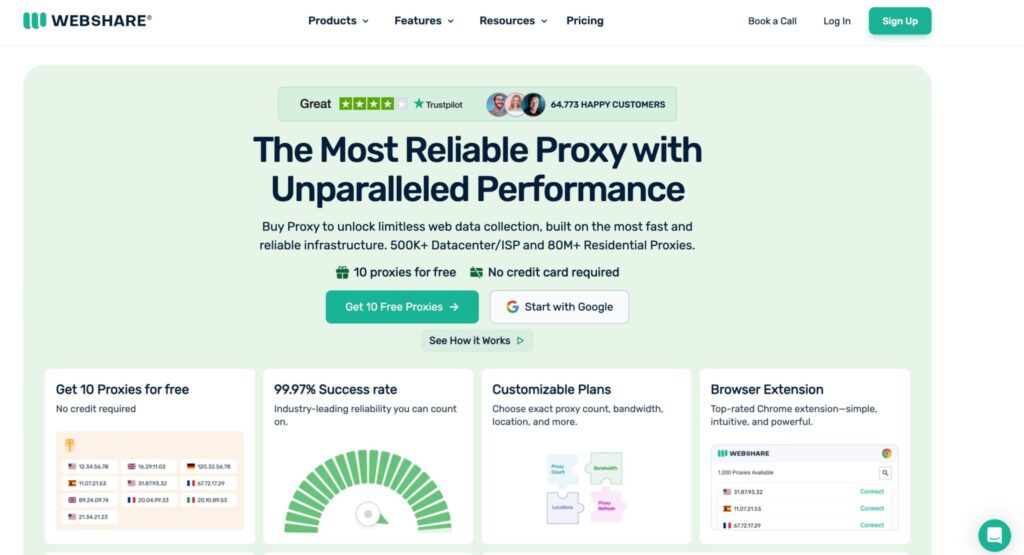
Webshare is useful when you want affordable proxies for basic monitoring, QA, and low-risk public web checks. It is not the most advanced scam monitoring platform, but it can be a smart part of your stack.
For example, you can use Webshare for checking known scam URLs, testing regional visibility, running lightweight scripts, or monitoring pages that do not aggressively block traffic. Its dashboard is simple, and the free starter option makes it easy to test before spending.
For more sensitive targets, you may still need residential or mobile proxies from a stronger provider. But for budget-friendly monitoring, Webshare can do the job.
Pro-Tip: Do not use your best residential bandwidth for every task. Use cheaper proxies for first-pass checks, then upgrade only suspicious URLs to higher-quality IPs.
Best for
Developers, small teams, QA checks, and low-cost public page monitoring.
Watch out for
Advanced scam-monitoring teams may need stronger geo-targeting and anti-blocking tools.
8. Rayobyte: Best for US-Focused Scam and Marketplace Monitoring
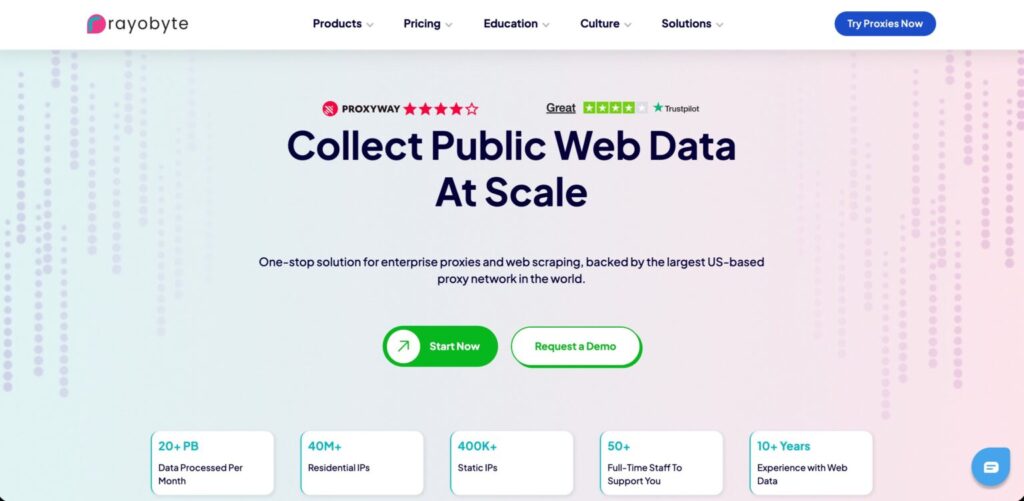
Rayobyte is a strong option if your scam monitoring work is heavily focused on the United States. It offers residential, ISP, and datacenter proxies, with a strong public data collection positioning.
For ecommerce brands, Rayobyte can be useful for checking fake sellers, counterfeit product listings, suspicious pricing pages, copied product descriptions, and fraudulent marketplace activity. Its ISP proxies are also useful when you need stable sessions with better trust than standard datacenter IPs.
Rayobyte’s biggest strength is its practical approach. It is not trying to be everything for everyone. It works well for teams that want solid infrastructure for public data monitoring, especially in US-heavy workflows.
Pro-Tip: Use ISP proxies for repeat visits to the same marketplace or ecommerce domain. They offer better session stability than fast-rotating residential IPs.
Best for
US ecommerce monitoring, marketplace checks, brand protection, and public web data collection.
Watch out for
Global monitoring teams should compare its location coverage against Bright Data, Oxylabs, SOAX, or Decodo.
How to Choose the Best Proxies for Scam Monitoring
1. Start with your scam surface
Do not buy proxies before mapping what you need to monitor. A fintech brand may need phishing page checks, fake Google ads, Telegram impersonation tracking, and fake support pages. An ecommerce brand may care more about marketplaces, coupon abuse, counterfeit listings, and cloned stores.
Your scam surface decides your proxy type.
2. Match proxy type to monitoring task
Residential proxies are best for scam pages that block datacenter traffic. ISP proxies are best for stable, repeatable sessions. Mobile proxies help when scams target phone users or social traffic. Datacenter proxies are best for cheap first-pass checks.
A strong setup often uses all four, not just one.
3. Check IP pool quality, not just pool size
A huge IP pool sounds good, but quality matters more. Look for ethically sourced IPs, strong uptime, location accuracy, clean reputation, and session control. Scam monitoring depends on repeatable evidence. Bad proxies create bad reports.
4. Use rotation carefully
Fast rotation is great for discovery, but it can break investigations. If you are moving through a suspicious funnel, use sticky sessions. If you are scanning thousands of search results, use rotating sessions.
5. Prioritize geo-targeting
Scams are often regional. Pick a provider that supports country, state, city, carrier, ZIP, or ASN targeting if your brand operates in multiple markets.
6. Think about evidence collection
A scam monitoring workflow should capture URLs, timestamps, IP region, screenshots, HTML copies, redirect chains, and ad copy. Proxies help you access the content, but your evidence process is what makes takedowns easier.
7. Stay ethical and compliant
Only monitor public data, respect legal boundaries, and avoid accessing accounts, private systems, or restricted content. Proxies are tools for visibility, not a license to break rules.
FAQs: Best Proxies for Scam Monitoring
1. What are the best proxies for scam monitoring?
Bright Data, Oxylabs, Decodo, SOAX, NetNut, IPRoyal, Webshare, and Rayobyte are strong choices. The right one depends on budget, target countries, scale, and whether you need residential, ISP, mobile, or datacenter proxies.
2. Are residential proxies better for detecting scam websites?
Yes, residential proxies are often better because many scam pages block datacenter traffic or show different content based on IP reputation. Residential IPs help you see pages closer to how real users see them.
3. Do I need mobile proxies for scam monitoring?
Use mobile proxies when scams appear mainly through mobile ads, social media links, SMS-style funnels, or app-first landing pages. Many fraud campaigns treat mobile and desktop visitors differently.
4. Can proxies help detect fake ads?
Yes. Proxies let you check ads from different regions and devices. This helps uncover geo-cloaked ads, fake brand bidding, misleading landing pages, and suspicious affiliate campaigns.
5. Which proxy type is best for monitoring phishing pages?
Residential proxies are best for discovery. ISP proxies are useful for stable evidence capture. Mobile proxies help when phishing pages target mobile users.
6. Are datacenter proxies useful for scam monitoring?
Yes, but mainly for low-risk checks. They are fast and cheap, but they get blocked more often. Use them for first-pass scanning, then switch to residential or ISP proxies for deeper checks.
7. How often should I rotate IPs during scam monitoring?
Rotate frequently during broad discovery. Use sticky sessions when investigating a suspicious page, clicking through a funnel, or capturing evidence across multiple steps.
8. Can proxies prevent scams?
No. Proxies do not prevent scams directly. They help you find, verify, and document scam activity faster, which supports takedowns, legal notices, ad complaints, and customer protection.
Final Verdict: Which Proxy Provider Should You Choose?
If you need the strongest enterprise setup, choose Bright Data or Oxylabs. If you want a balanced provider with good coverage and easier usability, Decodo is a smart pick. If your monitoring depends heavily on accurate geo-targeting, SOAX deserves a close look. For stable recurring checks, NetNut is reliable.
For smaller teams, IPRoyal and Webshare keep costs manageable. For US-focused ecommerce and marketplace monitoring, Rayobyte is a practical choice.
My advice is simple: do not choose based only on the biggest IP pool. Choose based on your scam surface, target regions, rotation needs, and evidence workflow. Scam monitoring works best when your proxies, crawlers, screenshots, and reporting process all support the same goal: finding abuse early and proving it clearly.