
Best Proxies For Secure Remote Access.
Remote work stopped being a “nice setup” a long time ago. Teams now log into cloud dashboards, CRMs, ad accounts, testing environments, vendor portals, staging servers, and internal tools from different cities, countries, networks, and devices. That flexibility is useful, but it also creates a messy access problem.
One login from a home ISP looks fine. Ten logins from coffee shops, shared Wi-Fi, rented VPS nodes, and random travel locations can trigger account locks, fraud checks, CAPTCHA walls, or access denials.
That is where proxies become useful.
A proxy is not a magic security shield. It will not replace MFA, SSO, password hygiene, device management, VPNs, or Zero Trust access rules. But the right proxy setup can make remote access cleaner, more predictable, and easier to control.
You can keep access traffic routed through consistent IPs, assign teams to approved regions, reduce suspicious login patterns, and separate sensitive admin work from noisy public networks.
The best proxies for secure remote access are not always the cheapest ones. You need stable IPs, clean reputation, strong authentication, session control, good support, and enough IP diversity to avoid looking like a bot farm.
For admin panels and SaaS tools, ISP and dedicated datacenter proxies often make more sense than random rotating residential IPs. For region-based testing, fraud monitoring, and market access checks, residential and mobile proxies become more useful.
Quick Verdict: Best Proxy Providers For Secure Remote Access
| Proxy Provider | Best For | Proxy Types | IP Pool / Coverage | Session Control | Starting Price Snapshot | Remote Access Fit |
|---|---|---|---|---|---|---|
| Bright Data | Enterprise teams needing compliance and global control | Residential, ISP, datacenter, mobile | Very large global residential network | Strong rotation, sticky sessions, advanced targeting | Residential pricing starts around per-GB plans | Best for large teams, compliance-heavy workflows, and geo-controlled access |
| Oxylabs | Enterprise-grade remote workflows and data teams | Residential, dedicated datacenter, ISP, mobile | Large residential pool with global targeting | Flexible session control and high concurrency | Residential pricing varies by plan | Best for companies that need scale, uptime, and account support |
| Decodo | Balanced choice for agencies and growing teams | Residential, datacenter, ISP, mobile | Large global IP pool | Rotating and sticky sessions | Residential plans start from low per-GB tiers | Best mix of usability, scale, and pricing |
| SOAX | Precise geo-targeting and controlled remote sessions | Residential, mobile, ISP, datacenter | Wide global coverage | Flexible targeting and session options | Bundled plans start around entry-level per-GB pricing | Strong for remote QA, app testing, and regional access |
| NetNut | Stable residential and ISP-style access | Residential, static residential, mobile | Large residential and mobile coverage | Good for long-running sessions | Typically more business-focused pricing | Best for stable access and performance-focused teams |
| IPRoyal | Affordable secure access for small teams | Residential, ISP, datacenter, mobile | Mid-sized global pool | Rotating and sticky options | Residential starts around $7/GB, lower at bulk | Best value for freelancers, small agencies, and light access control |
| Webshare | Budget datacenter and residential access | Residential, static residential, datacenter | Broad residential coverage | Basic but practical controls | Datacenter and residential plans are low-cost | Best for simple IP allowlisting and budget remote access |
| Rayobyte | Dedicated datacenter and ISP proxy control | Datacenter, ISP, residential | Strong datacenter inventory | Static IP options | Datacenter and ISP plans priced per IP | Best for dedicated access paths and stable admin workflows |
What Makes a Proxy Good For Secure Remote Access?
A secure remote access proxy should do three things well.
First, it should keep IP behavior predictable. If a remote employee logs into the same SaaS dashboard from a new IP every five minutes, the platform may treat that as suspicious. Sticky sessions, static ISP proxies, or dedicated datacenter IPs help create a more stable access pattern.
Second, the provider should offer proper authentication. Username-password access is fine for basic use, but IP allowlisting is often cleaner for business environments. It limits access to approved devices, servers, or office networks. For sensitive workflows, proxy credentials should never be shared casually in Slack chats or spreadsheets.
Third, the network should have clean IP reputation. Cheap shared proxies may be abused by other users. That can lead to account locks, failed logins, or blocked dashboards. For secure remote access, paying more for cleaner IPs often saves more money than constantly dealing with verification issues.
Pro-Tip: For admin dashboards, finance tools, client ad accounts, and cloud consoles, start with static ISP proxies or dedicated datacenter proxies. Use rotating residential proxies only when your workflow truly needs location diversity.
1. Bright Data: Best For Enterprise Secure Remote Access
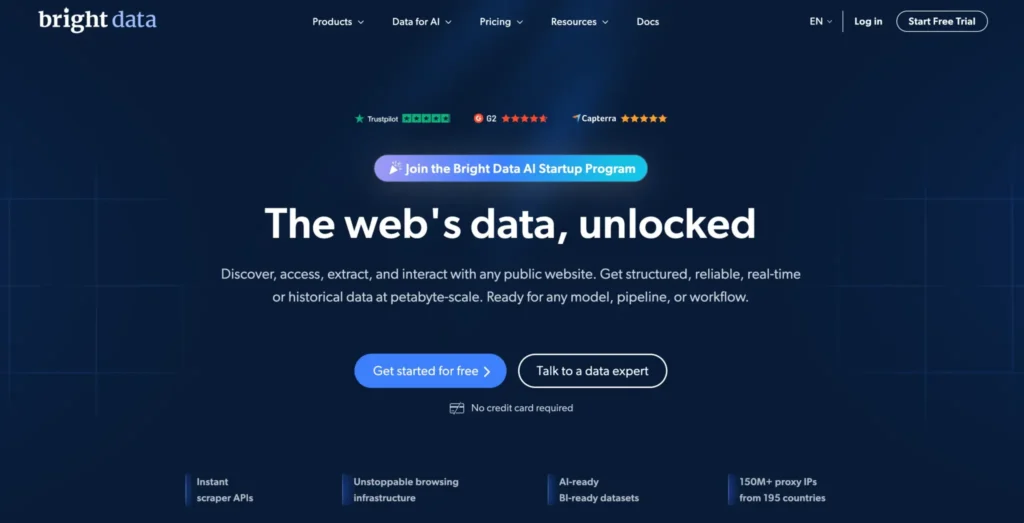
Bright Data is the heavyweight option. It is built for serious teams that need scale, control, compliance workflows, and detailed proxy management.
For secure remote access, Bright Data makes sense when your team needs approved access routes across multiple countries, internal QA from different regions, or controlled access to business platforms that dislike unpredictable IP jumps.
Its biggest strength is flexibility. You can use residential proxies when you need local-looking access, datacenter proxies when speed matters, ISP proxies when you want a stable IP with better trust signals, and mobile proxies for mobile-first environments.
That mix is useful because secure remote access is rarely one use case. One team may need fixed IPs for admin tools, while another needs residential IPs for testing localized dashboards.
Bright Data also gives strong targeting. You can narrow access by country, city, ZIP, ASN, and other options depending on the product. That is useful for companies with distributed teams, market monitoring teams, or compliance needs where access must appear from specific regions.
The dashboard is powerful, but beginners may find it more technical than lightweight tools. Pricing can also feel premium. That said, for teams managing client accounts, regional testing, fraud monitoring, or business-critical workflows, paying for better control usually makes sense.
Best Use Cases
Bright Data is best for enterprise remote teams, cybersecurity teams, QA teams, and agencies that need a clean, structured proxy setup instead of random cheap IPs. It is also a strong fit when you need documentation, support, and serious compliance standards.
Pro-Tip
Create separate proxy zones for each department or client account. Do not let your SEO team, QA team, and admin team share the same proxy credentials. Shared credentials create messy logs and make troubleshooting harder.
2. Oxylabs: Best For High-Stability Enterprise Workflows
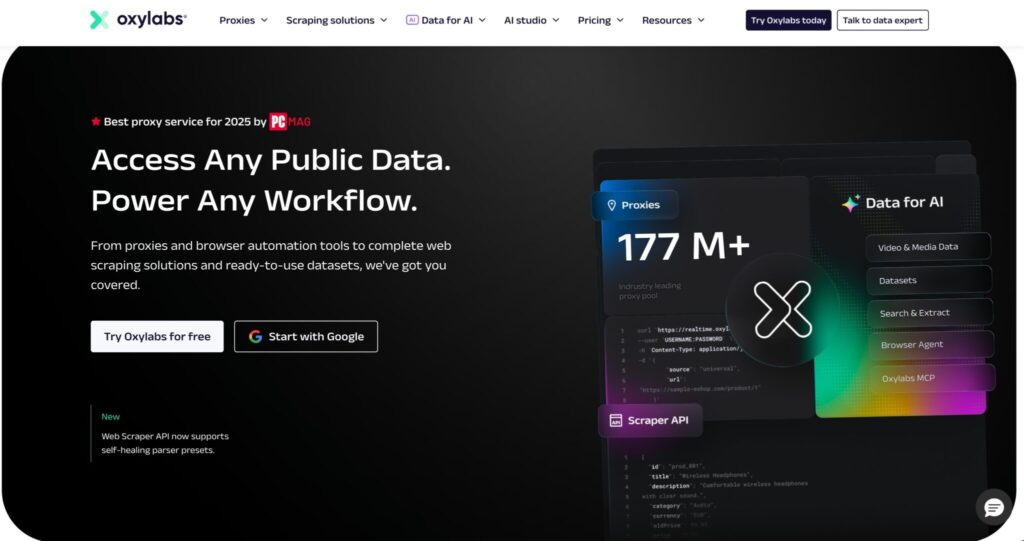
Oxylabs sits in the same premium category as Bright Data, but it has a slightly different personality. It feels built for businesses that value stability, account support, scale, and predictable infrastructure.
For secure remote access, Oxylabs is a strong choice when you need a provider that can handle high-volume traffic without forcing your team into constant setup headaches.
The residential proxy network is large, with broad global coverage and advanced targeting. Oxylabs also supports dedicated datacenter proxies, which are often better for secure admin workflows where speed and consistency matter more than residential identity.
If your company wants to allowlist a small set of IPs for dashboards, cloud tools, or internal portals, dedicated datacenter IPs can be cleaner than rotating residential IPs.
Session control is another big advantage. When remote access involves dashboards, account sessions, multi-step forms, or login-based tools, you do not want IPs changing mid-session.
Oxylabs gives you the control needed to keep sessions stable while still offering rotation where needed.
The downside is that Oxylabs is not the cheapest route. It is more suitable for businesses than hobby users. If you only need a handful of proxies for light browser access, it may feel oversized.
But if secure remote access affects revenue, client work, or internal operations, Oxylabs deserves a serious look.
Best Use Cases
Oxylabs works well for enterprise SaaS access, ad verification teams, compliance testing, regional QA, and companies that need dedicated infrastructure with strong reliability.
Pro-Tip
Use dedicated datacenter proxies for fixed internal access and residential proxies only for region-sensitive testing. Mixing both gives better control and avoids wasting premium residential bandwidth on tasks that do not need it.
3. Decodo: Best Balanced Proxy Provider For Growing Teams
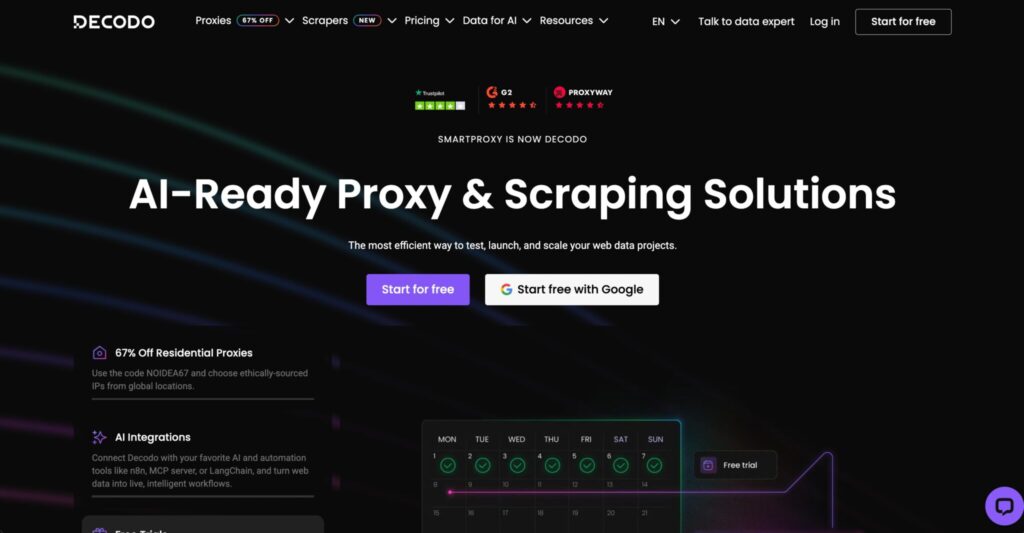
Decodo, formerly Smartproxy, is one of the easiest providers to recommend for teams that want strong proxy performance without enterprise-level complexity. It has a large IP pool, clean dashboard, broad location coverage, and enough session control for most secure remote access workflows.
For agencies, Decodo is especially practical. Many teams need to log into client dashboards, check localized search results, test websites from different countries, manage remote browser environments, or access tools that dislike unstable public Wi-Fi traffic.
Decodo handles those needs without making the setup feel like a full infrastructure project.
Residential proxies are useful for region-specific access, while datacenter and ISP options work better for repeat logins and fixed workflows.
The provider also keeps onboarding simple, which matters when your team includes marketers, account managers, QA testers, and non-technical users.
Pricing is more accessible than many premium enterprise vendors, especially for small and mid-sized teams. You still need to choose your plan carefully because bandwidth-based pricing can rise quickly if the whole team starts routing everything through residential proxies.
Best Use Cases
Decodo is ideal for agencies, remote marketing teams, small SaaS teams, SEO teams, and businesses that need a clean mix of affordability, reliability, and control.
Pro-Tip
Do not use rotating residential proxies for every login. Assign static or sticky sessions for tools where account trust matters. Save rotation for testing, localization, and research tasks.
4. SOAX: Best For Geo-Targeted Remote Access
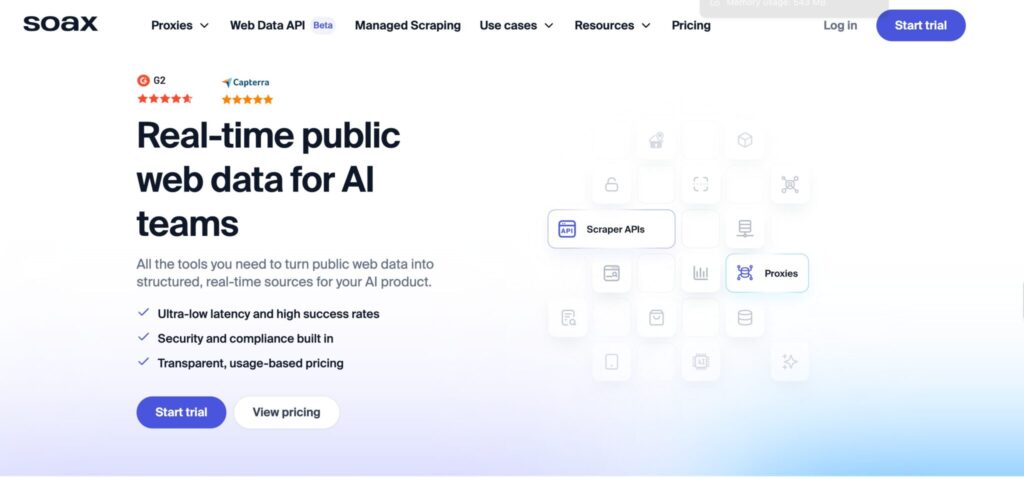
SOAX is a strong pick when location accuracy matters. Its strength is not just offering proxies, but giving users practical targeting options across residential, mobile, ISP, and datacenter networks.
For secure remote access, that matters when your workflow depends on seeing what a user sees in a specific region.
Think of app testing, localized SaaS dashboards, country-specific checkout flows, ad previews, pricing checks, fraud detection reviews, or customer support investigations.
A basic datacenter proxy may be enough for simple IP allowlisting, but it may not show the same environment as a real user in a target region. SOAX gives teams more control over that layer.
Its bundled pricing model is also useful because teams can test different proxy types without immediately locking themselves into one format. Residential may work for one platform, ISP may be better for another, and mobile may be needed for mobile-first apps or telecom-sensitive services.
SOAX is not always the simplest option for tiny teams that only need one or two static IPs. But for companies that care about accurate location testing and controlled sessions, it is a practical choice.
Best Use Cases
SOAX is best for QA teams, mobile app teams, ad tech teams, location testing, regional market checks, and customer support teams troubleshooting geo-specific issues.
Pro-Tip
Build a small test matrix before scaling. Test residential, ISP, and mobile proxies on your target platforms, then document which proxy type works best for each workflow.
5. NetNut: Best For Stable Residential And ISP-Style Access
NetNut is a good fit for teams that care about stability and performance. It is often positioned for business users rather than casual proxy buyers, and that makes it relevant for secure remote access.
The provider offers residential proxies, static residential proxies, and mobile proxies, with a focus on reliable connectivity and business-grade use cases.
For remote access, NetNut’s static residential style is useful because it can give teams a more consistent identity than fully rotating peer-based residential networks.
That matters for tools where frequent IP switching causes security checks. If your team logs into internal dashboards, analytics tools, or account management systems, stable IPs usually perform better.
NetNut also makes sense for teams that want access from many countries while still keeping speed acceptable. The trade-off is price.
It is not usually the first choice for users who want the cheapest possible proxy bandwidth. It is better suited for teams that value uptime, support, and predictable performance.
Best Use Cases
NetNut is a good fit for business intelligence teams, remote account teams, data teams, and agencies that need long-running access sessions with fewer interruptions.
Pro-Tip
Use NetNut for workflows where session continuity matters. For one-off browsing, cheaper providers may be enough. For repeat logins and business dashboards, stability wins.
6. IPRoyal: Best Budget Proxy Provider For Small Remote Teams
IPRoyal is one of the better options if you want practical proxy access without paying enterprise prices. It offers residential, ISP, datacenter, and mobile proxies, which gives small teams enough room to build a flexible remote access setup.
For secure remote access, the real appeal is affordability. A freelancer, small agency, or lean marketing team may not need a giant enterprise proxy contract. They may simply need stable access for client dashboards, regional testing, ad account checks, or browser-based work where public Wi-Fi and random VPNs create too many login alerts.
IPRoyal’s ISP proxies are useful for long-session reliability. Datacenter proxies are better when you need speed and fixed access at a lower cost. Residential proxies make sense when you need region-based access or want traffic to look closer to a normal consumer connection.
The dashboard is fairly beginner-friendly, which matters if your team is not full of network engineers. You can get started quickly, test different proxy types, and scale only when needed. The trade-off is that IPRoyal does not feel as deep as Bright Data or Oxylabs for enterprise controls, advanced compliance, and large account support.
Best Use Cases
IPRoyal is best for freelancers, small agencies, startup teams, affiliate marketers, remote support teams, and users who want affordable access without buying questionable shared proxies.
Pro-Tip
Start with ISP proxies for repeat logins and use residential proxies only for tasks that need country or city-level variation. This keeps costs lower and reduces suspicious IP movement.
7. Webshare: Best Low-Cost Option For Static And Datacenter Access
Webshare is a strong budget-friendly provider, especially for users who need datacenter proxies, static residential proxies, or simple rotating residential access. It is not the most advanced platform in this list, but it does the basics well and keeps pricing friendly.
For secure remote access, Webshare is useful when your goal is simple IP control. For example, you may want to assign a small batch of static IPs to remote workers, browser profiles, QA environments, or admin access points.
Instead of logging in from home networks, coffee shop Wi-Fi, and mobile hotspots, team members can route traffic through known proxy endpoints.
The datacenter proxy plans are especially useful for fixed access workflows. They are fast, affordable, and easier to manage than large residential pools. Static residential proxies are better when you want a more trusted ISP-style footprint without constant IP rotation.
Webshare is also attractive for beginners because the dashboard is clean and easy to understand. You can generate proxy lists, manage authentication, and test configurations without feeling buried in enterprise menus.
The weakness is support depth and advanced features. If you need managed onboarding, compliance documentation, detailed targeting, or custom enterprise workflows, Webshare may feel limited. But for cost-effective remote access and simple IP allowlisting, it is a practical pick.
Best Use Cases
Webshare is best for budget-conscious teams, small businesses, QA testers, browser profile users, and companies that need static IPs for simple access control.
Pro-Tip
Use Webshare datacenter proxies for low-risk tools and static residential proxies for accounts where IP trust matters more. Do not treat every dashboard the same.
8. Rayobyte: Best For Dedicated Datacenter And ISP Proxy Control
Rayobyte is a strong choice when you want dedicated datacenter or ISP proxies with clear control over your IP setup. It has long been known for datacenter proxies, and that makes it useful for secure remote access cases where consistency matters more than huge residential rotation.
A lot of remote access problems come from unstable IP behavior. If your team logs into a cloud dashboard from New Delhi today, a German VPS tomorrow, and a random mobile hotspot later, security systems may react badly. Rayobyte’s dedicated proxy model helps avoid that by giving you more predictable routes.
Its ISP proxies are useful when you need static access with a residential-like profile. That can work well for account dashboards, eCommerce systems, research tools, and internal platforms that dislike datacenter traffic but also dislike rotating IPs.
Rayobyte is also useful for agencies that need to assign separate IPs to separate clients. That separation keeps account histories cleaner and makes troubleshooting easier. If one workflow causes blocks or security prompts, you can isolate it without disturbing every other client or department.
Best Use Cases
Rayobyte is best for agencies, technical teams, browser profile managers, account access workflows, and users who need dedicated IP control instead of random shared proxy pools.
Pro-Tip
Map one proxy group to one business function. For example, use one group for client ad accounts, one for QA testing, and one for internal admin access. Clean separation prevents messy access patterns.
How To Choose The Best Proxies For Secure Remote Access
Choosing proxies for secure remote access is not about picking the provider with the biggest IP pool. A huge pool helps in some cases, but access security depends more on stability, reputation, authentication, and workflow design.
1. Choose The Right Proxy Type First
Datacenter proxies are fast and affordable. They are useful for fixed admin access, software testing, browser sessions, and IP allowlisting. The downside is that some platforms can identify datacenter IP ranges easily.
ISP proxies are often the sweet spot for secure remote access. They are hosted on fast infrastructure but assigned through internet service providers. This gives you better stability than rotating residential proxies and better trust signals than many datacenter IPs.
Residential proxies are useful when you need location diversity or consumer-like access. They are strong for regional testing, ad verification, market research, and access checks. They are not always ideal for sensitive admin dashboards if the IP rotates too often.
Mobile proxies are best for mobile app testing, telecom-based checks, and workflows where a mobile carrier footprint matters. They are usually more expensive, so use them only when the use case justifies the cost.
2. Understand IP Pools Before You Buy
A large IP pool sounds impressive, but quality matters more than raw numbers. For secure remote access, ask these questions:
| Question | Why It Matters |
|---|---|
| Are the IPs shared or dedicated? | Shared IPs may have poor reputation if other users abuse them. |
| Can I choose country, city, or ASN? | Useful for remote teams and geo-specific workflows. |
| Are static IPs available? | Important for allowlisting and repeat logins. |
| Can I keep the same IP for long sessions? | Prevents mid-session trust issues. |
| Does the provider support IP replacement? | Useful if an IP becomes blocked or flagged. |
A 100-million IP pool is not automatically better than a clean set of 20 static ISP proxies for secure business access. Match the pool to the job.
3. Use Rotation Carefully
Rotation is great for scraping, ad verification, and large-scale testing. It is not always great for secure remote access.
If your team is logging into admin tools, CRMs, finance dashboards, hosting panels, or ad accounts, frequent rotation can create security problems. A platform may think several people are trying to access the same account from different locations.
For remote access, sticky sessions are usually safer. A sticky session keeps the same IP for a set period. Static proxies are even better when the same users need repeat access over days, weeks, or months.
4. Pick The Right Protocol
Most proxy providers support HTTP, HTTPS, and SOCKS5.
HTTP proxies work for basic browser traffic and web requests. HTTPS proxies add encrypted tunneling for secure web sessions. SOCKS5 is more flexible and can handle different traffic types beyond standard web browsing.
For remote browser access and SaaS dashboards, HTTPS proxies are usually enough. For custom applications, remote tools, automation environments, or non-browser traffic, SOCKS5 may be the better choice.
5. Lock Down Authentication
Proxy authentication should not be treated casually. If credentials leak, someone else may use your proxy traffic and damage your IP reputation.
Use IP allowlisting where possible. If you need username-password authentication, create separate credentials for each user or workflow. Rotate credentials when team members leave. Never share one master login across an entire team.
6. Track Logs And Usage
A good proxy setup should make access easier to audit. Track which team uses which proxy group, what tools they access, and when IP changes happen.
This helps with troubleshooting. If a SaaS account gets flagged, you can quickly identify whether the issue came from a proxy change, a shared IP, a browser profile mismatch, or a user logging in outside the approved setup.
Best Proxy Setup For Different Remote Access Needs
| Use Case | Best Proxy Type | Recommended Providers |
|---|---|---|
| Admin dashboard access | Static ISP or dedicated datacenter | Rayobyte, Webshare, Oxylabs |
| Client ad account access | ISP or sticky residential | Bright Data, Decodo, IPRoyal |
| Geo-based QA testing | Residential or mobile | SOAX, Bright Data, Oxylabs |
| Small agency remote work | ISP plus residential backup | Decodo, IPRoyal, Webshare |
| Enterprise access workflows | ISP, residential, datacenter mix | Bright Data, Oxylabs, NetNut |
| Browser profile management | Dedicated datacenter or ISP | Rayobyte, Webshare, IPRoyal |
| Mobile app testing | Mobile proxies | SOAX, NetNut, Bright Data |
FAQs: Best Proxies For Secure Remote Access
1. Are proxies safe for secure remote access?
Proxies can be safe when used correctly, but they are not a full security system. You still need MFA, strong passwords, device rules, access logs, and proper account permissions. A proxy mainly helps control the IP route used for access.
2. Are proxies better than VPNs for remote access?
It depends on the workflow. VPNs are better for full-device encrypted access to private networks. Proxies are better for browser-level routing, account separation, geo-testing, and assigning different IPs to different users or tools.
3. What proxy type is best for remote team logins?
Static ISP proxies are usually the best fit because they combine stable sessions with better trust signals than many datacenter IPs. Dedicated datacenter proxies can also work well for tools that allow IP allowlisting.
4. Should I use rotating proxies for secure remote access?
Use rotating proxies carefully. They are useful for testing and research, but not ideal for sensitive dashboards where frequent IP changes may trigger security checks. Sticky or static sessions are safer for repeat logins.
5. Can proxies prevent account bans?
No proxy can guarantee that. A clean proxy can reduce suspicious IP behavior, but bans may still happen because of browser fingerprints, device changes, policy violations, unusual login timing, or poor account practices.
6. How many proxies does a remote team need?
A small team may only need a few static proxies. A larger agency may need one proxy group per client, department, or workflow. The goal is not to buy the most IPs. The goal is to keep access patterns clean and easy to audit.
7. Are free proxies good for remote access?
Free proxies are a bad idea for secure remote access. They are often slow, abused, unstable, and risky for sensitive logins. If the account matters, use a paid provider with authentication, support, and replacement options.
8. Which provider is best overall?
Bright Data and Oxylabs are strongest for enterprise users. Decodo is the best balanced option for growing teams. IPRoyal and Webshare are better for smaller budgets. Rayobyte is a strong pick when static datacenter or ISP control matters most.
Final Buying Advice
The best proxies for secure remote access depend on how your team actually works.
If you need enterprise controls, start with Bright Data or Oxylabs. If you want a balanced setup for an agency or growing business, Decodo is the easiest recommendation. If budget matters, IPRoyal and Webshare give you enough flexibility to build a clean access system without overspending. If your main priority is fixed, dedicated access, Rayobyte deserves a close look.
The safest setup is usually a mix: static ISP proxies for repeat logins, datacenter proxies for fast internal workflows, and residential or mobile proxies only where location testing matters.
Do not buy proxies only by IP pool size. Buy based on session stability, authentication, clean reputation, protocol support, and how easily your team can document who uses which access route. That is what separates a professional remote access setup from a messy proxy list.