
9. Best Proxies For Social Data Collection: Buyer’s Guide
Best Proxies For Social Data Collection: Buyer’s Guide Social data is messy, fast moving, and rarely polite. One minute you are collecting public engagement signals, creator mentions, hashtag trends, review snippets, or brand sentiment.
The next minute, your scraper is choking on blocks, location mismatches, throttled sessions, and half loaded pages.
That is why proxy quality matters.
For social data collection, you are not just buying IPs. You are buying stability, location accuracy, clean routing, smart rotation, and enough pool diversity to avoid turning your research workflow into a guessing game.
Cheap proxies can work for small tests, but once you start collecting data across platforms, countries, languages, and time windows, weak networks quickly become expensive.
This guide breaks down the best proxies for social data collection, with a practical focus on residential proxies, mobile proxies, ISP proxies, rotation settings, IP pool quality, and real use cases.
Use proxies only for lawful collection of public data, research, monitoring, and analytics. Do not collect private data, bypass logins, violate platform terms, or automate abusive activity.
Quick Verdict: Best Proxy Providers For Social Data Collection
| Provider | Best For | Proxy Types | Residential IP Pool | Starting Price Signal | Rotation Strength | Best Fit |
|---|---|---|---|---|---|---|
| Bright Data | Enterprise social intelligence | Residential, mobile, ISP, datacenter | 400M+ residential IPs | From around $4 per GB promo PAYG | Very strong | Large teams, compliance heavy projects |
| Oxylabs | Large scale public data collection | Residential, mobile, ISP, datacenter | 175M+ residential IPs | Often starts around $8 per GB PAYG, lower on plans | Very strong | Data teams and agencies |
| Decodo | Balanced price and performance | Residential, mobile, ISP, datacenter | 115M+ residential IPs | From around $3.75 per GB on small plans | Strong | Mid sized teams, social listening tools |
| SOAX | Geo targeted social research | Residential, mobile, ISP, datacenter | 155M+ residential IPs | From $90 for 25 GB bundle | Strong | Country, city, ASN focused collection |
| NetNut | Stable rotating residential traffic | Residential, mobile, ISP, datacenter | 85M+ rotating residential IPs | From around $99 monthly starter plan | Strong | Continuous data collection workflows |
| IPRoyal | Affordable residential proxies | Residential, ISP, mobile, datacenter | 32M+ residential IPs | From around $7 per GB small plans | Good | Small teams and budget projects |
| Webshare | Low cost testing and scaling | Residential, ISP, datacenter | 80M+ residential IPs | From around $1.40 per GB at high volume | Good | Developers, lean teams, testing |
| Infatica | Flexible residential collection | Residential, mobile, datacenter | 35M+ residential IPs | From around $4 per GB PAYG | Good | Small to mid scale scraping |
| DataImpulse | Budget social data projects | Residential, mobile, datacenter | 90M+ IPs | From $1 per GB | Moderate to good | Cost sensitive bulk collection |
What Makes A Proxy Good For Social Data Collection?
Social platforms behave differently from normal websites. They personalize content by country, device, language, session behavior, and sometimes even network type. A proxy that works well for price scraping may not always work well for social data.
A good social data proxy should offer:
- A large and fresh residential IP pool
- City, country, and ASN targeting
- Rotating and sticky sessions
- HTTP, HTTPS, and preferably SOCKS5 support
- Clean dashboards and API access
- Clear rules around compliant use
- Reasonable success rates under steady traffic
For public social monitoring, residential proxies are usually the safest starting point because they resemble real consumer connections. Mobile proxies can help when mobile first platforms show different content on carrier networks. ISP proxies are useful when you need longer stable sessions without changing IPs too often.
Pro Tip: Do not rotate too aggressively. For social data collection, a fresh IP on every request can look unnatural. Sticky sessions of 5 to 30 minutes often work better for profile pages, hashtag pages, and localized feeds.
1. Bright Data: Best For Enterprise Social Intelligence
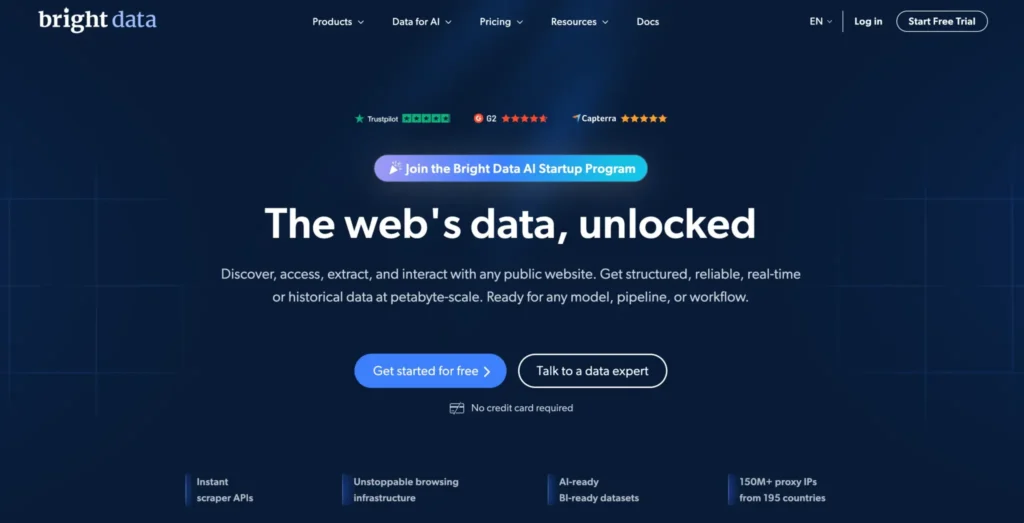
Bright Data is the heavy option in this category. It offers one of the largest residential proxy networks, deep geo targeting, advanced proxy controls, and extra data collection tools for teams that need more than basic IP rotation.
For social data collection, Bright Data makes sense when accuracy matters more than saving a few dollars per gigabyte.
If you are monitoring brand mentions across regions, collecting creator level public signals, checking local content visibility, or running multilingual social research, its location controls are a real advantage.
Its residential proxies cover country, state, city, ZIP code, and ASN targeting.
That matters when your campaign data depends on how content appears in specific regions. Bright Data also offers Web Unlocker and scraping infrastructure, which can reduce engineering load for teams that do not want to build everything themselves.
The downside is complexity. Bright Data is powerful, but beginners may find the dashboard, compliance flow, and pricing structure a little heavy at first.
Best for: Enterprise teams, social intelligence platforms, brand monitoring, ad verification, and region sensitive research.
2. Oxylabs: Best For Large Scale Public Social Data Collection
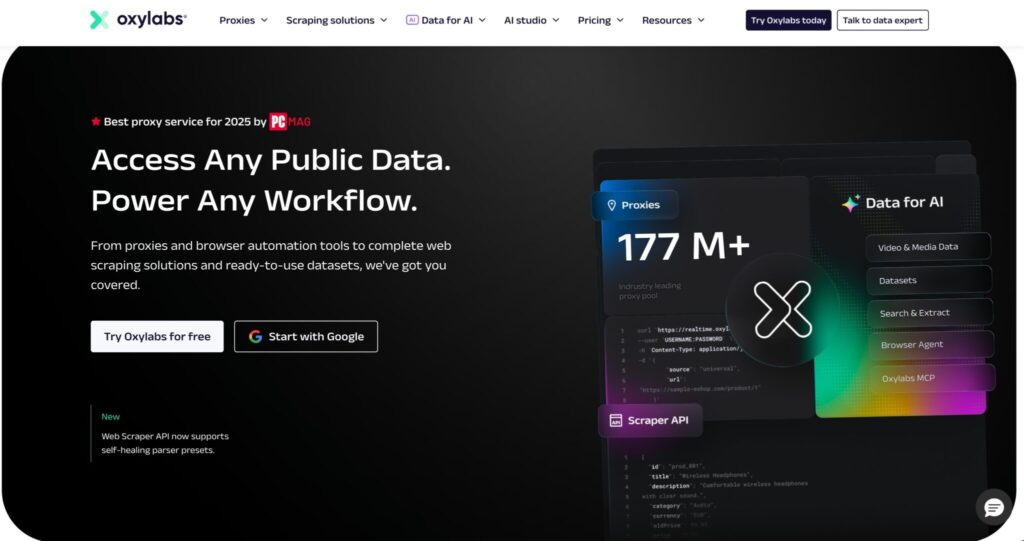
Oxylabs is another premium provider built for scale. Its residential proxy pool is large, global, and well suited for teams collecting public data across many locations. It also has strong infrastructure around web scraping, which helps when social data collection is part of a larger market research or competitive intelligence workflow.
The main strength here is reliability. Oxylabs is not usually the cheapest choice, but it is built for companies that care about uptime, support, account management, and predictable data operations. For social data, that means fewer random failures and better support when your collection jobs grow.
Oxylabs supports city and country targeting, flexible session control, SOCKS5 support, and unlimited concurrent sessions on residential proxies. That gives technical teams enough room to tune collection flows based on platform behavior.
Best for: Agencies, research teams, AI data teams, and companies collecting social data at scale.
3. Decodo: Best Balance Of Price, Pool Size, And Ease Of Use
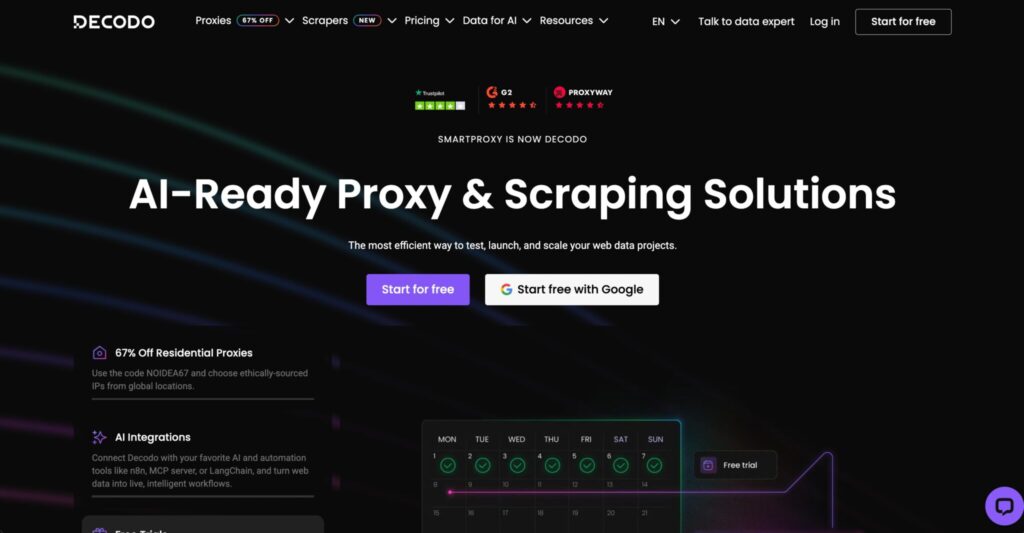
Decodo, formerly Smartproxy, is one of the most practical choices for social data collection because it balances scale, usability, and cost well. Its residential proxy network is large enough for serious scraping projects, but the platform still feels approachable for small and mid sized teams.
For social use cases, Decodo works well for collecting public profile data, hashtag data, comments, post metadata, creator discovery signals, and localized SERP plus social visibility checks.
The dashboard is clean, setup is quick, and the pricing is easier to understand than some enterprise first providers.
Its rotation controls are useful for both request based rotation and sticky sessions. If you are building a custom scraper, this flexibility matters. You can keep the same IP long enough to load paginated content, then rotate before the session gets stale.
Best for: Mid sized social listening teams, affiliate research, influencer discovery tools, and agencies that need value without weak infrastructure.
4. SOAX: Best For Geo Targeted Social Data Research
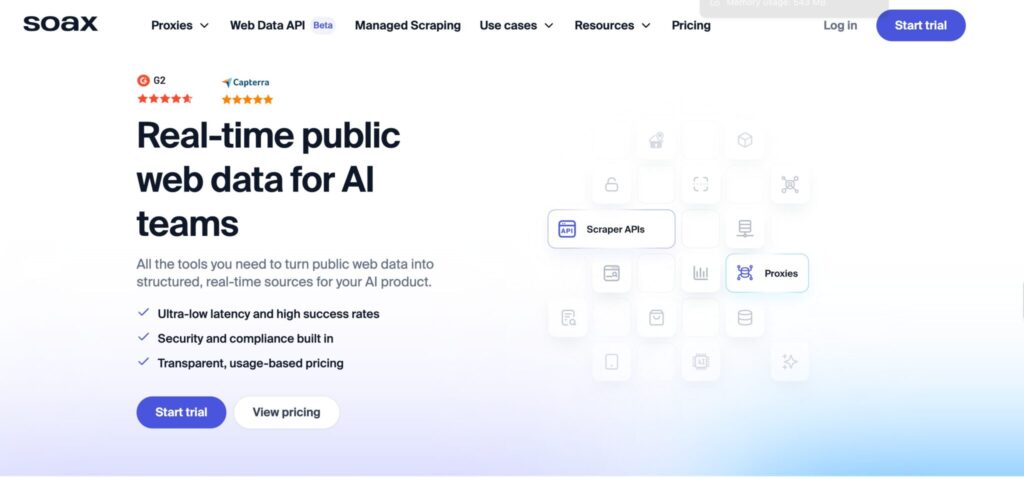
SOAX is strong when location accuracy matters. Its network includes residential, mobile, ISP, and datacenter proxies, with detailed targeting options and flexible rotation settings. For social data collection, this is useful when you need to compare how content appears in different countries, cities, or carrier environments.
The platform lets users configure rotation on each request or at set intervals. That gives you more control over pacing, which is important for social platforms where session behavior can affect what content loads.
SOAX is also a good fit when you need mobile proxies. Many social platforms were built around mobile behavior first, so mobile IPs can sometimes produce more realistic data for app like experiences, mobile feeds, and creator discovery flows.
Best for: Geo specific monitoring, multilingual social research, location based content checks, and mobile heavy projects.
5. NetNut: Best For Stable Rotating Residential Workflows
NetNut is a solid pick for teams that want stable residential proxy infrastructure for ongoing collection. Its rotating residential pool is large, and its plans are built more for business use than casual weekend scraping.
For social data collection, NetNut works well when you run repeated jobs every day and need predictable access to public pages. That could include tracking public creator profiles, monitoring brand mentions, collecting engagement movement, or checking localized social visibility.
Its pricing starts higher than low cost providers, but the setup is business friendly. You get useful traffic plans, global coverage, and support for larger workloads. It is not the flashiest platform, but it is practical when your team values consistency.
Best for: Continuous social monitoring, recurring public data collection, and business grade scraping operations.
6. IPRoyal: Best Budget Friendly Residential Proxy Option
IPRoyal is popular because it keeps residential proxies accessible for smaller users. The pool is smaller than Bright Data, Oxylabs, or Decodo, but it is still large enough for many public social data tasks.
One useful feature is non expiring traffic. If your collection volume changes from month to month, this can save money. Many teams waste bandwidth because they buy monthly plans and do not use the full allowance. With non expiring traffic, IPRoyal becomes attractive for small agencies, affiliate marketers, and researchers who run campaigns in bursts.
Rotation and sticky sessions are available, and the platform supports HTTP(S) and SOCKS5. It is not the best choice for extremely large enterprise workloads, but for cost controlled social data collection, it deserves a place on the shortlist.
Best for: Small teams, one off research projects, influencer list building, and budget conscious scraping.
7. Webshare: Best For Developers Who Want Low Cost Control
Webshare is a strong fit for developers and lean teams that want affordable proxies without a long sales process. It offers residential, static residential, and datacenter options with a simple dashboard and self serve pricing.
For social data collection, Webshare is useful for testing crawlers, validating workflows, and running lower risk public data jobs. It may not have the same advanced scraping ecosystem as Bright Data or Oxylabs, but the pricing makes it attractive when you are still experimenting.
Its residential proxy pricing can become very competitive at higher bandwidth volumes. That said, some targets may require extra verification or restrictions depending on use case, so check the provider rules before designing a large social workflow.
Best for: Developers, startups, test environments, and teams that need affordable residential bandwidth.
8. Infatica: Best For Flexible Mid Scale Collection
Infatica offers residential proxies with a friendly pricing structure, SOCKS5 options, dashboard controls, and global targeting. It is not always the first name people mention, but it can be a practical choice for mid scale social data work.
For public social data collection, Infatica fits use cases like profile research, social trend tracking, local visibility checks, and review style social monitoring. The provider gives enough flexibility for rotating residential sessions without pushing users into large enterprise commitments too early.
Its main appeal is simplicity. You can start smaller, test the network, and scale based on your actual traffic needs.
Best for: Mid scale collection, flexible budgets, and teams that want residential proxies without enterprise complexity.
9. DataImpulse: Best Low Cost Option For Bulk Public Data
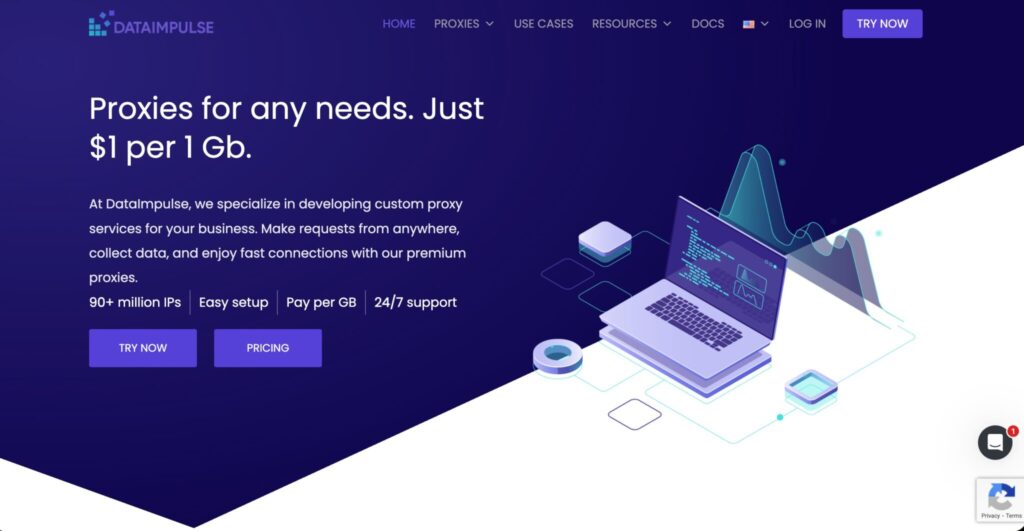
DataImpulse is one of the most aggressive budget options in the market, with residential proxies starting around $1 per GB. That makes it attractive for large volume public data collection where cost per gigabyte matters.
For social data collection, DataImpulse can work well for broad research tasks where you need volume more than advanced managed tooling. Think public keyword discovery, broad trend monitoring, or lightweight creator research across regions.
The tradeoff is that low cost networks usually require more testing. You should run a small pilot before committing your entire workflow. Check response quality, location accuracy, session stability, and failure rates under your exact use case.
Best for: Budget focused teams, bulk public collection, prototype scraping, and traffic heavy research.
How To Choose Proxies For Social Data Collection
1. Start With The Right Proxy Type
Residential proxies are the default choice for most social data workflows. They offer real consumer IPs and broad location coverage.
Mobile proxies are better when you need mobile network behavior, app like sessions, or carrier level testing.
ISP proxies are useful when you need a stable IP for longer sessions, such as logged in research tools that comply with platform rules.
Datacenter proxies are fast and cheap, but they are easier to flag. Use them for low sensitivity tasks, testing, and public pages that do not aggressively filter traffic.
2. Look Beyond IP Pool Size
A huge IP pool sounds impressive, but freshness matters more. Ask these questions:
- Are the IPs active in your target countries?
- Can you target city or ASN?
- Does the provider recycle poor IPs quickly?
- Can you control session duration?
- Does the dashboard show usage and errors clearly?
A smaller clean pool can outperform a massive weak pool.
3. Match Rotation To Your Data Flow
For feed style pages, sticky sessions often work better than instant rotation. For independent public URLs, request based rotation may be fine.
A good starting setup:
- Public profile pages: sticky session for 10 to 20 minutes
- Search or hashtag pages: rotate every few requests
- Geo checks: use location locked sessions
- High volume collection: rotate by batch, not randomly
Pro Tip: Build retry logic before increasing proxy spend. Many failed requests come from bad timing, page weight, JavaScript rendering issues, or poor scraper logic, not only bad proxies.
4. Check Compliance And Data Rules
Social data collection can touch privacy and platform policy issues. Stay on public data. Avoid private messages, private profiles, hidden APIs, account abuse, or personal data collection without a legal basis.
A good proxy provider will have clear acceptable use rules. That is a positive sign, not a weakness.
My Practical Ranking
If money is not the main issue, choose Bright Data or Oxylabs. If you want the best balance, start with Decodo or SOAX. If you need affordable testing, try Webshare, IPRoyal, or DataImpulse. For stable recurring business workflows, NetNut and Infatica are both worth testing.
My preferred stack for most social data teams would look like this:
- Decodo for daily residential collection
- SOAX for geo targeted research
- Webshare or DataImpulse for low cost testing
- Bright Data or Oxylabs for enterprise scale workloads
FAQs
What are the best proxies for social data collection?
The best options are usually residential proxies from providers like Bright Data, Oxylabs, Decodo, SOAX, NetNut, IPRoyal, Webshare, Infatica, and DataImpulse. The right choice depends on scale, budget, targeting needs, and how much control you need over rotation.
Are residential proxies better than datacenter proxies for social data?
Yes, in most cases. Residential proxies look closer to normal user traffic because they come from consumer ISP networks. Datacenter proxies are faster and cheaper, but they are easier for platforms to identify.
Should I use rotating or sticky proxies?
Use both, depending on the task. Rotating proxies work well for independent public URLs. Sticky sessions work better when you need to load multiple pages in the same flow, such as profiles, hashtags, or localized feeds.
Are mobile proxies useful for social media data?
Yes, especially for mobile first platforms or location sensitive research. Mobile proxies can show content closer to what real mobile users may see, but they are usually more expensive than residential proxies.
How many proxies do I need for social scraping?
It depends on your request volume, target countries, session length, and collection frequency. Start small, measure success rate and bandwidth usage, then scale. Buying a massive plan before testing is a common mistake.
Can proxies prevent blocks completely?
No. Proxies reduce IP based limits, but they do not fix bad scraper behavior. You still need clean request pacing, proper rendering, smart retries, and respect for platform rules.
What is the cheapest proxy provider for social data collection?
DataImpulse, Webshare, and IPRoyal are usually among the more affordable options. Still, cheap does not always mean better. Test success rate, location quality, and stability before choosing based only on price.
What proxy type is best for influencer data collection?
Residential proxies are usually the best starting point. If you need mobile specific results, add mobile proxies. If you need longer stable sessions for approved tools, consider ISP proxies.
What should I avoid when buying social data proxies?
Avoid free proxy lists, unclear sourcing, no dashboard controls, no rotation settings, and providers with vague usage rules. Free proxies are often slow, unstable, and risky for business data collection.
Final Recommendation
The best proxy for social data collection is the one that matches your workflow, not the one with the biggest logo or the loudest pricing claim.
For serious teams, Bright Data and Oxylabs offer the strongest enterprise setup. For most buyers, Decodo and SOAX give the best mix of scale, targeting, rotation, and usability. For budget projects, Webshare, IPRoyal, and DataImpulse are smart starting points. NetNut and Infatica sit in the middle, with steady infrastructure for teams that want business grade residential traffic without going fully enterprise.
Start with a small test. Track success rate, bandwidth cost, location accuracy, and failure patterns. Then scale the provider that gives you the cleanest data at the lowest real cost, not just the cheapest price per GB.