
Buying proxies looks simple until you actually need them to work at scale.
A cheap provider may look fine for the first 500 requests, then collapse when you run a serious scraping job. A premium provider may have a huge IP pool, but the pricing can feel painful if you only need a few gigabytes for SEO checks or localized testing.
Some networks are built for developers. Some are built for enterprise data teams. Some are great for sneaker bots and social media workflows, but weak for business-grade web data collection.
That is why “best proxy provider” is not a one-size answer. The right choice depends on your target sites, traffic volume, rotation needs, location requirements, session length, budget, and risk tolerance.
For most professional users, the safest shortlist comes down to Decodo, Oxylabs, Bright Data, SOAX, NetNut, IPRoyal, Webshare, Rayobyte, DataImpulse, and Proxy-Seller. Each one has a different personality. Some win on scale. Some win on price. Some win on clean dashboards and fast setup. Some win because they give technical teams more control over targeting, sessions, APIs, and proxy types.
Below is a practical buyer’s guide written for people who actually need proxies to perform, not just look good on a pricing page.
Quick Verdict: Best Proxy Providers by Use Case
| Rank | Proxy Provider | Best For | Proxy Types | Starting Price Snapshot | Main Strength | Main Limitation |
| 1 | Decodo | Best overall balance | Residential, ISP, mobile, datacenter, scraping tools | Residential plans listed from around $3.75/GB on small plans, with lower rates at higher volume | Easy dashboard, strong network, good value | Not the cheapest at very low usage |
| 2 | Oxylabs | Enterprise scraping and data collection | Residential, mobile, datacenter, ISP, Web Unblocker, scraping APIs | Residential starter plan listed at 5GB for $30, or $6/GB | Massive network and serious scraping stack | Can feel expensive for small users |
| 3 | Bright Data | Advanced targeting and enterprise workflows | Residential, mobile, ISP, datacenter, datasets, scraping APIs | Residential pricing page lists plans from $5.88/GB, while other proxy pages show pay-as-you-go options | Deep controls, huge scale, strong compliance posture | More complex than beginner tools |
| 4 | SOAX | Geo-targeting and flexible proxy bundles | Residential, mobile, US datacenter, Web Data API | Pricing page lists bundled proxy plans from $3.60/GB with 25GB included | Clean geo controls and mobile/residential strength | Starter cost is higher than ultra-budget tools |
| 5 | NetNut | Stable business scraping | Residential, mobile, datacenter | Residential plans listed from $3.53/GB on starter tiers, with lower rates at scale | Strong business focus and large pool | Not ideal for tiny one-off projects |
| 6 | IPRoyal | Budget-friendly residential and ISP proxies | Residential, ISP, datacenter, mobile | Residential listed from $1.75/GB, ISP from around $2/proxy | Affordable, simple, low barrier to entry | Less enterprise polish than Oxylabs or Bright Data |
| 7 | Webshare | Low-cost datacenter and simple residential proxy setup | Datacenter, static residential, rotating residential | Datacenter proxy servers from $2.99/month, residential from $3.50/month for 1GB | Beginner-friendly and affordable | Support and scraping tools are more limited |
| 8 | Rayobyte | Datacenter proxies and mixed proxy infrastructure | Datacenter, ISP, residential | Residential starts around $3.50/GB, datacenter plans start by IP volume | Transparent pricing and solid datacenter coverage | Residential pool is not as large as the biggest players |
| 9 | DataImpulse | Cheap pay-as-you-go residential traffic | Residential and related proxy services | Residential pricing starts at $1/GB | Great entry price and non-expiring traffic model | Fewer advanced enterprise tools |
| 10 | Proxy-Seller | Flexible personal and business proxy buying | Residential, ISP, datacenter IPv4/IPv6, mobile | Residential pricing shown from $0.7/GB | Broad catalog, SOCKS5 support, flexible plans | Quality can vary by product type and use case |
Pricing changes often, so treat these as a planning snapshot, not a checkout quote. Decodo lists residential proxy pricing from $3.75/GB on small plans and notes Smartproxy has rebranded to Decodo. Oxylabs lists residential starter pricing at 5GB for $30. Bright Data lists residential proxy plans from $5.88/GB and separately promotes a 400M+ residential IP network. SOAX lists bundled proxy pricing from $3.60/GB.
What Makes a Proxy Provider Worth Paying For?
A good proxy provider is not just selling IP addresses. It is selling reliability under pressure.
The real test starts when you send traffic at volume, target stricter websites, rotate sessions, hit different countries, and run jobs for hours without babysitting them. That is when weak networks show their cracks.
Here are the main things that separate serious providers from disposable proxy shops.
1. IP Pool Quality
Big IP numbers look impressive, but quality matters more than raw size. A provider with 20 million clean, well-managed IPs can outperform a provider claiming a giant pool full of burned, slow, or unstable nodes.
For scraping, SEO monitoring, ad verification, and price intelligence, you want IPs that look natural. Residential IPs usually perform better on stricter sites because they come from real consumer networks. Datacenter IPs are faster and cheaper, but they are easier for advanced anti-bot systems to flag.
2. Rotation Control
Rotation is where many buyers make expensive mistakes.
Some projects need a new IP on every request. Others need sticky sessions that hold the same IP for 5, 10, or 30 minutes. Account-based workflows usually need longer sessions. SERP scraping and price checks often work better with aggressive rotation.
The best proxy providers let you control this instead of forcing one default behavior.
3. Geo-Targeting Accuracy
Country targeting is not enough for many professional use cases. If you are checking local ads, marketplace pricing, delivery availability, or localized search results, you may need state, city, ZIP, ASN, or ISP-level targeting.
Bright Data highlights city, state, country, ZIP, and ASN-level targeting for its residential network. Proxy-Seller also mentions GEO and ISP targeting in its residential proxy controls.
4. Protocol Support
At minimum, you want HTTP and HTTPS. SOCKS5 is useful when you need broader app compatibility, better flexibility, or non-browser workflows.
Oxylabs notes SOCKS5 support for residential and dedicated datacenter proxies, while Proxy-Seller states support for HTTP(S) and SOCKS5 across its catalog.
5. Ethical Sourcing and Compliance
This matters more in 2026 than it did a few years ago.
Residential proxy networks can be risky when the provider does not clearly explain how it sources IPs. Free proxies are even worse. A 2024 academic study on free web proxies found major instability, vulnerabilities, and content manipulation risks, which is a strong reason to avoid random free proxy lists for business work.
A serious provider should have clear sourcing practices, abuse controls, KYC for sensitive use cases, and terms that do not encourage spam, credential attacks, scraping private data, or bypassing paywalls.
Detailed Reviews of the Best Proxy Providers
1. Decodo: Best Overall Proxy Provider for Most Teams
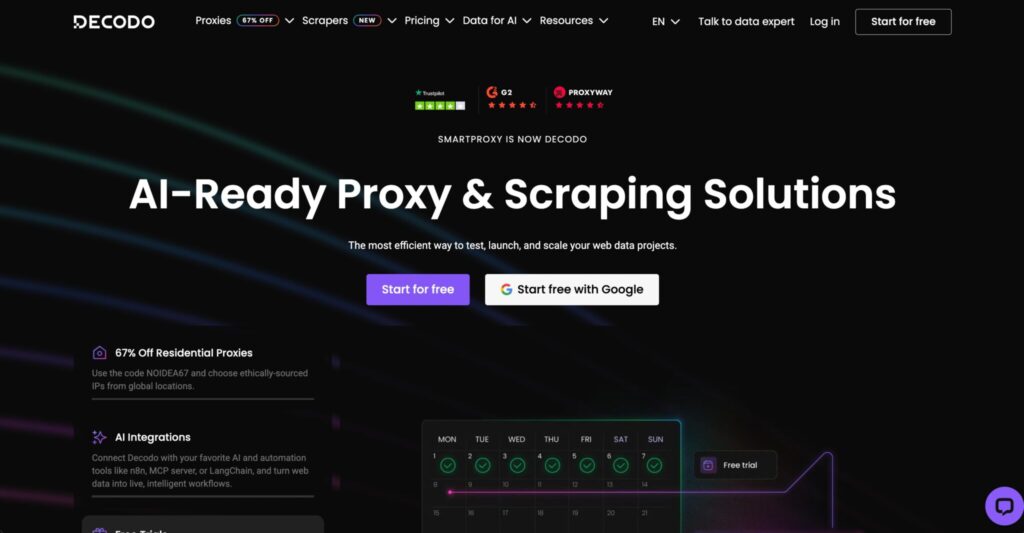
Decodo, formerly Smartproxy, is one of the easiest proxy providers to recommend for users who want strong performance without enterprise-level complexity. The company states that Smartproxy officially rebranded to Decodo, and its current site highlights access to 125M+ IPs.
The biggest appeal is balance. Decodo gives you residential proxies, static residential or ISP proxies, mobile proxies, datacenter proxies, scraping APIs, and a clean dashboard. You can use it for SEO monitoring, market research, ad verification, account testing, localized browsing, and scraping jobs without feeling like you need a full engineering department just to set things up.
Its residential pricing is also competitive. The current Decodo residential pricing page shows small plans starting at 3GB for $3.75/GB, with lower per-GB rates on larger plans.
Best for: users who want a strong mix of price, usability, proxy variety, and scraping features.
Pro tip: Start Decodo with residential proxies if your targets are stricter. Use datacenter proxies only when speed and low cost matter more than stealth.
2. Oxylabs: Best for Enterprise Scraping and Large Data Teams
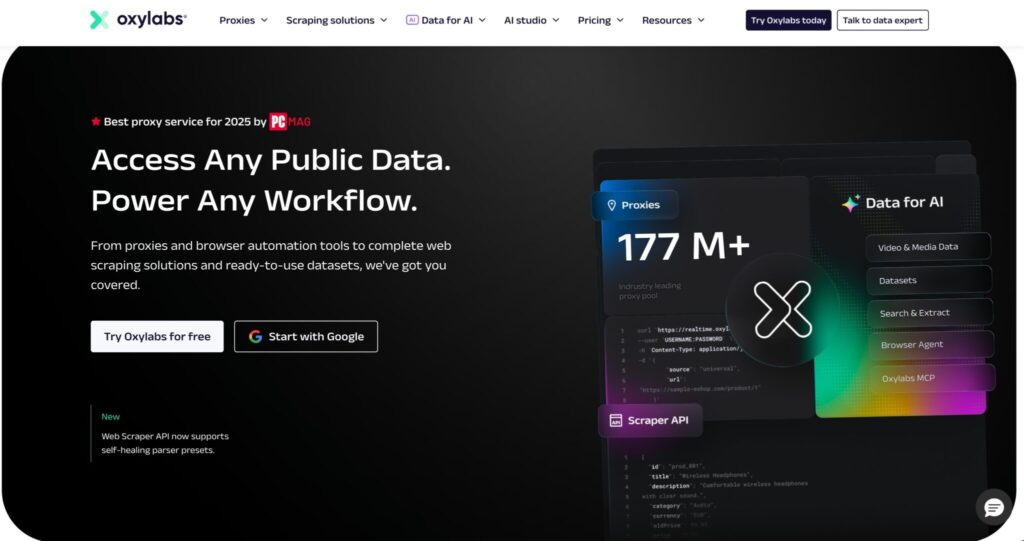
Oxylabs is built for serious web data collection. It is not just a proxy seller. It offers residential proxies, datacenter proxies, mobile proxies, ISP-style options, Web Unblocker, scraper APIs, and data collection tools.
Oxylabs says it offers 175M+ residential IPs and 2M datacenter IPs, which puts it among the largest proxy networks in the market.
Its residential pricing page lists a starter plan at 5GB for $30, or $6/GB, with lower rates as you move into larger plans. Mobile proxy pricing starts at 4GB for $30, or $7.50/GB, according to its mobile pricing page.
Oxylabs makes the most sense when uptime, scale, support, and unblock rates matter more than shaving a few dollars from the bill. If you run price intelligence, brand protection, SERP monitoring, travel fare tracking, threat intelligence, or large-scale public data scraping, Oxylabs should be on your shortlist.
Best for: enterprise users, technical teams, and businesses running high-volume scraping.
Pro tip: If your team keeps fighting CAPTCHAs and blocks, compare Oxylabs proxies against its Web Unblocker or scraper APIs. Sometimes the managed scraping layer costs more upfront but saves hours of engineering time.
3. Bright Data: Best for Advanced Targeting and Data Infrastructure
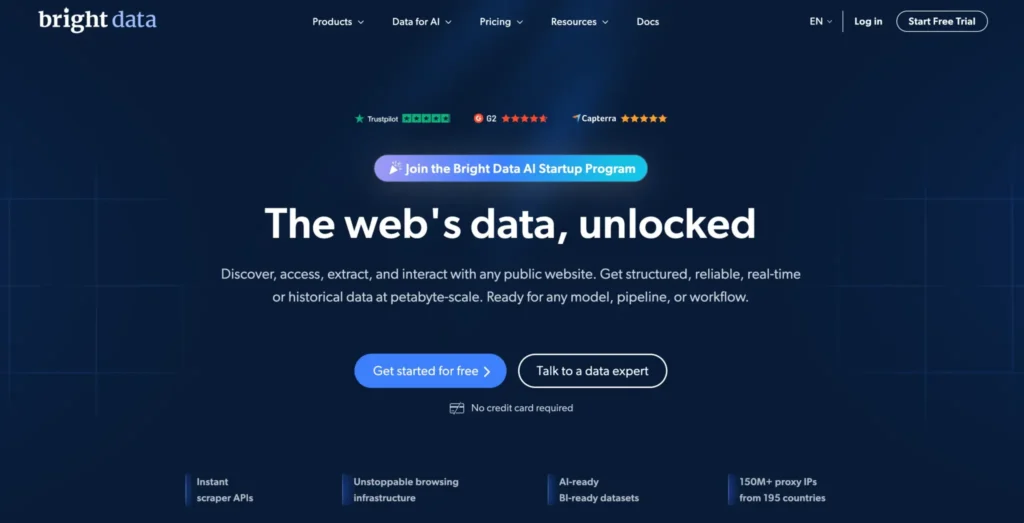
Bright Data is one of the most advanced proxy platforms in the market. It offers residential, ISP, mobile, and datacenter proxies, plus scraping tools, datasets, and APIs.
Its residential proxy page claims access to 400M+ residential IPs across 195 countries, with targeting options including city, state, country, ZIP code, and ASN.
This is the provider you choose when you want control. Bright Data is not always the simplest tool for beginners, but it gives experienced operators a deep set of options. If you need exact location targeting, compliance-oriented workflows, large-scale scraping, or integrated datasets, Bright Data is one of the strongest names in the category.
The pricing is not bargain-bin. Bright Data’s residential pricing page lists plans from $5.88/GB. Its broader proxy pricing page also shows different models for pay-as-you-go and per-IP products.
Best for: advanced teams that need targeting depth, enterprise-grade controls, and more than just raw proxies.
Pro tip: Bright Data can be overkill for small SEO checks. But if location accuracy and success rate are critical, the extra control can justify the cost.
4. SOAX: Best for Geo-Targeting and Clean Proxy Management
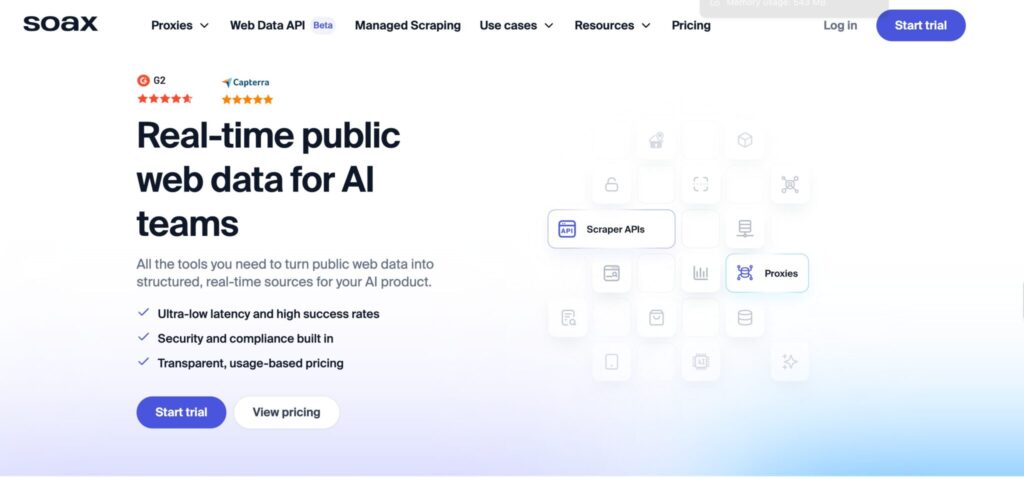
SOAX sits in a strong middle ground between enterprise proxy platforms and simpler self-serve tools. It offers residential proxies, mobile proxies, US datacenter proxies, and Web Data API access through bundled plans.
Its pricing page currently lists bundled proxy plans starting at $3.60/GB with 25GB included, while its residential page shows higher-volume business and enterprise pricing with much lower per-GB rates at scale.
SOAX is especially useful when you need accurate geographic filtering and a cleaner operational experience. It is a good pick for ad verification, localized content testing, ecommerce monitoring, travel data, and research projects where country-level targeting is not enough.
Best for: teams that care about location control and clean proxy management.
Pro tip: SOAX is a strong fit when you need residential and mobile testing in the same workflow. Test both types against your target before committing to one.
5. NetNut: Best for Stable Business-Grade Residential Proxies
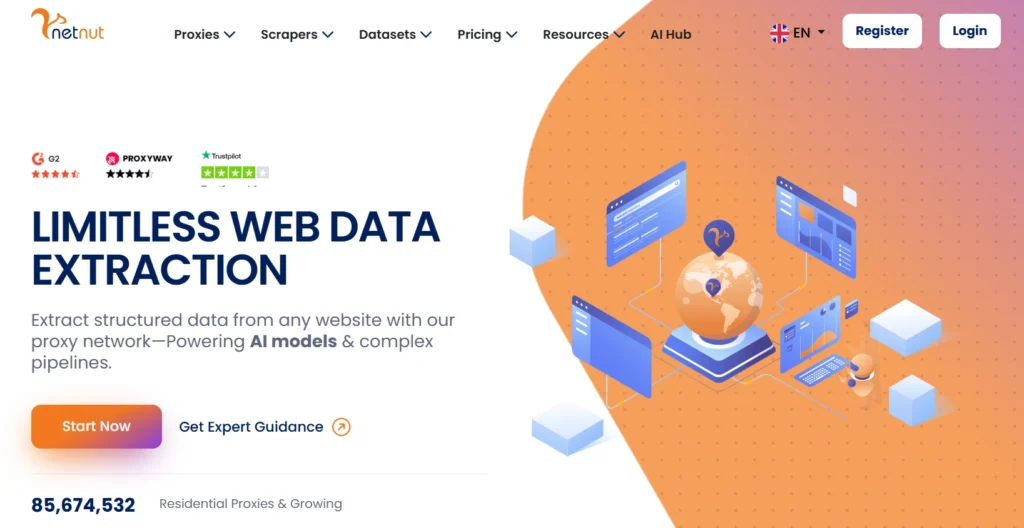
NetNut is a business-focused proxy provider with residential, mobile, and datacenter products. Its site states that it offers over 85 million residential proxies and 5 million mobile proxies.
Its residential pricing page lists several plans, starting at $3.53/GB on the starter tier and dropping at higher volume levels.
NetNut’s pitch is stability. It is a good fit for teams that need consistent data collection without jumping between throwaway proxy vendors every month. For scraping, price comparison, ad verification, and brand monitoring, NetNut is worth testing against Oxylabs, Bright Data, and SOAX.
Best for: businesses that want reliable residential proxy infrastructure without the most complex setup.
Pro tip: NetNut makes more sense once you have predictable monthly usage. For tiny one-off tasks, a pay-as-you-go provider may be easier.
6. IPRoyal: Best Budget-Friendly Proxy Provider
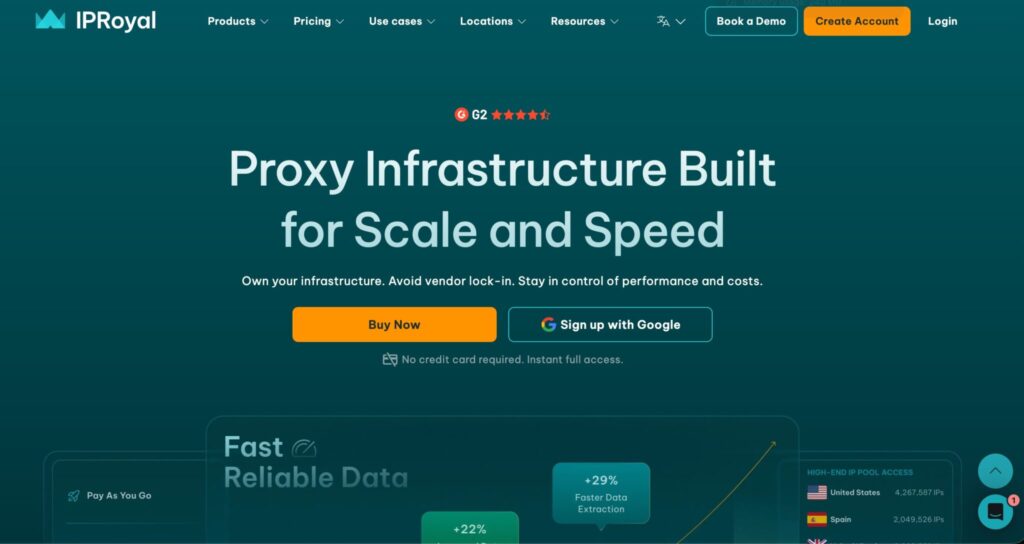
IPRoyal has become popular because it keeps pricing accessible. Its main site lists residential proxies from $1.75/GB and ISP proxies from around $2/proxy, with a 32M+ residential proxy pool and 500K+ ISP proxy count shown on its product pages.
This makes IPRoyal attractive for freelancers, small SEO teams, affiliate marketers, and developers who do not want to start with a large monthly commitment. It offers residential, ISP, datacenter, and mobile proxies, so you can test different workflows without moving to another provider immediately.
The trade-off is that IPRoyal does not feel as enterprise-heavy as Oxylabs or Bright Data. That is not always a bad thing. Many users prefer a simpler setup and lower cost.
Best for: budget-conscious users who still want paid proxy reliability.
Pro tip: Use IPRoyal residential proxies for small to medium scraping and geo-testing projects. Use ISP proxies when you need longer sessions and more stable IP identity.
7. Webshare: Best for Simple, Affordable Proxy Access
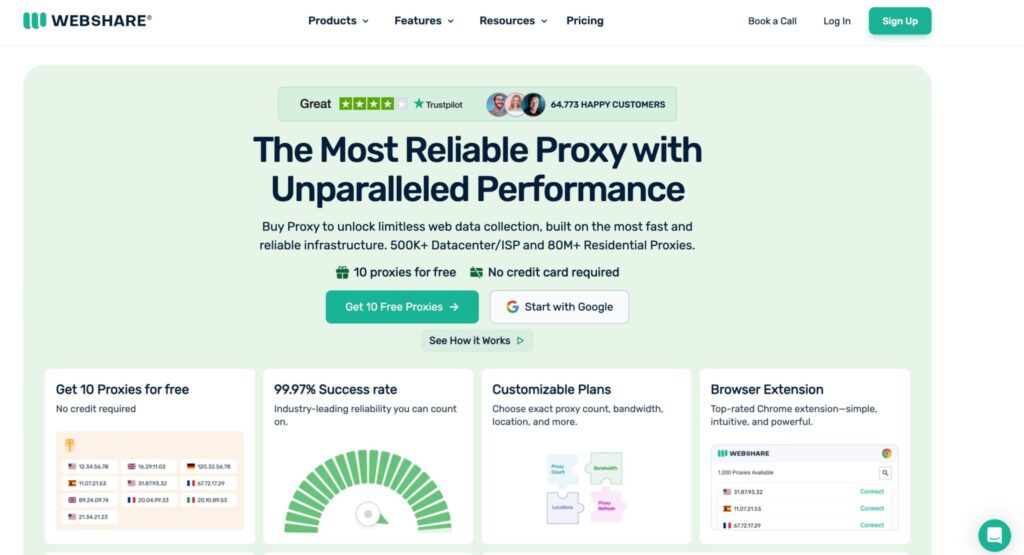
Webshare is a strong option for users who want affordable proxies with a simple dashboard. Its site lists three main proxy products: datacenter proxy servers, static residential proxies, and residential proxies. It also advertises datacenter proxy servers from $2.99/month and static residential options from $6/month.
Its residential proxy page shows rotating residential proxies with 80M+ residential IPs and pricing from $3.50/month for 1GB, while another Webshare page lists residential pricing as low as $1.40/GB at larger volumes.
Webshare is not the most advanced scraping platform. You do not get the same depth of managed unblocking tools as Oxylabs, Bright Data, or Decodo. But for simple datacenter proxies, static residential proxies, testing, and smaller scraping jobs, it is a practical choice.
Best for: beginners, budget users, and teams that want quick proxy setup without a steep learning curve.
Pro tip: Webshare is especially useful for datacenter proxy testing. If your target accepts datacenter IPs, you can save a lot compared with residential bandwidth.
8. Rayobyte: Best for Datacenter Proxies and Mixed Proxy Needs
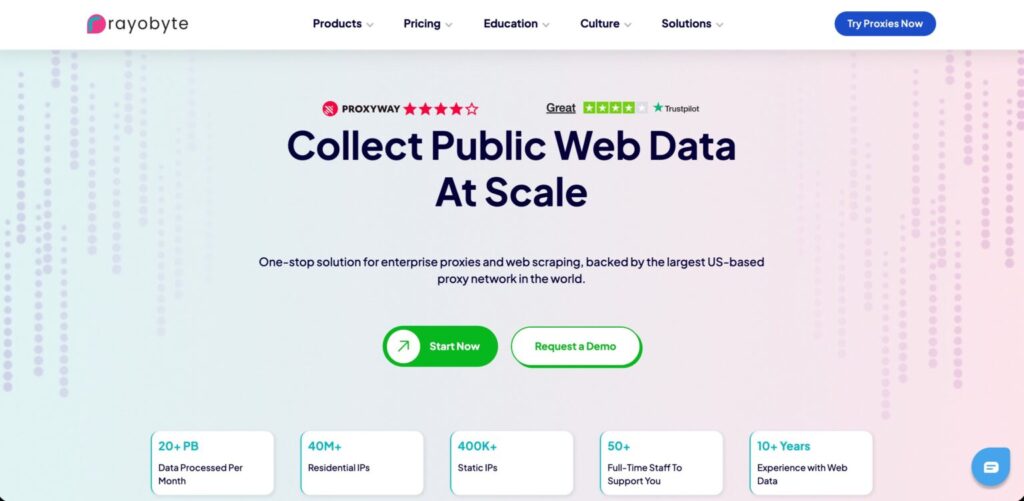
Rayobyte has a long-standing reputation in the datacenter proxy space. Its datacenter proxy page lists 300,000+ available IPs, 29+ global locations, and 9+ ASNs.
It also offers residential and ISP proxies. Its residential product page lists starter pricing around $3.50/GB, and its pricing page shows datacenter and ISP proxy pricing by IP volume.
Rayobyte is a good fit when you want a more traditional proxy provider with a strong datacenter foundation. It is not always the first name people mention for massive residential scraping, but it can be very useful for users who need a mix of datacenter, ISP, and residential proxies.
Best for: datacenter-heavy workflows, mixed proxy stacks, and teams that want transparent pricing.
Pro tip: Test Rayobyte datacenter proxies before defaulting to residential. For some B2B scraping, uptime checks, and non-aggressive workloads, datacenter IPs may be enough.
9. DataImpulse: Best Cheap Pay-As-You-Go Residential Proxies
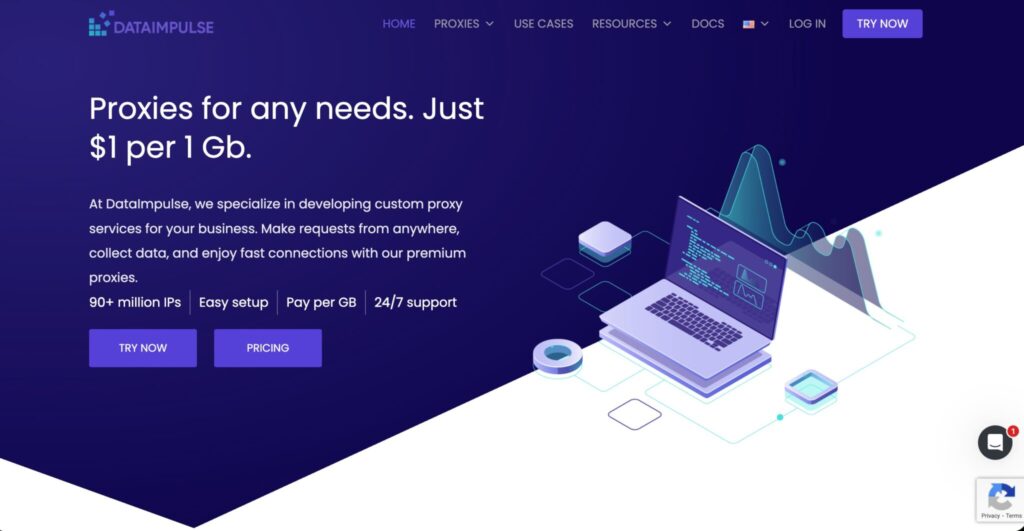
DataImpulse is one of the most interesting budget options because of its simple pricing. Its residential proxy page says it offers 90M+ residential IPs across 195 countries, with pricing starting from $1 per GB.
Its use-case page also says residential proxy traffic starts at $1/GB, does not require a subscription, and does not expire.
That makes DataImpulse attractive for users who dislike monthly commitments. If you run occasional scraping jobs, SEO checks, market research, or geo-testing tasks, non-expiring pay-as-you-go traffic can be easier to manage.
The downside is that it does not have the same brand weight, managed scraping stack, or enterprise tooling as the bigger providers. But for the price, it deserves attention.
Best for: low-cost residential traffic and occasional proxy users.
Pro tip: Use DataImpulse as a secondary provider for overflow or testing. It can help you benchmark whether premium proxy costs are actually improving success rates.
10. Proxy-Seller: Best for Flexible Proxy Buying Across Categories
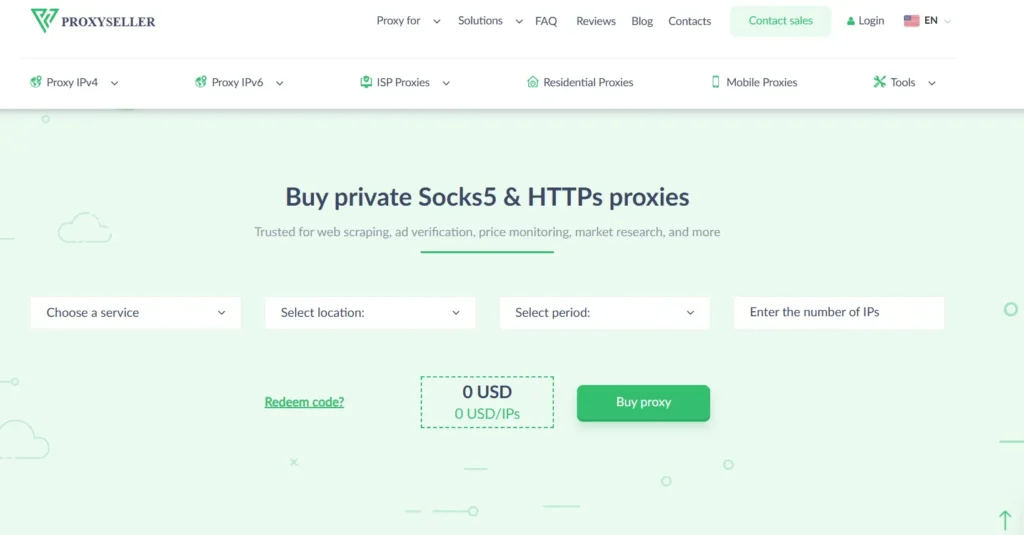
Proxy-Seller has a broad proxy catalog covering residential, ISP, datacenter IPv4/IPv6, and mobile proxies. Its residential page advertises residential proxies from $0.7/GB, 20M+ addresses, 220+ countries and regions, ISP selection, GEO targeting, rotation modes, HTTPS/SOCKS5 support, and username/password or IP allowlist authentication.
That flexibility makes it useful for buyers who want to choose between different proxy types without dealing with a highly complex enterprise platform.
Proxy-Seller is especially appealing for users who need specific proxy types for SEO tools, automation, app testing, gaming, or general business workflows. As always, test before buying large volume. Broad catalogs can vary by product type.
Best for: flexible proxy buying, mixed use cases, and users who want residential, ISP, mobile, and datacenter options in one place.
Pro tip: Do not judge Proxy-Seller by one proxy type alone. Test the exact category you plan to use, such as residential, ISP, or mobile, because performance can differ heavily by network.
How to Choose the Best Proxy Provider
Start With the Proxy Type
Residential Proxies
Residential proxies route traffic through IPs associated with real internet service providers. They are best for scraping, ad verification, market research, localized testing, travel data, ecommerce pricing, and tasks where datacenter IPs get blocked quickly.
They cost more, but they usually blend in better.
Datacenter Proxies
Datacenter proxies are fast, cheap, and stable. They are good for high-speed tasks, basic scraping, uptime checks, and workflows where the target site is not strict.
The downside is detection. Datacenter IP ranges are easier to classify, so they may fail on tougher sites.
ISP or Static Residential Proxies
ISP proxies combine datacenter-style speed with residential-looking ownership. They are useful for long sessions, account workflows, ecommerce monitoring, and ad verification.
If you need the same IP for longer periods, ISP proxies often make more sense than rotating residential proxies.
Mobile Proxies
Mobile proxies use carrier IPs. They are useful for app testing, mobile ad verification, social platform QA, and checking mobile-first experiences.
They are usually more expensive, so use them only when the use case truly needs mobile carrier identity.
Understand Rotation Protocols Before Buying
Rotation controls how often your IP changes.
Per-request rotation gives you a new IP for each request. This is useful for broad scraping jobs where you want to spread traffic across many IPs.
Sticky sessions keep the same IP for a set time. This is useful for login flows, shopping carts, multi-step journeys, and account-based tasks.
Manual rotation gives you more control but requires better engineering.
Backconnect gateways let you connect to one endpoint while the provider handles IP rotation behind the scenes.
Pro tip: If your scraping job fails randomly halfway through a multi-step flow, your rotation may be too aggressive. Use sticky sessions.
Check IP Pool Size, But Do Not Worship It
A huge IP pool helps when you need global reach, many concurrent requests, and lower reuse. But pool size alone does not guarantee success.
Ask these questions:
- Are the IPs ethically sourced?
- Are they active in the countries you need?
- Can you target city, ZIP, ASN, or ISP?
- Can you control session length?
- Are banned IPs replaced quickly?
- Does the provider offer usage analytics?
- Is support technical enough to help with real problems?
A smaller clean pool can beat a huge dirty one.
Test With Your Real Target Sites
Do not buy proxies based only on reviews.
Run a proper test:
- Pick 3 to 5 target websites.
- Send realistic traffic, not just a few browser visits.
- Test residential, datacenter, and ISP proxies if available.
- Measure success rate, latency, CAPTCHA rate, ban rate, and cost per successful request.
- Run the test at the same time of day you expect to use the proxies.
- Repeat with sticky sessions and rotating sessions.
The cheapest proxy is not the one with the lowest price per GB. It is the one with the lowest cost per successful result.
Avoid Free Proxies for Business Work
Free proxies look tempting, but they are not worth the risk for serious use. The academic study mentioned earlier found that many free proxies were unstable and that some manipulated content.
For business use, free proxies can create security, privacy, reliability, and legal headaches. Use paid proxies from providers with clear sourcing and abuse policies.
FAQs About the Best Proxy Providers
1. What is the best proxy provider overall?
For most users, Decodo is the best overall balance of usability, pricing, proxy types, and scraping features. For enterprise scraping, Oxylabs and Bright Data are stronger choices. For budget residential traffic, IPRoyal, DataImpulse, and Webshare are easier to start with.
2. Are residential proxies better than datacenter proxies?
Residential proxies are better for stricter websites because they look like normal ISP traffic. Datacenter proxies are faster and cheaper, but easier to detect. Use residential proxies when success rate matters. Use datacenter proxies when speed and cost matter more.
3. What is the cheapest good proxy provider?
For residential traffic, DataImpulse and IPRoyal are among the most affordable options based on current public pricing. DataImpulse lists residential traffic from $1/GB, while IPRoyal lists residential proxies from $1.75/GB.
4. What is the difference between a proxy and a VPN?
A proxy usually changes the IP address for a specific app, browser, or connection. A VPN typically routes and encrypts all device traffic through a secure tunnel. Norton’s proxy vs VPN guide also explains that VPNs usually provide broader encryption, while proxies are mainly used for IP routing and location changes.
5. Which proxy type is best for web scraping?
Residential proxies are usually best for scraping stricter websites. Datacenter proxies are better for cheap, fast scraping on easier targets. ISP proxies are useful when you need stable sessions. Mobile proxies are best for mobile app testing and mobile ad verification.
6. How many proxies do I need?
It depends on your request volume, target strictness, and rotation settings. A small SEO workflow may need only a few GB of residential traffic. A large ecommerce scraping project may need hundreds or thousands of GB per month. Always calculate based on successful requests, not just bandwidth.
7. Are proxies legal?
Proxies themselves are legal tools. The risk depends on how you use them. Public web data collection, ad verification, SEO monitoring, QA testing, and market research can be legitimate use cases. Avoid using proxies for spam, credential stuffing, fraud, scraping private data, bypassing paywalls, or violating platform rules.
8. Should I choose pay-as-you-go or monthly plans?
Choose pay-as-you-go if your usage is irregular or you are testing. Choose monthly plans if you have predictable traffic and want lower per-GB rates. Bigger monthly plans usually reduce bandwidth cost, but unused traffic can become waste unless the provider offers rollover or non-expiring balance.
9. Which proxy provider is best for beginners?
Webshare, IPRoyal, and Decodo are good beginner-friendly options. Webshare is simple and affordable. IPRoyal is budget-friendly. Decodo gives more room to grow once you need better targeting, scraping APIs, or multiple proxy types.
Final Verdict: Which Proxy Provider Should You Choose?
If you want the safest all-around choice, start with Decodo. It has the best mix of ease, proxy variety, pricing, and professional features.
If you run serious web scraping at scale, test Oxylabs and Bright Data first. They cost more, but they are built for bigger workloads, stricter targets, and technical teams that need fewer surprises.
If budget matters most, compare IPRoyal, DataImpulse, and Webshare. They are easier to start with and make sense for smaller projects.
If you need strong geo-targeting, add SOAX to your shortlist. If you need business-grade stability, test NetNut. If datacenter proxies matter, check Rayobyte. If you want a flexible catalog across residential, ISP, datacenter, and mobile proxies, try Proxy-Seller.
The smart move is simple: shortlist three providers, run the same test against your real targets, and measure success rate, speed, CAPTCHA rate, and total cost per successful request.
That is how you find the best proxy provider for your actual workflow, not just the best-looking name on a comparison table.