
SOCKS5 proxies sit in that useful middle ground between simple browser proxies and heavier privacy tools. They are not as beginner-friendly as a one-click VPN, but they give technical users much more control. That is why developers, web data teams, SEO analysts, ad verification teams, QA engineers, and automation users still care about them.
The real value of SOCKS5 is protocol flexibility. Unlike basic HTTP proxies that mainly handle web traffic, SOCKS5 can move different types of traffic through a proxy connection, including TCP and UDP-based use cases when the provider supports them.
SOAX, for example, explains that SOCKS5 can support both TCP and UDP traffic, while Bright Data describes SOCKS5 as useful for handling HTTP, HTTPS, FTP, and more complex traffic types.
That does not mean every SOCKS5 proxy provider is equal. Some are built for enterprise-grade scraping. Some are better for small automation projects. Some are cheap but limited. Others are powerful but overkill unless you are running serious data operations.
Below is a practical buyer’s guide to the 9 best SOCKS5 proxy providers in 2026, based on protocol support, IP pool quality, pricing structure, rotation options, targeting depth, and real-world usability.
What Makes SOCKS5 Different From HTTP Proxies?
HTTP proxies are designed mainly for web traffic. They understand HTTP and HTTPS requests, which makes them useful for browser automation, web scraping, SERP checking, and basic content access.
SOCKS5 works at a lower level. It does not interpret the web request in the same way. Instead, it acts more like a general traffic tunnel between your device or application and the destination server. This makes it more flexible for apps, non-browser tools, FTP clients, gaming-related traffic, messaging tools, and custom automation stacks.
The practical difference is simple:
HTTP proxies are usually easier for standard scraping and browser work. SOCKS5 proxies are better when you need broader protocol compatibility, app-level routing, or UDP support.
That said, provider implementation matters. A company may advertise SOCKS5 support, but you still need to check whether it supports sticky sessions, rotating sessions, UDP, country targeting, city targeting, ASN targeting, API control, and bandwidth rules.
Pro Tip: Do not buy SOCKS5 proxies only because the provider says “SOCKS5 supported.” Ask what proxy types support SOCKS5. Residential, datacenter, ISP, and mobile SOCKS5 proxies behave very differently under load.
9 Best SOCKS5 Proxy Providers in 2026
#1 — Oxylabs: Best SOCKS5 Proxy for Business-Grade Reliability
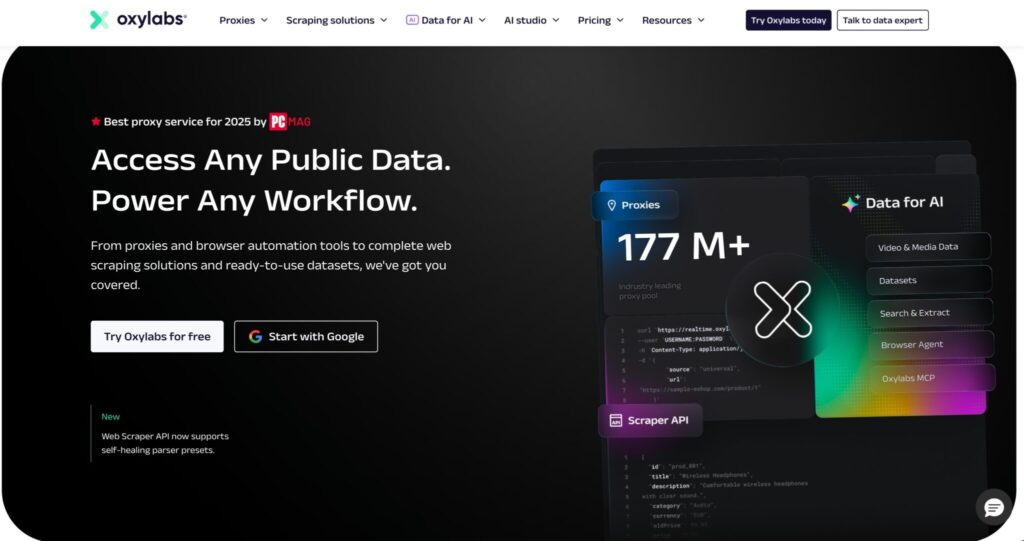
Oxylabs is the provider I would place at the top for teams that care more about uptime, stability, and enterprise support than the lowest possible price.
Its SOCKS5 offering covers both residential proxies and dedicated datacenter proxies. Oxylabs lists a 2M+ dedicated datacenter proxy network, coverage across 188 countries, and 99.9% average uptime on its SOCKS5 proxy page.
For companies running large-scale scraping, QA testing, fraud monitoring, or market intelligence projects, that matters. A cheap proxy that fails during a crawl costs more than a premium proxy that works quietly in the background.
Oxylabs also gives buyers different proxy paths depending on the job. If you want raw speed and consistent IPs, dedicated datacenter SOCKS5 proxies make sense. If you need better trust signals and residential routing, residential SOCKS5 proxies are the better fit.
Pricing reflects the enterprise positioning. Oxylabs’ dedicated datacenter pricing page lists pay-per-IP pricing from $1.20/IP with unlimited bandwidth under fair usage, while its SOCKS5 pricing page shows larger plans starting from $1.80/IP for a 180-IP starter tier.
Oxylabs is not the best pick for someone who needs five proxies for a tiny side project. It is better for buyers who need clean infrastructure, account support, and predictable performance across serious workloads.
Best for: Enterprise scraping, data intelligence, infrastructure monitoring, high-volume automation
Main weakness: Entry pricing may feel high for beginners
Pro Tip: Use Oxylabs datacenter SOCKS5 proxies for speed-heavy jobs, but switch to residential SOCKS5 when target sites are sensitive to datacenter IP ranges.
#2 — Decodo: Best Value SOCKS5 Provider
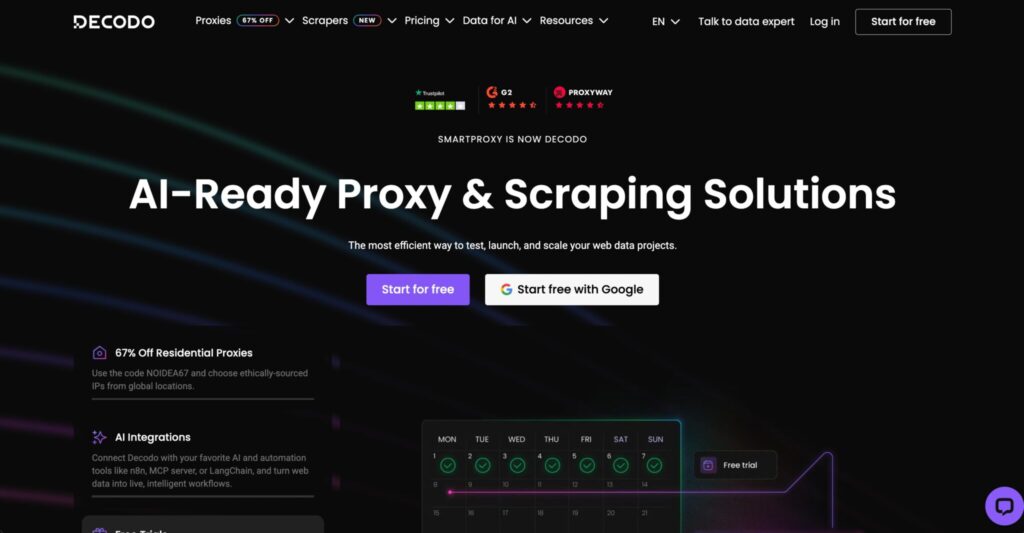
Decodo, formerly known as Smartproxy, has become one of the strongest value picks in the proxy market. It offers SOCKS5 proxies across residential, datacenter, and mobile categories, which gives users good flexibility without forcing them into enterprise-only pricing.
Its SOCKS5 page lists flexible pricing options, including residential proxies from $3.75/GB, datacenter proxies from $0.60/GB, and mobile proxies from $3.75/GB under the displayed plan examples.
That pricing makes Decodo attractive for smaller teams that still want reliable infrastructure. You can start with residential SOCKS5 for scraping and research, use datacenter SOCKS5 for speed-heavy requests, or test mobile proxies if your workflow depends on mobile network signals.
Decodo’s bigger advantage is usability. The dashboard is easier to understand than some enterprise-heavy platforms. The documentation is approachable. The pricing is not as intimidating. For many buyers, that combination matters more than having the largest possible proxy network.
It is a strong fit for SEO tools, rank tracking, price monitoring, ad verification, e-commerce research, and mid-sized scraping systems. You still need to manage request behavior properly, but Decodo gives you enough flexibility to test and scale without feeling boxed in.
Best for: Value-focused teams, SEO tools, scraping, flexible SOCKS5 testing
Main weakness: Enterprise buyers may still prefer Oxylabs or Bright Data for heavier compliance and infrastructure needs
Pro Tip: Start with datacenter SOCKS5 when testing your scraper logic. Move to residential only when you confirm your target sites need stronger trust signals.
#3 — Webshare: Best SOCKS5 Proxy with a Free Tier
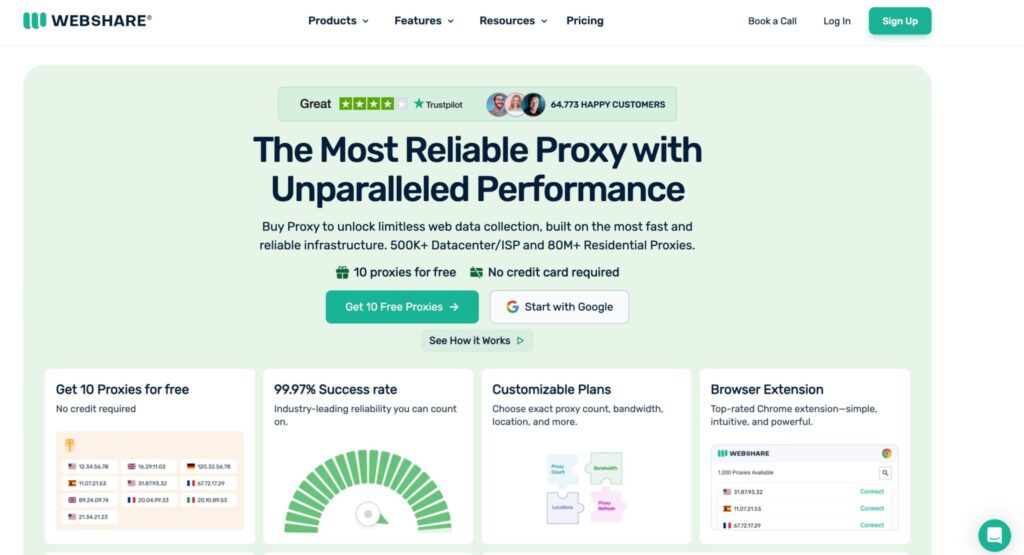
Webshare is one of the easiest providers to recommend to beginners because it keeps the buying process simple. It offers datacenter proxy servers, static residential proxies, and residential proxies. Its homepage lists proxy servers from $2.99/month, static residential from $6/month, and a clear “Start Free” option for proxy servers.
That makes Webshare useful for developers who want to test SOCKS5 routing without starting with a large monthly commitment.
The real appeal is control. Webshare is known for letting users configure proxies in a practical way, including proxy type, authentication, replacement settings, bandwidth, and locations. It may not have the same advanced data products as Bright Data or Oxylabs, but it works well for people who want affordable proxies without a complicated sales process.
Webshare is especially useful for browser automation testing, basic scraping, sneaker-style monitoring, lightweight SEO checks, and account testing in controlled environments.
It is not the provider I would choose for complex enterprise web data pipelines. But for small teams, solo developers, and marketers testing automation workflows, Webshare is one of the friendlier options.
Best for: Beginners, developers, affordable proxy testing, free-tier users
Main weakness: Fewer enterprise tools compared with Bright Data, Oxylabs, or SOAX
Pro Tip: Webshare is a good place to test whether SOCKS5 fits your stack before moving to a larger provider.
#4 — Bright Data: Most Comprehensive SOCKS5 Infrastructure
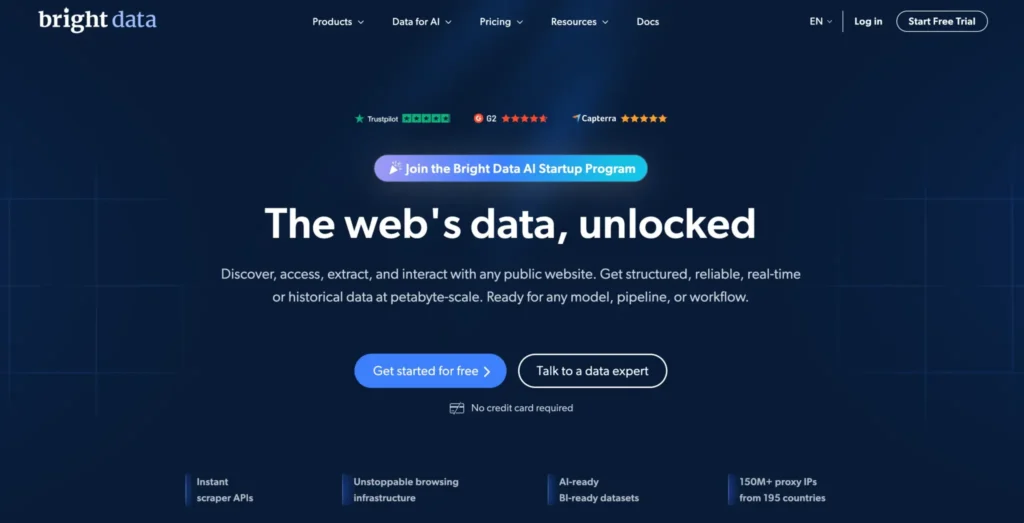
Bright Data is the heavy machinery of the proxy industry. It is not just a proxy seller. It is a full data collection infrastructure company with residential, ISP, datacenter, and mobile proxy options, plus scraping APIs and datasets.
For SOCKS5, Bright Data claims 400M+ monthly SOCKS5 proxy IPs across 195 countries, with unlimited concurrent sessions and free geo-location targeting on its SOCKS5 page.
That is a serious infrastructure footprint. Bright Data’s residential proxy documentation also confirms support for HTTP/S and SOCKS5 protocols.
Bright Data is best for advanced teams that need more than just a list of IPs. If your workflow involves compliance processes, access controls, scraping APIs, proxy management, session rules, and large-scale public web data collection, Bright Data gives you more operational depth than most providers.
The tradeoff is complexity. New users may find the dashboard and pricing more involved than budget proxy providers. Bright Data’s residential proxy pricing page lists residential proxies starting from $5.88/GB, which positions it above the cheapest options but still competitive for serious users.
Best for: Large data teams, enterprise scraping, geo-targeted research, compliance-heavy projects
Main weakness: More complex than beginner-focused providers
Pro Tip: Choose Bright Data when your proxy needs are tied to a larger data collection operation, not just basic IP rotation.
#5 — SOAX: Best SOCKS5 Proxy for Protocol Diversity
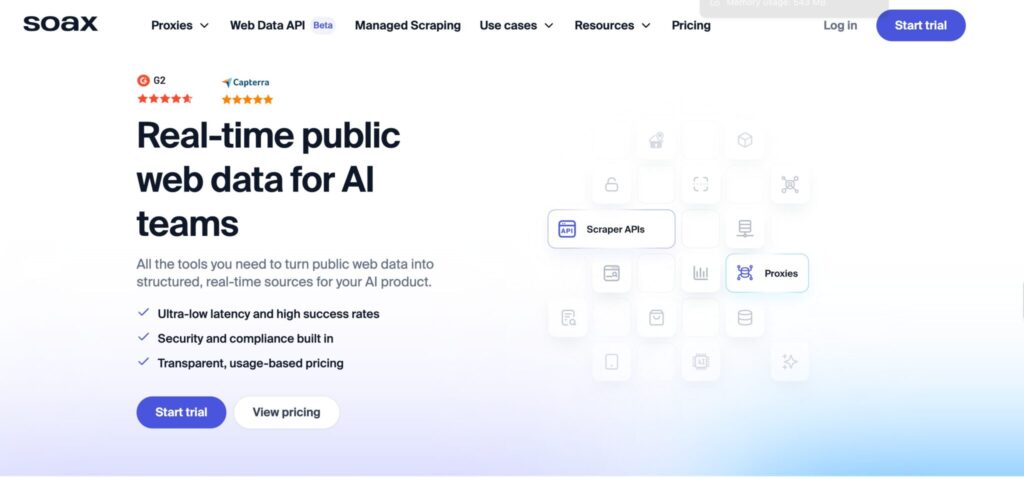
SOAX has become a strong pick for users who want modern proxy controls with broad protocol support. Its proxy page lists HTTP(S), SOCKS5, UDP, and QUIC protocols, along with sticky and rotating sessions, country, region, city, and ISP targeting, customizable IP refresh rates, unlimited proxy connections, and proxies in 195+ countries.
That is a very strong feature set for technical users.
The key reason SOAX belongs in this list is protocol diversity. Many providers stop at HTTP, HTTPS, and SOCKS5. SOAX goes further by clearly positioning UDP and QUIC as supported protocols in its broader proxy offering. That matters for more advanced application-level workflows.
SOAX also confirms that all its proxies support HTTP, HTTPS, and SOCKS5, and its help center describes SOCKS5 as useful for advanced non-web use cases, UDP support, and complex integrations.
For buyers who care about fine location targeting, SOAX is also strong. City and ISP filters are useful for ad verification, localized pricing checks, app testing, and region-specific research.
SOAX is not always the cheapest option, but it feels built for users who know what they are doing. If you want more control over sessions, targeting, and refresh behavior, it deserves a close look.
Best for: Advanced targeting, UDP-aware workflows, mobile testing, ad verification
Main weakness: May feel more technical for beginners
Pro Tip: Use sticky sessions when you need login continuity. Use rotating sessions when you are crawling broad public data and do not need stateful behavior.
#6 — IPRoyal: Best SOCKS5 Proxy with Unlimited Bandwidth Options
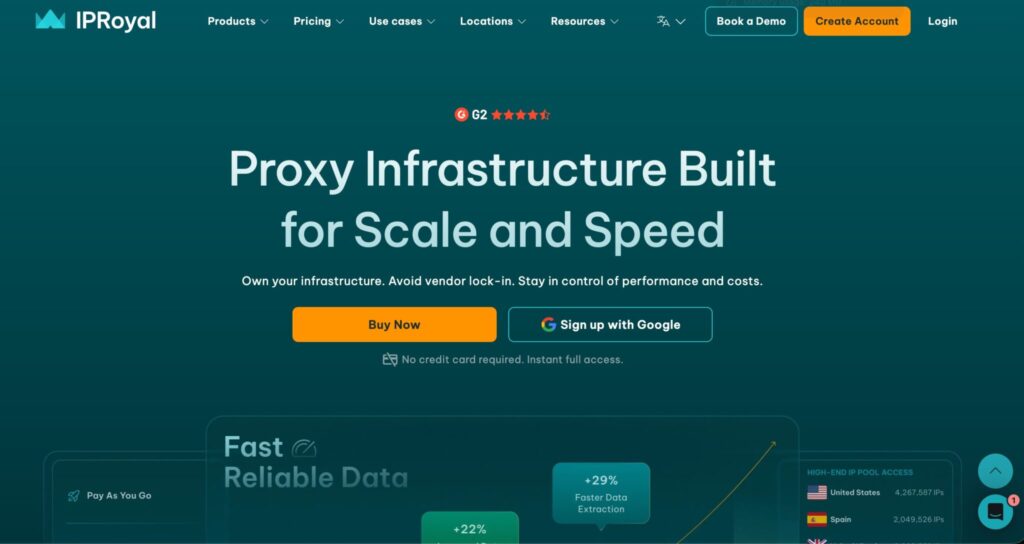
IPRoyal is a strong choice for cost-conscious buyers who still want flexibility across residential, ISP, mobile, and datacenter proxies.
Its homepage lists residential proxies from $1.75/GB, a 32M+ residential proxy pool, ISP proxies from $2/proxy, datacenter proxies from $1.39/proxy, and mobile proxies from $10.11/day.
IPRoyal also has a dedicated SOCKS5 residential proxy page that positions SOCKS5 proxies for use cases such as travel fare aggregation and web scraping.
The reason IPRoyal stands out is pricing flexibility. Some proxy buyers hate monthly bandwidth expiry and rigid subscriptions. IPRoyal has built much of its market appeal around more buyer-friendly usage terms, especially for smaller users and intermittent projects.
It is not as enterprise-polished as Bright Data or Oxylabs, but it gives you enough options to build practical workflows without spending heavily upfront.
For use cases like market research, SERP tracking, travel fare checks, light scraping, and privacy-focused browsing, IPRoyal is a practical pick.
Best for: Budget-conscious users, flexible bandwidth buyers, small scraping projects
Main weakness: Smaller infrastructure reputation than the top enterprise providers
Pro Tip: IPRoyal makes sense when you need SOCKS5 flexibility but cannot justify enterprise proxy pricing yet.
#7 — Proxy-Cheap: Best Budget SOCKS5 Proxy Provider

Proxy-Cheap is built around affordability. Its homepage lists static residential, rotating residential, datacenter IPv4, datacenter IPv6, and static mobile proxy options, with datacenter IPv4 starting around $1.49/month in the displayed discounted pricing and rotating residential from $4.99/GB.
Its SOCKS5 page also states that unlimited bandwidth SOCKS5 proxies start from $1.99 per proxy per month for datacenter proxies.
That makes Proxy-Cheap attractive for buyers who want simple, low-cost SOCKS5 access. It is not trying to be the most advanced enterprise provider. The value is price.
This provider works best for testing, lightweight automation, basic browsing, and small projects where cost control matters more than premium features.
The caution is obvious: budget providers need careful testing. Check speed, IP reputation, replacement rules, and support response before committing to larger usage.
Best for: Low-cost SOCKS5 proxies, testing, simple automation
Main weakness: Not ideal for mission-critical enterprise workloads
Pro Tip: Buy a small batch first and test the exact sites or apps you plan to use. Cheap proxies are only cheap if they actually work for your target workflow.
#8 — ProxyEmpire: Best SOCKS5 Proxy for Multi-Protocol Automation
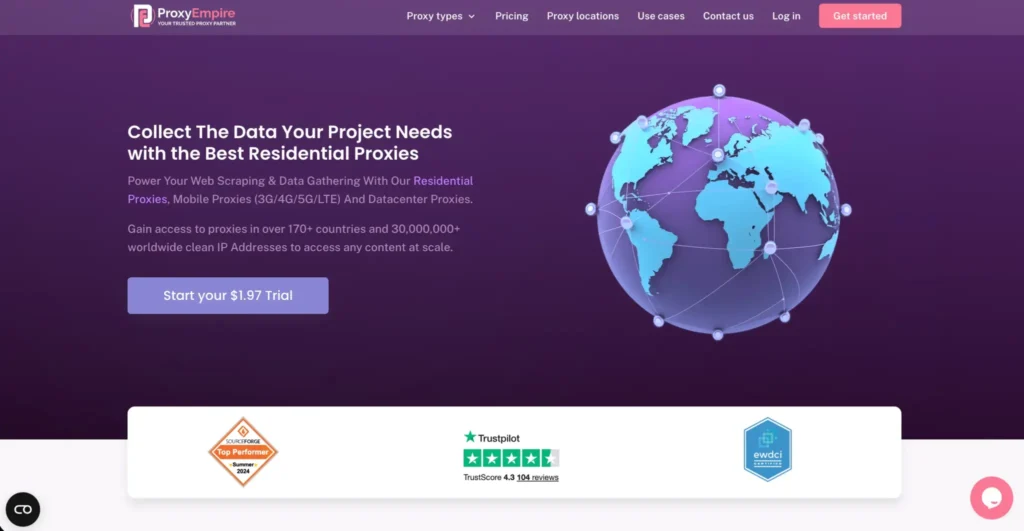
ProxyEmpire is a useful pick for teams that want residential, mobile, and datacenter options with strong location targeting. Its homepage lists 30M+ clean IPs, 170+ countries, 99.9% uptime, and 24/7 support.
ProxyEmpire also states that its plans work with HTTP, HTTPS, and SOCKS5 protocols, and that its static residential proxies can keep the same IP for weeks or months.
This makes ProxyEmpire interesting for multi-protocol automation. You can use rotating residential proxies for broad crawling, static residential proxies for session-sensitive workflows, and mobile proxies when you need mobile network identity.
Its pricing page lists rotating residential, static residential, rotating mobile, dedicated mobile, and rotating datacenter proxy categories, with a $1.97 trial promoted on the pricing page.
ProxyEmpire is especially useful for users who want granular targeting without moving into the highest enterprise price brackets. It also works well when you need to switch between proxy types for different tasks.
Best for: Multi-protocol automation, geo-targeted data collection, static sessions
Main weakness: May require more testing to choose the right proxy type
Pro Tip: Use static residential SOCKS5 proxies for long sessions and rotating residential SOCKS5 proxies for broad data collection.
#9 — DataImpulse: Best Budget SOCKS5 Proxy
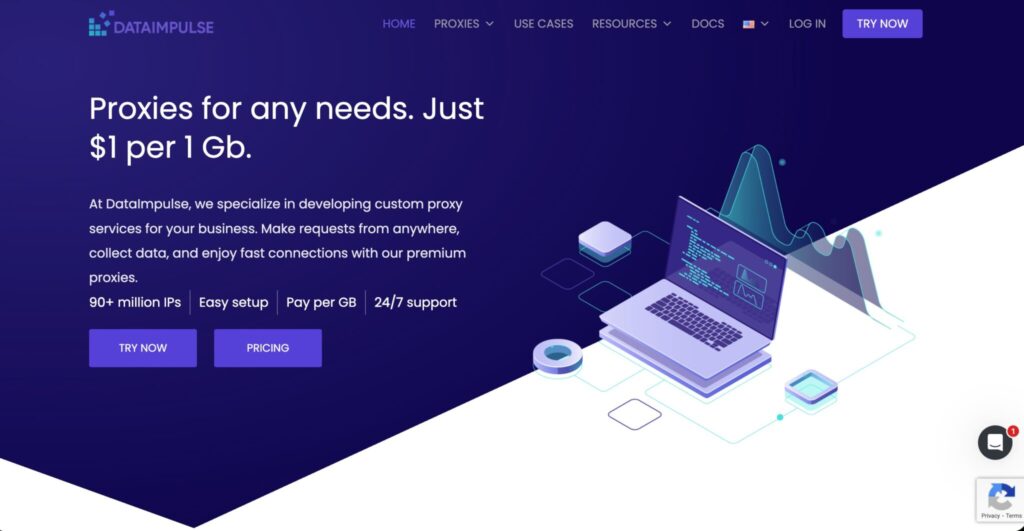
DataImpulse is one of the strongest budget picks in 2026 because its pricing is unusually simple. Its homepage advertises proxies from $1 per GB, 90+ million IPs, pay-per-GB pricing, and 24/7 support.
Its residential proxy page also says it offers 90M+ ethical residential IPs, coverage across 195 countries, pay-as-you-go pricing, no time limits, and country targeting, with residential proxies starting from $1/GB.
For SOCKS5 specifically, DataImpulse documentation confirms support for HTTP, HTTPS, and SOCKS5 protocols. It also explains that rotating connections use a separate SOCKS5 port, which is useful for developers setting up tools manually.
DataImpulse is a good choice when you need affordable residential traffic for scraping, SERP monitoring, ad verification, or price intelligence, but do not want to commit to expensive monthly plans.
It may not have the same brand weight as Oxylabs, Bright Data, or Decodo, but its pricing makes it hard to ignore.
Best for: Budget residential SOCKS5 traffic, pay-as-you-go users, small to mid-sized scraping
Main weakness: Less enterprise depth than premium providers
Pro Tip: DataImpulse is a smart testing provider when you want residential SOCKS5 traffic without burning budget during early scraper development.
Best SOCKS5 Proxy Providers in 2026: Quick Comparison Table
| Provider | Best For | Proxy Types | SOCKS5 Strength | Starting Price Mentioned | Rotation Support | Targeting Depth | Best Buyer Type |
|---|---|---|---|---|---|---|---|
| Oxylabs | Enterprise reliability | Residential, dedicated datacenter | Strong business-grade SOCKS5 infrastructure | Dedicated datacenter from $1.20/IP; SOCKS5 plans from $1.80/IP | Yes | Country-level and advanced options | Enterprise teams |
| Decodo | Best value | Residential, datacenter, mobile | Affordable SOCKS5 across multiple proxy types | Residential from $3.75/GB, datacenter from $0.60/GB | Yes | 195+ locations listed on SOCKS5 page | SMBs, SEO teams, scrapers |
| Webshare | Free-tier testing | Datacenter, static residential, residential | Simple proxy setup and low-cost entry | Proxy servers from $2.99/month | Yes, depending on plan | Country/location options | Beginners and developers |
| Bright Data | Full infrastructure | Residential, ISP, datacenter, mobile | Large SOCKS5 network and enterprise tooling | Residential from $5.88/GB | Yes | 195 countries and geo-targeting | Large data teams |
| SOAX | Protocol diversity | Residential, mobile, datacenter | SOCKS5 plus UDP and QUIC support | Varies by plan | Sticky and rotating | Country, region, city, ISP | Advanced technical users |
| IPRoyal | Flexible bandwidth | Residential, ISP, datacenter, mobile | Affordable SOCKS5 use cases | Residential from $1.75/GB, datacenter from $1.39/proxy | Yes | 195+ countries for residential | Small teams and budget users |
| Proxy-Cheap | Cheap SOCKS5 | Datacenter, residential, mobile | Low-cost SOCKS5 proxies | SOCKS5 datacenter from $1.99/proxy/month | Depends on product | Multiple country options | Budget buyers |
| ProxyEmpire | Multi-protocol automation | Residential, mobile, datacenter | HTTP, HTTPS, SOCKS5 support across plans | Trial from $1.97 | Yes | Country, region, city, ISP | Automation users |
| DataImpulse | Budget residential SOCKS5 | Residential, datacenter, mobile | SOCKS5 documented with simple ports | Residential from $1/GB | Rotating and sticky | 195 countries, state/city/ZIP/ASN on residential page | PAYG users |
How to Choose the Best SOCKS5 Proxy Provider
1. Start With the Proxy Type, Not the Brand
A good provider can still be wrong for your use case.
Datacenter SOCKS5 proxies are fast and cheap. They are good for speed tests, infrastructure checks, simple scraping, and lower-risk automation.
Residential SOCKS5 proxies are better when the destination site cares about IP reputation. They cost more, but they often look more natural because the IPs are tied to real consumer networks.
ISP SOCKS5 proxies sit between datacenter and residential. They offer stable sessions with stronger trust signals than normal datacenter proxies.
Mobile SOCKS5 proxies are best for app testing, mobile ad verification, and mobile-first platforms. They are usually more expensive.
2. Check Rotation Rules Carefully
Rotation is where many buyers make mistakes.
Rotating proxies change IPs automatically. They are good for broad crawling, SERP tracking, price monitoring, and public data collection.
Sticky sessions hold the same IP for a set period. They are better for logins, carts, account dashboards, testing flows, and anything that breaks when the IP changes too often.
Pro Tip: If your workflow includes login sessions, do not use aggressive rotation. You will create more failures than wins.
3. Look at IP Pool Quality, Not Just IP Pool Size
A provider may advertise millions of IPs, but size alone does not guarantee performance.
You want to check:
- How many IPs are active in your target country
- Whether city or ISP targeting is available
- How often IPs repeat
- Whether IPs are ethically sourced
- Whether the provider has clean replacement rules
- Whether your target sites block the network heavily
A smaller but cleaner pool can beat a massive pool with poor quality.
4. Match Protocol Support to Your Tool
Some tools only need HTTP or HTTPS. Others require SOCKS5 specifically. A few need UDP support.
SOAX, for example, clearly documents SOCKS5, UDP, and QUIC support in its broader proxy plans. DataImpulse documents separate ports for SOCKS5 rotating connections. These details matter when you are configuring apps manually.
5. Test Before Scaling
Never buy a large plan before testing.
Run a small test against your real workflow. Measure:
- Success rate
- Response time
- Block rate
- Session stability
- IP replacement speed
- Dashboard usability
- Support quality
The best SOCKS5 proxy provider is not always the one with the biggest name. It is the one that works reliably for your exact target sites, tools, countries, and traffic pattern.
FAQs: Best SOCKS5 Proxy Providers 2026
What is a SOCKS5 proxy, and how does it differ from HTTP?
A SOCKS5 proxy routes traffic at a lower level than an HTTP proxy. HTTP proxies are mainly built for web traffic, while SOCKS5 can support broader traffic types and is often used for apps, FTP tools, scraping systems, and advanced automation. SOCKS5 can also support TCP and UDP depending on the provider’s setup.
Is SOCKS5 better than a VPN?
SOCKS5 is not automatically better than a VPN. It depends on the job. A VPN is usually easier for full-device privacy. SOCKS5 is often better for app-specific routing, automation tools, scraping setups, and situations where you need to control IPs, sessions, and locations more precisely.
Can I use SOCKS5 proxies for web scraping?
Yes, SOCKS5 proxies can be used for web scraping, especially when your scraper or automation tool supports SOCKS5 connections. Residential SOCKS5 proxies are usually better for sensitive targets, while datacenter SOCKS5 proxies are better for speed and cost control.
Do SOCKS5 proxies support UDP?
SOCKS5 as a protocol can support UDP, but provider support varies. SOAX specifically says SOCKS5 supports UDP in its proxy setup and notes that UDP is available on selected residential, mobile, and single-geo packages.
Which SOCKS5 proxy provider offers the best price in 2026?
For low-cost residential traffic, DataImpulse is one of the cheapest options listed here, with pricing from $1/GB. For cheap datacenter SOCKS5 proxies, Proxy-Cheap lists SOCKS5 datacenter proxies starting from $1.99 per proxy per month.
Which SOCKS5 proxy provider is best for enterprise use?
Oxylabs and Bright Data are the strongest enterprise picks. Oxylabs is excellent for reliability, dedicated datacenter SOCKS5 proxies, and business-grade support. Bright Data is better when you need a broader data collection platform with proxies, APIs, datasets, and advanced controls.
Are free SOCKS5 proxies safe?
Free public SOCKS5 proxies are risky. They may be slow, abused, unstable, logged, or already blocked by major platforms. A free tier from a known provider like Webshare is safer than random public proxy lists because you are dealing with an actual proxy company and a controlled dashboard.
What is better for SOCKS5: residential or datacenter proxies?
Residential SOCKS5 proxies are better for trust-sensitive tasks, geo-specific research, and sites that block datacenter IPs. Datacenter SOCKS5 proxies are better for speed, affordability, software testing, and lower-risk automation.
What should I test before buying a SOCKS5 proxy plan?
Test success rate, speed, target-site blocks, IP rotation behavior, sticky session stability, country accuracy, authentication options, and support response time. A provider can look perfect on paper and still fail on your exact target workflow.
Conclusion: Best SOCKS5 Proxy Providers 2026
The best SOCKS5 proxy provider depends on what you actually need.
Choose Oxylabs if reliability, scale, and business support matter most. Pick Decodo if you want strong value without feeling locked into enterprise pricing. Use Webshare if you want a simple and affordable starting point. Go with Bright Data if your proxy needs are part of a larger data collection operation. Choose SOAX if protocol flexibility and granular targeting are priorities.
For budget buyers, IPRoyal, Proxy-Cheap, and DataImpulse are all worth testing. For multi-protocol automation with strong geo-targeting, ProxyEmpire is a practical middle-ground option.
My practical recommendation is simple: shortlist two providers, buy the smallest usable plan, and test them against your real workflow. SOCKS5 performance is not theoretical. The right provider is the one that gives you stable sessions, clean IPs, accurate targeting, and fewer failed requests at a price your project can handle.