
A rotating proxy is great when you want a fresh IP on every request. A static proxy is great when you need one IP that stays the same for a long time. But sticky session proxies sit in the sweet spot between both.
They let you keep the same IP for a defined window, usually a few minutes, 30 minutes, several hours, or even longer depending on the provider. That makes them useful for workflows where a changing IP would break the session: paginated scraping, price monitoring, logged-in QA testing, ad verification, sneaker/ecommerce tracking, SERP checks, marketplace monitoring, travel fare research, and regional website testing.
The catch is simple: not every “sticky proxy” behaves the same.
Some providers give you sticky residential sessions for 10 minutes. Some support 24-hour sessions. Some let you define a custom TTL. Some keep the IP only while the peer remains online. Some expire the session if you stay idle for too long. That one detail can make or break your scraping stack.
So this guide is not just a list of proxy brands. It is a practical buying guide for choosing sticky session proxies based on session length, pool quality, rotation control, geo-targeting, protocol support, uptime, dashboard usability, and scaling comfort.
What Are Sticky Session Proxies?
Sticky session proxies are proxies that keep the same exit IP for multiple requests during a defined session window. Instead of switching IPs on every request, the proxy gateway maps your requests to the same IP as long as you use the same session ID, username string, port, or TTL parameter.
For example, if you are scraping a product category with 20 pages, a sticky session lets you move through those pages from the same IP. That looks more consistent than jumping between 20 unrelated IP addresses in one workflow.
This is why sticky sessions are useful for:
- Multi-page scraping
- Cart and checkout testing
- Login-based QA
- Localized SERP monitoring
- Travel fare tracking
- Marketplace monitoring
- Ad verification
- Session-based browsing automation
- Data workflows that need continuity
Pro-Tip: Sticky does not always mean permanent. In most residential and mobile proxy networks, the IP can still change if the peer goes offline, the TTL expires, the provider resets the node, or your request stays idle too long.
Sticky vs Rotating vs Static Proxies
Here is the simple breakdown.
Rotating proxies change the IP frequently, often on every request. They work well for high-volume scraping where each request is independent.
Sticky session proxies keep the same IP for a fixed session window, then rotate. They are best for workflows that need temporary identity consistency.
Static proxies keep the same assigned IP for much longer. These are better for account management, long-term browser profiles, internal QA, and stable access where frequent rotation is not needed.
A good sticky setup gives you the flexibility to run multiple parallel sessions, each with its own session ID, without forcing every request through the same IP.
Best Sticky Session Proxies at a Glance
Bright Data currently positions its residential network at 400M+ IPs across 195 countries, with detailed configuration for residential proxy targeting, sticky duration, and rotation behavior. Oxylabs lists 175M+ residential IPs across 195+ countries and supports sticky residential sessions for up to 24 hours. Decodo states that residential sticky sessions can persist for up to 24 hours, with a 10-minute default session time. SOAX supports rotating on every request or keeping the same IP for a longer custom session length, with sticky session IDs and a 60-second inactivity timeout note in its help center. IPRoyal documents sticky residential sessions with a configurable lifetime and lists sticky sessions up to 7 days.
| Provider | Best For | Proxy Types | Sticky Session Control | Geo-Targeting | Protocol Support | Key Strength | Main Limitation |
|---|---|---|---|---|---|---|---|
| Bright Data | Enterprise-grade sticky sessions | Residential, ISP, mobile, datacenter | Sticky IP duration, long-session peers, rotation controls | Country, city, state, ZIP, ASN | HTTP, HTTPS, SOCKS5 depending on product | Huge network and advanced controls | Can feel complex for beginners |
| Oxylabs | High-scale public data collection | Residential, mobile, ISP, datacenter | Sticky sessions up to 24 hours on residential proxies | Country, state, city, ASN | HTTP, HTTPS, SOCKS5, HTTP/3 on residential plans | Strong infrastructure and success rates | Premium pricing |
| Decodo | Balanced price and control | Residential, mobile, ISP, datacenter | Custom sticky sessions up to 24 hours | Country, city, state | HTTP, HTTPS, SOCKS5 | Easy dashboard and flexible setup | Rebrand confusion with old Smartproxy name |
| SOAX | Custom session lengths and precise targeting | Residential, mobile, ISP, datacenter | Custom sticky sessions, session IDs, keep-alive behavior | Country, city, ASN/ISP | HTTP, HTTPS, SOCKS5 | Clean interface and strong targeting | Idle timeout needs attention |
| NetNut | Stable residential and ISP-backed sessions | Residential, static residential, mobile | Sticky IP sessions on rotating residential proxies | 195+ countries | HTTP, HTTPS, SOCKS5 | Strong business-focused proxy stack | Less granular rotation customization than some rivals |
| IPRoyal | Affordable sticky sessions | Residential, ISP, datacenter, mobile | Sticky sessions up to 7 days on residential proxies | Country, state, city | HTTP, HTTPS, SOCKS5 | Budget-friendly and flexible TTL | Network quality may vary by location |
| ProxyEmpire | Geo-targeted sticky residential/mobile sessions | Residential, mobile, datacenter | Sticky options across rotating products | Country, region, city, ISP | HTTP, HTTPS, SOCKS5 | Good targeting depth | Smaller brand compared to Bright Data/Oxylabs |
| Webshare | Low-cost residential and static residential proxies | Rotating residential, static residential, datacenter | Static residential and rotating options | Global coverage | HTTP, HTTPS, SOCKS5 on many products | Affordable entry point | Fewer advanced scraping tools |
| ZenRows | Developers who want proxy control with scraping tools | Residential proxies and scraping APIs | Sticky TTL from short windows up to 1 day | Location targeting available | HTTP/HTTPS | Developer-friendly setup | More scraping-platform oriented |
1. Bright Data: Best Overall for Advanced Sticky Session Control
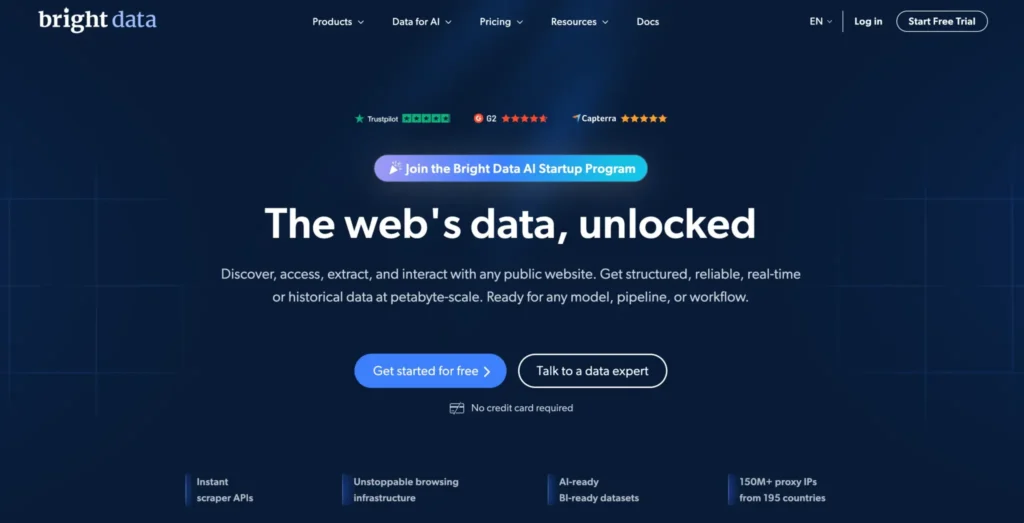
Bright Data is the provider I would shortlist first for enterprise-grade sticky session workflows. It is not the simplest provider on the market, but that is partly because it gives you a lot of control.
The platform supports residential, ISP, mobile, and datacenter proxy networks. For sticky workflows, the residential and mobile networks are usually the most relevant because they help simulate real user behavior more naturally than datacenter IPs. Bright Data’s documentation highlights configuration options for residential proxy geolocation, IP type, sticky IP duration, long-session peers, and rotation.
Where Bright Data stands out is its infrastructure depth. You can target by country, city, state, ZIP code, and ASN on residential proxies, which is useful when your data task depends on very specific local results. Its residential proxy page currently claims 400M+ residential IPs across 195 countries.
For sticky use, Bright Data is best when you need:
- Localized ecommerce monitoring
- Public web data collection at scale
- Ad verification by city or ASN
- SERP monitoring across many regions
- Enterprise proxy governance
- Advanced rotation and session rules
Pro-Tip: Bright Data’s own docs mention session context can be lost after idle time in some rotation scenarios. If your workflow pauses between page steps, build a lightweight keep-alive or checkpoint system instead of assuming the IP will stay alive forever.
Pros
- Huge residential proxy network
- Advanced geo-targeting
- Strong rotation controls
- Suitable for enterprise workflows
- Mature documentation and integrations
Cons
- Not the cheapest option
- Setup may feel heavy for beginners
- You need to understand session parameters properly
Best For
Bright Data is best for businesses that care more about success rate, scale, targeting, and control than getting the lowest price per GB.
2. Oxylabs: Best for High-Scale Public Data Collection
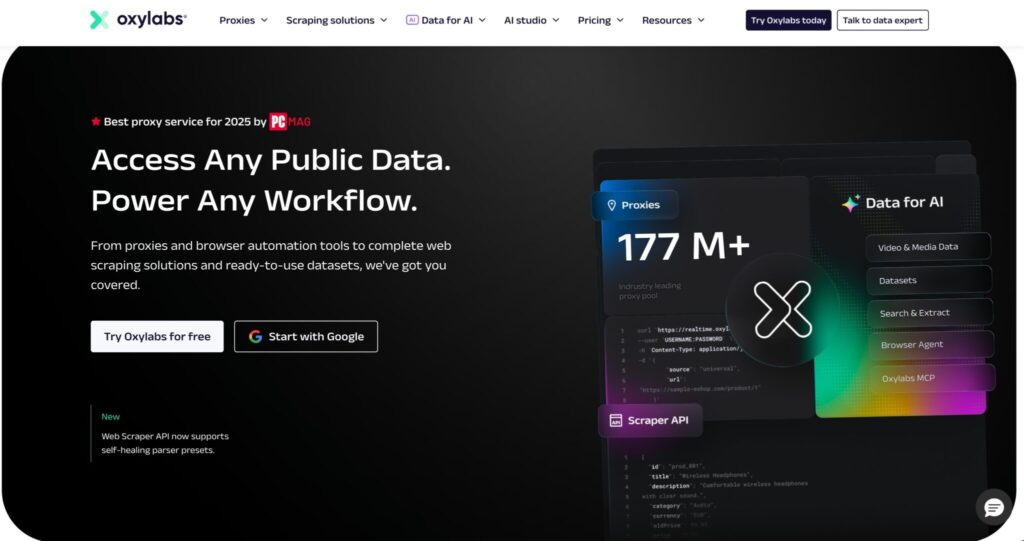
Oxylabs is another premium provider built for serious data teams. It has one of the largest residential proxy networks in the market, with its official page listing 175M+ residential IPs across 195+ countries.
For sticky sessions, Oxylabs is very strong. Its residential proxy page explains that sticky residential proxies can keep the same IP for up to 24 hours. Its quick-start guide also describes choosing sticky sessions to keep the same IP for up to 24 hours or rotating sessions to get a new IP with each request.
That matters because many providers cap sticky residential sessions at 10, 30, or 60 minutes. Oxylabs gives you more breathing room for long multi-step flows.
Oxylabs is especially good for:
- Complex scraping projects
- Market intelligence
- Travel fare aggregation
- Review monitoring
- Ad verification
- Large-scale ecommerce research
- Teams that need support and documentation
The provider also lists unlimited concurrent sessions, sticky sessions, flexible rotation, HTTP/HTTPS/HTTP3/SOCKS5 support, and a 99.95% average success rate on its residential pricing page.
Pro-Tip: If you are running multi-page scraping, start with shorter sticky windows and increase only when needed. Long sessions are useful, but they can also make bad behavior easier to fingerprint if your request pattern is too robotic.
Pros
- Up to 24-hour sticky residential sessions
- Large residential IP pool
- Strong technical documentation
- Good fit for enterprise scraping teams
- Advanced targeting and protocol support
Cons
- Higher cost than budget providers
- Overkill for small one-off jobs
- Some features may require plan-specific setup
Best For
Oxylabs is ideal for teams that need stable sticky sessions for public data workflows where failed requests cost more than premium bandwidth.
3. Decodo: Best Balance of Usability, Price, and Sticky Control
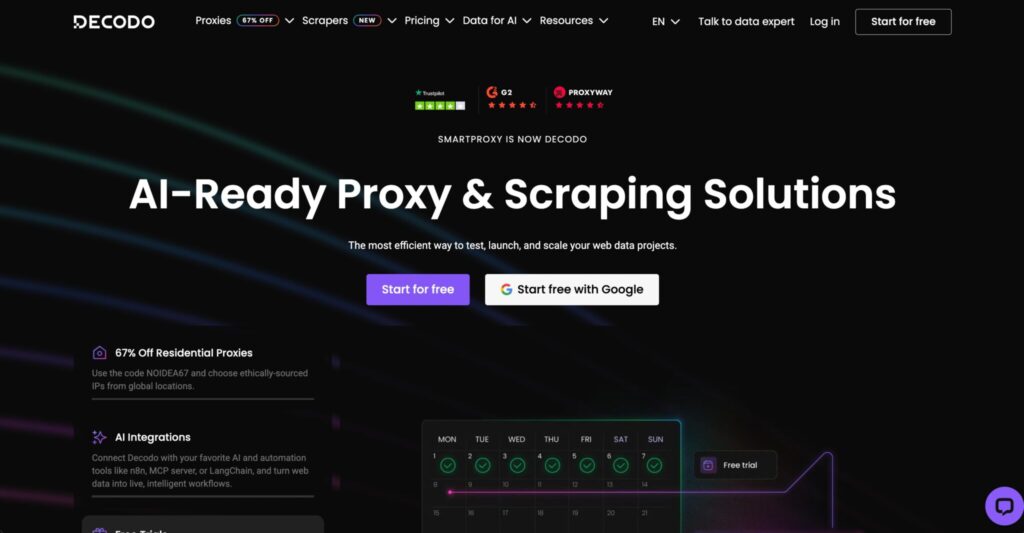
Decodo, formerly Smartproxy, is one of the most practical options for users who want strong sticky session control without the heavier enterprise feel of Bright Data or Oxylabs.
A key detail: Decodo’s official site says Smartproxy rebranded to Decodo, and it warns that Smartproxy.org is not related to the company. That matters because proxy buyers often search old brand names and can land on confusing lookalike domains.
For sticky sessions, Decodo’s help center states that residential proxies can persist for up to 24 hours, with a 10-minute default sticky session time. That is very useful for users who need longer continuity but still want rotating residential infrastructure.
Decodo works well for:
- Small to mid-sized scraping teams
- SEO tools
- Social media monitoring within permitted use
- Ecommerce pricing workflows
- Regional testing
- Developers who want simple endpoint generation
The biggest reason to choose Decodo is usability. The dashboard, endpoint generation, and documentation are more approachable than many enterprise-first platforms.
Pro-Tip: Use a unique session ID for every parallel browser profile or scraper worker. Reusing one sticky session across too many workers can create unnatural request patterns and reduce success.
Pros
- Sticky sessions up to 24 hours
- Beginner-friendly dashboard
- Solid residential pool
- Good balance of price and control
- Supports rotating and sticky modes
Cons
- Rebrand from Smartproxy may cause confusion
- Not as deeply configurable as Bright Data
- Heavy users may still prefer Oxylabs or Bright Data
Best For
Decodo is best for users who want a clean, practical sticky proxy setup that works well without requiring a full proxy engineering team.
4. SOAX: Best for Custom Session Lengths and Granular Targeting
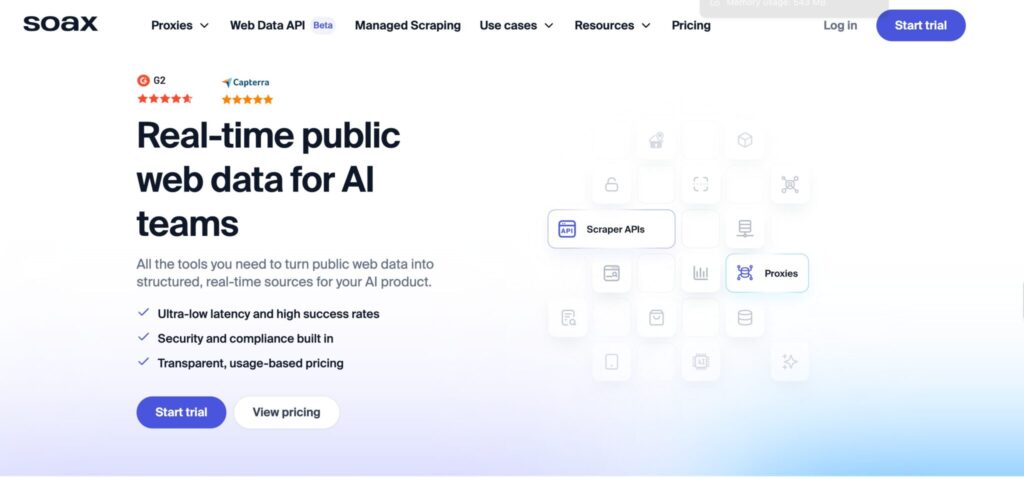
SOAX is a strong pick when your project depends on precise targeting and clean session handling. Its residential proxy page says users can rotate IPs on every request or keep the same IP for a longer period, with custom session lengths.
SOAX’s sticky session help page explains that sticky sessions keep the same IP address for a specified session length and can reduce node resets for smoother operations. Another SOAX help article notes that sticky sessions can use different session IDs for parallel connections and that sessions expire after 60 seconds of inactivity, with keep-alive requests recommended every 30 seconds.
That idle-time detail is important. SOAX can be excellent, but you need to code around its session behavior. If your scraper has long pauses, your session may expire unless you manage keep-alives.
SOAX is a good fit for:
- Localized public data collection
- Ecommerce monitoring
- Ad verification
- Regional QA
- Multi-session browser workflows
- Projects that need city or ASN-level targeting
Its public residential proxy page highlights 155M+ IPs in 195+ locations.
Pro-Tip: SOAX is best when your workflow is active and continuous. If your task waits several minutes between actions, design your scraper to refresh the session cleanly instead of assuming the old IP is still attached.
Pros
- Custom session lengths
- Good targeting controls
- Supports sticky and rotating sessions
- Useful for parallel sessions
- Clean dashboard experience
Cons
- 60-second inactivity timeout needs planning
- Not always the cheapest option
- Requires careful session handling for longer workflows
Best For
SOAX is best for teams that want flexible sticky sessions with strong location control and are comfortable managing session IDs properly.
5. NetNut: Best for Stable Business Proxy Workflows
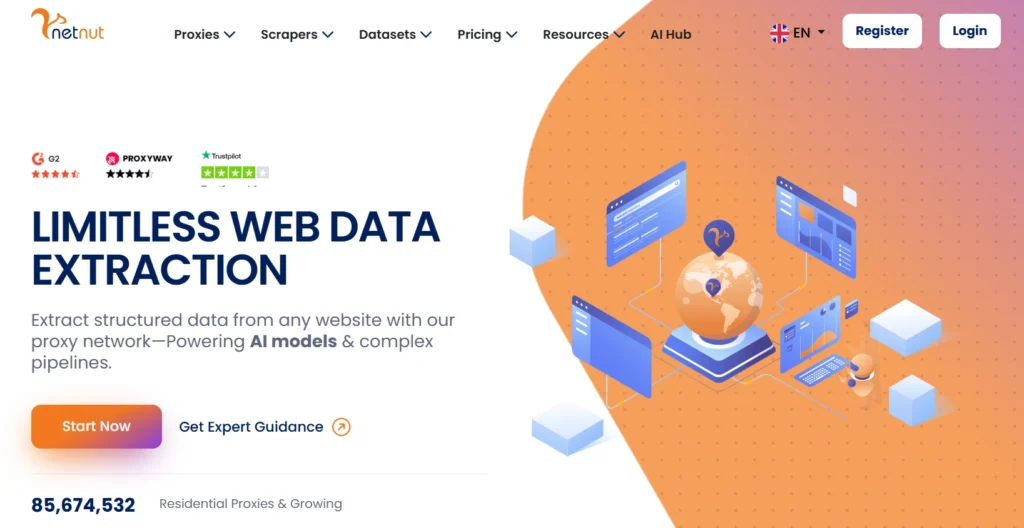
NetNut is a business-focused proxy provider with residential, rotating residential, static residential, and mobile proxy products. Its website currently lists over 85 million IPs across 195+ countries for rotating residential proxies.
For sticky sessions, NetNut says users can control rotating proxy sessions with sticky IPs and adjust IP sessions to project needs. It is especially interesting if you care about stable residential and ISP-style connectivity.
NetNut may not always have the slickest consumer-style interface, but it is a serious provider for business use cases. It fits teams that need reliable proxy infrastructure for monitoring, research, and data collection.
NetNut works well for:
- Price monitoring
- SEO monitoring
- Market research
- Brand protection
- Ad verification
- Enterprise data collection
Pro-Tip: If you need the same IP for long browser sessions, compare NetNut’s rotating residential sticky behavior with its static residential product. Sticky residential sessions and static residential IPs solve different problems.
Pros
- Large residential pool
- Business-focused infrastructure
- Static residential options
- Strong fit for market research and monitoring
- Supports sticky IP sessions
Cons
- Not as beginner-friendly as Decodo
- Rotation customization may feel less transparent
- Pricing may not suit very small users
Best For
NetNut is best for teams that want stable, business-grade proxies and may benefit from both rotating residential and static residential options.
6. IPRoyal: Best Affordable Sticky Session Proxy Provider
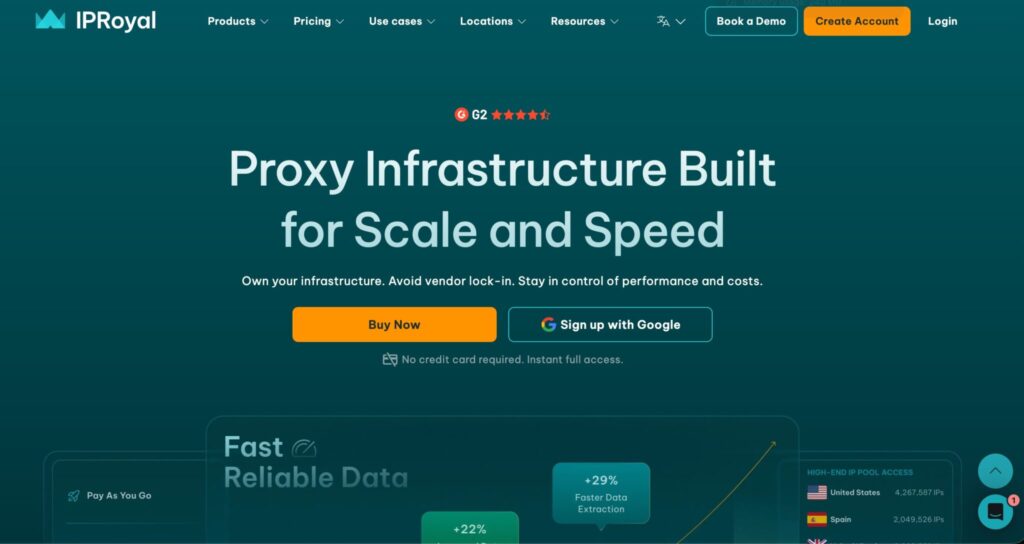
IPRoyal is a strong option for buyers who want sticky residential sessions without jumping straight into premium enterprise pricing. Its documentation says residential proxies support advanced session control, including a new IP on each request or sticky sessions up to 7 days.
Its quick-start guide also explains that users can choose “Randomize IP” for new IPs or “Sticky IP” to keep the same IP for a set period, with session TTL from 1 second to 7 days.
That is unusually flexible. A 7-day sticky window is longer than what many residential proxy buyers expect. That said, long sticky sessions are not always the best choice. The real quality still depends on peer availability, target compatibility, and your request behavior.
IPRoyal works well for:
- Budget-conscious data teams
- Small agencies
- Browser automation
- Location testing
- Lightweight scraping
- Multi-session workflows
Pro-Tip: Do not choose a 7-day sticky session just because the option exists. For scraping, shorter sessions often look more natural and reduce the damage if one IP starts getting challenged.
Pros
- Sticky sessions up to 7 days
- Flexible TTL controls
- Affordable compared with top enterprise providers
- HTTP(S) and SOCKS5 support
- Unlimited simultaneous sessions listed in documentation
Cons
- Performance can vary by geography
- Less enterprise polish than Bright Data or Oxylabs
- You may need testing before committing at scale
Best For
IPRoyal is best for buyers who want sticky proxy flexibility at a lower cost and are willing to test location quality before scaling.
7. ProxyEmpire: Best for Geo-Targeted Sticky Residential and Mobile Use
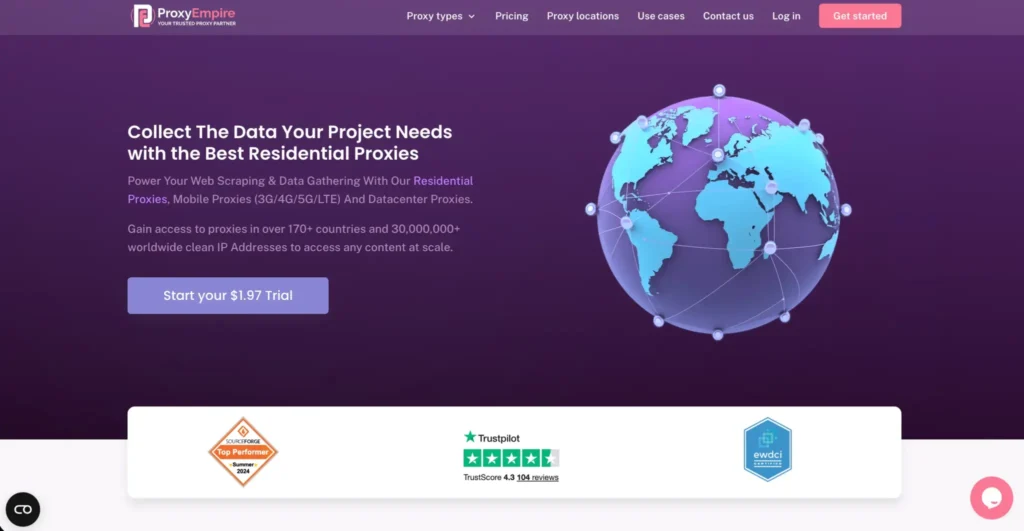
ProxyEmpire is a practical provider for buyers who care about location control. Its public site lists residential, mobile, and datacenter proxies, 170+ countries, 30M+ IPs, and 99.9% uptime. Its locations page highlights country, regional, and city targeting, with visible country-level availability.
ProxyEmpire is not as massive as Bright Data or Oxylabs, but it gives users a useful combination of residential, mobile, and datacenter proxy options. That can be helpful if you want sticky behavior across different proxy types.
It works well for:
- Geo-specific data collection
- Mobile proxy testing
- Local ecommerce monitoring
- Ad verification
- Regional content checks
- Small to mid-sized scraping stacks
Pro-Tip: For location-sensitive projects, do not buy only based on total IP pool size. Check the available IP count in your exact target country, region, city, or ISP. A provider with fewer total IPs can outperform a giant network in a specific location.
Pros
- Good geo-targeting depth
- Residential and mobile products
- Trial option available
- Useful for regional workflows
- City and ISP targeting support
Cons
- Smaller than the largest enterprise providers
- Documentation depth may not match Oxylabs
- Needs testing for heavy production workloads
Best For
ProxyEmpire is best for teams that need region-specific sticky sessions and want a mix of residential and mobile proxy options.
8. Webshare: Best Budget-Friendly Option for Static and Residential Proxy Users
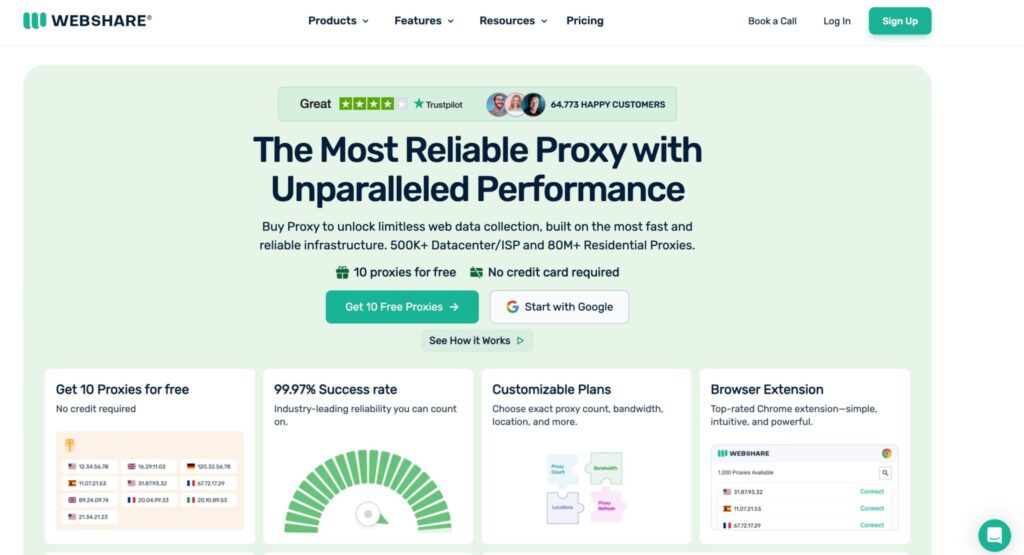
Webshare is a good choice if you want affordable proxy access and do not need every advanced scraping feature under the sun. Its residential proxy page lists rotating residential proxies with 80M+ residential IPs and static residential proxy options.
For sticky-style needs, Webshare is most interesting because of its static residential options. If your workflow needs one stable IP for longer periods, static residential may be a better fit than a time-limited sticky residential session.
Webshare is useful for:
- Budget proxy testing
- Small scraping projects
- Static residential use cases
- Simple automation
- QA workflows
- Users who want transparent pricing
Pro-Tip: If your task needs the same IP for hours or days, do not force a rotating residential product to behave like a static proxy. Use static residential or ISP proxies instead.
Pros
- Affordable plans
- Rotating and static residential options
- Simple dashboard
- Good for smaller users
- Useful for proxy testing and light workflows
Cons
- Not as feature-rich as premium providers
- Support and advanced tooling may be limited
- Not ideal for complex enterprise scraping stacks
Best For
Webshare is best for buyers who want a lower-cost starting point and may prefer static residential proxies for longer session persistence.
9. ZenRows: Best Sticky TTL Option for Developers
ZenRows is more than a basic proxy seller. It is a scraping-focused platform that gives developers proxy and anti-blocking tooling in one place. Its residential proxy documentation explains sticky sessions through TTL and session ID parameters, with sticky durations from 30 seconds up to 1 day.
That makes ZenRows useful if you want developer-friendly control instead of manually managing every proxy behavior yourself.
ZenRows works well for:
- Developers building scrapers
- Scraping APIs
- Multi-step workflows
- Login-based testing where permitted
- Short to medium sticky TTL needs
- Teams that want proxy handling plus scraping tooling
Pro-Tip: ZenRows is a good pick when your main pain is not only proxies, but also headers, rendering, retries, and blocking logic. If you only need raw proxy bandwidth, compare its cost against pure proxy providers.
Pros
- Sticky TTL from 30 seconds to 1 day
- Developer-friendly documentation
- Good for scraping workflows
- Reduces manual proxy handling
- Useful for multi-step browsing flows
Cons
- More platform-oriented than raw proxy-only providers
- May cost more than basic proxy bandwidth
- Less ideal if you already have a mature in-house scraper
Best For
ZenRows is best for developers who want sticky session control inside a broader scraping toolkit.
How to Choose the Best Sticky Session Proxy Provider
Choosing sticky proxies is not about picking the biggest number on a homepage. You need to match the session behavior to the job.
1. Check the Real Sticky Session Duration
Do not stop at “supports sticky sessions.” Ask:
- What is the default sticky duration?
- What is the maximum duration?
- Can I set custom TTL?
- Does the session expire after idle time?
- Does the same session ID always try to keep the same IP?
- What happens if the peer goes offline?
For example, Oxylabs and Decodo support sticky sessions up to 24 hours on residential proxies. IPRoyal documents sticky sessions up to 7 days. SOAX supports custom sticky sessions but notes a 60-second inactivity timeout in its sticky connection documentation.
2. Match Proxy Type to the Use Case
Use residential sticky proxies for tasks where real-user IP reputation matters.
Use mobile sticky proxies when mobile carrier identity is important, such as app testing, mobile SERP checks, and mobile ad verification.
Use ISP/static residential proxies when you need a stable IP for longer periods.
Use datacenter proxies only when cost and speed matter more than residential authenticity.
3. Evaluate IP Pool Depth by Location
A provider may advertise 100M+ IPs, but your project may only need clean IPs from Texas, London, Berlin, or Mumbai. The total pool size is less important than useful availability in your target market.
Look for:
- Country targeting
- City targeting
- State/region targeting
- ASN or ISP targeting
- ZIP targeting if needed
- Real-time availability tools
4. Review Rotation Protocols and Session IDs
Sticky sessions usually work through one of these methods:
- Username parameters
- Session ID strings
- Port-based sticky routing
- Password TTL parameters
- Dashboard-generated endpoints
- API-based session control
For scalable scraping, session ID control is usually the cleanest option. You can assign one session ID per worker, browser profile, task, or customer simulation.
5. Test Idle Behavior
This is where many proxy setups fail.
A sticky session may stay alive for 30 minutes only if traffic continues. If your scraper waits between steps, the provider may drop the session and assign a new IP. That can break carts, pagination, login flows, or test journeys.
Build a test script that checks:
- Same IP after 10 seconds
- Same IP after 1 minute
- Same IP after 5 minutes
- Same IP after 15 minutes
- Same IP after the maximum stated TTL
6. Look at Protocol Support
Most users need HTTP and HTTPS. More advanced users may need SOCKS5.
Oxylabs lists HTTP/HTTPS/HTTP3/SOCKS5 on residential pricing details. IPRoyal documentation also lists HTTP(S) and SOCKS5 support for residential proxies.
If you use Playwright, Puppeteer, Selenium, AdsPower, Multilogin, GoLogin, Scrapy, or custom Python scripts, confirm protocol compatibility before buying.
7. Avoid Over-Sticking
Long sticky sessions sound attractive, but they are not always safer. A long session with robotic timing, repeated requests, and no human-like browsing pattern can still get challenged.
For most scraping workflows, a sticky window of 10 to 30 minutes is enough. Use longer sessions only when the workflow truly needs them.
Final Verdict: Which Sticky Session Proxy Should You Choose?
If you want the strongest enterprise-grade sticky session control, choose Bright Data.
If you need high-scale residential proxies with up to 24-hour sticky sessions and strong infrastructure, choose Oxylabs.
If you want the best balance of usability, price, and sticky residential control, choose Decodo.
If you care about custom session lengths, granular targeting, and clean multi-session handling, choose SOAX.
If you want business-focused residential and static residential options, choose NetNut.
If you want affordable sticky sessions with unusually long TTL flexibility, choose IPRoyal.
If your project depends heavily on region, city, and ISP targeting, test ProxyEmpire.
If you want a budget-friendly route and may need static residential IPs, consider Webshare.
If you are a developer who wants proxy control inside a scraping toolkit, look at ZenRows.
My practical recommendation: shortlist three providers, then run a real test against your target website. Measure success rate, session survival, response time, CAPTCHA rate, cost per successful page, and location accuracy. The best sticky proxy is not the one with the biggest pool. It is the one that keeps your workflow stable without wasting bandwidth.
FAQs About Sticky Session Proxies
1. What is a sticky session proxy?
A sticky session proxy keeps the same proxy IP for several requests during a defined session window. Instead of rotating on every request, it preserves the same IP long enough to complete a multi-step task.
2. Are sticky proxies better than rotating proxies?
They are better for session-based workflows, but not for every task. Rotating proxies are better when each request is independent. Sticky proxies are better when you need continuity across pages, forms, carts, logins, or browser sessions.
3. How long do sticky proxy sessions last?
It depends on the provider. Some sticky sessions last 10 minutes. Some last 30 or 60 minutes. Some providers support longer sessions, such as 24 hours or even several days. The real duration may also depend on peer availability and idle timeout rules.
4. Can sticky residential proxies change IP during a session?
Yes. Even if the session is sticky, the IP can change if the residential peer goes offline, the TTL expires, the provider resets the connection, or your session becomes idle for too long.
5. Are sticky proxies good for web scraping?
Yes, when used for permitted public data collection and multi-step workflows. They are useful for pagination, localized browsing, price monitoring, and QA testing. For high-volume independent requests, rotating proxies may be more efficient.
6. Should I use residential, mobile, ISP, or datacenter sticky proxies?
Use residential for realistic user-like browsing, mobile for carrier-based mobile testing, ISP/static residential for long stable sessions, and datacenter when you need speed and low cost more than residential reputation.
7. What is the difference between sticky and static proxies?
A sticky proxy keeps the same IP for a temporary session window. A static proxy keeps the same assigned IP for a much longer period. If you need the same IP for days or weeks, static residential or ISP proxies are usually better.
8. Can I run multiple sticky sessions at the same time?
Yes, most serious providers allow multiple parallel sticky sessions. The usual method is to assign a unique session ID to each worker, browser profile, or automation task.
9. What is the best sticky session proxy provider overall?
For enterprise control, Bright Data is the strongest overall pick. For high-scale scraping, Oxylabs is excellent. For a balanced option, Decodo is easier to use. For budget users, IPRoyal is worth testing. For custom session handling, SOAX is a strong choice.