
Best Telecom Proxy Providers.
Telecom proxies sit in a strange but powerful corner of the proxy market. They are not the cheapest proxies. They are not always the fastest either. But when you need traffic that looks like it is coming from real carrier networks, they are hard to replace.
Think mobile ad verification, localized app testing, mobile SEO tracking, price monitoring, travel fare research, social platform testing, fraud prevention QA, and public web data collection where normal datacenter IPs get flagged too quickly. In those cases, a basic proxy pool feels like using a paper umbrella in a storm.
The tricky part is choosing the right provider.
Some vendors call them mobile proxies, some say carrier proxies, some bundle them under telecom-grade IPs, and some sell ISP proxies that are useful for longer sessions but are not true mobile carrier IPs. That naming mess makes comparison harder than it should be.
This guide cuts through that. I’ll compare the best telecom proxy providers based on real-world buying factors: IP pool quality, mobile carrier coverage, ASN targeting, rotation controls, sticky sessions, protocols, pricing flexibility, and the type of team each provider fits best.
What Are Telecom Proxies?
Telecom proxies are proxies that route your traffic through IP addresses associated with telecom networks. In practical buying terms, this usually means one of three things:
- Mobile proxies using 3G, 4G, LTE, or 5G carrier IPs.
- ISP proxies using IPs registered to internet service providers but hosted with datacenter-like stability.
- Residential proxies with ASN or carrier targeting, useful when you want traffic tied to specific networks.
For most buyers, mobile carrier proxies are the purest form of telecom proxies. They use IPs assigned by mobile operators, often through real devices or carrier-grade infrastructure. That gives them a more natural mobile footprint than datacenter proxies.
A big reason mobile IPs are trusted is CGNAT. Mobile carriers often place many users behind shared public IPs, so blocking one mobile IP can accidentally affect real users. Rayobyte explains this CGNAT behavior as one reason mobile proxies are harder to ban at scale.
That does not mean telecom proxies are magic. Poor headers, abusive request patterns, bad fingerprinting, and unrealistic session behavior can still get you blocked. The proxy is only one part of the stack.
Quick Picks: Best Telecom Proxy Providers
| Provider | Best For | Telecom Proxy Type | Key Strength |
|---|---|---|---|
| Oxylabs | Enterprise scraping and ad verification | Mobile proxies | Huge mobile pool and precise targeting |
| Bright Data | Compliance-heavy enterprise teams | Mobile, ISP, residential | Strong tooling and global infrastructure |
| Decodo | Balanced price, scale, and ease of use | Mobile proxies | 10M+ mobile IPs and carrier-level targeting |
| SOAX | Granular geo and protocol flexibility | Mobile proxies | Strong geo controls and wide protocol support |
| NetNut | Enterprise data collection | Mobile and residential proxies | ISP-connected infrastructure and business support |
| IPRoyal | Budget-conscious teams | Rotating and dedicated mobile proxies | Flexible pricing and carrier selection |
| Infatica | Global targeting and SEO workflows | Mobile residential proxies | Country, city, carrier, and ASN combinations |
| DataImpulse | Pay-as-you-go users | Rotating mobile proxies | Low entry pricing and long sticky sessions |
| ProxyEmpire | Carrier targeting and rollover bandwidth | Rotating mobile proxies | Carrier-level targeting and SOCKS5 support |
| Rayobyte | US carrier-focused use cases | Mobile proxies | Self-managed US carrier devices |
Massive Comparison Table: Best Telecom Proxy Providers
| Provider | IP Pool / Coverage | Targeting Options | Rotation & Sticky Sessions | Protocols | Pricing Style | Best Use Case | Main Watch-Out |
|---|---|---|---|---|---|---|---|
| Oxylabs | 20M+ mobile IPs, 140+ countries | Country, state, city, coordinates, ASN | Automatic rotation, 24-hour sticky sessions | HTTP, HTTPS, SOCKS5 | Premium per-GB plans | Enterprise scraping, ad verification, SERP monitoring | Higher cost for smaller teams |
| Bright Data | 7M+ mobile IPs, global coverage | Country, city, ZIP, carrier, ASN on supported networks | Session and geo controls | Depends on product setup | Premium, enterprise-oriented | Compliance-heavy teams and large data workflows | Can feel complex for beginners |
| Decodo | 10M+ mobile IPs, 160+ locations, 700+ carriers | Country, city, ASN, carrier | Rotating and sticky modes | HTTP(S), SOCKS5 | Per-GB plans | Balanced mobile proxy buying | Not always the cheapest at scale |
| SOAX | 33M+ mobile proxies, 195+ geos | Country, region, city, ISP | Sticky and rotating, custom refresh | HTTP(S), SOCKS5, UDP, QUIC | Trial plus paid plans | Geo-heavy testing and data collection | Setup options may take tuning |
| NetNut | 5M+ mobile IPs, 100 countries | Geo and carrier-style use cases | Rotating proxy workflows | HTTP, HTTPS, SOCKS5 on product suite | Business-focused plans | Enterprise web data collection | Less beginner-oriented |
| IPRoyal | Rotating and dedicated mobile options | Country, state, city, carrier | Random IP or sticky IP | Common proxy protocol support | Per-GB and daily dedicated options | Budget mobile proxy projects | Smaller advanced tooling layer |
| Infatica | 5M+ mobile residential IPs | Country, city, carrier, ASN | Switch IPs based on needs | HTTP and SOCKS | Usage-based plans | SEO, market research, app testing | Needs testing for exact carrier quality |
| DataImpulse | 16M+ carrier IPs, 195 countries | Country targeting, carrier/ASN options | Auto-rotation, up to 120-minute sticky sessions | Works with common automation stacks | $2/GB pay as you go | Low-cost testing and flexible usage | Newer budget positioning versus premium vendors |
| ProxyEmpire | 4M+ mobile IPs, 170+ countries | Country, region, city, mobile carrier | Per request, timed, sticky sessions | HTTP, HTTPS, SOCKS5 | Plans with bandwidth rollover | Multi-location telecom workflows | Smaller mobile pool than top giants |
| Rayobyte | Carrier-based mobile pool | Verizon, T-Mobile, AT&T self-managed devices, custom carrier requests | Mobile proxy plans with management support | Product-dependent | Higher-commitment plans | US carrier-specific testing | Less ideal for tiny one-off users |
Detailed Reviews of the Best Telecom Proxy Providers
1. Oxylabs: Best Telecom Proxy Provider for Enterprise Teams
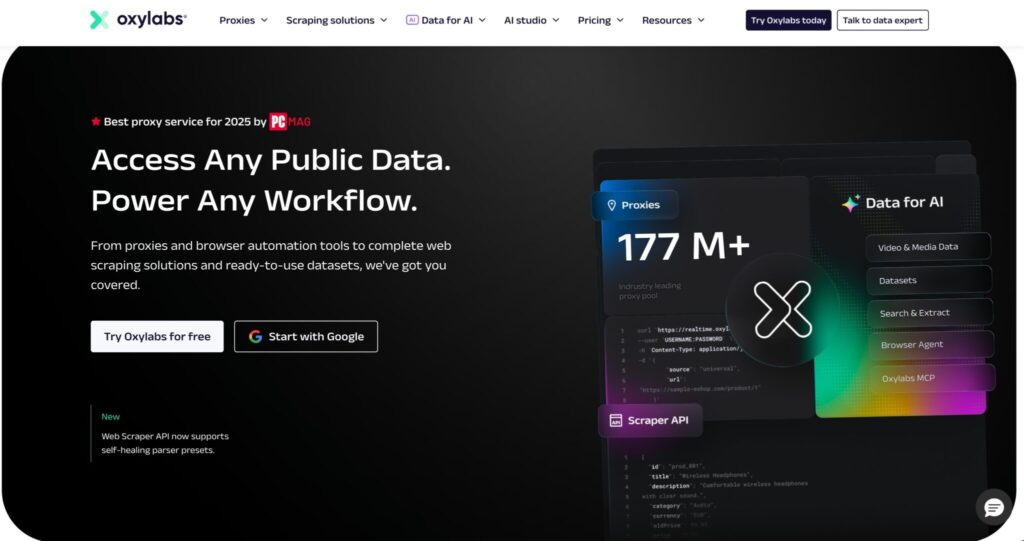
Oxylabs is one of the strongest choices when you need serious mobile proxy infrastructure rather than a small test pool. Its mobile proxy page lists 20M+ mobile IPs, coverage across 140+ countries, and targeting by continent, country, state, city, coordinates, and ASN.
That ASN targeting matters. If you are testing how content appears on a particular carrier network, broad country targeting is not enough. You may need traffic from a specific mobile operator or network block. Oxylabs gives enterprise teams more control here than many lower-cost options.
From a technical angle, Oxylabs supports HTTP, HTTPS, and SOCKS5, plus automatic mobile IP rotation and sticky sessions up to 24 hours. That makes it useful for both high-volume scraping and workflows where a stable session is needed.
Best for: Large teams handling public data collection, ad verification, mobile SERP tracking, travel pricing research, and localized ecommerce intelligence.
Pro-Tip: Do not buy Oxylabs only because the pool is large. Ask for a test in your exact country, city, ASN, and carrier combination. A 20M+ pool is impressive, but your real success rate depends on the slice of the pool you actually use.
2. Bright Data: Best for Compliance-Heavy Data Teams
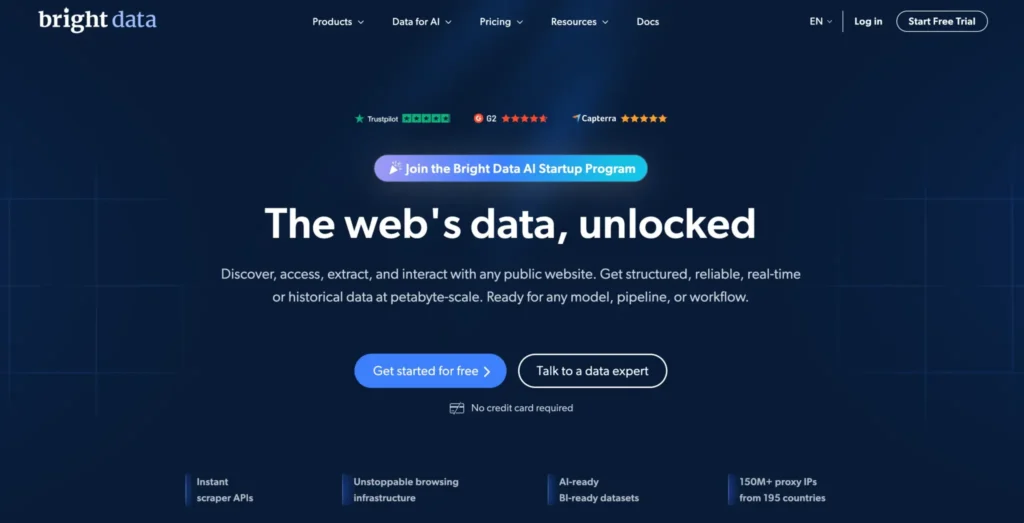
Bright Data is more than a proxy seller. It is a larger web data platform with residential, ISP, datacenter, and mobile proxy infrastructure. Its documentation highlights full session and geo-targeting control across its proxy infrastructure, while its pricing page references proxy access across 195 countries.
For mobile specifically, Bright Data’s documentation search result describes a mobile proxy network with 7 million mobile IPs worldwide, built for use cases like business intelligence, competitor analysis, and ad verification.
The biggest reason to consider Bright Data is control. Enterprise buyers often care about legal review, sourcing, data governance, account management, and platform tooling. Bright Data is built for that type of buyer. It can be overkill if you only need a few GB of traffic, but for large operations, the added tooling can justify the cost.
Best for: Enterprise data teams, compliance-conscious companies, brand monitoring, large-scale public data extraction, and mobile ad verification.
Pro-Tip: Bright Data is powerful, but map your workflow before buying. Decide whether you need mobile proxies, ISP proxies, Web Unlocker-style tooling, or a scraping API. Buying the wrong product type can make the setup more expensive than needed.
3. Decodo: Best Balance of Scale, Usability, and Carrier Targeting
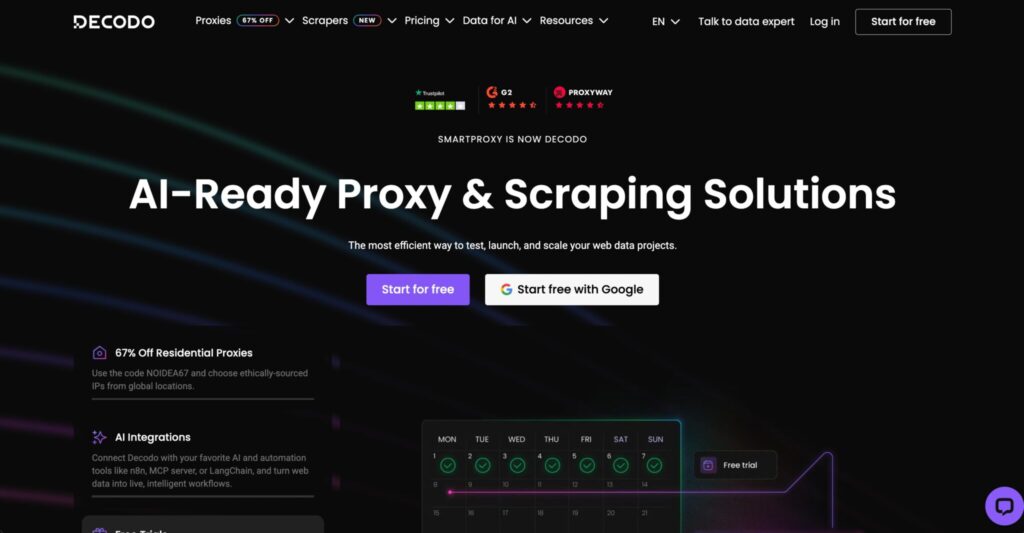
Decodo, formerly Smartproxy, is a strong middle-ground choice. It gives you a big enough telecom-style mobile pool without the heavier enterprise feel of some premium providers.
Its mobile proxy page lists 10M+ ethically sourced mobile IPs, 160+ global locations, and 700+ mobile carriers. It also reports 99.76% success rate on the product page.
Decodo supports HTTP(S) and SOCKS5, plus city-level targeting, carrier-grade 3G/4G/5G proxies, and the ability to rotate IPs automatically or keep a sticky session.
This is the type of provider I’d shortlist for teams that want a serious telecom proxy setup but do not want to spend weeks configuring it. The dashboard and documentation are friendlier than many enterprise-first platforms.
Best for: Agencies, growth teams, SEO tools, app QA teams, and mid-market data collection projects.
Pro-Tip: Decodo is especially useful when you need carrier-level testing but still want a clean user interface. Start with one or two target countries and measure success rate before expanding.
4. SOAX: Best for Geo Precision and Protocol Flexibility
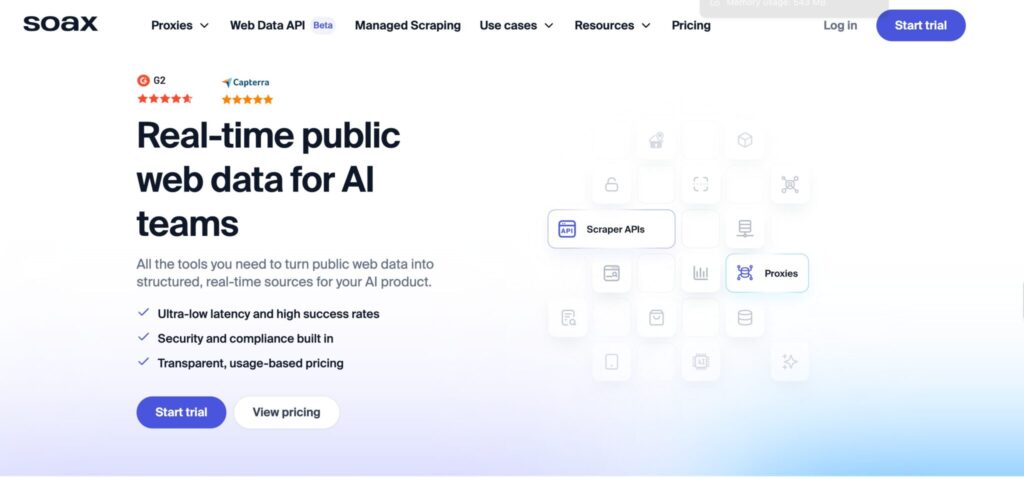
SOAX is one of the most interesting telecom proxy providers because it combines a large pool with deep configuration options. Its mobile proxy page lists 33M+ 5G, 4G, 3G, and LTE mobile proxies, 195+ geos, city-level targeting, sticky and rotating sessions, and a claimed 0.55s response time.
The protocol support is also a major point. SOAX lists HTTP(S), SOCKS5, UDP, and QUIC across plans, along with country, region, city, and ISP targeting.
That makes SOAX attractive for technical users who care about more than “give me a proxy endpoint.” You can tune sessions, refresh rates, connection behavior, and location filters.
Best for: Technical teams that need precise geo testing, mobile app QA, localized web checks, and custom proxy workflows.
Pro-Tip: SOAX gives you a lot of knobs to turn. That is good, but it also means bad configuration can hurt performance. Test rotating mode and sticky mode separately before judging the pool.
5. NetNut: Best for Business-Grade Proxy Infrastructure
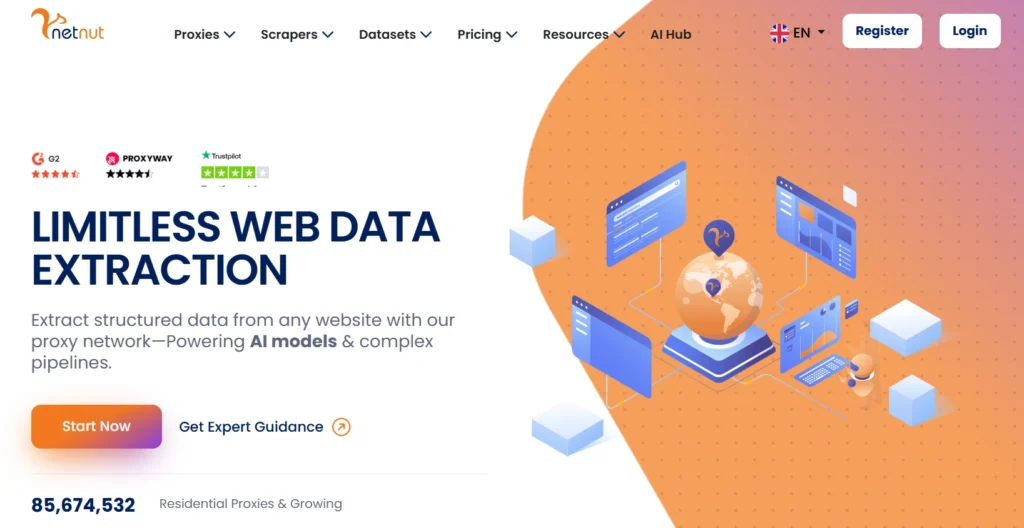
NetNut has long been known for ISP-connected proxy infrastructure, and its current product lineup includes mobile proxies as well. Its website lists 5M+ mobile IPs, 100 countries, 3G/4G/5G/LTE mobile proxies, and 99.9% success rates for mobile IPs.
NetNut is not always the first provider beginners test, but it has a strong business-focused positioning. If you are running data collection at scale and want account support, enterprise packaging, and stable infrastructure, it deserves a spot on your shortlist.
It is also a good fit when you want more than only mobile proxies. Many teams use a mix of residential, ISP, datacenter, and mobile proxies depending on the target site, session length, and cost limits.
Best for: Enterprise data collection, market intelligence, SERP tracking, and projects that require both mobile and non-mobile proxy types.
Pro-Tip: Ask NetNut whether your target workflow should use mobile proxies or ISP proxies. Mobile is better for carrier realism. ISP is often better for long, stable, lower-latency sessions.
6. IPRoyal: Best Budget-Friendly Telecom Proxy Provider
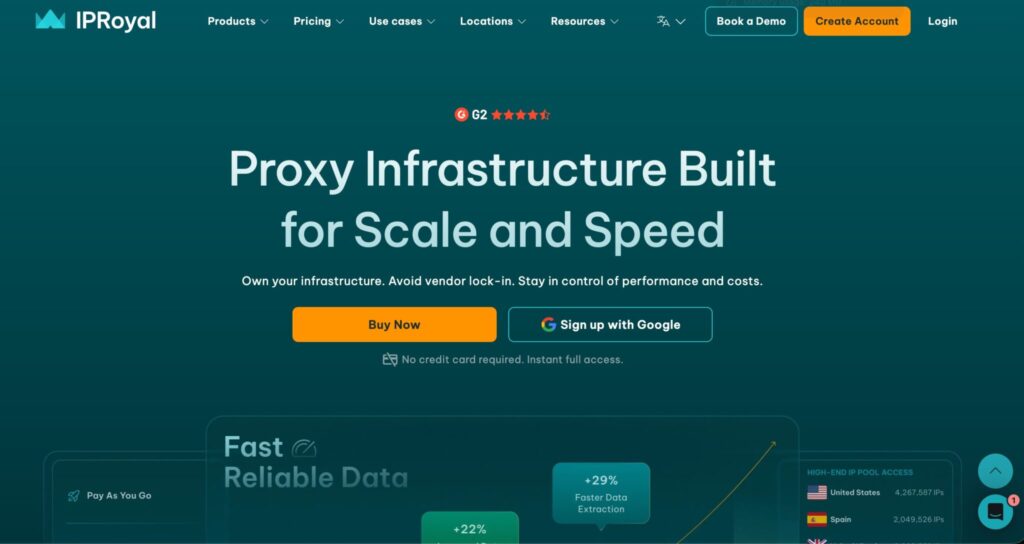
IPRoyal is a good choice for smaller teams that want telecom proxy access without jumping straight into enterprise contracts. Its mobile proxy page states that its mobile proxies support country, state, and city-level targeting and can use carriers such as Orange, Vodafone, Verizon, and T-Mobile depending on location. It also says users can choose a preferred carrier and configure sticky sessions.
Pricing is one of IPRoyal’s main selling points. Its page lists rotating mobile proxy pricing starting at $5.20 per GB and dedicated mobile proxies starting from $10.11 for 24 hours, at the time reviewed.
That makes it practical for affiliate marketers, SEO testers, small automation teams, and buyers who want to test telecom proxies without a heavy minimum.
Best for: Small teams, freelancers, QA testers, and budget-conscious telecom proxy buyers.
Pro-Tip: If you are testing social platforms or mobile app flows, try dedicated mobile proxies first. Rotating pools are useful for scale, but dedicated mobile sessions can be easier to debug.
7. Infatica: Best for Carrier and ASN Combinations
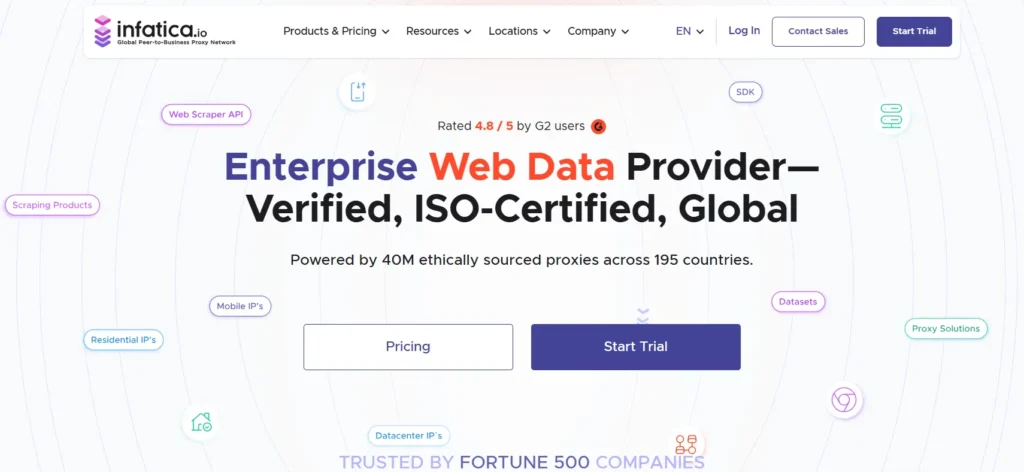
Infatica’s mobile proxy page lists 5M+ mobile residential IPs and highlights country, city, carrier, and ASN combinations.
That makes it relevant for buyers who care about location and network identity together. For example, checking a search result from “United States” is broad. Checking it from a specific mobile carrier or ASN is much more useful when you are auditing mobile-first experiences.
Infatica also says its proxies can be used with browsers, apps, or devices that support HTTP or SOCKS protocols.
The provider is a sensible pick for SEO checks, market research, ecommerce monitoring, and brand visibility tracking. It may not be as instantly recognizable as Bright Data or Oxylabs, but the carrier and ASN targeting angle gives it a clear use case.
Best for: SEO teams, app testing, localized market research, ecommerce checks, and mobile visibility tracking.
Pro-Tip: For Infatica, ask support which countries have the strongest mobile pool depth. “Global” coverage is useful, but telecom proxy quality often varies heavily by country and carrier.
8. DataImpulse: Best Pay-As-You-Go Telecom Proxy Option
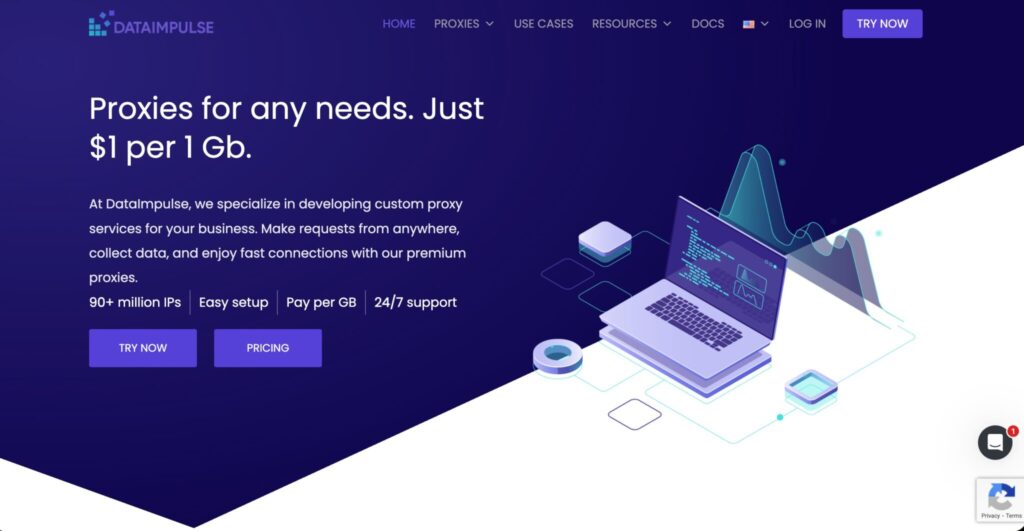
DataImpulse is one of the most interesting budget picks in this category. Its mobile proxy page lists 16M+ carrier IPs, 195 countries, pricing from $2 per GB, and sticky sessions up to 120 minutes.
That is an attractive setup for users who do not want a monthly commitment. If you only need telecom proxies for occasional tests, app QA, ad checks, or small scraping jobs, pay-as-you-go pricing can be much cleaner than paying for unused monthly bandwidth.
DataImpulse also mentions integrations with tools like Scrapy, Selenium, and Puppeteer for web scraping workflows.
Best for: Low-volume users, testing teams, solo operators, and buyers who want cheap mobile proxy traffic without subscriptions.
Pro-Tip: Low price is useful, but do not judge only on cost per GB. Run a small test against your exact target sites and compare success rate, retry rate, and average response time.
9. ProxyEmpire: Best for Carrier Targeting and Bandwidth Rollover
ProxyEmpire offers rotating mobile proxies with a focus on carrier-level targeting and flexible usage. Its mobile proxy page lists 4M+ ethically sourced 3G/4G/5G/LTE mobile IPs, 170+ countries, carrier-level targeting, unlimited concurrent connections, 99.8% uptime, and support for HTTP, HTTPS, and SOCKS5.
ProxyEmpire also explains that users can control rotation per request, use timed sessions, or use sticky sessions from 30 seconds to 30 minutes.
The pool is smaller than Oxylabs, SOAX, or Decodo, but the carrier targeting and bandwidth rollover angle can appeal to buyers who want more control over spend.
Best for: Multi-location workflows, social media testing, ecommerce research, and projects where unused bandwidth rollover matters.
Pro-Tip: ProxyEmpire is worth testing if you need SOCKS5 plus mobile carrier targeting. Ask for confirmation on carrier availability before buying a large package.
10. Rayobyte: Best for US Carrier-Specific Mobile Proxies
Rayobyte stands out because it publicly discusses its self-managed devices from Verizon, T-Mobile, and AT&T, and says buyers can contact them if they need a specific carrier beyond those three.
That makes Rayobyte especially useful for US-focused telecom proxy testing. If your work depends on checking how mobile content behaves across major US carriers, this direct carrier angle is more useful than a generic “US mobile proxy” label.
Rayobyte’s mobile proxy pricing page lists larger-commitment plans, including a trial tier and monthly plans with per-GB pricing. This is not the cheapest route for tiny users, but it can make sense for serious US carrier testing.
Best for: US telecom testing, app QA, ad verification, scraping workflows, and teams that care about ethical sourcing.
Pro-Tip: Rayobyte is not the first place I’d send a tiny one-day tester. But if your target carriers are Verizon, T-Mobile, or AT&T, it is one of the more practical providers to evaluate.
How to Choose the Best Telecom Proxy Provider
1. Start With the Use Case, Not the Provider
A telecom proxy setup for mobile ad verification is different from one for ecommerce scraping. App testing needs stable sessions and realistic device behavior. SERP tracking may need many locations. Public data scraping may need rotation depth and concurrency
Before buying, define:
- Target countries
- Target cities
- Required carriers or ASNs
- Expected monthly bandwidth
- Rotation needs
- Sticky session duration
- Protocol requirements
- Success rate benchmark
- Budget per successful request, not only per GB
That last one matters. A cheap proxy with a 40% success rate can cost more than a premium proxy with a 90% success rate.
2. Check IP Pool Quality, Not Just Pool Size
Large pools look impressive in sales copy. They are useful, but only if the provider has strong IPs in the locations you need.
Ask these questions:
- How many IPs are available in my target country?
- Can I target city, region, carrier, or ASN?
- Are the IPs real mobile carrier IPs?
- Are they shared or dedicated?
- What happens when the same subnet gets abused?
- Is the provider transparent about sourcing?
Pro-Tip: Run ASN checks during your trial. Do not assume every “mobile” proxy is actually tied to the carrier you want.
3. Understand Rotation Protocols
Rotation is where many buyers make mistakes.
A rotating telecom proxy can change IPs:
- Every request
- Every few minutes
- On command
- When the mobile connection resets
- When a sticky session expires
For scraping public pages, fast rotation can help distribute requests. For account login, checkout testing, app QA, or location-sensitive flows, too much rotation can break the session.
Sticky sessions solve that by keeping the same IP for a set period. Some providers offer 10 minutes. Some offer 30 minutes. Some offer 120 minutes or longer. Oxylabs, for example, mentions 24-hour sticky sessions for its mobile proxies. DataImpulse lists sticky sessions up to 120 minutes.
Pro-Tip: Match sticky duration to task length. A 5-minute app flow does not need a 24-hour sticky session. A long research crawl may benefit from one.
4. Check Protocol Support
Most buyers need HTTP and HTTPS. Technical teams may need SOCKS5. Some advanced use cases may benefit from UDP or QUIC support, which SOAX lists among its supported protocols.
Use this simple rule:
- HTTP/HTTPS: Best for web scraping, browser traffic, APIs, SEO tools.
- SOCKS5: Better for broader app-level traffic and tools that need protocol flexibility.
- UDP/QUIC: Useful for specialized testing, not required for most buyers.
5. Test Carrier Targeting Before Scaling
Carrier targeting is the heart of telecom proxy buying. If a provider says it offers carrier targeting, ask for examples.
You want to know:
- Can I choose Verizon, T-Mobile, Vodafone, Orange, Airtel, Jio, O2, EE, or another carrier?
- Is carrier targeting included or paid extra?
- Is carrier availability guaranteed?
- Can I combine carrier + city + sticky session?
- Can I access the same carrier repeatedly?
A provider may have strong country coverage but weak carrier depth in your exact market.
6. Look at Total Cost Per Successful Action
Proxy pricing can be misleading. A $2/GB provider may be cheaper on paper, while a $7/GB provider may be cheaper in production if it reduces retries, blocks, and failed sessions.
Track:
- Cost per GB
- Average page weight
- Success rate
- CAPTCHA rate
- Retry count
- Session failure rate
- Time lost to debugging
- Support quality
This gives you the real cost.
7. Do Not Ignore Ethics and Terms
Use telecom proxies for legitimate workflows: app testing, ad verification, public data collection, localization checks, brand monitoring, SEO testing, and security QA. Avoid using them for spam, credential attacks, fraud, platform abuse, or violating account systems.
Good providers increasingly care about sourcing and compliance. You should too. Cleaner sourcing usually means fewer surprise blocks and less reputational risk.
Final Verdict: Which Telecom Proxy Provider Should You Choose?
If you want the strongest enterprise-grade telecom proxy provider, start with Oxylabs or Bright Data. They are built for serious data teams, have strong infrastructure, and offer advanced targeting.
If you want the best mix of usability, carrier coverage, and practical pricing, Decodo and SOAX are the most balanced picks. Decodo is easier for many teams to start with, while SOAX gives technical users deeper protocol and configuration options.
If budget matters, DataImpulse and IPRoyal are the two I’d test first. DataImpulse is attractive for pay-as-you-go traffic, while IPRoyal gives smaller teams access to rotating and dedicated mobile proxy options.
If your workflow is carrier-specific, look closely at ProxyEmpire, Infatica, and Rayobyte. ProxyEmpire is useful for carrier-level targeting and SOCKS5. Infatica is strong for country, city, carrier, and ASN combinations. Rayobyte is especially interesting for US carrier testing across Verizon, T-Mobile, and AT&T.
My practical recommendation: shortlist three providers, test them on the same target sites, same locations, same carriers, and same request volume. Then compare success rate, latency, block rate, session stability, and support response. That test will tell you more than any marketing page.
FAQs About Telecom Proxy Providers
1. What is a telecom proxy?
A telecom proxy routes your traffic through an IP address associated with a telecom network. In most cases, this means mobile carrier IPs from 3G, 4G, LTE, or 5G networks. Some buyers also include ISP proxies and ASN-targeted residential proxies under the broader telecom proxy category.
2. Are telecom proxies the same as mobile proxies?
Not always, but they overlap heavily. Mobile proxies are telecom proxies because they use carrier network IPs. ISP proxies can also be telecom-related, but they usually provide longer, more stable sessions instead of real mobile carrier behavior.
3. Why are telecom proxies more expensive than datacenter proxies?
Telecom proxies rely on harder-to-source IPs, mobile carrier bandwidth, real devices or carrier-connected infrastructure, and more complex rotation systems. Datacenter proxies are easier to provision, so they are cheaper and faster, but easier for many platforms to identify.
4. What are telecom proxies used for?
Common use cases include mobile ad verification, app testing, mobile SEO tracking, localized content checks, ecommerce research, public web data collection, brand protection, and market intelligence.
5. Should I choose rotating or sticky telecom proxies?
Choose rotating proxies when you need many different IPs for public data collection. Choose sticky sessions when you need one stable identity for a task, such as testing an app flow, checking localized content, or maintaining a session.
6. Do telecom proxies support SOCKS5?
Many top providers support SOCKS5, but not all plans include it. Oxylabs, Decodo, SOAX, and ProxyEmpire list SOCKS5 support on their mobile proxy pages.
7. What is carrier targeting in proxies?
Carrier targeting lets you route traffic through a specific mobile operator or network, such as Verizon, T-Mobile, Vodafone, Orange, or another carrier depending on the provider and location. This is useful for mobile QA, ad checks, telecom testing, and region-specific research.
8. Are telecom proxies legal?
Telecom proxies are legal tools when used for legitimate purposes and in line with applicable laws, website terms, privacy rules, and data collection policies. The risk comes from how they are used. Public data collection, app testing, and ad verification are common business uses. Fraud, spam, credential abuse, or platform manipulation are not acceptable uses.
9. Which telecom proxy provider is best for beginners?
For beginners, Decodo, IPRoyal, and DataImpulse are easier starting points. Decodo has a clean balance of scale and usability. IPRoyal is budget-friendly. DataImpulse is useful if you want pay-as-you-go mobile traffic.
10. Which telecom proxy provider is best for enterprises?
For enterprise teams, Oxylabs, Bright Data, SOAX, and NetNut are stronger picks. They offer larger infrastructure, better support options, and more advanced targeting for serious data workflows.