
Thailand is a tricky proxy market.
On paper, almost every global proxy company says it supports “195 countries.” That sounds nice until you actually need Thai IPs that work consistently for Bangkok SERP checks, Shopee Thailand price monitoring, Lazada ad verification, local app testing, or scraping public Thai business data without constant blocks.
That is where the difference shows up.
A provider may have millions of global IPs, but only a thin Thailand pool. Another may offer Thai residential IPs, but no sticky sessions. Some are great for fast datacenter traffic but weak for real-user behavior. Others are powerful enough for enterprise scraping teams, yet overkill if you only need a few clean Thai sessions every week.
So this guide is built around one practical question:
Which Thailand proxy provider gives you the right mix of Thai IP coverage, rotation control, speed, reliability, pricing, and technical flexibility?
Below, I’ll compare the top Thailand proxy providers for 2026, with a clear focus on residential proxies, mobile proxies, ISP/static residential IPs, datacenter proxies, IP pool quality, rotation protocols, session control, and real-world use cases.
Quick Verdict: Best Thailand Proxy Providers
| Rank | Provider | Best For | Thailand Coverage | Proxy Types | Rotation Control | Pricing Style |
|---|---|---|---|---|---|---|
| 1 | Bright Data | Enterprise scraping, ad verification, advanced geo-targeting | Strong Thailand and Bangkok support | Residential, mobile, ISP, datacenter | Advanced rotation, sticky sessions, city/ZIP/ASN targeting | Premium, usage-based |
| 2 | Oxylabs | Large-scale scraping and serious data teams | Large Thailand pool with city-level accuracy | Residential, datacenter, mobile, ISP | Automatic rotation, sticky sessions, SOCKS5 | Premium, bandwidth-based |
| 3 | Decodo | Best value for most teams | Thailand page with residential and mobile IPs | Residential, mobile, static residential, datacenter | Rotating and sticky sessions | Mid-range, flexible plans |
| 4 | SOAX | Flexible filtering and mixed proxy testing | Global network with bundled proxy access | Residential, mobile, ISP, datacenter | Strong filtering, rotation, session settings | Bundled GB plans |
| 5 | NetNut | Enterprise users needing scale and static options | Thailand proxy page and global 195-country coverage | Residential, rotating residential, static residential, mobile, datacenter | Sticky and rotating IP options | Volume-based |
| 6 | IPRoyal | Affordable Thai residential IPs | Claims 430,750 Thailand IPs | Residential, datacenter, mobile, ISP | Rotation type and session TTL controls | Budget-friendly |
| 7 | Webshare | Budget datacenter and static residential proxies | Global location support with country targeting | Datacenter, static residential, residential | Rotating residential, country filtering | Low-cost monthly plans |
| 8 | Proxy-Seller | Cheap private Thai proxies | Thailand proxy page with 1Gbps and unlimited bandwidth claims | Residential, ISP, datacenter, mobile | Static and mobile rotation options | Per-IP pricing |
| 9 | Infatica | Mid-market residential Thailand proxies | Claims 60,000+ Thailand IPs | Residential, private, HTTP/SOCKS proxies | IP rotation and concurrent sessions | Usage-based |
1. Bright Data: Best Thailand Proxy Provider for Enterprise-Grade Control
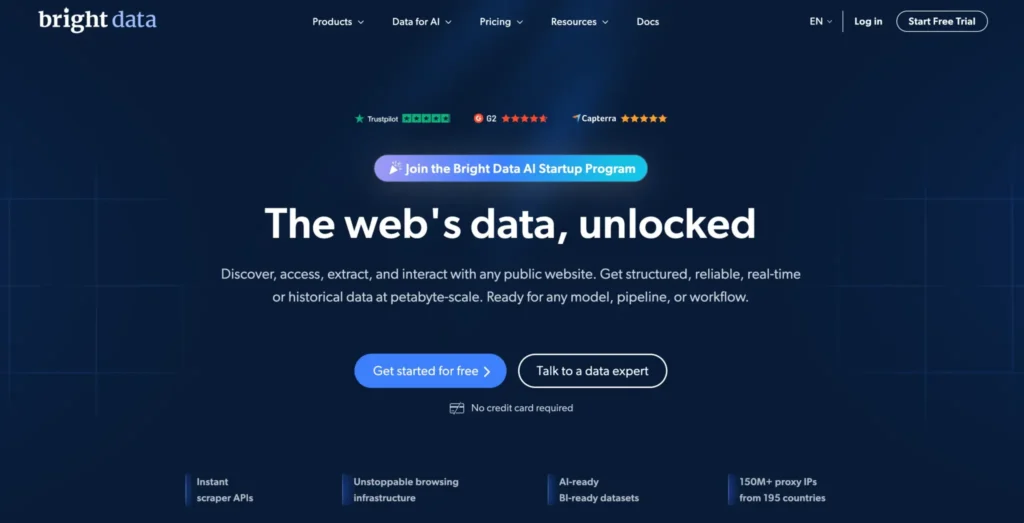
Bright Data is the provider I would put at the top for serious Thailand proxy work, especially if you need precise geo-targeting and not just a random Thai exit node.
Its Thailand proxy page lists 245,369 Thailand IPs, with support for residential, mobile, ISP, and datacenter proxy networks. It also mentions free city, state, and ZIP-code-level targeting for Thailand, which is useful if your workflow depends on checking search results, ad delivery, or localized content from Bangkok or other Thai regions.
That matters because Thailand is not one uniform market. Bangkok, Chiang Mai, Phuket, Pattaya, and smaller provinces can behave differently across search, e-commerce, maps, delivery apps, classifieds, and local platforms. If your proxy only gives you “Thailand” as a country selector, your data may be too broad.
Bright Data’s residential proxy page also advertises 400M+ residential IPs across 195 countries, sticky and rotating sessions, and free geo-targeting down to city, state, country, ZIP code, and ASN level.
Where Bright Data Stands Out
Bright Data is strongest when your project needs high success rates, precision, and technical control. Think ad verification, SERP monitoring, e-commerce intelligence, brand protection, and large-scale public web data collection.
You can rotate IPs aggressively for scraping, keep sticky sessions for login-like flows, or use ISP/static residential proxies when you need a clean and stable footprint. That flexibility is the reason many enterprise data teams shortlist Bright Data first.
Where It Falls Short
The biggest downside is cost and complexity. Bright Data is not the easiest provider for beginners. The dashboard, compliance checks, product range, and pricing model can feel heavy if you only need a small batch of Thai IPs for light browsing or occasional testing.
Pro-Tip
Use Bright Data if you care about geo precision more than cheap bandwidth. For example, if you are checking whether a Thai ad appears correctly in Bangkok, a cheap rotating proxy may give you noisy results. Bright Data’s location controls are better suited for that kind of work.
2. Oxylabs: Best Premium Thailand Proxy Provider for Large-Scale Scraping
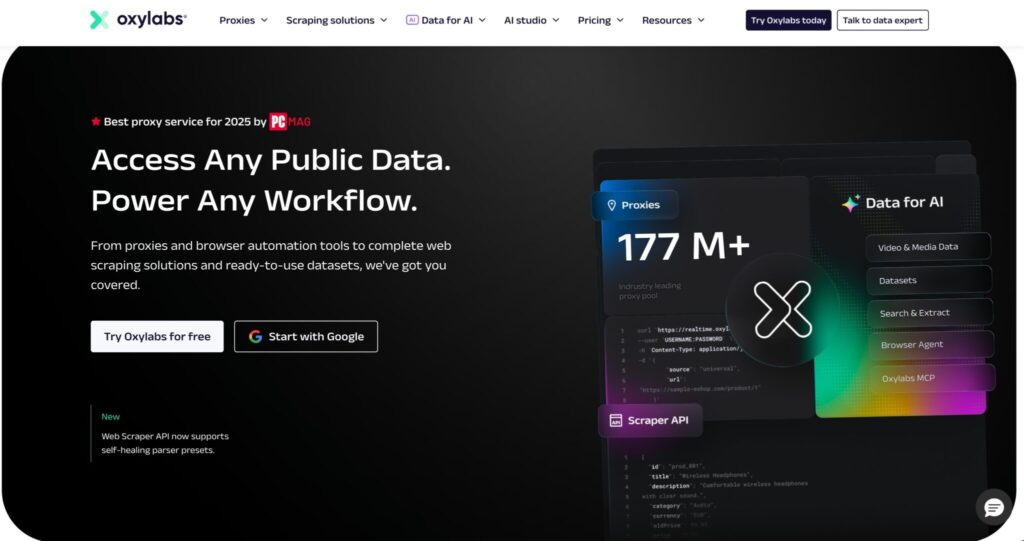
Oxylabs is another top-tier option for Thailand proxies, especially for businesses that run structured data collection at scale.
Its Thailand proxy page mentions 1,542,629 Thailand IPs, uptime up to 99.9%, localized targeting, pre-selected proxies, and residential and datacenter Thailand proxy servers.
Oxylabs also promotes a wider network of 175M+ residential IPs and 2M datacenter IPs, which makes it one of the largest premium proxy ecosystems on the market.
Where Oxylabs Stands Out
Oxylabs is built for teams that need reliability, documentation, and support. If your stack already uses Python, Playwright, Puppeteer, Scrapy, custom API pipelines, or data warehouse workflows, Oxylabs is easier to justify.
Its residential proxy product supports city-level targeting, sticky sessions up to 24 hours, and SOCKS5 for residential proxies and dedicated datacenter proxies.
That gives you room to tune traffic based on the target. For example:
Use rotating residential proxies for public product listings.
Use sticky sessions for cart, checkout, or session-based testing.
Use datacenter proxies for fast, low-risk data pulls where Thai residential identity is not required.
Where It Falls Short
Oxylabs is not the cheapest path into Thailand proxies. It is more suitable for companies that value stability, success rate, and support over the lowest possible entry cost.
Pro-Tip
For Thai e-commerce scraping, do not start with mobile proxies unless you actually need mobile-carrier behavior. Start with residential proxies, test rotation frequency, then move to mobile only if the target reacts differently to desktop residential traffic.
3. Decodo: Best Value Thailand Proxy Provider for Most Teams
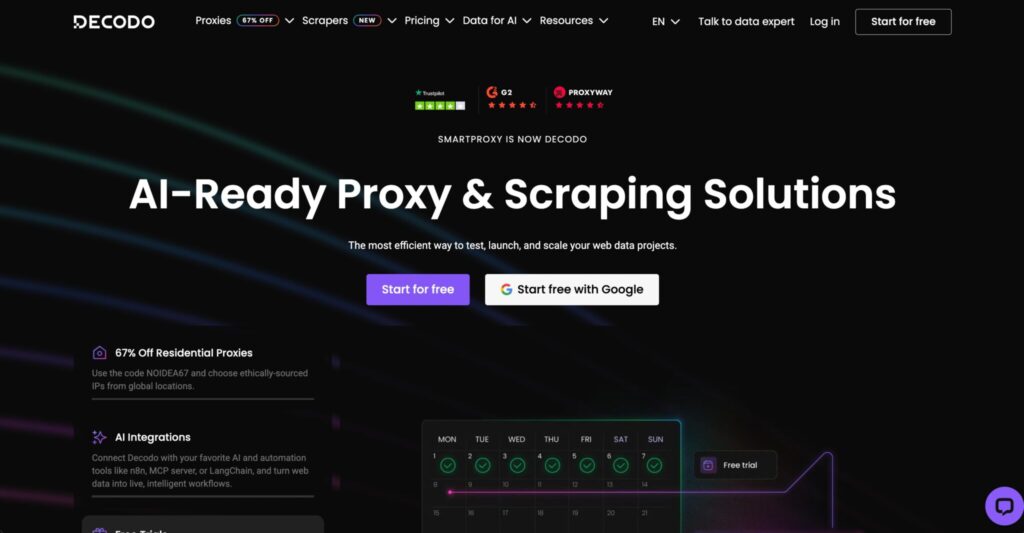
Decodo, formerly Smartproxy, is one of the strongest choices for users who want a balance of price, usability, and scale.
The company states that Smartproxy has officially rebranded to Decodo and lists 125M+ IPs on its official website. Its Thailand proxy page promotes local Thailand access with residential and mobile IPs, a 14-day money-back option, 125M+ global IPs, and 99.98% success rate.
Pricing is also more approachable than many premium vendors. Decodo’s residential proxy pricing page lists smaller monthly plans, including 3 GB, 10 GB, 25 GB, and 50 GB tiers, with residential pricing shown from $3.75/GB on the 3 GB plan and lower rates at higher usage.
Where Decodo Stands Out
Decodo is easier to use than many enterprise-first platforms. The dashboard is cleaner, setup is faster, and the provider has enough scale for most SEO, e-commerce, ad verification, and market research workloads.
It supports rotating and sticky residential sessions, which gives you two very different ways to work:
Rotating sessions help with high-volume public data collection.
Sticky sessions help when a target expects the same user to stay on one IP for a period of time.
Where It Falls Short
Decodo is strong, but power users may still prefer Bright Data or Oxylabs for the most advanced targeting and enterprise compliance workflows. If your Thailand workload needs deep ASN targeting, custom SLAs, and large dedicated pools, compare carefully before committing.
Pro-Tip
Decodo is a smart first paid provider if you are moving away from unreliable free Thai proxy lists. Start with a small residential plan, test Bangkok-specific targets, then increase bandwidth only after you confirm success rates.
4. SOAX: Best for Flexible Filtering and Mixed Proxy Testing
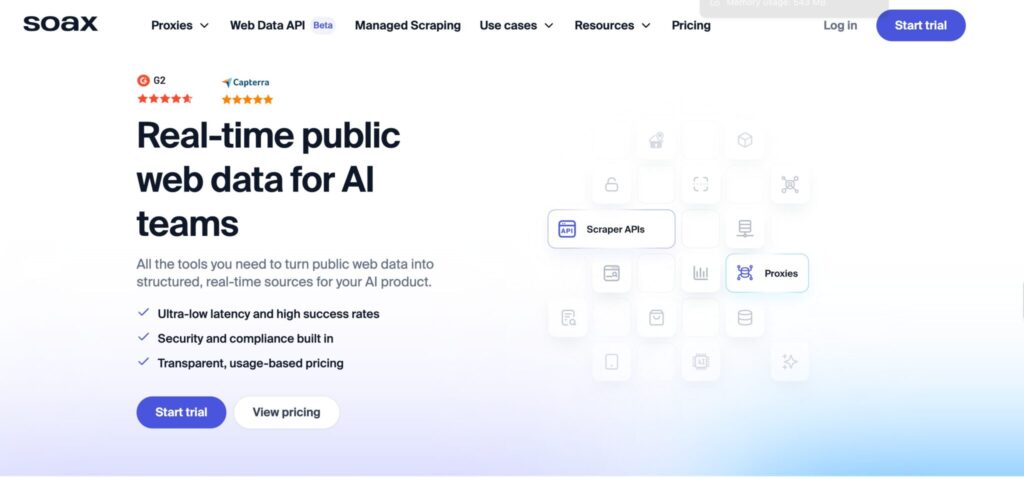
SOAX is worth considering if you want one plan that lets you test different proxy types without buying separate products for every use case.
Its pricing page says users can access residential proxies, mobile proxies, US datacenter proxies, and Web Data API through bundled plans. The Starter plan is listed at $3.60/GB with 25 GB included, billed monthly.
SOAX positions itself as a data extraction platform with automated scraping, APIs, anti-blocking support, and compliance procedures.
Where SOAX Stands Out
SOAX is good for teams that need to test multiple target types. For example, you may discover that Thai SERP checks work fine on residential proxies, while a mobile app test needs mobile IPs, and a less protected endpoint can run on datacenter traffic.
That flexibility can save money because you are not forced to use the most expensive proxy type for every task.
Where It Falls Short
SOAX is not always the first provider people think of for Thailand-specific depth. Before buying a larger plan, test your exact Thai targets, cities, and session behavior.
Pro-Tip
Use SOAX when you are still mapping your proxy needs. If you do not yet know whether your target needs residential, mobile, ISP, or datacenter traffic, bundled access can help you test faster.
5. NetNut: Best for Enterprise Static and Rotating Proxy Workflows
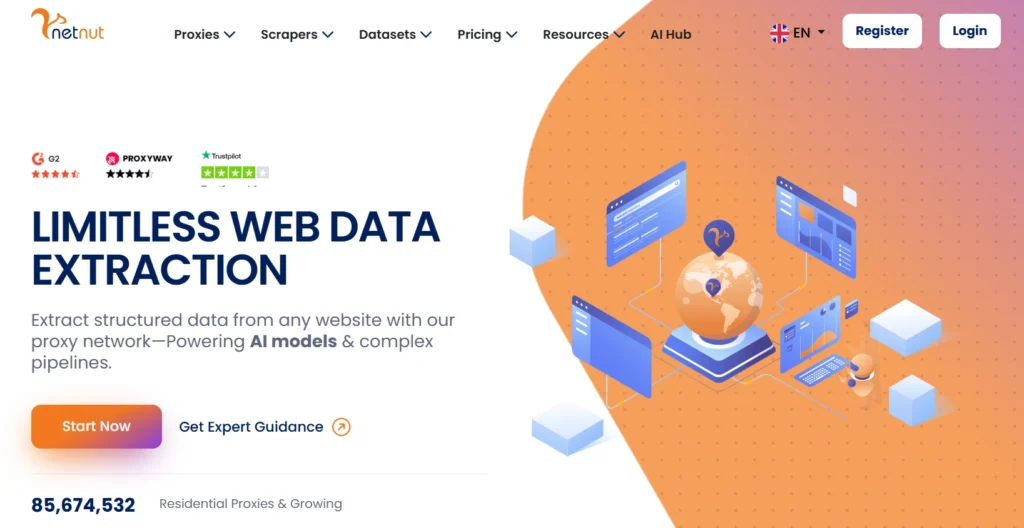
NetNut is another strong option for companies that want scale, stable routing, and enterprise-level proxy infrastructure.
Its homepage lists 85M+ residential IPs in 195 countries, city/state targeting, unlimited concurrency, and HTTP/HTTPS/SOCKS5 support. It also lists 5M+ mobile IPs across 100 countries.
NetNut’s Thailand proxy page includes Thailand-specific proxy plans and mentions city/state selection, API access, IP whitelisting, and dedicated account managers.
Where NetNut Stands Out
NetNut is useful when you want a mix of rotating residential proxies, static residential proxies, mobile proxies, and datacenter proxies. Static residential and ISP-style options are helpful when you need a stable Thai identity over time.
For example, if your workflow involves repeated monitoring of the same Thai business platform or dashboard-like public interface, changing IPs every request can create more problems than it solves. A stable Thai IP may perform better.
Where It Falls Short
NetNut feels more enterprise-oriented than beginner-friendly. Pricing and plan fit should be reviewed carefully if you are a small user.
Pro-Tip
If your target blocks aggressive IP rotation, test static residential or sticky sessions before blaming the provider. Some Thai sites respond better to stable behavior than constant IP changes.
6. IPRoyal: Best Budget-Friendly Thailand Proxy Provider
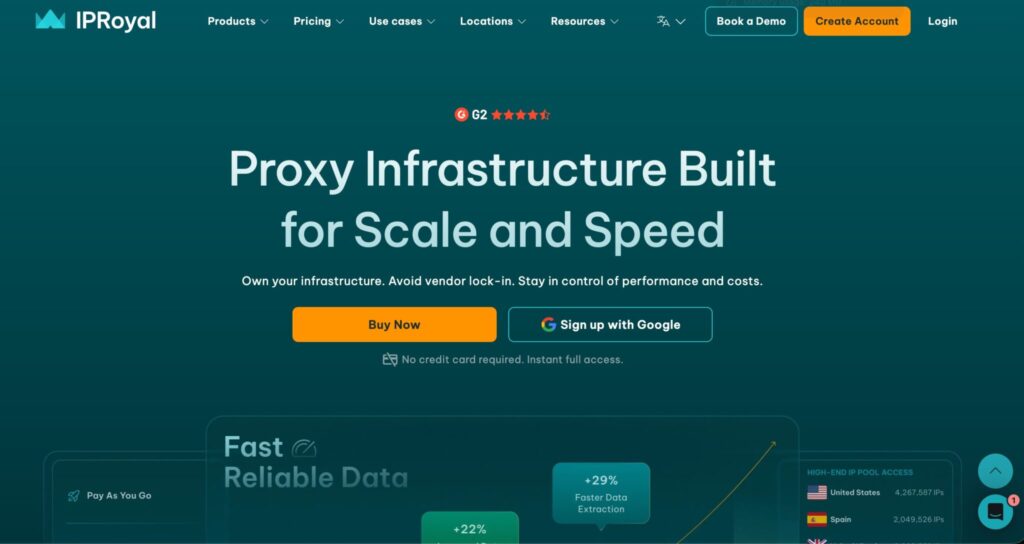
IPRoyal is one of the better options for users who want Thailand proxies without enterprise pricing.
Its Thailand page claims access to 430,750 Thailand IPs and says it offers datacenter, residential, mobile, and sneaker proxies.
IPRoyal also has useful technical controls. Its residential quick-start guide shows options for selecting proxy location, choosing rotation type, and setting session TTL.
Where IPRoyal Stands Out
IPRoyal is appealing for small teams, affiliate marketers, SEO testers, browser profile users, and developers who want Thai residential access at a lower cost.
The non-enterprise feel is a benefit. You can buy smaller amounts, configure location, test rotation, and avoid the bigger commitments that come with premium platforms.
Where It Falls Short
Budget providers can be more variable. You should test speed, success rate, and IP quality on your actual Thai targets before scaling. A big IP count does not automatically mean every endpoint will be clean, fast, and available at all times.
Pro-Tip
For SEO rank tracking in Thailand, use sticky sessions and controlled rotation rather than blasting requests through random IP changes. Rank tracking needs consistency more than raw volume.
7. Webshare: Best Low-Cost Option for Datacenter and Static Residential Proxies
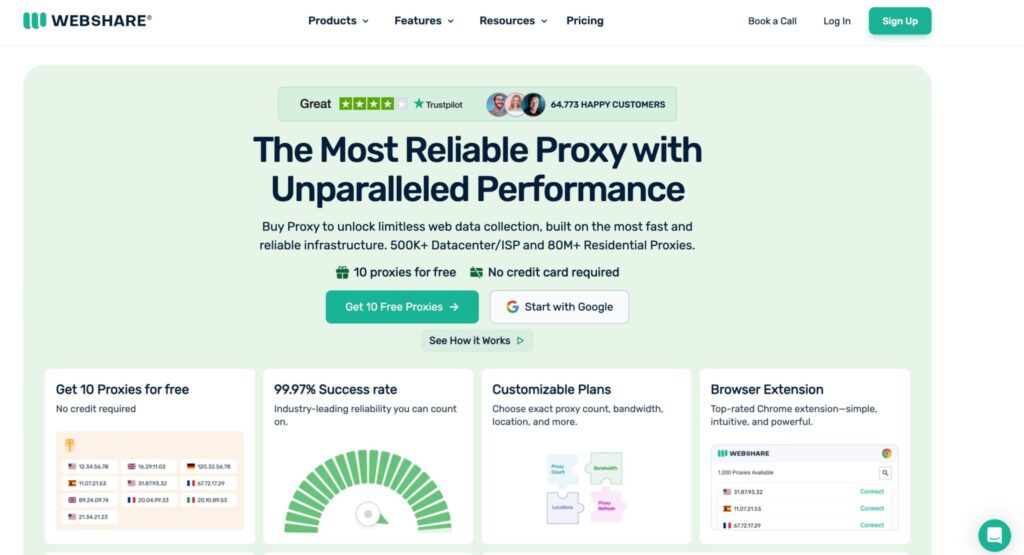
Webshare is a good pick if you care about price, simple setup, and predictable proxy management.
Its site lists 80M+ global IPs across 195 countries, 24/7 support, API docs, and three proxy products: proxy server/datacenter, static residential, and residential proxy.
It also offers proxy locations across many countries and promotes country-level filtering, although availability can depend on inventory and plan type.
Where Webshare Stands Out
Webshare is useful for budget-sensitive workloads. If you need simple Thai proxy testing, datacenter access, or low-cost static residential options, it can be more affordable than Bright Data or Oxylabs.
It is also developer-friendly. The API docs, dashboard, and simple plans make it easier for small teams to integrate proxies into scripts.
Where It Falls Short
Webshare may not be the best choice for advanced Thailand-specific residential targeting. If you need Bangkok-level accuracy, mobile-carrier behavior, or high success rates on protected Thai websites, test before relying on it.
Pro-Tip
Use Webshare for lower-risk workloads first. If a Thai target is not heavily protected, datacenter or static residential proxies can save serious money compared with premium residential traffic.
8. Proxy-Seller: Best for Cheap Dedicated Thai IPs
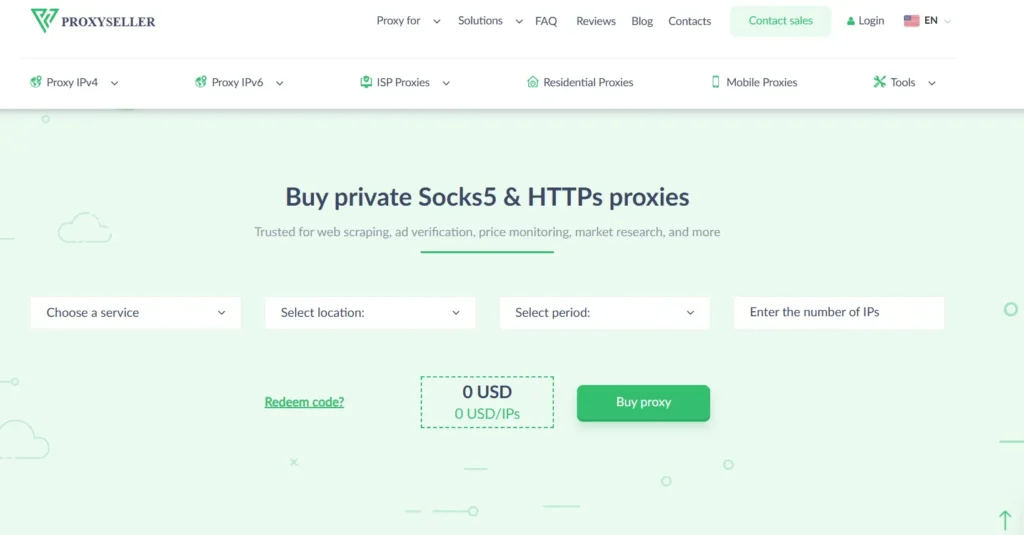
Proxy-Seller is a practical option when you want low-cost private proxies and do not need the full enterprise stack.
Its homepage lists private residential, ISP, datacenter IPv4/IPv6, and rotating mobile 4G/5G proxies, with SOCKS5 and HTTP(S) support. It also lists Thailand in its country pricing table, with Thailand proxies shown from $0.90/IP in the captured official result.
Its Thailand proxy page promotes Thai proxies at 1Gbps, unlimited bandwidth, and SOCKS5/HTTP(S) support.
Where Proxy-Seller Stands Out
Proxy-Seller is attractive for smaller operational tasks: account testing, SEO checks, simple Thai browsing, QA work, and cases where you need a private IP rather than a huge rotating residential pool.
The per-IP buying model is easy to understand. You choose location, quantity, rental period, and protocol.
Where It Falls Short
It is not the first choice for complex scraping or advanced Thai residential rotation. For large public data collection, Bright Data, Oxylabs, Decodo, or SOAX are usually better fits.
Pro-Tip
Proxy-Seller makes sense when you need a small number of stable Thai IPs. If you need thousands of rotating Thai residential sessions, pick a provider built around pool depth and rotation control.
9. Infatica: Best Mid-Market Thailand Residential Proxy Alternative
Infatica is not always mentioned first, but it deserves a spot if you need residential Thailand proxies with clear location positioning.
Its Thailand page claims 60,000+ Thailand IP addresses, with city mentions including Bangkok, Nonthaburi, Pak Kret, Hat Yai, and Chaophraya Surasak. It also mentions HTTP/SOCKS support, IP rotation, residential ISP connections, and unlimited concurrent sessions.
Where Infatica Stands Out
Infatica is suitable for mid-market teams that want genuine Thai residential IPs without immediately going to the most expensive enterprise platforms.
It can work well for localized market research, ad checks, content access, and lighter scraping tasks where Thai residential identity matters.
Where It Falls Short
The pool is smaller than the biggest players. If you need huge scale, deep targeting, or highly protected target success rates, compare it against Bright Data, Oxylabs, and Decodo.
Pro-Tip
Infatica is worth testing when the largest vendors feel too expensive but budget providers feel too thin. It sits in that middle lane.
How to Choose the Best Thailand Proxy Provider
1. Start With the Proxy Type, Not the Brand
This is the mistake many buyers make. They pick the provider first, then try to force every use case through one proxy type.
That is backwards.
Choose based on the job:
Residential proxies are best for public data scraping, ad verification, localized browsing, price tracking, and targets that expect real ISP traffic.
Mobile proxies are best for app testing, mobile ad verification, social platforms, and targets where carrier-grade NAT makes mobile traffic appear more natural.
ISP/static residential proxies are best when you need a stable IP that still looks closer to a residential connection than a datacenter IP.
Datacenter proxies are best for speed, low cost, simple automation, and low-risk targets.
2. Check Thailand Pool Depth
A provider with 100M global IPs may still have weak Thailand inventory. Look for Thailand-specific pages, Bangkok targeting, Thai ISP diversity, and city-level controls.
For Thailand, pool quality matters more than headline global IP count.
3. Understand Rotation Protocols
Rotation is not just “change IPs.”
You need to know how the provider handles:
- Per-request rotation
- Time-based rotation
- Sticky sessions
- Session TTL
- Manual IP rotation
- Backconnect gateways
- Country and city parameters
- SOCKS5 versus HTTP(S) support
- IP whitelisting versus username/password authentication
For scraping public Thai data, per-request or short-interval rotation can work well. For login-like flows, checkout testing, or account dashboards, sticky sessions are usually safer.
4. Test Bangkok Separately
If your use case is Thailand SEO, paid ads, local listings, or e-commerce pricing, Bangkok often matters more than generic Thailand targeting.
A provider that can target Bangkok or specific Thai regions gives you cleaner data than a provider that only lets you choose Thailand at the country level.
5. Do Not Overpay for Mobile Proxies
Mobile proxies are powerful, but expensive. Do not buy them just because they sound more “undetectable.”
Use mobile proxies when the target behaves differently for mobile users, apps, carrier networks, or mobile ads. Otherwise, residential proxies are usually the better starting point.
6. Avoid Free Thailand Proxy Lists for Serious Work
Free Thai proxy lists can be useful for quick experiments, but they are risky for business workflows. They may be slow, unstable, overused, blocked, insecure, or unavailable when you need them. One free Thailand proxy list page even showed no active free Thailand proxies at the time it was captured, while still offering frequent updates.
For real projects, use paid proxies with support, authentication, and predictable availability.
Best Thailand Proxy Provider by Use Case
| Use Case | Best Provider Choice |
|---|---|
| Enterprise ad verification | Bright Data or Oxylabs |
| Shopee/Lazada price tracking | Oxylabs, Decodo, Bright Data |
| Budget Thai residential proxies | IPRoyal |
| Cheap private Thai IPs | Proxy-Seller |
| Mixed proxy testing | SOAX |
| Static Thai sessions | NetNut, Proxy-Seller, Webshare |
| Developer-friendly low-cost setup | Webshare |
| Mid-market Thailand residential proxies | Infatica |
| Bangkok-level targeting | Bright Data or Oxylabs |
FAQs About Thailand Proxy Providers
1. What is a Thailand proxy?
A Thailand proxy routes your traffic through an IP address located in Thailand. To websites, apps, search engines, or ad platforms, your request appears to come from a Thai user instead of your real location.
2. Are Thailand proxies legal?
Thailand proxies are legal when used for legitimate purposes such as public data collection, SEO testing, ad verification, app testing, market research, and privacy protection. You still need to respect website terms, platform rules, data protection laws, and anti-abuse policies.
3. Which is better for Thailand, residential or datacenter proxies?
Residential proxies are better for Thai websites that check user authenticity or block datacenter traffic. Datacenter proxies are faster and cheaper, but easier to detect. For serious scraping or ad verification, start with residential proxies. For simple browsing or low-risk automation, datacenter proxies may be enough.
4. Do I need Thai mobile proxies?
Only if your target requires mobile-style behavior. Mobile proxies are useful for mobile app testing, mobile ads, social media workflows, and carrier-specific checks. For most SEO and e-commerce monitoring tasks, Thai residential proxies are usually more cost-effective.
5. What is a sticky session in proxy usage?
A sticky session keeps the same proxy IP for a set period. This is useful when a website expects a single user to stay on one connection during browsing, login, cart testing, or multi-step actions.
6. What is proxy rotation?
Proxy rotation changes your outgoing IP address based on rules. Some providers rotate on every request, while others rotate after a set time or allow manual rotation. Rotation helps distribute requests and reduce blocks, but too much rotation can look unnatural on session-based sites.
7. Which Thailand proxy provider is best overall?
Bright Data is the best overall choice for enterprise-grade Thailand proxy control. Oxylabs is excellent for large-scale scraping. Decodo is the best value pick for most teams. IPRoyal is better for budget users, while Proxy-Seller works well for cheap private Thai IPs.
8. Can I use Thailand proxies for Shopee and Lazada monitoring?
Yes, Thai proxies are commonly used for localized e-commerce research, including product pricing, availability, promotions, and search visibility. Use residential proxies first, then test mobile proxies if the platform behaves differently for mobile users.
9. Should I choose country-level or city-level Thailand targeting?
Choose city-level targeting if your work depends on local accuracy. Bangkok-level SERP results, local ads, delivery platforms, and regional pricing can differ from broader Thailand results. Country-level targeting is fine for basic Thai access.
Final Verdict: Which Thailand Proxy Provider Should You Pick?
If you want the safest premium pick, choose Bright Data. It gives you deep Thailand targeting, multiple proxy types, and enterprise-level control.
If your team runs large-scale scraping and wants premium infrastructure, choose Oxylabs.
If you want the best mix of price, usability, and performance, choose Decodo.
If you are still testing which proxy type works best for Thai targets, choose SOAX.
If you want budget Thai residential access, choose IPRoyal.
If you need cheap private Thai proxies, choose Proxy-Seller.
For most professional users, I would start with Decodo or Oxylabs, then move to Bright Data if the project needs more precise geo-targeting, stronger compliance controls, or higher reliability at scale.