
Best Mexico Proxy Providers in 2026: Buyer’s Guide for Reliable Mexican IPs Mexico looks simple on a proxy map. Pick “MX,” plug the endpoint into your scraper, and collect the data, right?
Not quite.
Mexico is a large, uneven digital market. A proxy that works smoothly for a lightweight SERP check may fall apart when you run price monitoring across retail, travel, delivery, or ad platforms. Some providers advertise huge global pools, but their actual Mexican IP availability can be thin. Others offer cheap bandwidth, yet give you limited targeting, weak session control, or unstable rotation during heavier jobs.
That is why choosing the best Mexico proxy provider is not just about price per GB. You need to check the Mexico IP pool, session control, proxy type, city targeting, ASN targeting, protocol support, concurrency limits, uptime claims, and how the provider handles large scale traffic.
For professional use cases like localized SEO tracking, ad verification, market research, travel fare aggregation, social listening, and public web data collection, residential proxies are usually the safest starting point. Datacenter proxies can be faster and cheaper, but they are easier for protected sites to detect. ISP proxies sit in the middle, giving you cleaner static sessions with stronger trust than normal datacenter IPs.
Here are the best Mexico proxy providers worth considering in 2026.
Quick Verdict: Best Mexico Proxy Providers
| Rank | Provider | Best For | Mexico Proxy Types | Starting Price Snapshot | Main Strength |
|---|---|---|---|---|---|
| 1 | Bright Data | Enterprise data collection and advanced targeting | Residential, Mobile, ISP, Datacenter | Residential pay as you go shown at $4/GB during current promo | Massive global pool, advanced geo targeting, strong tooling |
| 2 | Oxylabs | Large scale scraping and ad verification | Residential, SOCKS5, Dedicated Datacenter, Mobile | Mexico residential starts at $8/GB | Strong Mexico coverage and enterprise grade infrastructure |
| 3 | Decodo | Best balance of price, usability, and scale | Residential, Static Residential, Mobile, Datacenter | Residential plans from $3.75/GB on small plans, lower on larger plans | Easy setup, 115M+ IP pool, good targeting |
| 4 | SOAX | Flexible plans and location focused campaigns | Residential, Mobile, ISP, Datacenter | Starter plan at $3.60/GB | Strong Mexico pool visibility and flexible credit based pricing |
| 5 | NetNut | High concurrency and stable business workflows | Rotating Residential, Static Residential, Mobile, Datacenter | Quote based or sales led for many plans | 85M+ residential IPs and unlimited concurrency claims |
| 6 | Webshare | Budget Mexico proxies and self serve buying | Datacenter, Rotating Residential, Static Residential | Mexico proxy from $0.029/IP, residential from $7/month for 1GB | Affordable entry point and simple dashboard |
| 7 | IPRoyal | Low commitment residential proxy buying | Residential, ISP, Datacenter, Mobile | 1GB residential at $7/GB, bulk residential from $1.75/GB | Non expiring traffic and flexible small plans |
| 8 | ProxyEmpire | Rotating residential and mobile Mexico workflows | Residential, Mobile, Static Residential | Rotating residential pay as you go listed at $3.50/GB with current promo | Unlimited concurrent sessions and SOCKS5 support |
| 9 | Rayobyte | Static and rotating ISP proxy use cases | Residential, Static ISP, Rotating ISP, Datacenter | Residential from $3.50/GB, rotating ISP from $3.75/GB | Strong fit for stable sessions and dedicated Mexico IP needs |
| 10 | DataImpulse | Budget residential Mexico IPs | Residential, Premium Residential, Datacenter, Mobile | $1 per GB | Low cost, no mandatory subscription, visible Mexico pool stats |
What Is a Mexico Proxy?
Best Mexico Proxy Providers in 2026: Buyer’s Guide for Reliable Mexican IPs
A Mexico proxy routes your internet requests through an IP address located in Mexico. To the target website, your request appears to come from a Mexican user, not from your real location.
That matters when you need to see localized search results, Mexico specific pricing, local ads, regional travel fares, product availability, streaming catalogs, marketplace pages, or app behavior. It also helps businesses test how their websites load for users in Mexico.
A residential Mexico proxy uses a real ISP issued IP address. Oxylabs defines residential proxies as intermediary servers that use real IP addresses assigned by internet service providers to real users, which makes them more authentic than normal server based datacenter IPs.
The main proxy types you will see are:
Residential proxies: Best for protected websites, localized scraping, ad verification, and market research.
Datacenter proxies: Best for speed, low cost, and simple workloads where detection risk is lower.
ISP proxies: Static IPs issued by ISPs, useful when you need long sessions and better trust than datacenter IPs.
Mobile proxies: Best for mobile first platforms, app testing, ad checks, and mobile carrier based location testing.
Massive Mexico Proxy Provider Comparison Table
Best Mexico Proxy Providers in 2026: Buyer’s Guide for Reliable Mexican IPs
| Provider | Global Pool Size | Mexico Specific Data | Targeting Options | Protocols | Rotation Control | Best Use Case | Weak Spot |
|---|---|---|---|---|---|---|---|
| Bright Data | 400M+ residential IPs in 195 countries | Mexico location page available with free trial | Country, state, city, ZIP, ASN | Common proxy protocols supported across products | Advanced rotation and session tooling | Enterprise scraping, SERP, ads, compliance heavy workflows | Can feel expensive and complex for small users |
| Oxylabs | 175M+ residential IPs globally | Mexico page lists 8,698,618 IPs | Country, state, city, ZIP, ASN | HTTP(S), SOCKS5 | Rotating and sticky sessions | High volume public data collection and ad verification | Mexico residential pricing starts higher than budget tools |
| Decodo | 115M+ real user IPs across 195+ locations | Mexico City, Guadalajara, Monterrey targeting mentioned | Country, state, city, ZIP | HTTP(S), SOCKS5 | Rotating and sticky sessions up to 60 minutes | Teams wanting strong UX without enterprise complexity | Deep enterprise controls are not as broad as Bright Data |
| SOAX | 191M+ proxy network claim on main proxy page | Mexico page lists 1,823,160 IPs | Country, city, ISP style controls depending on product | HTTP(S), SOCKS5 | Rotation and sticky sessions | Location sensitive research and flexible traffic planning | Starter plan begins at 25GB, not ideal for tiny tests |
| NetNut | 85M+ residential IPs, 195+ countries | Dedicated Mexico residential proxy page | City and state targeting, unlimited concurrency claim | HTTP, HTTPS, SOCKS5 | Rotating and static options | Stable business scraping and large parallel workloads | Public pricing is less transparent |
| Webshare | 80M+ rotating residential IPs | Mexico page lists 1,182,383 proxies | Country level, product dependent | HTTP, SOCKS5 options | Built in rotation on selected plans | Low cost testing and budget proxy lists | Less advanced scraping tooling |
| IPRoyal | 32M+ residential proxy pool | Mexico available through global location selection | Country, city, state, ISP level options vary | HTTP(S), SOCKS5 | Controlled IP changes, non expiring traffic | Flexible pay as you go proxy use | Smaller pool than enterprise providers |
| ProxyEmpire | Large residential and mobile pool | Mexico residential page available | Country, region, city, ISP options vary | HTTP, SOCKS5 | Rotating and sticky sessions | Mobile and residential geo workflows | Current promo pricing may change |
| Rayobyte | Product dependent | Mexico proxy page available | Geo targeting, product dependent | HTTP(S), SOCKS5 depending on product | Static and rotating products | Static Mexico sessions and ISP style workflows | Residential pricing is not the cheapest |
| DataImpulse | 90M+ IPs globally | Mexico page shows live active and 30 day IP counts | Country, city, rotation interval | HTTP(S), SOCKS5 depending on setup | Per request or time interval rotation | Low cost scraping and budget residential testing | Smaller Mexico live pool than premium providers |
1. Bright Data: Best Overall Mexico Proxy Provider for Enterprise Teams
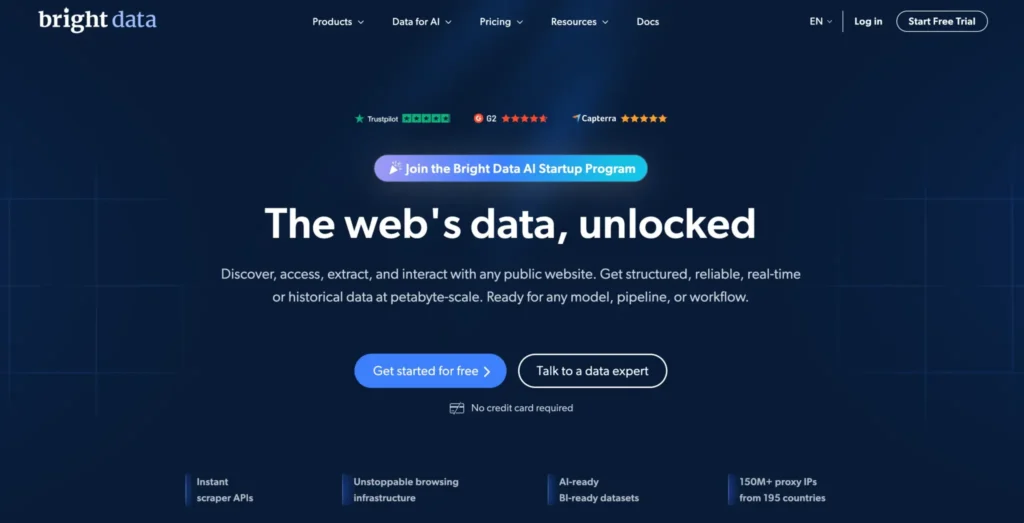
Bright Data is the premium option for companies that need scale, control, and serious proxy infrastructure. Its residential proxy pricing page lists 400M+ rotating residential IPs across 195 countries, with country, state, city, and ZIP code targeting available for free. The current pricing page also shows residential pay as you go pricing at $4/GB during its listed promotion.
For Mexico based work, Bright Data is a strong fit when you need precise location behavior, not just “some Mexican IP.” That matters for SERP tracking, retail pricing, travel fare checks, real estate data, app localization, ad verification, and brand protection.
The biggest advantage is the ecosystem. You do not just get proxies. You also get Web Unlocker, SERP API, scraping tools, browser tools, and enterprise support. If your team already runs data pipelines, Bright Data can fit into a larger stack rather than acting like a simple proxy list.
The downside is cost and complexity. A solo marketer who only needs a few GB of Mexican residential traffic may find the dashboard and pricing structure heavier than necessary. Bright Data is best when reliability is worth more than saving a few dollars per GB.
Pro Tip: Use Bright Data when missed data costs more than proxy bandwidth. For example, if you are monitoring flight prices, ad placements, local retail prices, or competitor catalogs across Mexican cities, its targeting depth can justify the premium.
2. Oxylabs: Best Mexico Proxy Provider for Heavy Scraping and Ad Verification
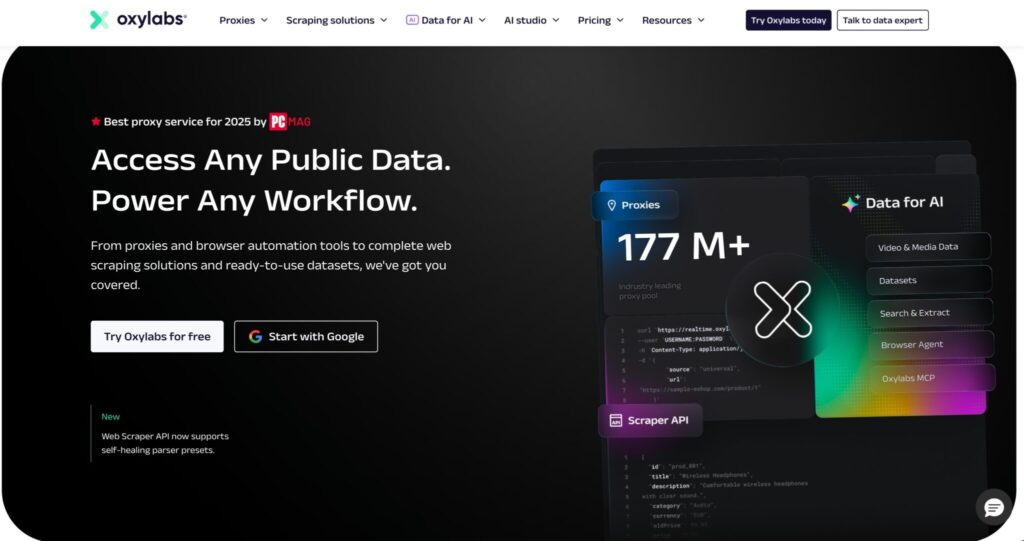
Oxylabs is another top tier provider built for serious data operations. Its dedicated Mexico proxy page lists 8,698,618 Mexico IPs and includes residential, SOCKS5, dedicated datacenter, and mobile proxy options. The same page lists Mexico residential proxies from $8/GB, SOCKS5 from $8/GB, dedicated datacenter proxies from $8.25/month, and Mexico mobile proxies from $9/GB.
For professional users, Oxylabs has two big strengths: infrastructure and use case alignment. Its Mexico page specifically mentions review monitoring, ad verification, travel fare aggregation, cybersecurity, market research, and brand protection. That tells you the product is not only designed for casual browsing. It is built around commercial data collection workloads.
Oxylabs also supports advanced targeting, including ASN, ZIP, city, state, and country targeting on its SOCKS5 proxy product. That is useful when a Mexican target site behaves differently by city, carrier, ISP, or network type.
The biggest drawback is price. If your use case is basic, Oxylabs may be overkill. If you need stable performance and support for bigger scraping jobs, it is one of the safest choices.
Pro Tip: Use Oxylabs for Mexico campaigns where success rate matters more than raw bandwidth cost. It is especially strong for structured public data collection, travel data, ad checks, and commercial monitoring.
3. Decodo: Best Value Mexico Proxy Provider for Most Teams
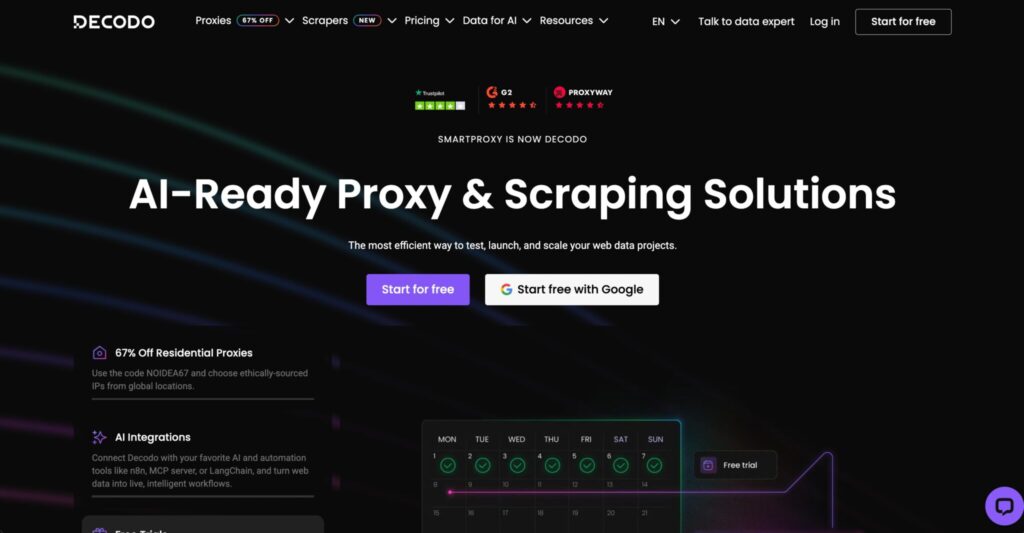
Decodo, formerly Smartproxy, has become one of the easiest recommendations for teams that need reliable residential proxies without enterprise level friction. Its Mexico page mentions access to urban hubs such as Mexico City, Guadalajara, and Monterrey through Mexican residential proxies sourced from everyday households.
On pricing, Decodo’s residential proxy page lists plans starting at $3.75/GB for 3GB, $3.50/GB for 10GB, $3.25/GB for 25GB, and $3.00/GB for 50GB. The same pricing page also says residential proxies start at $2/GB on larger plans.
That makes Decodo a strong middle ground. It is not the cheapest provider, but the experience is cleaner than many budget tools. You get a broad IP pool, smooth dashboard, documentation, and proxy setup that does not feel like it was built only for engineers.
For Mexico proxy users, Decodo works well for SEO tracking, local price checks, social research, ecommerce data, and browser based testing. It is also friendly enough for smaller teams that do not have a dedicated data engineering department.
The limitation is that the most demanding enterprise users may still prefer Bright Data or Oxylabs for advanced data tooling, account support, and complex targeting needs.
Pro Tip: Decodo is a smart first paid provider when you want to test Mexico residential proxies seriously but do not want to start with a heavy enterprise contract.
4. SOAX: Best Mexico Proxy Provider for Flexible Traffic Across Proxy Types
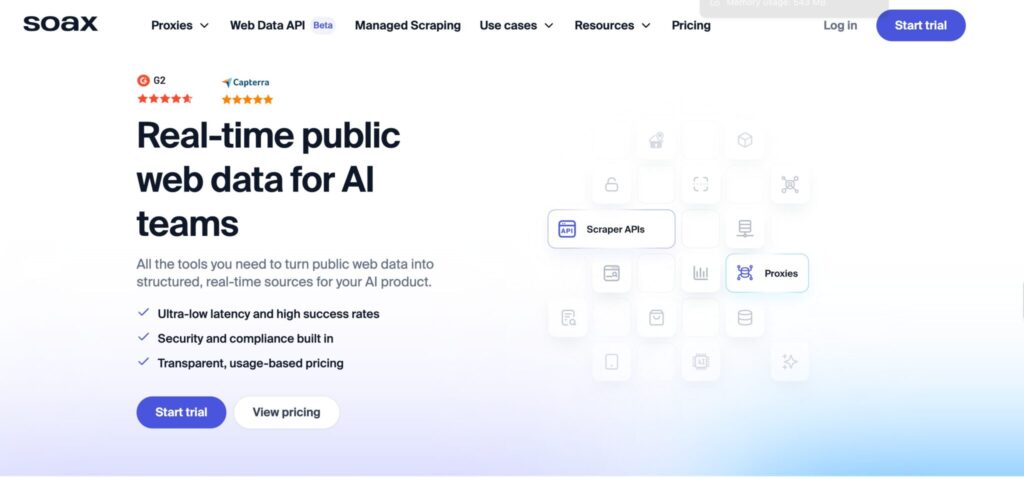
SOAX is useful when you want residential, mobile, ISP, datacenter proxies, and Web Data API access under one credit based plan. Its pricing page says credits can be used across residential, mobile, ISP, datacenter proxies, and Web Data API. Starter pricing is listed at $3.60/GB with 25GB included, while enterprise pricing starts from $0.32/GB for high volume customers.
Its Mexico proxy page lists 1,823,160 Mexican proxies, which gives buyers a clearer idea of Mexico availability than providers that only publish global pool numbers.
SOAX is a good choice for buyers who test multiple proxy types against the same targets. For example, you might use residential proxies for protected pages, datacenter proxies for lightweight endpoints, and mobile proxies for app related checks. Instead of locking yourself into one type, you can experiment.
The drawback is minimum commitment. The starter package includes 25GB, so it may not be ideal if you only need 1GB for a tiny test. But for agencies, SEO teams, and data teams running ongoing Mexico projects, the flexibility is useful.
Pro Tip: Use SOAX when you do not yet know which proxy type will perform best on your Mexico targets. Test residential, mobile, and ISP traffic before scaling.
5. NetNut: Best Mexico Proxy Provider for High Concurrency Workloads
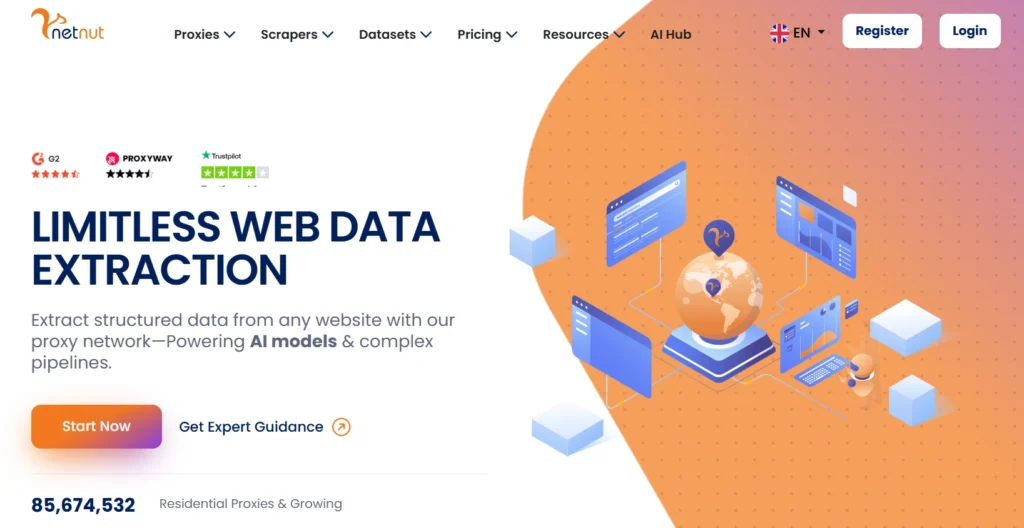
NetNut focuses on performance, stability, and business grade proxy access. Its site lists 85M+ residential IPs across 195 countries, city and state targeting, unlimited concurrency, and HTTP, HTTPS, and SOCKS5 protocol support for rotating residential proxies. It also lists 1M+ static residential IPs, 5M+ mobile IPs, and datacenter proxies with 99.99% uptime.
NetNut also has a dedicated Mexico residential proxy page that highlights 99.9% proxy uptime, security, and fast server speed.
The provider is a strong fit when your main issue is stability under load. If you are running many parallel requests, monitoring large datasets, or collecting from targets that need session consistency, NetNut deserves a look.
Where it falls short is public pricing clarity. Many buyers prefer seeing exact price tiers before creating an account or talking to sales. NetNut is better suited for business users who are comfortable speaking with sales to configure the right pool.
Pro Tip: Ask NetNut about Mexico specific pool size, average success rate on your target category, sticky session limits, and bandwidth calculation before committing.
6. Webshare: Best Budget Mexico Proxy Provider
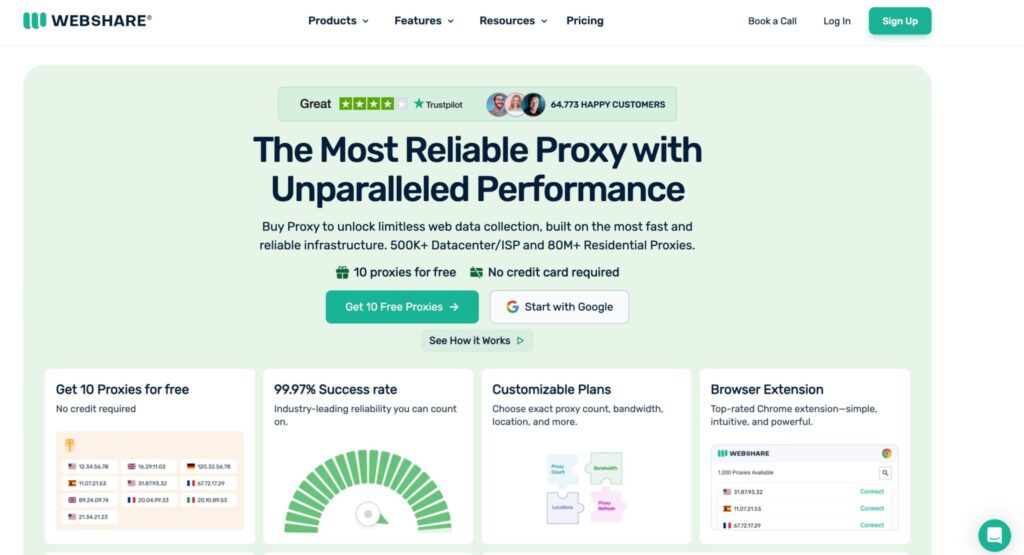
Webshare is one of the best options for buyers who want affordable Mexico proxies without a long sales process. Its Mexico proxy page lists 1,182,383 available Mexico proxies and says Mexico proxy pricing starts from $0.029/IP. It also states that larger proxy plans can go as low as $0.0179/IP and that Mexico residential proxy pricing starts from $7/month for 1GB.
Webshare’s main pricing page lists rotating residential proxies from $1.4/GB, static residential proxies from $0.23/IP, and datacenter proxy servers from $0.018/IP.
This makes Webshare attractive for entry level buyers, QA teams, and developers who need Mexico IPs without committing to enterprise pricing. It is also useful when datacenter proxies are enough for your workload.
The tradeoff is tooling. Webshare is more of a proxy platform than a full data collection suite. You do not get the same level of scraping APIs, managed unblockers, or enterprise hand holding that you get from Bright Data or Oxylabs.
Pro Tip: Use Webshare for lower risk tasks first, such as location testing, simple SEO checks, and low security websites. For heavily protected targets, test residential proxies before buying datacenter IPs in bulk.
7. IPRoyal: Best Mexico Proxy Provider for Flexible Residential Traffic
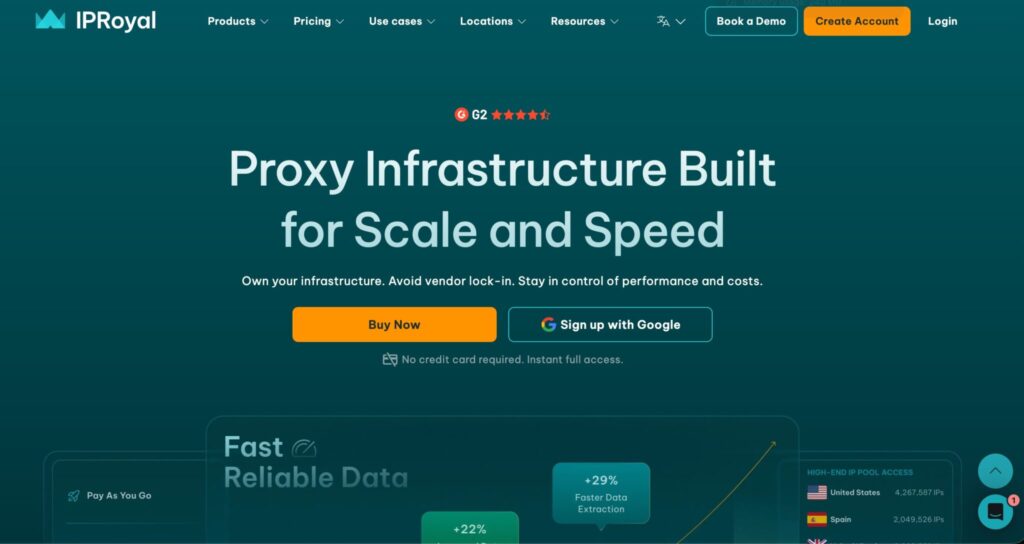
IPRoyal is popular with users who want residential proxies without complicated commitments. Its residential pricing page lists 1GB at $7/GB, 2GB at $5.95/GB, 10GB at $5.25/GB, and 50GB at $4.90/GB. Its general pricing page also lists residential proxies from $1.75/GB and a 32M+ proxy pool.
The most practical advantage is flexibility. IPRoyal’s residential traffic is known for being beginner friendly, and the “traffic never expires” positioning is useful for buyers who run occasional campaigns rather than daily scraping pipelines.
For Mexico, IPRoyal can work well for local browsing, SEO checks, simple public data collection, and testing localized web experiences. It is not the biggest pool on this list, but it gives smaller buyers a low friction way to start.
The weak point is scale. If your workload needs millions of requests per day, complex targeting, or managed support, you may outgrow IPRoyal faster than Oxylabs, Bright Data, SOAX, or NetNut.
Pro Tip: IPRoyal is a good fit when your usage is uneven. If you collect Mexico data only during campaign checks or monthly audits, non expiring traffic can be better than a monthly plan you barely use.
8. ProxyEmpire: Best for Mexico Residential and Mobile Rotation
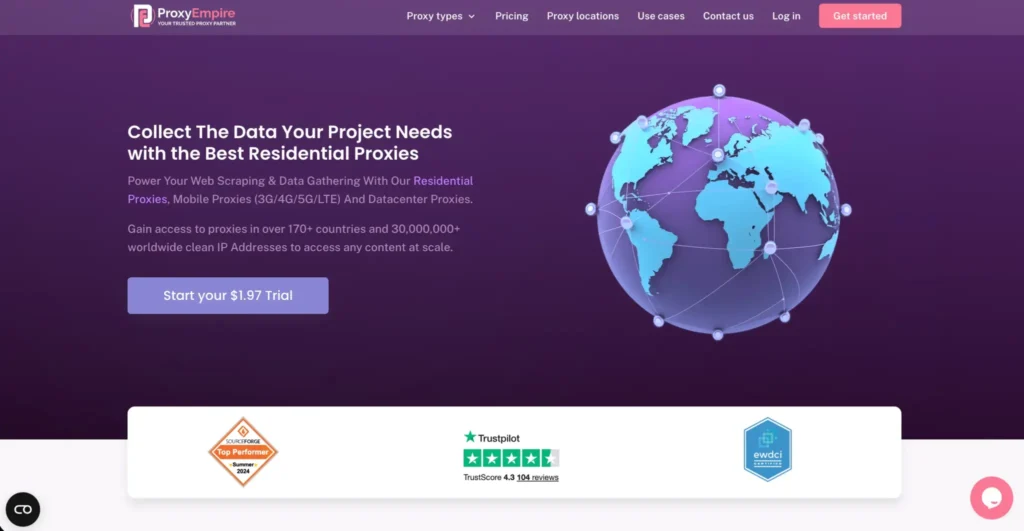
ProxyEmpire offers rotating residential, static residential, rotating mobile, and datacenter proxy plans. Its Mexico residential page says residential and mobile proxies support HTTP and SOCKS5, pricing is based on traffic usage, and there is no concurrent session limit.
Its pricing table currently shows rotating residential pay as you go at $3.50/GB under a listed promo, with larger discounted tiers going lower. It also lists rotating mobile pay as you go at $4.50/GB under the same promo.
ProxyEmpire is useful when you need both residential and mobile style Mexico testing. Mobile proxies matter for platforms that behave differently on cellular networks or mobile first environments.
The biggest caution is promo pricing. Always check whether the discounted rate applies at checkout and whether it continues after renewal. Proxy pricing pages change often.
Pro Tip: ProxyEmpire is worth testing if your Mexico workflow includes mobile ad checks, app testing, or social platform research where cellular IP behavior matters.
9. Rayobyte: Best for Dedicated Mexico IP and ISP Style Workflows
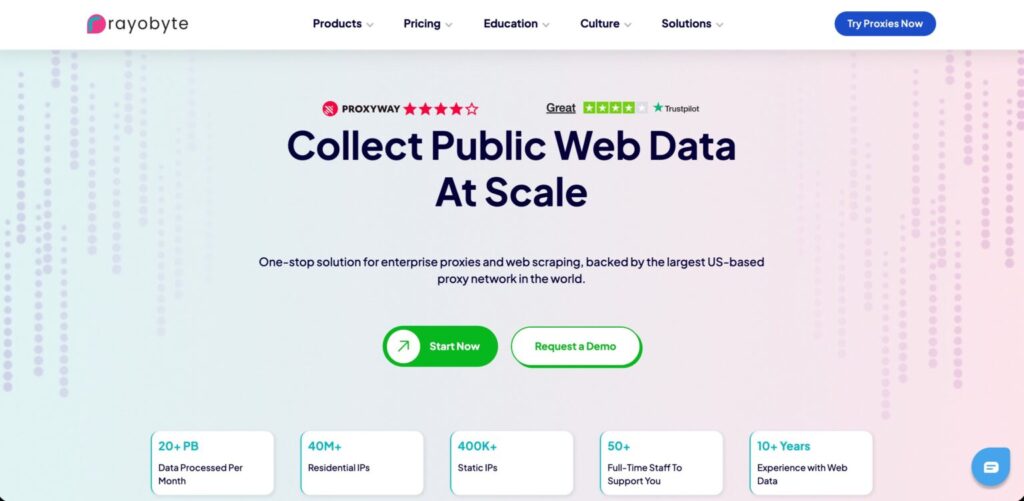
Rayobyte has a dedicated Mexico proxy page focused on Mexico based content, data collection, and scalable Mexican internet proxy access.
Its residential proxy page lists residential pricing from $3.50/GB for 1GB to 49GB. Its pricing page also lists rotating ISP proxies from $3.75/GB for up to 15GB, then lower rates at higher traffic levels. Static ISP pricing starts at $5/IP for 5 to 99 IPs, with lower per IP rates at higher volumes.
Rayobyte is especially interesting if you want ISP style sessions. Static ISP proxies can be helpful for login based workflows, QA testing, dashboard access, brand monitoring, and other cases where you do not want your IP changing every request.
The downside is that residential pricing is not as aggressive as low cost providers like DataImpulse or Webshare. You choose Rayobyte for stability and product variety, not the absolute lowest bandwidth cost.
Pro Tip: Use Rayobyte when your Mexico use case needs a stable identity for longer sessions. For aggressive scraping, rotating residential may be better. For dashboards, QA, and account based checks, ISP proxies may make more sense.
10. DataImpulse: Best Low Cost Mexico Residential Proxy Provider
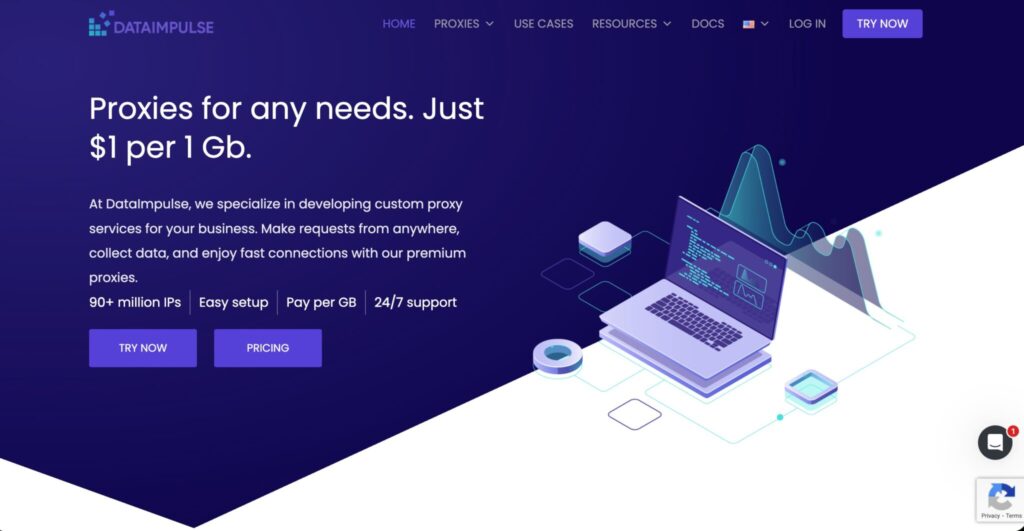
DataImpulse is the budget pick that still provides useful location visibility. Its homepage lists 90M+ IPs and pricing at $1 per GB.
Its Mexico residential proxy page shows live Mexico availability stats, including real time active IP pool, unique IPs in the last 30 days, and unique IPs in the last 24 hours. It also lists benefits such as pay per traffic, no mandatory subscriptions, no expiration for purchased traffic, proxy rotation by time interval or per new request, country plans, API access, and 24/7 support.
That makes DataImpulse attractive for cost conscious users who want to test Mexico residential proxies without burning through a premium budget.
The tradeoff is scale and polish. For mission critical enterprise jobs, you may still want a provider with stronger account management, deeper targeting, and more mature tooling. But as a budget residential option, DataImpulse is hard to ignore.
Pro Tip: Use DataImpulse for testing, smaller scraping jobs, and budget sensitive projects. Before scaling, benchmark success rate, latency, and IP freshness against your actual Mexico targets.
Quick link
Best Mexico Proxy Providers in 2026: Buyer’s Guide for Reliable Mexican IPs
How To Choose the Best Mexico Proxy Provider
1. Check Mexico IP Pool, Not Just Global Pool
A provider can claim 100M+ global IPs and still have weak Mexico availability. Always ask:
- How many active Mexico IPs are available right now?
- How many unique Mexico IPs were available in the last 24 hours?
- How many unique Mexico IPs were available in the last 30 days?
- Can I target Mexico City, Guadalajara, Monterrey, or specific regions?
For Mexico focused campaigns, local pool quality beats global marketing numbers. SOAX, Webshare, Oxylabs, and DataImpulse are useful here because they publish Mexico specific pool figures or pages.
2. Match Proxy Type to the Job
Use residential proxies for protected websites, public data scraping, retail monitoring, and ad verification.
Use datacenter proxies for fast, cheap tasks on less protected sites.
Use ISP proxies when you need a stable Mexican IP that behaves more naturally than a datacenter proxy.
Use mobile proxies when testing mobile ads, mobile apps, cellular content, or platforms that treat mobile traffic differently.
3. Understand Rotation Protocols
Rotation is where many buyers make mistakes.
Per request rotation changes IP frequently. It is useful for high volume scraping when each request is independent.
Sticky sessions keep the same IP for a period of time. They are better for cart flows, login based testing, multi step forms, localized browsing, and session based research.
Manual rotation lets you trigger a new IP when needed. It is useful for QA and controlled testing.
For Mexico proxies, sticky sessions are often more realistic because many websites expect a user to keep the same IP during a session.
4. Check Protocol Support
Most professional proxy tools support HTTP and HTTPS. SOCKS5 is more flexible and useful for traffic intensive workflows, apps, browsers, and tools that do not fit cleanly into HTTP only routing.
Oxylabs lists SOCKS5 proxy support for Mexico, and ProxyEmpire says its residential and mobile proxies support HTTP and SOCKS5 for Mexican IP use.
5. Test Real Targets Before Buying Big
Do not buy 500GB based only on a homepage claim.
Run a small test on your real targets:
- Check success rate.
- Track timeout rate.
- Measure response time.
- Test several Mexican cities if location matters.
- Test sticky sessions and rotating sessions.
- Watch bandwidth consumption.
- Check whether the provider charges for failed requests, total transfer, or only successful requests.
This is especially important in Mexico, where network quality can vary by region, ISP, and target website.
Final Recommendation
For most professional users, Decodo is the best starting point because it balances price, usability, Mexico access, and overall reliability. It is not the cheapest, but it is easy to use and strong enough for most SEO, scraping, and market research workflows.
For enterprise teams, Bright Data and Oxylabs are the safest premium choices. Bright Data wins on tooling and targeting depth. Oxylabs wins on strong Mexico specific positioning, large scale scraping workflows, and business grade infrastructure.
For budget focused buyers, Webshare, IPRoyal, and DataImpulse are worth testing. Webshare is strong for affordable Mexico proxy access, IPRoyal is good for flexible residential traffic, and DataImpulse is hard to beat on low cost residential bandwidth.
For specialized workflows, SOAX is strong when you want flexible traffic across proxy types, NetNut is worth considering for high concurrency workloads, ProxyEmpire is useful for residential plus mobile rotation, and Rayobyte is a good fit when static or rotating ISP proxies matter.
FAQs About Mexico Proxy Providers
1. What is the best Mexico proxy provider?
The best overall Mexico proxy provider depends on your workload. For enterprise scraping and ad verification, Bright Data and Oxylabs are the strongest choices. For most teams, Decodo offers the best mix of price and usability. For budget users, Webshare, IPRoyal, and DataImpulse are easier entry points.
2. Are Mexico proxies legal?
Buying and using proxies is generally legal, but what you do with them matters. Use proxies for lawful tasks like public data collection, ad verification, SEO tracking, localization testing, and market research. Do not use proxies for fraud, credential attacks, spam, bypassing account rules, or accessing content in ways that violate laws or platform terms.
3. Should I choose residential or datacenter Mexico proxies?
Choose residential proxies when you need trust, location accuracy, and lower detection risk. Choose datacenter proxies when you need speed and low cost for less protected targets. For most professional Mexico data collection, residential proxies are the safer first test.
4. Do Mexico proxies support city targeting?
Some providers support city level targeting. Decodo mentions Mexico City, Guadalajara, and Monterrey on its Mexico proxy page. Oxylabs also lists advanced targeting options, including city, state, ZIP, ASN, and country targeting for relevant Mexico proxy products.
5. What is the cheapest Mexico proxy provider?
DataImpulse is one of the cheapest residential proxy providers at $1 per GB. Webshare is also very affordable, with Mexico proxies from $0.029/IP and residential Mexico proxy pricing from $7/month for 1GB.
6. Are free Mexico proxies worth using?
Free proxies are usually not worth it for professional work. They are unstable, slow, crowded, and risky. For business tasks, use a paid provider with clear privacy policies, authentication, HTTPS support, and support channels.
7. What rotation setting should I use for Mexico proxies?
Use rotating IPs for large scale scraping where each request is independent. Use sticky sessions for login flows, cart checks, app testing, localized browsing, and multi step actions. If the target site expects normal user behavior, sticky sessions usually look more natural.
8. Can I use Mexico proxies for SEO tracking?
Yes. Mexico proxies are useful for checking localized Google results, rank tracking, SERP features, local competitors, ads, and regional landing page behavior. For serious SEO tracking, use residential proxies with city targeting when possible.
9. Can I use Mexico proxies for ad verification?
Yes. Ad verification is one of the strongest use cases for Mexico proxies. They help you confirm whether ads are showing correctly in Mexico, whether landing pages match the region, and whether competitors are running localized campaigns. Oxylabs specifically lists ad verification as a Mexico proxy use case.