
Carrier proxies sit in that awkward middle ground where everyone talks about them, but not everyone defines them properly. Some providers call them mobile proxies.
Some call them 4G proxies, LTE proxies, 5G proxies, or carrier-grade IPs. Under the hood, the idea is simple: your traffic routes through IP addresses assigned by real mobile carriers instead of normal datacenter servers.
That matters because websites, apps, ad platforms, marketplaces, and fraud systems often treat mobile carrier IPs differently from datacenter IPs. A mobile IP from a known cellular ASN can look closer to a real smartphone connection. A random datacenter IP, even a clean one, can still scream “automation” before your request even loads.
But here is the catch. Carrier proxies are not magic. A poor provider with recycled IPs, weak rotation, messy location targeting, or bad session control can burn your budget fast. The best carrier proxy provider is not always the one with the biggest IP pool.
It is the one that gives you the right carrier coverage, stable sessions, clean rotation logic, good targeting, and enough documentation to plug into your actual workflow without babysitting every request.
This guide breaks down the best carrier proxy providers for serious use cases like mobile ad verification, app testing, public data collection, SEO monitoring, pricing intelligence, mobile SERP checks, fraud research, and localized QA.
What Are Carrier Proxies?
Carrier proxies are proxies that route traffic through IP addresses assigned by mobile network operators. These can include 3G, 4G, LTE, and 5G networks. In practical buying language, carrier proxies usually mean mobile proxies with targeting options around country, city, ASN, ISP, or mobile carrier.
A normal residential proxy routes through home broadband or consumer ISP connections. A datacenter proxy routes through server infrastructure. A carrier proxy routes through mobile network infrastructure, which makes it useful when your test or data workflow needs to appear from a mobile network rather than a fixed-line residential connection.
Bright Data’s mobile proxy documentation, for example, describes its mobile network as having 7 million mobile IPs with ASN, carrier, and mobile network targeting capabilities. Oxylabs positions its mobile proxy product around 3G/4G/5G/LTE cellular networks, 20M+ mobile IPs, 140+ countries, and targeting by country, state, city, coordinates, and ASN.
Best Carrier Proxy Providers at a Glance
| Provider | Best For | Mobile IP Pool | Targeting Strength | Rotation Control | Pricing Signal | Main Tradeoff |
|---|---|---|---|---|---|---|
| Bright Data | Enterprise-grade carrier targeting | 7M mobile IPs | Country, city, ASN, carrier, mobile network | Strong session controls | Premium | Can feel complex for beginners |
| Oxylabs | Large-scale scraping and ad verification | 20M+ mobile IPs | Country, state, city, coordinate, ASN | Automatic rotation | From $7.50/GB on Starter plan | Higher cost at small volumes |
| Decodo | Balanced price, usability, and coverage | 10M+ mobile IPs | 160+ locations, carrier-level targeting | Rotating and sticky sessions | From $2.25/GB on listed plans | Not as deep as Bright Data for enterprise controls |
| SOAX | Granular filtering and large mobile pool | 33M+ mobile proxies | 195 locations, flexible targeting | Per-request, interval, sticky options | Enterprise rates can go much lower | Entry plans may be overkill for tiny users |
| NetNut | Business-grade mobile proxy coverage | 5M+ mobile IPs | 100+ countries | Rotating mobile access | Sales-led pricing | Less self-serve detail than some rivals |
| IPRoyal | Dedicated mobile proxies and unlimited bandwidth options | 4.5M+ mobile IPs | Location and session controls | Auto-rotation and instant IP change | Talk-to-sales on mobile pricing page | Smaller ecosystem than enterprise leaders |
| Proxy-Seller | Dedicated/shared 4G/5G carrier proxies | Not clearly stated | Location-based mobile proxy buying | Timer and on-demand rotation | From $10/IP | Best for smaller tactical setups |
| ProxyEmpire | Carrier targeting and rollover-friendly plans | 4M+ mobile IPs | 170+ countries, carrier-level targeting | Rotating mobile sessions | Varies by plan | Less enterprise tooling than top-tier platforms |
| Infatica | Cost-conscious global mobile access | 5M+ mobile IPs claimed on product page | Local mobile carrier IPs | Rotating access | From $1/IP per month or $1/GB signals | Less polished than premium providers |
9. Best Carrier Proxies 2026
1. Bright Data: Best Overall for Enterprise Carrier Targeting
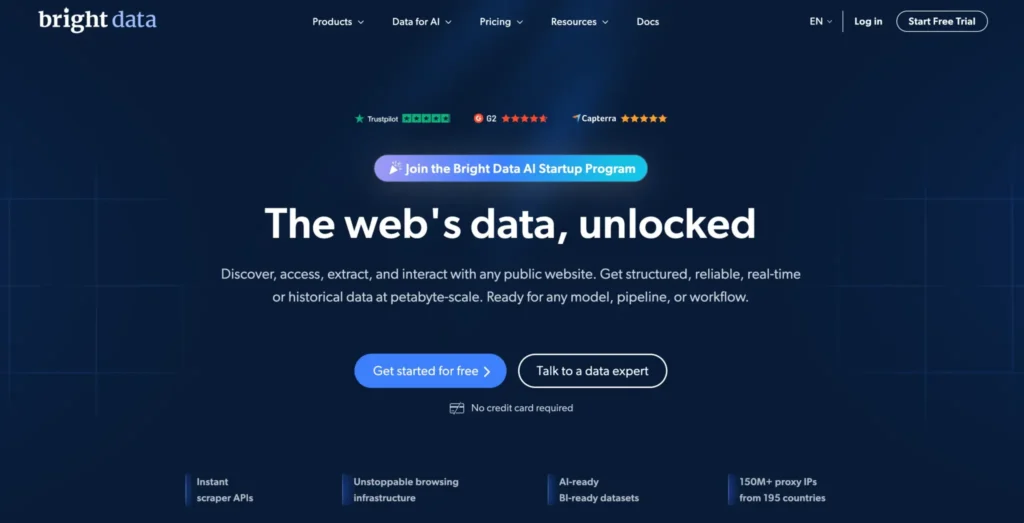
Bright Data is the provider I would put at the top when carrier targeting is not just a feature, but the whole reason you are buying proxies. Its mobile proxy documentation states that the network includes 7 million mobile IPs and supports ASN, carrier, and mobile network targeting. That matters for teams testing mobile ads, mobile app behavior, SERP differences by carrier, or carrier-specific fraud patterns.
The biggest strength here is control. Bright Data is built for teams that need to define exactly where traffic comes from and then monitor usage properly. If your project needs country-level access only, you may not need this much machinery. But if your team needs a specific carrier identity or ASN-level routing, Bright Data deserves serious attention.
The platform also has a broader proxy and data collection ecosystem around it. That helps if your project grows from “we need mobile IPs” into “we need mobile IPs, scraping infrastructure, compliance workflows, account controls, reporting, and developer support.”
Where Bright Data Fits Best
Bright Data fits best for enterprise ad verification, mobile market intelligence, localized app QA, fraud research, and large-scale public web data workflows where network identity matters. It is not the cheapest pick, and it may feel heavy if you only need a few simple mobile sessions.
Pro Tip
Use Bright Data when you need carrier or ASN control, not just mobile IP access. If your only requirement is “rotate mobile IPs from the US,” a simpler provider may save money.
2. Oxylabs: Best for Large-Scale Carrier Proxy Operations
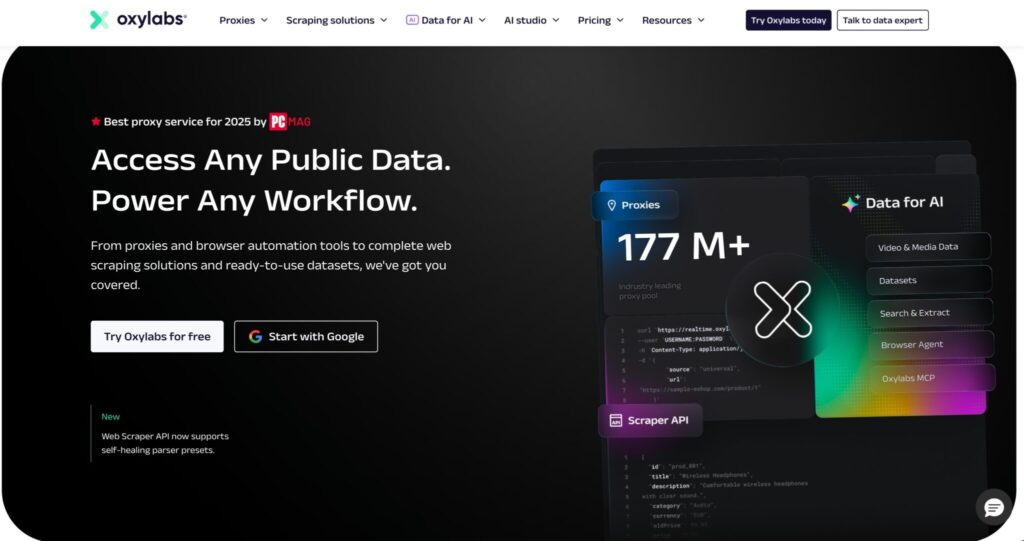
Oxylabs is one of the strongest choices for teams that want a large mobile pool with clean targeting and enterprise support. Its mobile proxy page lists 20M+ mobile IPs, 140+ countries, 99.9% uptime, and filtering by continent, country, state, city, coordinate, and ASN. Its pricing page currently shows mobile proxy tiers starting with Starter at 4GB for $7.50/GB, Basic at 15GB for $6.67/GB, Advanced at 100GB for $5/GB, and Corporate at 715GB for $3.50/GB.
The big reason to consider Oxylabs is reliability at scale. This is not a scrappy bargain provider. It is built for companies that need stable infrastructure, documentation, support, and advanced targeting without piecing together multiple small tools.
Oxylabs is especially strong when your project needs both mobile proxies and broader web scraping infrastructure. If you are running price monitoring, ad verification, review monitoring, travel fare checks, or SERP tracking across multiple locations, the platform gives you room to scale.
Where Oxylabs Fits Best
Oxylabs is a good fit for agencies, data teams, and companies that need strong uptime, large-scale access, and precise targeting. It works well for mobile ad verification, public web scraping, market research, and competitive intelligence.
Pro Tip
If your project requires ASN targeting, check your exact target ASN availability before buying a large plan. Pool size sounds great, but your actual win rate depends on the carriers and regions you need.
3. Decodo: Best Balance of Price, Usability, and Carrier Coverage
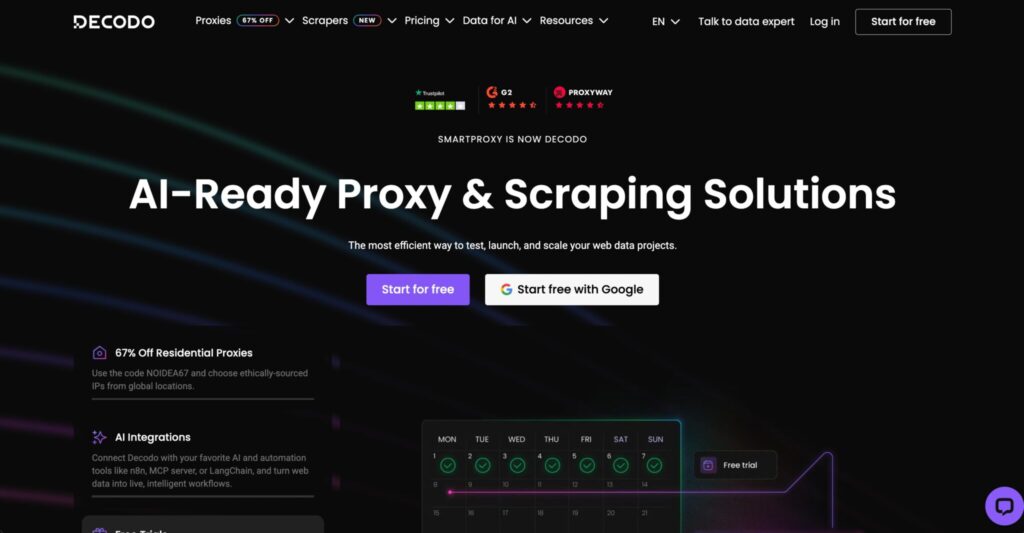
Decodo, formerly Smartproxy, has become one of the most practical options for users who want strong mobile proxy coverage without a steep enterprise learning curve. Its mobile proxy page says it offers 10M+ 3G, 4G, and 5G mobile IPs from 700+ carriers across 160+ locations. Its pricing page currently promotes mobile proxy plans starting at $2.25/GB, with listed regular tiers such as 2GB, 8GB, and 25GB packages.
Decodo also explains sticky and rotating sessions clearly. Sticky sessions keep the same IP for a set time, which is useful for logins or multi-step tasks, while rotating sessions switch IPs with each request to reduce blocks and improve anonymity. That clarity matters because many proxy buyers lose money not because the IPs are bad, but because they use the wrong rotation mode.
The dashboard is easier to approach than some enterprise-heavy tools. For freelancers, SEO teams, affiliate marketers, QA teams, and smaller data operations, that can be a big advantage.
Where Decodo Fits Best
Decodo is ideal for users who want carrier proxy power without needing a full enterprise sales cycle. It is a strong fit for mobile SERP tracking, localized testing, social media research, public data gathering, and ad preview checks.
Pro Tip
Use sticky sessions for account-based workflows and per-request rotation for high-volume public page checks. Mixing those two carelessly can create broken sessions, failed logins, and wasted bandwidth.
4. SOAX: Best for Granular Rotation and Large Mobile Pool Access
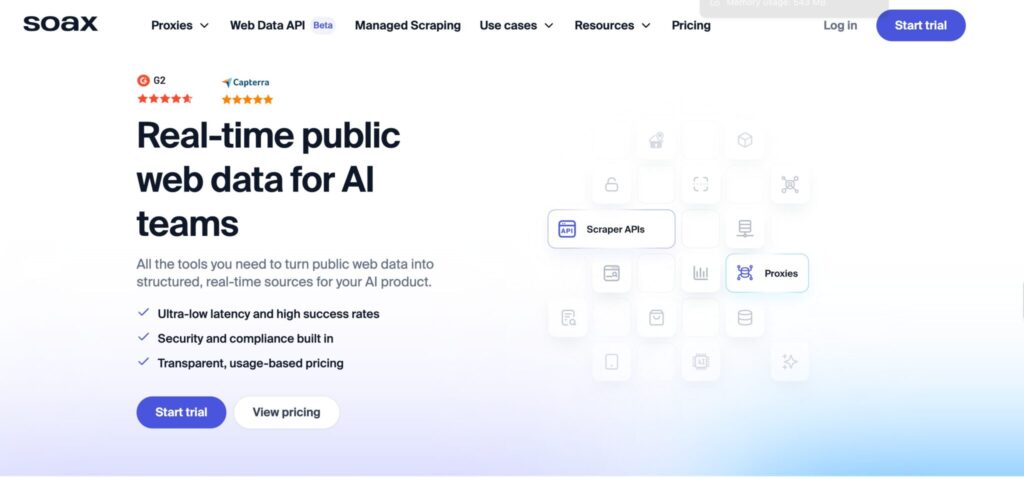
SOAX is a strong carrier proxy provider for buyers who care about filtering, rotation settings, and wide geographic reach. Its mobile proxy page lists 33+ million mobile proxies across 195 locations, covering 3G, 4G, 5G, and LTE networks. Its pricing page says SOAX plans provide access to the full proxy pool rather than limiting users to a small subset, and it lists 33+ million mobile proxies, 155+ million residential proxies, and 2.6+ million ISP proxies.
SOAX also gives flexible rotation options. The provider says mobile and residential proxies can rotate on each new request or at a set interval, with the maximum time between IP refreshes being one hour for mobile and residential proxies. That makes SOAX useful for workflows that need both frequent identity changes and controlled session continuity.
SOAX’s mobile page also lists common use cases such as social media management, ad verification, web scraping, market research, price comparison, cybersecurity, and threat monitoring.
Where SOAX Fits Best
SOAX is a strong pick for users who need flexible IP rotation, many locations, and a large mobile pool. It is especially good for buyers who want a balance between control and usability.
Pro Tip
Before using the largest available pool, narrow your traffic to the specific country, city, or carrier profile you actually need. Bigger pools do not automatically mean cleaner results.
5. NetNut: Best for Business Teams That Want Mobile IP Scale Without Overcomplication
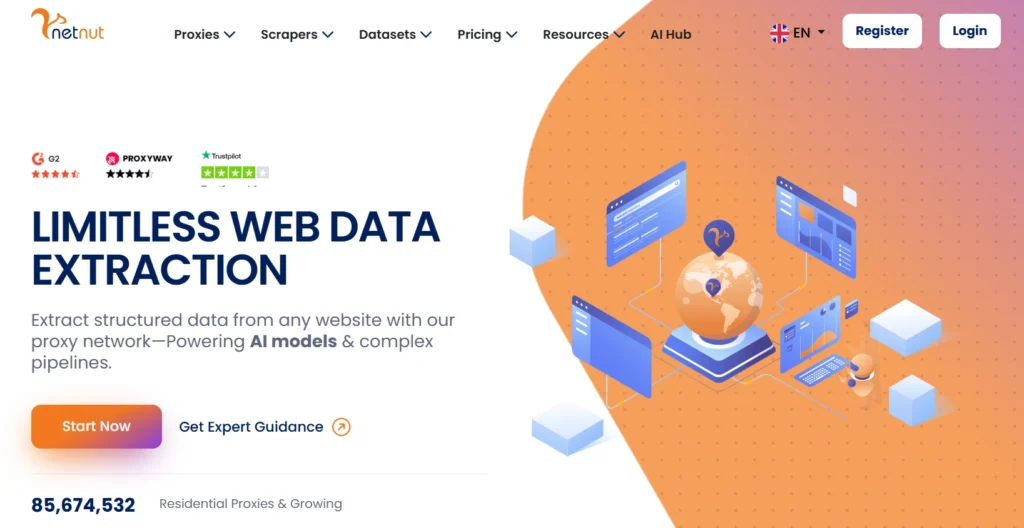
NetNut’s mobile proxy page says its mobile proxies route traffic through mobile devices and provide access to over 5M mobile IP addresses from more than 100 countries, including LTE, 3G, 4G, and 5G proxies. The company’s broader site also describes mobile proxies as using 3G/4G/5G/LTE connections from real mobile carriers.
NetNut is often a fit for teams that want business-grade proxy infrastructure but do not want to spend too much time tuning every setting. It leans toward professional data collection, web intelligence, and enterprise use cases rather than hobby-level proxy buying.
The main limitation is transparency around self-serve pricing and exact configuration details. Some buyers may prefer a provider where they can see every package and rotation setting before speaking to sales.
Where NetNut Fits Best
NetNut fits business teams doing public data collection, ad verification, web monitoring, and market intelligence. It is a solid option when you want mobile proxy coverage backed by a company that understands business workflows.
Pro Tip
Ask NetNut about exact country, carrier, concurrency, and session behavior before committing. For carrier proxies, those details matter more than a headline IP count.
6. IPRoyal: Best for Dedicated Mobile Proxies and Unlimited Bandwidth Style Buying
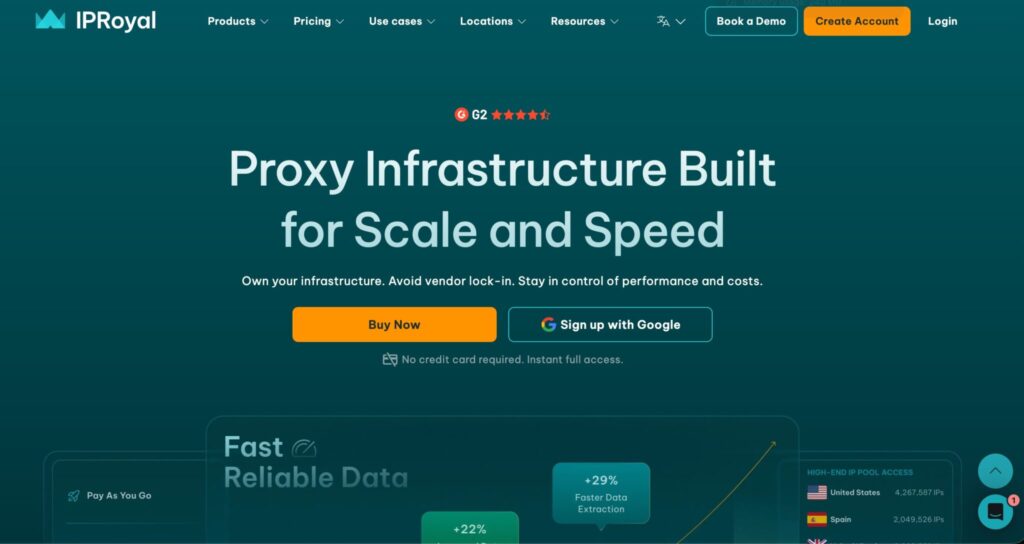
IPRoyal is a useful option if you want mobile proxies with a simpler buying model. Its mobile pricing page lists over 4.5M genuine residential mobile IPs, zero bandwidth and session limits, auto-rotation, instant IP change, and no logging or tracking. Its documentation says IPRoyal offers both Dedicated Mobile Proxies and Rotating Mobile Proxies, with dedicated plans available from 1 to 90 days and rotating mobile proxies billed in 30-day cycles.
That dedicated mobile proxy angle is important. Some users do not want shared rotating pools for every task. They need a more consistent mobile identity for app QA, account testing, or controlled regional browsing. IPRoyal can make sense there.
The platform also looks more approachable than some enterprise-first providers. It is not the deepest carrier-targeting provider on this list, but it is practical for users who want real mobile IPs, flexible session behavior, and simple operations.
Where IPRoyal Fits Best
IPRoyal works well for small teams, account management workflows, mobile testing, and users who prefer dedicated mobile sessions over pure pay-per-GB rotating pools.
Pro Tip
Dedicated mobile proxies are useful when consistency matters. Rotating mobile proxies are better when freshness and distribution matter. Pick based on workflow, not just price.
7. Proxy-Seller: Best for Tactical 4G/5G Proxy Buying
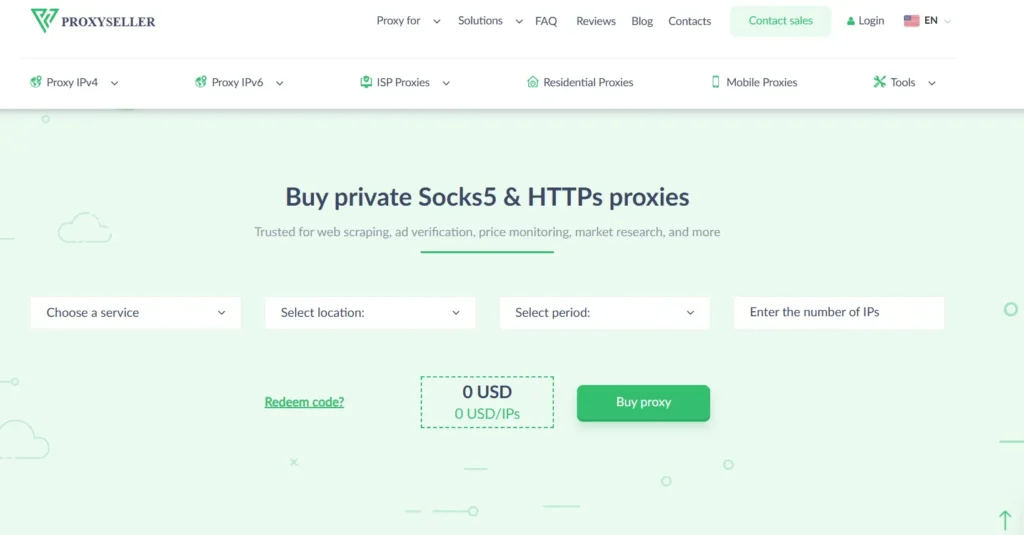
Proxy-Seller focuses on a more direct style of proxy buying. Its mobile proxy page says it offers rotating mobile proxies from real 4G/5G carriers, with dedicated or shared pools and IP rotation by timer or on demand. The same page lists mobile proxies from $10/IP.
This type of provider is useful when you need a smaller, more tactical setup. Maybe you need a few mobile IPs for a specific region. Maybe you want dedicated access instead of a large bandwidth package. Maybe you want rotation on demand rather than full automation across a huge IP pool.
Proxy-Seller is not the first name I would choose for huge enterprise scraping pipelines, but it can be practical for focused mobile workflows where you want simple 4G/5G access without building a large stack.
Where Proxy-Seller Fits Best
Proxy-Seller is best for smaller teams, mobile account testing, regional QA, localized browsing, and use cases where a few dedicated or semi-dedicated mobile proxies are enough.
Pro Tip
For smaller providers, always test before buying long-term. Check carrier identity, IP reputation, speed, and rotation reliability in your real target workflow.
8. ProxyEmpire: Best for Carrier-Level Targeting With Broad Country Coverage
ProxyEmpire offers a serious mobile proxy package for users who want carrier-level control without going straight to the most expensive enterprise platforms.
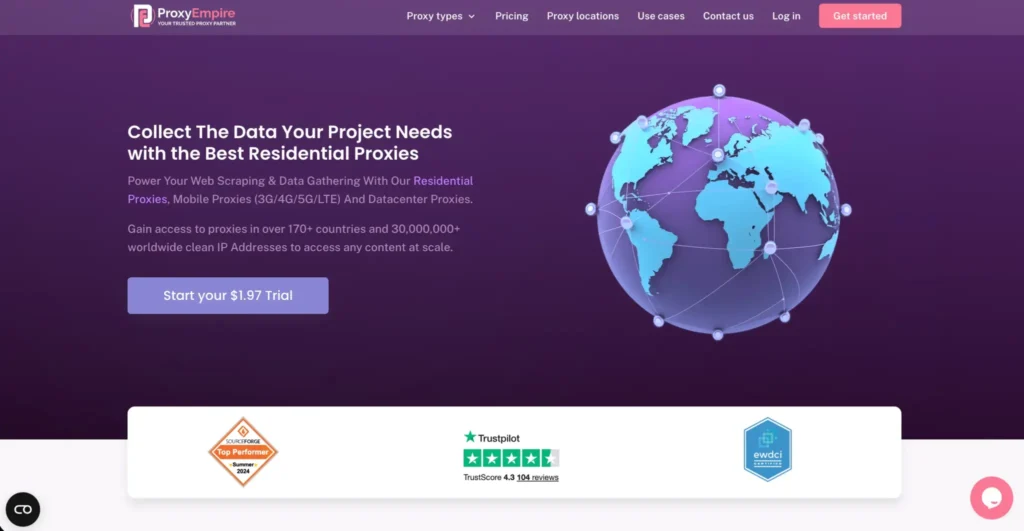
Its rotating mobile proxy page says it offers over 4 million ethically sourced 3G/4G/5G/LTE mobile IPs in 170+ countries, with carrier-level targeting, unlimited bandwidth rollover, unlimited concurrent connections, 99.8% uptime, and HTTP/HTTPS/SOCKS5 support.
The combination of carrier targeting and rollover-friendly positioning makes it interesting for teams that do not use the same amount of bandwidth every month. Many proxy buyers overpay because unused traffic disappears. Rollover can be valuable if your projects spike during launches, audits, campaigns, or seasonal monitoring.
ProxyEmpire also has dedicated 4G and 5G proxy pages aimed at users who want static mobile IP behavior from real mobile carriers.
Where ProxyEmpire Fits Best
ProxyEmpire is a strong fit for ad verification, mobile testing, brand monitoring, and users who need country plus carrier-level targeting without building a huge enterprise agreement.
Pro Tip
Rollover is useful only if the IP quality holds up. Test success rate first, then treat rollover as a cost advantage.
9. Infatica: Best Budget-Conscious Carrier Proxy Option
Infatica is worth considering for buyers who need mobile carrier IPs but want a more cost-sensitive starting point.
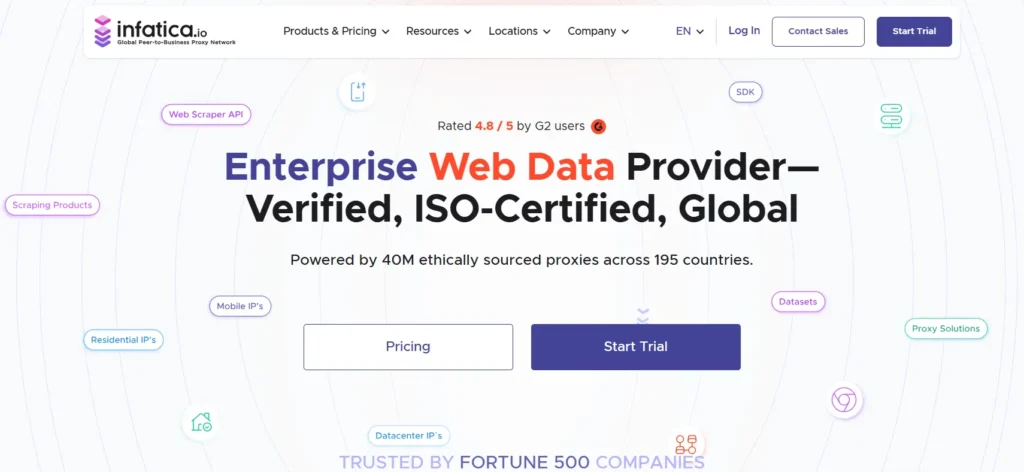
Its mobile proxy page says users can access real IP addresses from local mobile carriers in every country and region, with use cases like data scraping, ad testing, and social media monitoring. Its site also lists mobile IP pricing signals from $1/IP per month and $1 per GB.
The main appeal is affordability. Not every project needs Bright Data or Oxylabs-level infrastructure. If you are testing markets, running smaller QA checks, or validating a proxy workflow before scaling, Infatica may be enough.
That said, budget-friendly carrier proxy buying comes with a warning. You should test the exact target region, speed, success rate, and session stability before scaling. Low pricing is only useful if the proxies survive real-world targets.
Where Infatica Fits Best
Infatica fits smaller teams, early-stage testing, international browsing checks, lightweight scraping, and ad preview workflows where price matters.
Pro Tip
Do not judge a budget provider from one successful request. Run a proper test across multiple sessions, locations, carriers, and target pages.
How to Choose the Best Carrier Proxy Provider
1. Start With the Use Case, Not the Provider
Carrier proxies are expensive compared with datacenter proxies. So before buying, ask what you actually need.
Use carrier proxies when the target environment cares about mobile network identity. This can include mobile app testing, mobile ad verification, mobile SERP checks, carrier-specific localization, fraud research, and public data workflows where mobile IP trust improves success.
Do not use carrier proxies for basic scraping if residential or ISP proxies already work. You will pay more for no real gain.
2. Check Carrier and ASN Targeting
Carrier targeting is the heart of this category. If a provider only lets you choose “United States” or “Germany,” that may not be enough. For advanced workflows, you may need ASN or carrier selection.
Bright Data explicitly supports ASN, carrier, and mobile network targeting. Oxylabs supports ASN filtering along with country, state, city, and coordinate targeting. SOAX and ProxyEmpire also position themselves around granular mobile targeting.
3. Understand Rotation Modes
Rotation can make or break your campaign.
Per-request rotation changes the IP on every request. This is useful for public data collection where you do not need to maintain a session.
Sticky sessions keep the same IP for a fixed period. This is better for logins, carts, app flows, forms, dashboards, or multi-step journeys.
On-demand rotation lets you change IPs manually or through an API when needed.
Decodo describes sticky sessions as useful for logins or multi-step tasks, while rotating sessions switch IPs with each request. SOAX says mobile and residential proxies can rotate on each new request or at a set interval, with mobile and residential IP refresh intervals capped at up to one hour.
4. Look Beyond the IP Pool Number
A provider with 30 million mobile IPs may still perform poorly if your target country has limited coverage. A provider with a smaller pool may perform better if it has cleaner IPs in your exact region.
Ask these questions:
- Does the provider have the carrier you need?
- Can you target city, ASN, or carrier?
- Are the IPs shared, dedicated, or semi-dedicated?
- How often do IPs rotate?
- Does the provider support sticky sessions?
- What happens when a target blocks part of the pool?
- Can support help tune a proxy zone for your use case?
5. Test Protocol Support
HTTP and HTTPS are enough for many browser and scraper workflows. SOCKS5 can be useful when you need broader app compatibility or lower-level traffic handling. ProxyEmpire states support for HTTP, HTTPS, and SOCKS5 on its rotating mobile proxy page.
6. Compare Real Cost, Not Just Price Per GB
A cheap proxy that fails 40% of the time is not cheap. A higher-priced proxy with better success rate may cost less per successful request.
When comparing cost, calculate:
- Cost per successful page load
- Cost per completed workflow
- Bandwidth wasted on retries
- Support time
- Downtime
- Failed sessions
- Account or project risk
Best Carrier Proxy by Use Case
| Use Case | Best Pick | Why |
|---|---|---|
| Enterprise ad verification | Bright Data or Oxylabs | Strong targeting, support, and scale |
| Mobile SERP tracking | Decodo or SOAX | Good mix of location coverage and rotation |
| App localization testing | Bright Data, IPRoyal, Proxy-Seller | Carrier and session control matter |
| High-volume public scraping | Oxylabs or SOAX | Large pools and scalable infrastructure |
| Budget testing | Infatica or Proxy-Seller | Lower entry cost |
| Carrier-level targeting | Bright Data, Oxylabs, ProxyEmpire | ASN/carrier controls are stronger |
| Dedicated mobile sessions | IPRoyal or Proxy-Seller | Better for consistent identity |
| Flexible rollover-style usage | ProxyEmpire | Rollover can help irregular usage patterns |
FAQs About Carrier Proxies
1. Are carrier proxies the same as mobile proxies?
Most of the time, yes. In buying terms, carrier proxies usually refer to mobile proxies that use IPs assigned by cellular carriers. The best ones support 3G, 4G, LTE, or 5G networks and may offer carrier or ASN targeting.
2. Why are carrier proxies more expensive than datacenter proxies?
Carrier proxies rely on real mobile network access, which is more limited and operationally expensive than datacenter IP infrastructure. That scarcity usually makes them costlier than datacenter proxies.
3. Are 5G carrier proxies always better than 4G proxies?
Not always. 5G can be faster and lower-latency, but coverage, IP quality, rotation control, and carrier trust matter more than the network label. A clean 4G/LTE proxy from the right region can outperform a poorly maintained 5G proxy.
4. What is the best carrier proxy provider overall?
Bright Data is the best overall for deep carrier targeting and enterprise control. Oxylabs is excellent for scale. Decodo is a strong balanced choice for most users. SOAX is a good pick for granular rotation and a large mobile pool.
5. Should I choose rotating or sticky carrier proxies?
Use rotating carrier proxies for high-volume public data collection where each request can stand alone. Use sticky sessions when your workflow needs the same IP for several minutes, such as app testing, login flows, carts, forms, or dashboards.
6. Can I target a specific mobile carrier?
Some providers support carrier or ASN targeting, but not all do. Bright Data supports ASN, carrier, and mobile network targeting. Oxylabs supports ASN targeting along with detailed geo filters. ProxyEmpire also advertises carrier-level targeting.
7. Are carrier proxies good for scraping?
They can be, especially when the target treats mobile carrier IPs as higher-trust traffic. But they are not always necessary. For normal public web scraping, residential or ISP proxies may be more cost-effective.
8. What is the biggest mistake buyers make with carrier proxies?
The biggest mistake is buying based on IP pool size alone. The real test is whether the provider has clean, stable, well-rotated IPs in your exact target country, city, carrier, and ASN range.
9. Do carrier proxies support SOCKS5?
Some do. ProxyEmpire, for example, lists HTTP, HTTPS, and SOCKS5 support for its rotating mobile proxies. Always confirm protocol support before buying, especially if you plan to use proxies with non-browser tools.
Quick Links:
Final Verdict: Which Carrier Proxy Should You Choose?
For most professional users, Bright Data is the strongest choice when carrier-level targeting, compliance, and enterprise controls matter. Oxylabs is the better fit when you need large-scale mobile proxy infrastructure with strong uptime and advanced geo filters. Decodo is the most balanced pick for users who want good coverage, friendly pricing, and a dashboard that does not require a full engineering team. SOAX is excellent if you care about flexible rotation, large mobile pools, and granular filtering.
For smaller or more specific setups, IPRoyal works well for dedicated mobile sessions, Proxy-Seller is useful for tactical 4G/5G buying, ProxyEmpire is strong for carrier-level targeting with rollover-friendly positioning, and Infatica is worth testing when budget matters.
The simple rule: buy the proxy that matches your workflow, not the one with the loudest homepage claim. Carrier proxies are powerful, but only when the IP pool, carrier targeting, rotation mode, and session design match the job you are actually running.