
News scraping sounds simple until you actually try to do it at scale.
One page loads fine. Ten pages work. Then you add regional editions, author pages, category feeds, paywall previews, search pages, archives, and live update pages. Suddenly, the same scraper that looked clean in testing starts hitting blocks, redirects, empty HTML, CAPTCHA screens, or strange 403 errors.
That is where proxies become serious infrastructure.
For news scraping, you are not just collecting random web pages. You are dealing with fast changing content, country specific versions, strict rate limits, aggressive bot detection, and websites that update several times per hour. A weak proxy setup can ruin your crawl quality. A good one can make your scraper look more natural, distribute requests properly, keep your sessions stable, and help you capture public news data without burning your IPs.
This guide is built for people who need real utility: SEO teams tracking media mentions, PR agencies monitoring brand coverage, financial analysts watching market news, AI teams collecting training data, publishers building content intelligence tools, and developers scraping public news pages for research.
Below, I have reviewed the best proxy providers for news scraping based on IP pool quality, rotation control, geo targeting, speed, session handling, pricing flexibility, and how well each one fits different scraping workloads.
Quick Comparison Table: Best Proxies For News Scraping
| Proxy Provider | Best For | Proxy Types | IP Pool Strength | Rotation Control | Geo-targeting | Starting Price Signal | Best News Scraping Use Case |
|---|---|---|---|---|---|---|---|
| Bright Data | Enterprise grade scraping | Residential, ISP, datacenter, mobile | Very large global pool | Advanced rotation and session tools | Country, city, ASN options on selected products | Residential from around $5.88 per GB | Large-scale global news monitoring |
| Oxylabs | High volume data teams | Residential, datacenter, ISP, mobile, web unblocker | Very strong enterprise pool | Strong session and rotation options | Broad country and city coverage | Residential from around $6 per GB | Financial news, market intelligence, large crawls |
| Decodo | Balanced performance and pricing | Residential, datacenter, ISP, mobile | 125M plus IPs advertised | Flexible sticky and rotating sessions | 195 plus locations | Residential plans from around $2 per GB on larger plans | SEO, PR, media monitoring teams |
| SOAX | Precise location targeting | Residential, mobile, datacenter, ISP | Large global pool | Rotate per request or keep sessions | Strong location filters | Bundled plans around $3.60 per GB | Regional news scraping and local SERP news monitoring |
| NetNut | Stable business scraping | Residential, rotating residential, mobile, datacenter | 85M plus IPs advertised | Rotating and static style sessions | Wide global coverage | Custom and plan based pricing | Continuous monitoring of news categories |
| Webshare | Budget friendly scaling | Datacenter, static residential, rotating residential | Large residential and datacenter pool | Basic to moderate rotation controls | Global coverage | Residential from low monthly entry plans | Small to mid size crawlers and test projects |
| IPRoyal | Affordable residential scraping | Residential, ISP, datacenter, mobile | 32M plus residential IPs | Flexible rotation and sticky sessions | Country and city targeting on selected plans | Residential from around $7 per GB for small plans | Bloggers, small tools, lightweight monitoring |
| Rayobyte | Transparent proxy buying | Residential, ISP, datacenter | Solid pool with clear pricing | Rotating residential and static options | Country level targeting | Residential from around $3.50 per GB | Cost controlled scraping and archive crawling |
| Infatica | Mid market scraping teams | Residential, mobile, datacenter | Good global coverage | Rotating and sticky sessions | Country and city targeting | Plan based pricing | News aggregation and public data workflows |
What Makes News Scraping Different From Regular Web Scraping?
A news site is not like a simple ecommerce product page.
News pages change quickly. URLs appear, get updated, move into archives, or redirect to regional versions.
Some stories are syndicated across multiple domains. Some pages load key content through JavaScript. Many websites treat repeated category page requests as suspicious because real users rarely refresh archive pages hundreds of times in a short window.
9 Best Proxies For News Scraping 2026 (Detailed Reviews)
1. Bright Data: Best Overall For Enterprise News Scraping
Bright Data is one of the strongest choices when news scraping is not just a side project but part of a serious data operation. It gives you access to residential, ISP, datacenter, and mobile proxies, plus scraping tools that can reduce the amount of custom infrastructure your team needs to maintain.
For news scraping, Bright Data works especially well when you need broad global coverage. Think media monitoring across multiple countries, tracking political coverage across regional outlets, collecting public article metadata, or checking how stories appear from different locations.
The big advantage is control. You can fine tune IP type, session behavior, targeting, and rotation patterns. That matters because news sites do not all behave the same way. A lightweight blog may work fine with datacenter proxies. A major media site with stricter protection may need residential IPs, sticky sessions, headers, and slower request pacing.
Bright Data is not the cheapest option. Smaller publishers and solo developers may find it heavy if they only need a few thousand pages per month. But for large scale teams that need reliability, compliance tools, documentation, and serious coverage, it is one of the safest premium picks.
Best Use Cases
Bright Data is best for global news intelligence platforms, AI data collection teams, enterprise PR monitoring, financial news tracking, and high volume public web data extraction.
Pro Tip
Use residential proxies for high friction news websites, ISP proxies for stable session based crawling, and datacenter proxies for low risk archive pages. Mixing proxy types can lower your total cost without hurting success rates.
2. Oxylabs: Best For High Volume News Data Teams
Oxylabs sits in the same premium category as Bright Data, but it has its own strength: enterprise scale data collection. The provider is known for large proxy pools, strong infrastructure, and scraping products built for teams that collect public web data continuously.
For news scraping, Oxylabs makes sense when you need volume and stability. A financial research company tracking market moving headlines, a media intelligence platform watching thousands of news sources, or an AI team collecting article snippets from public pages can benefit from its scale.
The residential proxy pool is useful for tough news websites, while datacenter proxies can handle faster, cheaper scraping when targets are less protected. Oxylabs also offers web scraping APIs and unblocker style tools, which can reduce engineering work if your team does not want to build every retry, header, and rendering process manually.
Pricing is premium. That is expected. Oxylabs is not aimed at the person testing a small scraper on weekends. It is more suitable for businesses that care about uptime, account support, documentation, and stable throughput.
Best Use Cases
Oxylabs is best for large PR monitoring platforms, financial data products, media analytics dashboards, and teams scraping hundreds or thousands of public news sources.
Pro Tip
Do not use the same rotation setting for every news site. For homepage and category scraping, rotate more often. For article pages behind session based controls, use sticky sessions long enough to complete the page flow.
3. Decodo: Best Balance Of Performance, Price, And Usability
Decodo, formerly known as Smartproxy, is a strong middle ground for teams that want serious proxy power without the heavier enterprise feel of Bright Data or Oxylabs. It offers residential, datacenter, ISP, and mobile proxies, with a large advertised IP pool and good global reach.
For news scraping, Decodo is attractive because it is easier to start with. The dashboard is cleaner than many enterprise platforms, the pricing is more approachable, and the rotation controls are practical for common scraping workflows.
This makes it a good fit for SEO teams, PR agencies, SaaS tools, and affiliate publishers that need to track news mentions, competitor coverage, author pages, and content updates across multiple domains.
Residential proxies are the main product to look at for tougher news sites. Datacenter proxies can still work well for RSS feeds, archives, smaller publications, and less protected pages. ISP proxies are useful when you need more speed and stable identity than standard rotating residential traffic.
Best Use Cases
Decodo is best for media monitoring, SEO research, content intelligence, brand mention tracking, and mid scale news aggregation tools.
Pro Tip
For news scraping, start with residential proxies and test success rates by domain. Once you identify easy targets, move those to datacenter proxies to reduce cost.
4. SOAX: Best For Regional News Scraping
SOAX is a strong pick when location accuracy matters. News scraping often depends on geography. Local news sites may serve different layouts, cookie banners, election coverage, sports pages, or paywall messaging depending on the user’s country, state, or city.
SOAX gives you flexible rotation controls and good targeting options, making it useful for teams that need to monitor regional editions or compare how public content appears across markets.
Its residential proxies can rotate on every request or hold the same IP for a longer session. That flexibility is valuable. Some news websites are easier to scrape with fast rotation. Others behave better when the scraper keeps the same session for multiple requests.
SOAX is also a practical choice for agencies working with clients in multiple countries. If you are tracking coverage for a brand in the US, UK, Canada, Australia, and India, location control can be more important than just having a massive pool.
Best Use Cases
SOAX is best for local news monitoring, international PR tracking, regional content comparison, political media research, and location sensitive scraping.
Pro Tip
When scraping regional news, always test from the actual target country. A page that looks complete from India may show a different version from the US or UK.
5. NetNut: Best For Stable Always On Monitoring
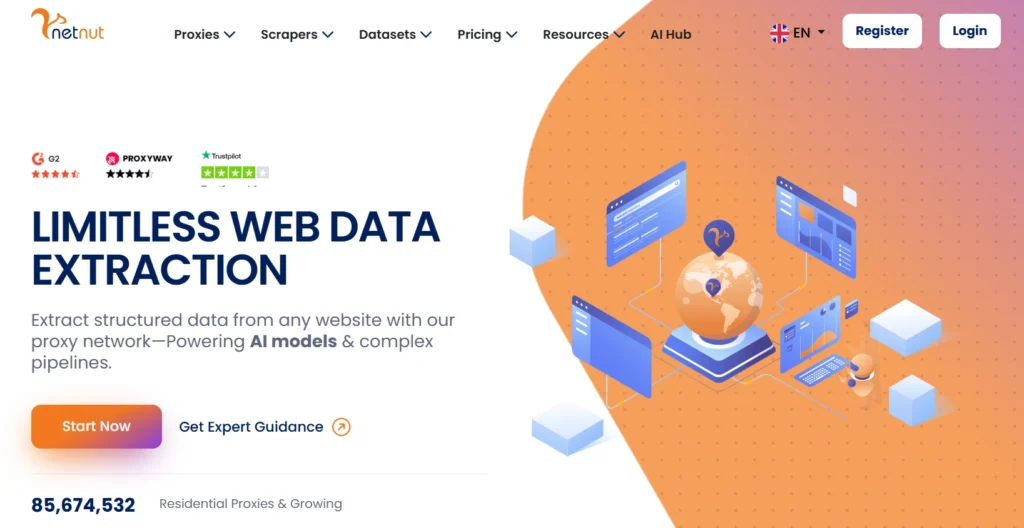
NetNut focuses on business grade proxy infrastructure with residential, rotating residential, mobile, and datacenter options. Its positioning works well for teams that need consistent scraping rather than short bursts.
News scraping often runs on schedules. You may scrape homepages every 10 minutes, category pages hourly, author pages daily, and archives weekly. That kind of always on workflow needs stable proxy performance, not just a cheap IP pool.
NetNut’s residential proxies are useful for public web data collection where lower block rates matter. The provider is often considered by companies that need scale, direct support, and predictable scraping infrastructure.
It may not feel as beginner friendly as Webshare or IPRoyal, but it fits teams with technical resources. If your developer already understands proxy authentication, session control, retry logic, and request throttling, NetNut can be a strong backend option.
Best Use Cases
NetNut is best for continuous news monitoring, business intelligence, ad verification, public data collection, and high frequency category tracking.
Pro Tip
For always on news scraping, monitor proxy success rate by domain. Do not only track total failed requests. A single major news website failing silently can damage your data quality even when the global success rate looks fine.
6. Webshare: Best Budget Option For Small And Mid Size News Scrapers
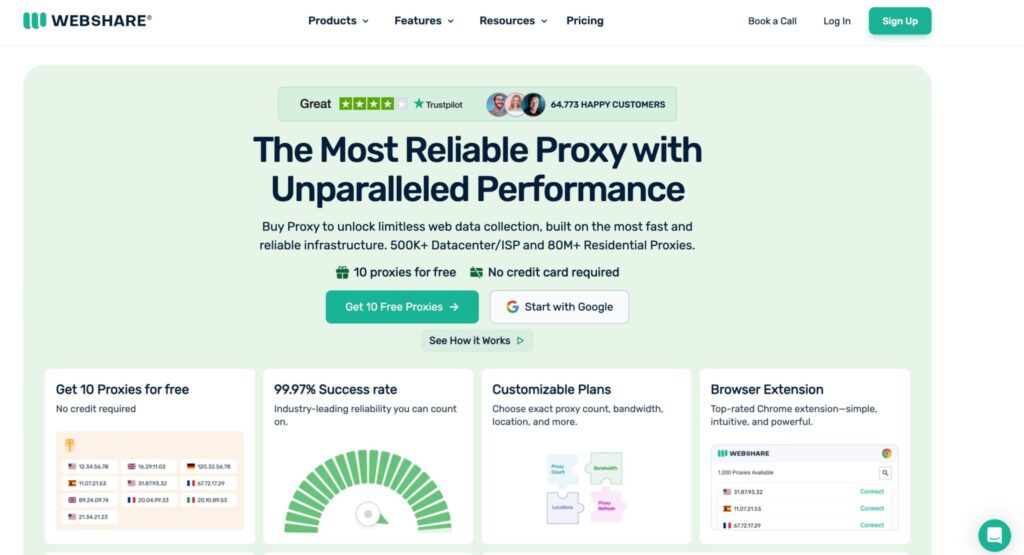
Webshare is one of the most approachable proxy providers for smaller teams. It offers datacenter proxies, static residential proxies, and rotating residential proxies, with pricing that makes testing easier.
For news scraping, Webshare is a good starting point if you do not have enterprise scale needs yet. A small media monitoring tool, niche SEO project, or internal research scraper can use Webshare to test proxy behavior without committing to expensive monthly contracts.
Its datacenter proxies are useful for lower risk targets like RSS feeds, public archives, and smaller publishers. Rotating residential proxies are better for protected news websites where datacenter IPs get blocked too quickly.
The tradeoff is that Webshare does not offer the same advanced scraping ecosystem as premium providers. You may need to handle more logic yourself, including retries, session management, browser rendering, headers, and block detection.
Best Use Cases
Webshare is best for budget conscious scraping, MVP testing, small monitoring tools, archive crawling, and teams that want simple proxy access without a complex setup.
Pro Tip
Use Webshare datacenter proxies for low friction sources first. Save residential bandwidth for websites that actually need it.
7. IPRoyal: Best Affordable Residential Proxy Pick
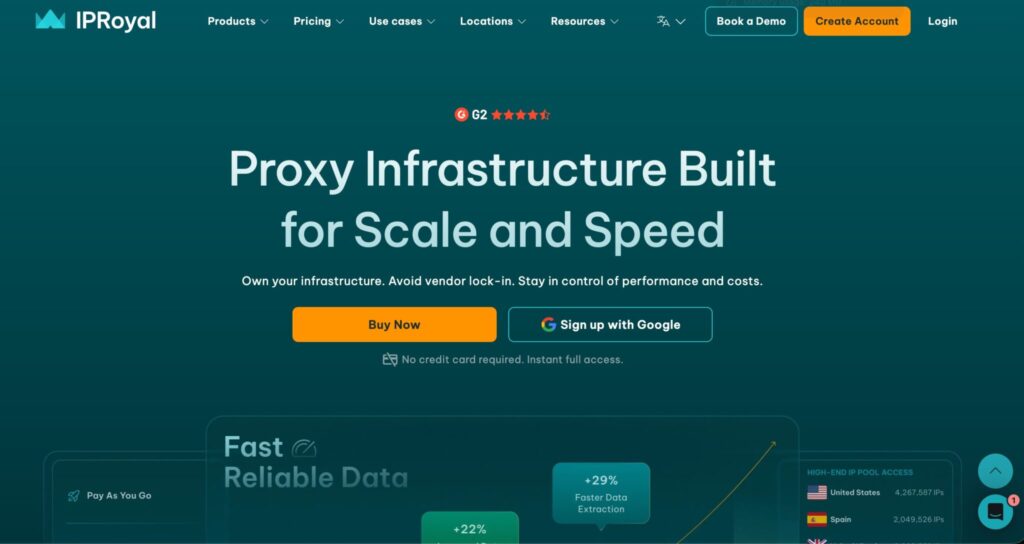
IPRoyal is a good fit for users who want residential proxies without jumping straight into enterprise budgets. It offers residential, ISP, datacenter, and mobile proxies, and its residential plans are flexible enough for smaller workflows.
For news scraping, IPRoyal is useful when you are scraping public article pages, checking regional versions, or building a lightweight brand monitoring workflow. The pool is smaller than some premium providers, but it can still work well when paired with careful crawl pacing.
This provider is especially appealing for solo developers, bloggers, affiliate marketers, and smaller SaaS founders who want to test scraping workflows before investing in a larger proxy stack.
You will need to be more hands on. That means testing target by target, tuning concurrency, using smart retries, and avoiding aggressive scraping patterns. But if you do that properly, IPRoyal can deliver good value for the price.
Best Use Cases
IPRoyal is best for small scale news scraping, public article monitoring, testing scrapers, and budget focused research projects.
Pro Tip
Do not judge a proxy provider after testing one news website. Build a test set of at least 20 domains across different difficulty levels before making a buying decision.
8. Rayobyte: Best For Transparent Pricing And Controlled Crawling
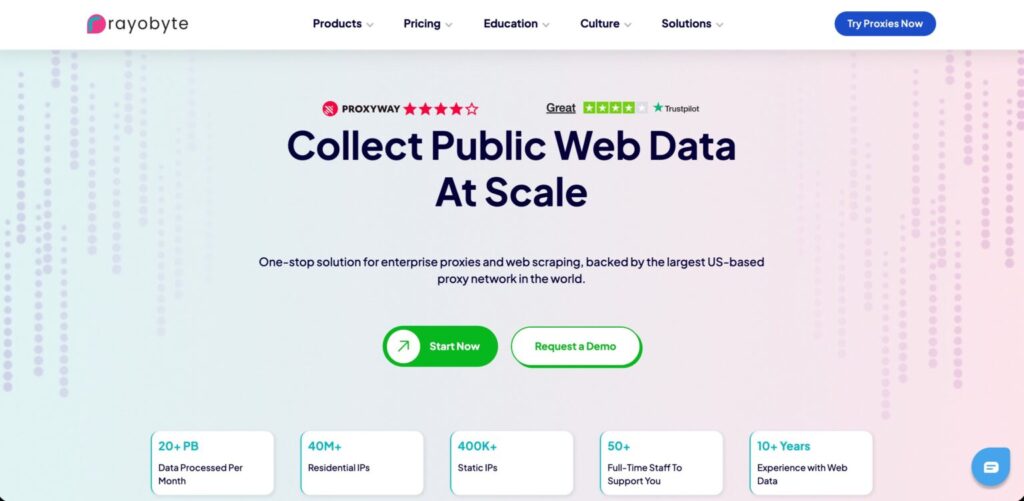
Rayobyte is known for clear pricing and a practical mix of residential, ISP, and datacenter proxy options. For news scraping, it fits teams that want cost control and do not want overly complicated packages.
Its residential proxies can be useful for general public news scraping, while datacenter proxies work for faster, lower cost crawling where blocks are less aggressive. ISP proxies can help with cases where you want stable sessions and better trust than pure datacenter IPs.
Rayobyte is especially interesting for archive scraping. If you are collecting older public articles, author pages, topic pages, or category archives, you may not need the most expensive residential setup for every request.
The main value is predictability. You can design a scraping workflow around cost per GB or IP based plans and avoid surprise spending.
Best Use Cases
Rayobyte is best for archive crawling, public article extraction, cost controlled scraping, and teams that want transparent proxy buying.
Pro Tip
For archive scraping, slow down your crawler and use caching. You do not need breaking news speed when collecting older pages, and slower crawling usually improves success rates.
9. Infatica: Best Mid Market Alternative For News Aggregation
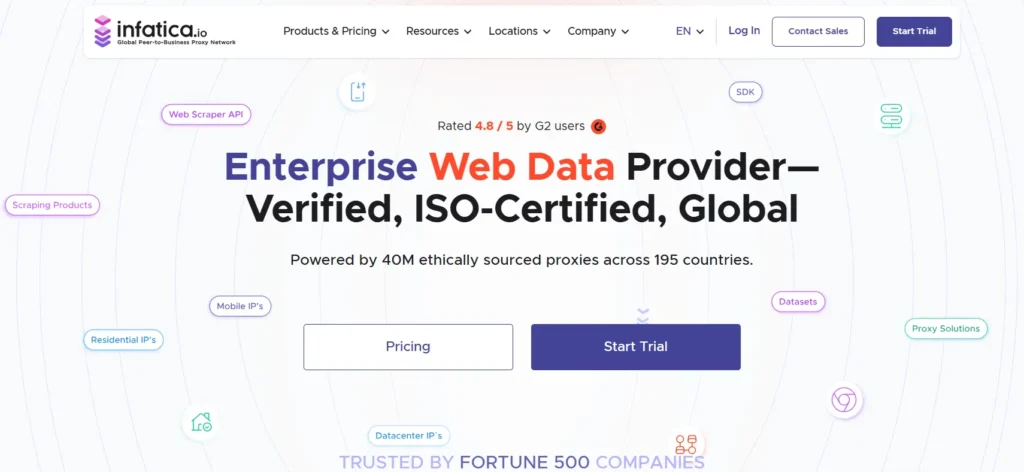
Infatica is another provider worth considering for mid market scraping needs. It offers residential, mobile, and datacenter proxies, with enough coverage for many public data collection workflows.
For news scraping, Infatica can work well for aggregation projects, content monitoring tools, and research teams that need rotating residential IPs without enterprise level complexity.
It may not have the same brand recognition as Bright Data or Oxylabs, but it gives you another option if you are comparing price, performance, and account support. That matters because proxy performance can vary by target website and region. Sometimes the second best provider on paper performs better for your exact target list.
Best Use Cases
Infatica is best for public news aggregation, regional article tracking, SEO monitoring, and medium scale scraping operations.
Pro Tip
Always run a pilot using your real target list. Proxy reviews are helpful, but your own success rate on your own news sources is the only number that matters.
How To Choose The Best Proxy For News Scraping
Picking a proxy for news scraping is not about choosing the biggest IP pool and calling it done. The right choice depends on your target websites, crawl frequency, location needs, and budget.
1. Choose The Right Proxy Type
Residential proxies are usually the safest choice for difficult news websites. They use real residential IPs, which makes requests look closer to normal user traffic.
Datacenter proxies are faster and cheaper, but they are easier to detect. Use them for smaller publishers, RSS feeds, archives, and low protection pages.
ISP proxies sit between residential and datacenter proxies. They are hosted like datacenter proxies but registered through internet service providers. For news scraping, they are useful when you need stable sessions and better trust.
Mobile proxies are expensive but powerful for mobile first websites, app based news content, or pages that behave differently on mobile networks.
2. Look At IP Pool Quality, Not Just Pool Size
A provider may advertise millions of IPs, but the number alone does not tell the full story. You need to know how many IPs are active in your target countries, how often they rotate, how clean they are, and whether they are overused.
For news scraping, clean IPs matter more than raw volume. A smaller pool with good quality can outperform a massive pool full of burned addresses.
3. Check Rotation Controls
Rotation is one of the most important parts of news scraping.
Use per request rotation when scraping large numbers of public pages where each request is independent. Use sticky sessions when the website expects the same user to continue browsing for several pages.
For example, scraping a homepage, then a category page, then an article page may work better with a sticky session. Scraping thousands of independent article URLs may work better with rotating IPs.
4. Test Geo Targeting Before Buying Big
Geo targeting is not optional for serious news scraping. News websites often show different content based on country, state, city, browser language, or cookie region.
Before buying a large plan, test whether the provider can reliably access your target locations. Do not assume “global coverage” means strong performance in every region.
5. Watch Bandwidth Costs
News pages can be heavy. They may load images, scripts, ads, trackers, videos, and related story modules. If you use browser rendering, your bandwidth usage can climb quickly.
To control cost, block unnecessary assets when possible. Scrape clean HTML where it works. Use browser rendering only when the content requires JavaScript.
6. Build Smart Retry Logic
A proxy provider cannot fix bad scraper logic.
Your scraper should detect blocks, retry with a new IP, reduce request speed, switch headers, and avoid repeating the same failed pattern. A basic retry loop that hammers the same URL five times can make blocks worse.
7. Respect Responsible Scraping Practices
Stick to public data. Avoid login protected content unless you have permission. Follow fair request rates. Do not collect personal data you do not need. Respect website terms and legal requirements in your market.
Good scraping is not just about getting the data. It is about getting it in a way that keeps your operation stable, defensible, and professional.
Best Proxy Setup For Different News Scraping Workloads
| Workload | Recommended Proxy Type | Rotation Style | Suggested Provider Type |
| Breaking news monitoring | Residential or ISP | Sticky sessions plus controlled rotation | Bright Data, Oxylabs, NetNut |
| Local news tracking | Residential | Country or city targeted rotation | SOAX, Decodo, Bright Data |
| Archive crawling | Datacenter or ISP | Slow rotation | Webshare, Rayobyte, Decodo |
| PR mention monitoring | Residential | Per request rotation | Decodo, SOAX, IPRoyal |
| Financial news scraping | Residential or ISP | Stable sessions | Oxylabs, Bright Data, NetNut |
| AI dataset collection | Mixed proxy stack | Domain based rotation rules | Bright Data, Oxylabs, Decodo |
| Small scraper testing | Residential or datacenter | Simple rotation | Webshare, IPRoyal, Rayobyte |
FAQs About Proxies For News Scraping
1. What is the best proxy type for news scraping?
Residential proxies are usually the best starting point because they offer better trust and lower block rates than datacenter proxies. For easier targets, datacenter proxies can still work and cost much less.
2. Are datacenter proxies good enough for news scraping?
Yes, but only for some targets. Datacenter proxies can work well for RSS feeds, public archives, smaller news sites, and low protection pages. For major publishers with stronger bot detection, residential or ISP proxies are usually better.
3. How many proxies do I need for news scraping?
It depends on crawl volume, request frequency, and target difficulty. A small scraper may only need a few GB of residential traffic. A large media monitoring system may need hundreds of GB and several proxy types working together.
4. Should I rotate IPs on every request?
Not always. Per request rotation is useful for scraping many independent URLs. Sticky sessions are better when a website expects one user session across multiple page loads.
5. Can proxies bypass news paywalls?
You should not use proxies to bypass paywalls or access restricted content without permission. Proxies should be used for responsible collection of public web data, testing location based pages, and reducing IP based blocks.
6. Why do news websites block scrapers?
News websites block scrapers because heavy automated traffic can strain servers, distort analytics, copy content too aggressively, or violate site terms. Many publishers also use bot detection to protect ads, subscriptions, and user experience.
7. What is the cheapest proxy for news scraping?
Webshare, IPRoyal, Rayobyte, and Decodo are usually more budget friendly starting points than premium enterprise platforms. The cheapest choice depends on your target sites and bandwidth usage.
8. Which proxy provider is best for large scale news scraping?
Bright Data and Oxylabs are the strongest choices for enterprise scale workloads. Decodo, SOAX, and NetNut can also work well depending on your target regions, budget, and technical setup.
9. Do I need browser rendering for news scraping?
Sometimes. Many news article pages still expose enough content in the HTML. Others require JavaScript rendering to load article bodies, related stories, comments, or live updates. Use rendering only when needed because it increases cost and complexity.
Quick Links:
- 8 Best Private Proxy Services
- 10 Best Telecom Proxy Providers
- 9 Best Wireless Carrier Proxies
- 8 Best Private Proxy Services
- 10 Best LTE Proxy Providers
- 7 Best Australia Proxy Providers
Final Verdict: Which Proxy Should You Choose?
If you want the most complete enterprise setup, start with Bright Data or Oxylabs. Both are built for serious scraping operations where coverage, reliability, and support matter more than saving a few dollars.
If you want the best balance of price and performance, Decodo is a very practical pick. It gives you enough power for serious news scraping without feeling too heavy.
If your project depends on regional accuracy, SOAX deserves a close look. Its rotation and location controls are especially useful for local news and international monitoring.
If you are testing a smaller scraper, Webshare, IPRoyal, or Rayobyte may be the smarter first move. They keep your entry cost lower while still giving you enough flexibility to learn what your target sites actually require.
The best setup for news scraping is usually not one provider and one proxy type forever. It is a layered system. Use residential proxies for difficult sites, datacenter proxies for easy pages, ISP proxies for stable sessions, and smart rotation rules for each domain.
That is how you build a news scraping stack that does not just work in a demo, but keeps working when the crawl grows.