
Buying proxies looks simple until you start testing them across countries. One provider works beautifully in the US but drops sessions in Brazil. Another has cheap traffic, then burns through bandwidth because rotation is messy. A third looks perfect on paper but gives weak ASN diversity in the countries you actually need.
International proxy buying is not about the largest headline IP number. It is about usable coverage, clean IP sourcing, session control, protocol support, and how well the network behaves under real workload pressure.
Below is a practical guide to the best international proxy providers for scraping public data, SEO monitoring, ad verification, price intelligence, QA testing, market research, and multi-region browsing.
Quick Comparison Table: Best International Proxy Providers
| Provider | Best For | Proxy Types | Global Coverage | Rotation Control | Protocols | Main Weak Spot |
|---|---|---|---|---|---|---|
| Bright Data | Enterprise data teams | Residential, ISP, mobile, datacenter | 195 countries | Per request, sticky, granular targeting | HTTP(S), SOCKS5, advanced options | Expensive for beginners |
| Oxylabs | Large-scale scraping | Residential, mobile, ISP, datacenter | 195+ countries | Automatic and sticky sessions | HTTP(S), SOCKS5 | Premium pricing |
| Decodo | Balanced performance and ease | Residential, ISP, mobile, datacenter | 195+ locations | Rotating and sticky sessions | HTTP(S), SOCKS5 | Some limits on lower plans |
| SOAX | Geo-targeting and clean pools | Residential, mobile, ISP, datacenter | 195+ countries | Flexible rotation and sticky IPs | HTTP(S), SOCKS5 | Dashboard can feel busy |
| NetNut | ISP-backed stability | Residential, static residential, mobile, datacenter | 195+ countries | Rotating and static sessions | HTTP(S), SOCKS5 on selected plans | Better for teams than casual users |
| IPRoyal | Budget residential coverage | Residential, ISP, mobile, datacenter | 195+ locations | Rotating and sticky sessions | HTTP(S), SOCKS5 on many plans | Smaller enterprise tooling |
| Webshare | Self-service datacenter and ISP proxies | Residential, ISP, datacenter | Broad global coverage | Manual and rotating options | HTTP, SOCKS5 | Less managed scraping support |
| Infatica | Mid-market scraping projects | Residential, mobile, datacenter | Country, city, and region targeting | Rotating residential sessions | HTTP(S), SOCKS5 | Smaller brand footprint |
| DataImpulse | Low-cost global traffic | Residential, mobile, datacenter | 195 countries | Rotating and sticky sessions | HTTP(S), SOCKS5 | Not as feature-rich as premium tools |
Best Pick by Use Case
For enterprise scraping, start with Bright Data or Oxylabs. For a cleaner agency workflow, Decodo is easier to manage. For granular city and mobile checks, SOAX is hard to ignore. NetNut fits teams that want steadier ISP-style sessions. IPRoyal and DataImpulse work when budget matters. Webshare is best when you want simple proxy inventory, quick deployment, and predictable pricing. Infatica is useful when you need a flexible middle option without jumping straight into enterprise contracts.
This split matters because there is no universal “best” proxy network. The right choice depends on target countries, request volume, and engineering support.
9 Best International Proxy Providers
1. Bright Data
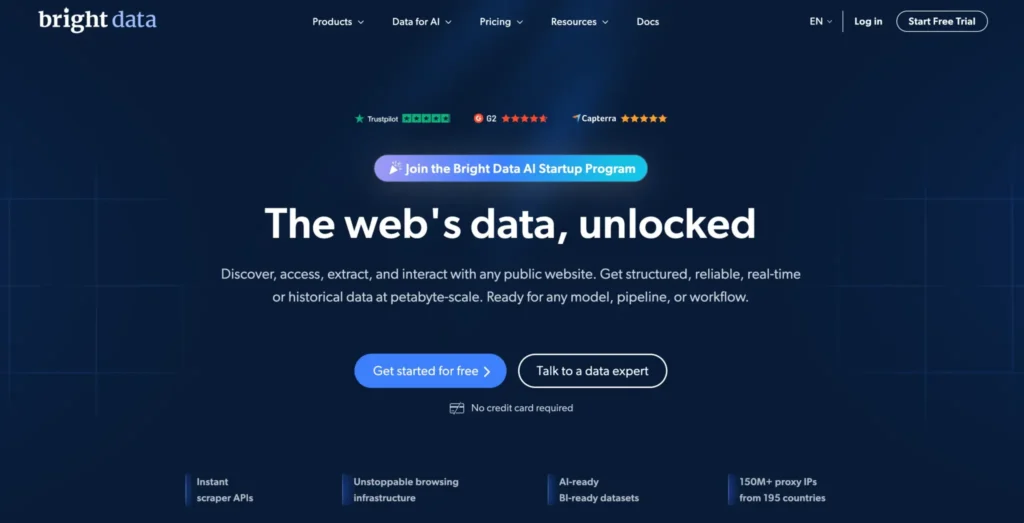
Bright Data is the heavyweight option for teams that need global coverage, advanced controls, and compliance workflows. Its international network is built for serious data operations where failed requests cost more than the proxy bill.
The biggest strength is targeting depth. You can usually work at country, state, city, ZIP, ASN, and carrier levels depending on the proxy type. That matters when you are checking local SERPs in Germany, testing retail pricing in Japan, or verifying ads in several US metro areas.
Rotation is also strong. Bright Data lets you rotate per request for high-volume crawling or hold sticky sessions when the target site needs continuity. Its Web Unlocker and scraping tools add another layer for teams that do not want to build every anti-blocking layer themselves.
Pro-Tip: Bright Data is best when you need precision, not when you only need cheap IPs. Use it for high-value targets, compliance-sensitive work, and difficult locations.
2. Oxylabs
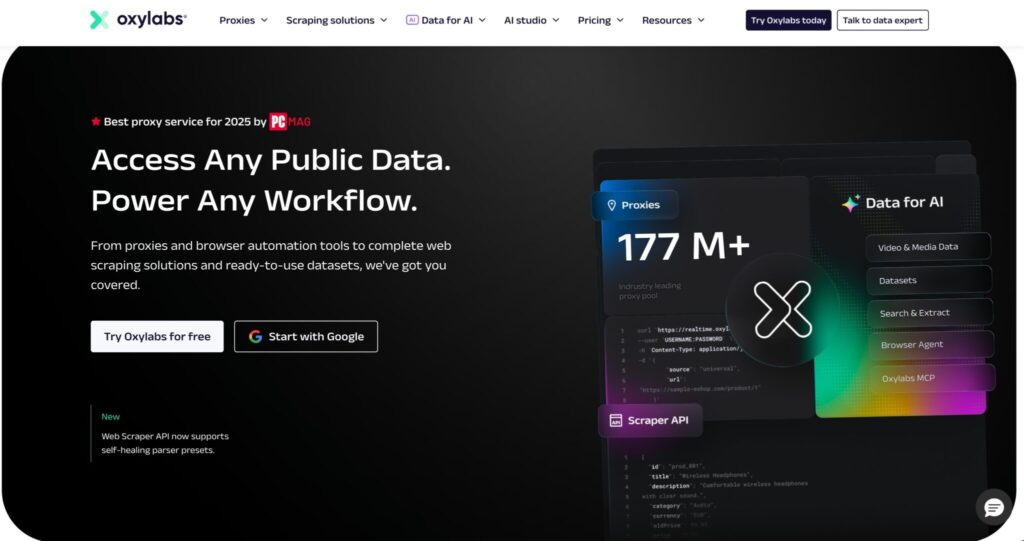
Oxylabs is one of the safest picks for international proxy buyers who need scale without too much operational drama. It has a large residential pool, strong datacenter options, mobile proxies, ISP proxies, and mature scraping APIs.
Where Oxylabs shines is reliability under volume. If your team runs price tracking, SERP scraping, travel fare monitoring, marketplace intelligence, or public web collection across many countries, Oxylabs gives you the kind of infrastructure that feels built for production.
Its residential proxies support automatic rotation and sticky sessions, so you can match the proxy behavior to the task. Use fast rotation for broad collection. Use sticky sessions for accountless workflows that still need continuity, such as cart testing or location-based browsing.
Pro-Tip: Oxylabs works best when you already know your target countries, request volume, and failure tolerance. It is overkill for tiny jobs but excellent for serious pipelines.
3. Decodo
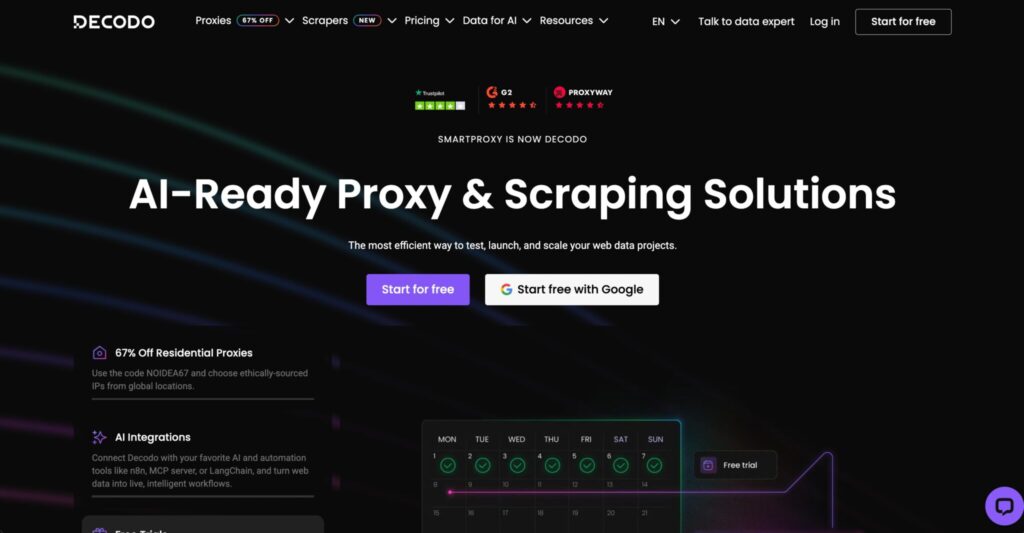
Decodo, formerly Smartproxy, is a strong middle ground between premium enterprise providers and budget proxy sellers. It is easy to start with, offers wide international coverage, and still has enough control for developers and SEO teams.
The platform is especially useful for agencies. You can run SERP checks, competitor pricing scans, localized landing page QA, and ad verification without spending days configuring infrastructure. The dashboard is clean, and integrations are beginner-friendly compared with some heavier platforms.
Rotation options include rotating sessions and sticky sessions, which is exactly what most international proxy users need. SOCKS5 support also makes it more flexible for tools that do not rely only on standard web traffic.
Pro-Tip: Decodo is a good first premium provider. Test it when you need reliable country coverage but do not want enterprise onboarding.
4. SOAX
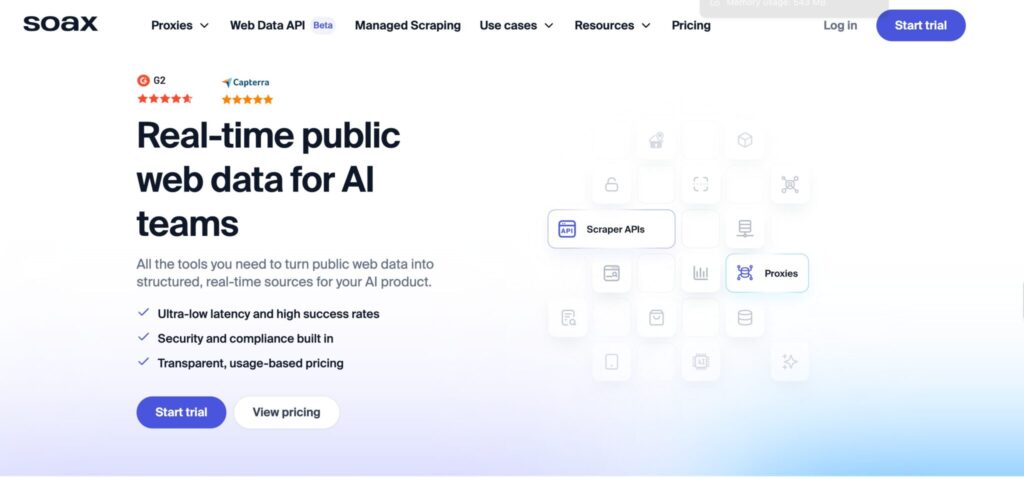
SOAX is known for strong residential and mobile proxy coverage with detailed geo-targeting. For international projects, that makes it valuable. You can target countries, regions, cities, and in some cases ISPs or mobile carriers.
SOAX suits use cases where location accuracy matters more than raw speed. Think ad verification, app testing, regional content checks, travel pricing, and local market research. Its mobile proxy options are also useful when you need traffic that looks closer to normal mobile network behavior.
The provider gives users solid session control. You can rotate IPs for scale or keep sticky sessions when login-free workflows require a stable identity for a while.
Pro-Tip: Use SOAX when your project depends on clean location matching. Always test several cities before committing to a large plan.
5. NetNut
NetNut takes a slightly different route by leaning heavily into ISP-sourced connectivity and business-grade stability. For international buyers, the appeal is consistency. You are not just chasing a huge pool. You are buying a network designed for predictable traffic routing.
It is a good fit for data teams, cybersecurity research, brand protection, ad verification, and market intelligence. Static residential proxies are useful when you need the credibility of an ISP IP with longer session life.
NetNut is not always the cheapest option, and its best value usually appears at higher usage levels. Still, for businesses that care about uptime and account support, it deserves a close look.
Pro-Tip: NetNut is worth testing when rotating residential pools feel too unstable. Static residential sessions can solve problems that raw rotation cannot.
6. IPRoyal
IPRoyal is popular because it keeps pricing approachable while still offering international residential coverage. It is not as advanced as Bright Data or Oxylabs, but it gives smaller teams access to residential, ISP, mobile, and datacenter proxies without heavy contracts.
The platform works well for SEO tools, basic scraping, marketplace checks, small automation setups, and testing local content. It also supports sticky sessions, which is useful for workflows that break when the IP changes too often.
The trade-off is tooling depth. You do not get the same level of managed unblocking or enterprise workflow support. Still, for budget-conscious users, IPRoyal often delivers enough control to get the job done.
Pro-Tip: Start with IPRoyal for country-level projects, then upgrade only if you need deeper city, ASN, or enterprise-level controls.
7. Webshare
Webshare is best for users who want fast setup, transparent pricing, and self-service control. It is especially attractive for datacenter, dedicated, ISP, and static proxy use cases.
For international work, Webshare makes sense when you need stable proxy lists, not a full managed scraping platform. Developers like it because setup is simple, SOCKS5 is available, and the dashboard does not get in the way.
Its residential offering can support global tasks, but Webshare’s real advantage is affordability and speed for predictable workloads. If you need a premium anti-blocking layer, look elsewhere. If you need clean proxy inventory and easy management, it is a practical choice.
Pro-Tip: Webshare is good for controlled environments. Use it for QA, monitoring, and tools that can handle retries themselves.
8. Infatica
Infatica is a solid mid-market proxy provider with rotating residential proxies, mobile proxies, and datacenter options. It is not always mentioned as often as the bigger names, but it can work well for web scraping, market research, SEO monitoring, and localized data collection.
The value is in flexible targeting and rotation. You can build international workflows around country, region, and city needs, then rotate IPs to reduce repeated hits from the same endpoint.
Infatica is a good candidate when premium networks feel too costly, but bargain-bin proxies are too risky. It sits in that useful middle lane.
Pro-Tip: Test Infatica with your actual target sites. Mid-market providers can perform very well on some regions and less consistently in others.
9. DataImpulse
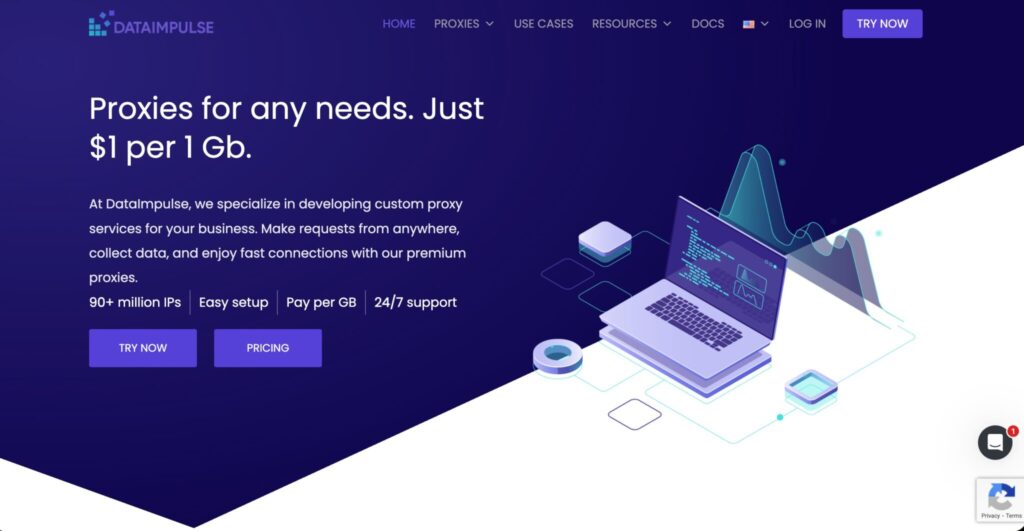
DataImpulse is a strong budget pick for buyers who want international residential traffic without premium pricing. It offers global residential coverage, pay-per-GB pricing, and support for rotating and sticky sessions.
This provider is attractive for startups, freelancers, affiliate teams, and agencies that need to test international campaigns or gather public data without locking into a large monthly contract.
The downside is that you do not get the same managed scraping ecosystem as the top enterprise vendors. You will need better internal retry logic, browser handling, and monitoring.
Pro-Tip: DataImpulse is best used with smart throttling. Cheap traffic is only valuable when your scraper controls retries, delays, and session reuse properly.
How to Choose an International Proxy Provider
Check IP Pool Quality, Not Just Pool Size
A huge IP pool sounds impressive, but the real question is how many usable IPs exist in your target countries. Ask for test access in your priority regions. Check ASN diversity, response time, ban rate, and whether the IPs match the advertised location.
For global SEO, country-level targeting may be enough. For ad verification, you may need city or carrier targeting. For ecommerce intelligence, you may need stable residential sessions in specific markets.
Match Rotation Protocols to the Job
Rotation is not one setting. Per-request rotation is useful for large-scale crawling because every request can use a fresh IP. Sticky sessions are better when the site expects continuity. Time-based rotation works well when you need a middle ground.
HTTP and HTTPS are fine for most web scraping and browser tasks. SOCKS5 is better when your software needs broader traffic support or when you want more flexibility with non-browser tools.
Understand Residential vs ISP vs Datacenter vs Mobile
Residential proxies are best for location-sensitive tasks and lower detection risk. ISP proxies give you residential-like trust with datacenter-like stability. Datacenter proxies are fast and cheap but easier to flag. Mobile proxies are expensive but useful for mobile app testing, carrier checks, and social or ad verification workflows.
A serious international setup often uses more than one type. Do not force every task through residential proxies if datacenter IPs can do the job.
Test Before Scaling
Run a small pilot across your hardest countries first. Track success rate, latency, CAPTCHA rate, block rate, and cost per successful request. The cheapest provider per GB can become expensive if half your requests fail.
FAQs About International Proxy Providers
1. What is an international proxy provider?
It is a proxy service that offers IP addresses across many countries, letting users route traffic through specific regions for testing, research, data collection, or verification.
2. Which proxy type is best for global scraping?
Residential proxies are usually the safest starting point. For speed-heavy jobs, combine datacenter proxies with good retry logic.
3. Are bigger proxy pools always better?
No. A smaller, cleaner pool in your target country can outperform a massive pool with poor session quality.
4. What is sticky session rotation?
Sticky rotation keeps the same IP for a set period. It helps when a website expects the same visitor to keep the same connection identity.
5. Do international proxies support SOCKS5?
Many premium providers support SOCKS5, but coverage can vary by proxy type. Always check before buying.
6. Which provider is best for beginners?
Decodo, IPRoyal, Webshare, and DataImpulse are easier starting points. Bright Data and Oxylabs are better for advanced teams.
7. Can proxies guarantee no blocks?
No. Good proxies reduce risk, but blocks also depend on request patterns, browser fingerprints, headers, rate limits, and target-site rules.
Quick Links:
- Best Proxies For Social Data Collection
- Best Residential Proxy APIs
- Best Telecom Proxy Providers
- Best Mobile Proxy Networks
Final Verdict
Choose Bright Data or Oxylabs when reliability and scale matter most. Pick Decodo for a balanced mix of usability, coverage, and performance. Use SOAX when accurate geo-targeting is the priority. Consider NetNut for stable ISP-backed sessions, IPRoyal for affordable residential coverage, Webshare for self-service proxy control, Infatica for mid-market scraping, and DataImpulse for low-cost global traffic.
The best international proxy provider is the one that performs well in your exact countries, with your exact tools, against your exact targets. Buy a small plan, test the hardest locations, measure successful requests, then scale only what works.